
T-shirt print durability is not just about which decoration method looks best on day one. For custom apparel buyers, the real question is whether the print still looks clean after washing, stretching, and everyday wear.
If you are comparing suppliers, it helps to start with a custom t-shirt supplier for durable print production that can discuss fabric, print method, and sampling limits before bulk orders are approved. That early alignment reduces the chance of cracking, fading, or a heavy hand feel later in production.
Why print durability matters more than the printing method itself
Two shirts can use the same printing method and perform very differently in bulk use. The final result depends on fabric, ink or film build, curing, garment color, artwork size, and how well the print was matched to the intended use.
For a brand owner, durability is not only a quality issue. It also affects returns, reorders, and whether the finished shirt feels premium enough to support your price point.
What buyers should look for in a print test
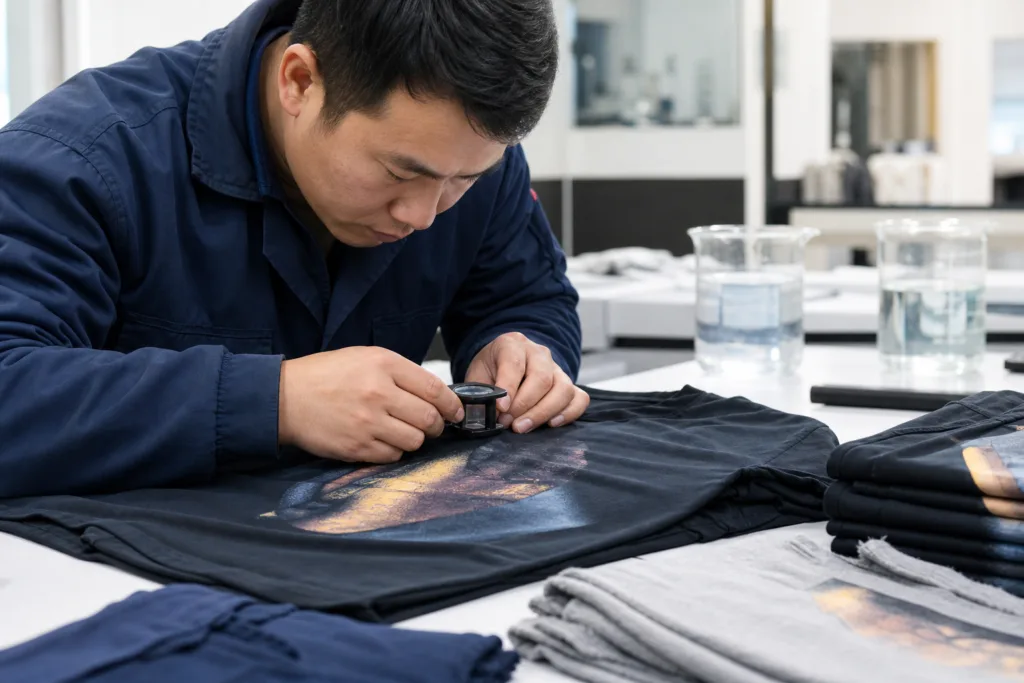
When evaluating a sample, focus on four failure points:
- Cracking – visible breaks in the print surface after stretch or wash.
- Fading – color loss, dullness, or weak contrast after laundering.
- Peeling – edges lifting, film separation, or partial print release.
- Hand feel – stiffness, thickness, or a plastic-like print that changes garment comfort.
A print can look sharp in a photo and still fail on comfort or wash resistance. That is why buyers should judge both appearance and wear behavior, not one or the other.
Durability priorities by printing method
| Printing method | What usually holds up well | What to verify closely | Buyer takeaway |
|---|---|---|---|
| Screen print | Strong opacity and long-term wear when cured correctly | Cracking on thick ink layers and hand feel on large prints | Good for scale, but curing and ink build must be controlled |
| DTF | Detailed graphics and strong edge clarity | Peeling, film stiffness, and stretch recovery | Good versatility, but film quality and transfer settings matter |
| DTG | Soft feel on cotton and fine artwork detail | Fading after wash and performance on dark garments | Best when fabric, pretreatment, and wash performance are aligned |
| Heat transfer | Fast customization and clean placement | Edge lift, surface wear, and thickness after repeated use | Useful for short runs, but long-term adhesion must be tested |
Method choice matters, but the real decision is whether the chosen method fits the fabric, print size, and intended wash life.
How to run a print wash test
A wash test should copy the way the shirt will be used in real life as closely as possible. That means using the same garment color, base fabric, print size, and finish that will go into production.
For a more practical framework, many buyers follow how brands run a wash test before bulk approval by checking the sample after a few controlled cycles instead of waiting until the full order is finished. The key is to compare the pre-wash sample with the washed sample under consistent lighting and handling.
- Use the planned detergent type if it is known.
- Test at a realistic wash temperature, not only an ideal one.
- Include both air-dry and tumble-dry behavior if the customer will use both.
- Review the print after each cycle for cracking, fading, peeling, and edge lift.
If the print passes only when handled gently, it is not ready for bulk use.
Stretch and rub testing
Wash performance is only one part of t-shirt print durability. Buyers should also check how the print behaves when the shirt is stretched across the chest, shoulder, or hem, because those are the areas most likely to reveal weak adhesion or brittle ink.
Rub testing is equally useful. A light but repeated dry rub or wet rub can expose poor surface bonding, especially on prints that look smooth but have weak edge stability.
- Stretch the printed area gradually instead of forcing one hard pull.
- Look for fine cracking first, then larger fractures.
- Check whether rubbed ink transfers, dulls, or flakes.
- Compare the test result against an approved sample reference.
Why dark fabric prints carry higher risk
Dark garments usually require more print build, stronger opacity, or a pretreatment process that changes how the print sits on the fabric. That can increase stiffness and make flaws easier to notice after wear.
On dark shirts, buyers should verify color coverage, edge sharpness, and the difference between the printed area and the surrounding fabric. If the print sits too heavily on top of the garment, the risk of cracking and a stiff hand feel rises quickly.
How print size, ink coverage, and layer thickness affect hand feel
Large chest logos, oversized back graphics, and dense artwork often create more hand feel than small placements. The bigger the print area, the more important it becomes to balance opacity with softness.
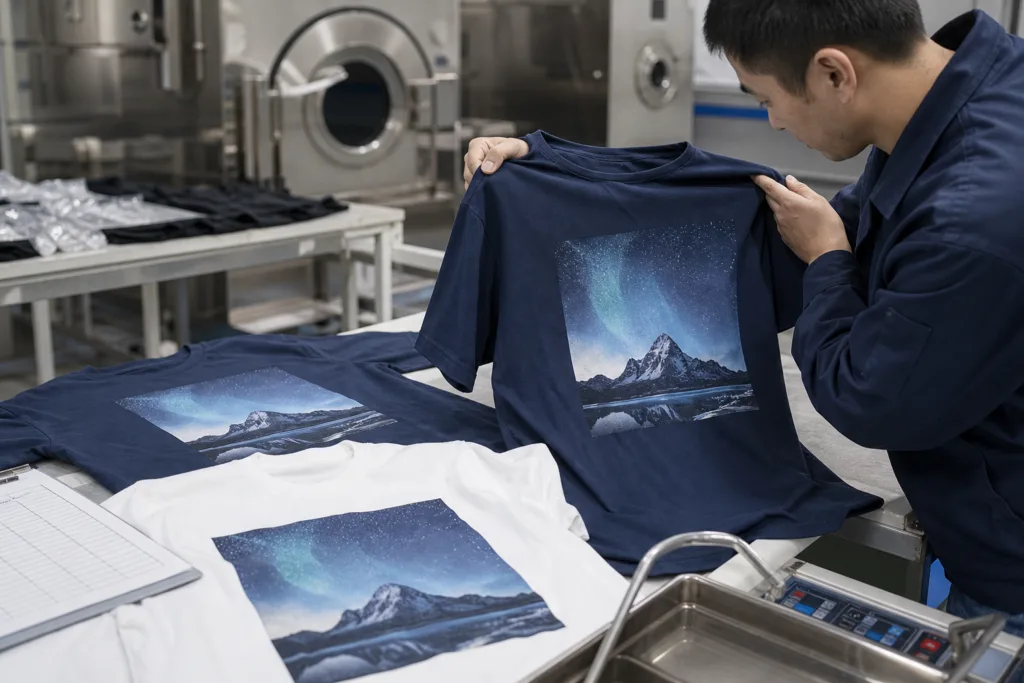
Thicker prints can look more vivid at first, but they may also feel less breathable and age less gracefully. For premium basics, many buyers prefer a softer print that sacrifices a little visual weight in exchange for better comfort and wear life.
How to approve print quality at the sample stage
A disciplined sample stage is where most print risk should be removed. The goal is to confirm that the artwork, fabric, print method, and finishing approach all work together before the order moves into bulk.
That is why the apparel sample approval process matters so much for custom apparel programs. At Ninghow Apparel, sample review is treated as a production test, not a formality, because the sample should prove the result the buyer can expect at scale.
During approval, check the sample under the same light, with the same folding and handling expectations, and with a written note of what is acceptable and what needs revision.
A bulk production QC checklist for t-shirt print durability
Once the sample is approved, bulk QC should still verify that the production run matches the approved standard. Print durability can drift if curing changes, ink batches shift, or the operator adjusts the setup during production.
For larger programs, third-party inspection services for print quality checks can help confirm that the finished order still matches the approved sample and the buyer’s expectations.
- Confirm print placement against the approved reference.
- Check opacity and color consistency across the lot.
- Inspect for cracking, peeling, surface gloss changes, and uneven curing.
- Review a random sample after folding, stretching, and light rubbing.
- Record any tolerance limits that the factory must follow.
Common mistakes buyers make
One common mistake is approving a print too early, before washing or stretching the sample. Another is judging the sample only by appearance and not by how it feels on the body.
Buyers also sometimes overlook the role of tolerance limits. A print that looks slightly different from the approved sample may still be acceptable if it stays within apparel quality tolerance standards, but the buyer should define that range before bulk production starts.
- Testing only a single cycle instead of a realistic wear scenario.
- Approving based on photos instead of physical inspection.
- Ignoring dark fabric behavior.
- Comparing samples without a clear reference standard.
- Waiting until bulk production to discover a hand-feel problem.
When a print is ready for production
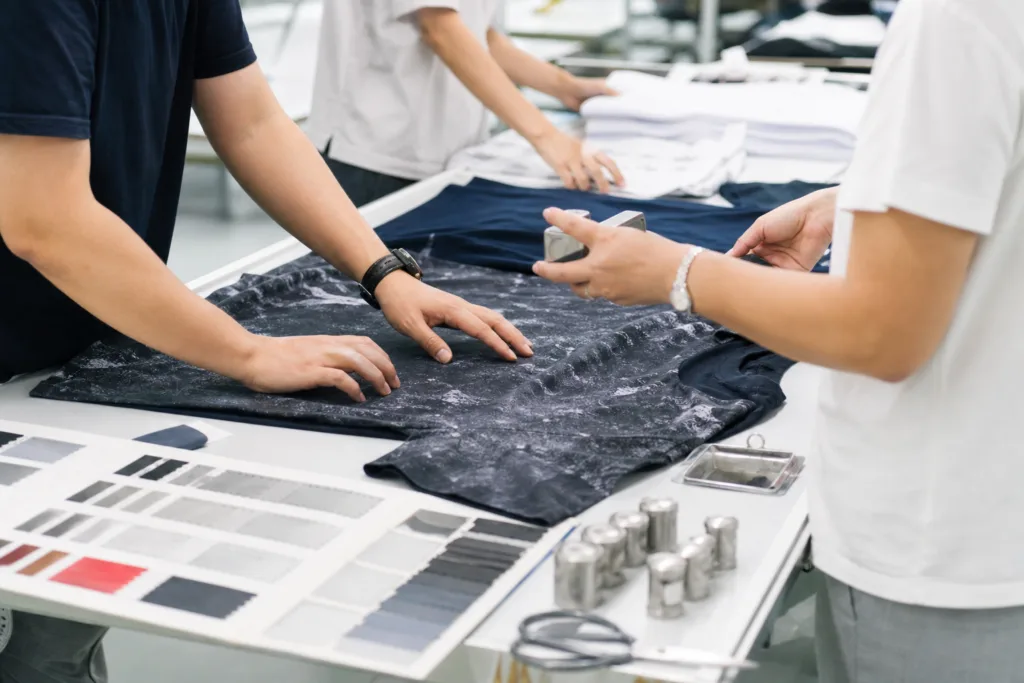
A print is ready for bulk only when it meets the visual standard, survives the planned wear test, and still feels right on the garment. If the print cracks, fades, peels, or feels too heavy during sample review, it should be revised before production starts.
For custom apparel buyers, the safest path is simple: verify performance early, document the acceptance standard clearly, and treat the sample as proof of production readiness rather than a preview.
FAQ
How many wash cycles should a buyer test?
There is no single universal number, but the test should be long enough to reveal cracking, fading, peeling, and any hand-feel change that would matter to the customer. Even a short, consistent test is more useful than no test at all.
What failure means the print is not ready for bulk?
If the print shows visible cracking, edge lift, meaningful fading, or a stiffness level that does not fit the product position, it should be revised before bulk production.
Is a soft hand feel always better?
Not always. Softness matters for comfort, but some products need stronger opacity or more coverage. The right balance depends on the garment category and brand position.
Which printing method is safest for durability?
No method is automatically safest in every case. Screen print, DTF, DTG, and heat transfer can all work well when matched to the fabric, artwork, and expected wash life.
Should dark fabric prints be tested differently?
Yes. Dark garments often need extra verification for opacity, hand feel, and edge quality because the print build is usually more noticeable and more vulnerable to stiffness or cracking.
When should a sample be revised instead of approved?
Revise the sample whenever the print misses the agreed visual standard, fails the wear test, or creates a comfort issue that would be hard to accept in bulk.