

A polo shirt wash test is one of the most practical ways to reduce bulk-production risk before a style is approved. It helps brands confirm whether the garment will shrink, fade, pill, or lose shape after real laundering, not just after a single showroom inspection.
If you are still aligning fabric, construction, and approval standards, early polo shirt supplier guidance can help you define what should be tested before production is released. That step is especially useful when the order includes custom branding, multiple colorways, or a private label launch.
Why wash testing matters before bulk production approval
For polo shirts, a sample can look right on day one and still fail after the first few washes. A garment that shrinks too much, twists at the side seams, or loses logo quality can create customer complaints and force expensive rework.
Wash testing is not just about checking whether the shirt survives laundering. It is about confirming that the fabric, trims, stitching, and decoration all work together under realistic use conditions. That is why approval should be based on post-wash performance, not visual appearance alone.
What a proper polo shirt wash test should evaluate
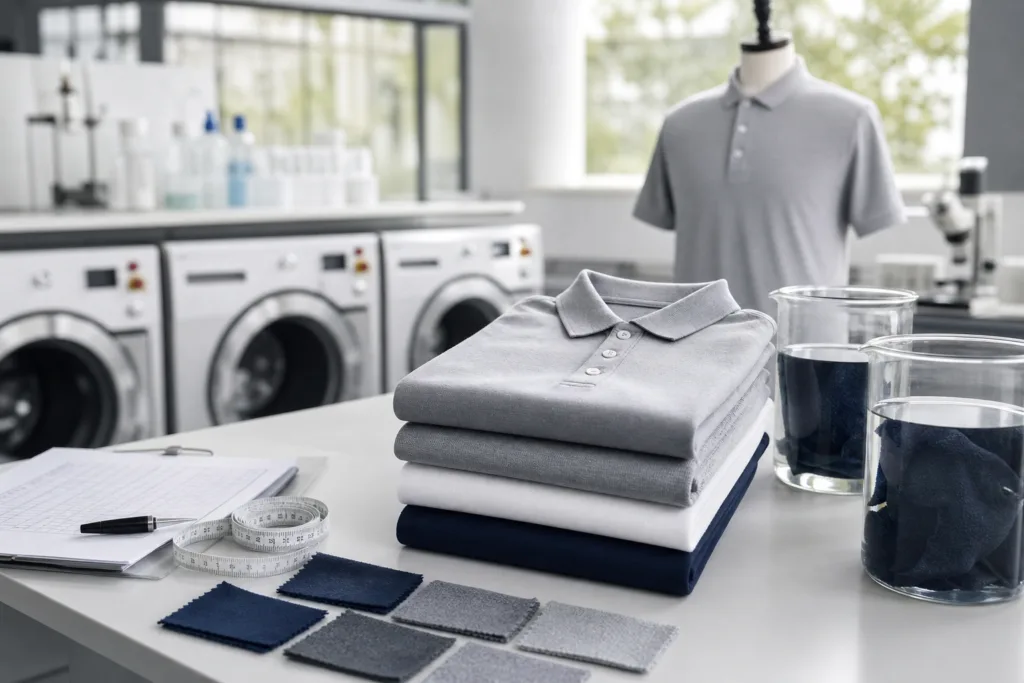
A useful test should cover the areas that affect retail acceptance and repeat orders: shrinkage, colorfastness, pilling, logo durability, and shape retention. If one of these areas fails, the shirt may still be wearable, but it may no longer meet the brand’s quality target.
Shrinkage
Measure body length, chest width, and sleeve length before washing and again after each cycle. Even moderate shrinkage can change the fit enough to affect size grading and customer satisfaction.
Colorfastness
Check whether the fabric bleeds, dulls, or shows edge wear after laundering. Dark shades, especially black and red, usually deserve extra attention because small failures are easier to see.
Pilling
Inspect the surface for fuzzing and small fiber balls after washing and drying. Pilling may not affect function, but it quickly makes a polo shirt look older than it is.
Logo durability
Test embroidery, heat transfer, and printed graphics for cracking, lifting, edge curl, or stitch distortion. Decoration that looks fine before washing can fail first if the base fabric shrinks unevenly.
Shape retention
Look at the collar, cuffs, side seams, placket, and hem after drying. A polo shirt should keep its structure, not twist, curl, or lose its intended silhouette.
How to measure shrinkage the right way
Use the same measuring points on every sample and record the numbers before washing, after the first wash, and after repeated cycles. Brands often compare only the finished garment, but the more useful check is the difference between pre-wash and post-wash measurements.
| Measurement point | What to check | Why it matters |
|---|---|---|
| Body length | Top of shoulder to hem | Shows whether the shirt shortens in a way that affects fit |
| Chest width | Across the body at the agreed point | Reveals side shrinkage and size inconsistency |
| Sleeve length | Shoulder point to cuff end | Helps confirm sleeve recovery after wash |
When reviewing the results, compare them against your approved tolerance window rather than a vague pass or fail reaction. If you need a framework for that stage, the apparel quality tolerance standards discussion is a useful reference point for deciding what is acceptable and what needs revision.
Why dark colors need extra attention
Colorfastness problems are easiest to see on deep shades, which is why navy, black, maroon, and red often need more scrutiny. A polo may pass a quick rinse test and still fail after repeated wash-and-dry cycles because the dye is not stable enough for real use.
Inspect the fabric under good light after each test cycle. Look for shade loss, uneven fading at seams, and staining transfer onto collars, trims, or light-colored garments washed in the same load.
When the style includes seasonal color runs, ask the supplier to keep the wash conditions consistent across all colorways so you can compare results fairly. That is one reason buyers should approve color and fabric together rather than as separate decisions.
Pilling and surface wear
Pilling is often a fabric selection issue, but it can also be affected by knitting structure, yarn quality, finishing, and laundering method. A polo shirt made for office uniforms may tolerate wear differently than one designed for sports or promotional use.
Test the fabric where friction is most likely: underarms, side seams, chest areas, and the inside of the collar. If pilling appears quickly, the shirt may still pass a basic construction check but fail in the market because it looks worn too early.
For brands comparing fabric options, the material choice should be reviewed alongside the intended use. If your team is still deciding on knit structure or fiber balance, best fabrics for custom polo shirts can help connect performance expectations with the final product direction.
Logo durability and decoration checks
Decoration often becomes the weak point in a polo shirt wash test. Embroidery can pucker if the fabric shrinks, prints can crack if the ink system is not stable, and heat transfers can lift at the edges if bonding is poor.
Check logos after every wash cycle for edge lifting, thread distortion, color shift, cracking, or surface roughness. If the shirt uses a chest emblem, compare it against a control sample that has not been washed so the change is easy to see.
When a style relies on logo presentation, it is worth reviewing the decoration method as part of the sample approval stage. A deeper review of embroidered logo polo durability can help buyers understand why stitch density, backing, and fabric stability all matter.
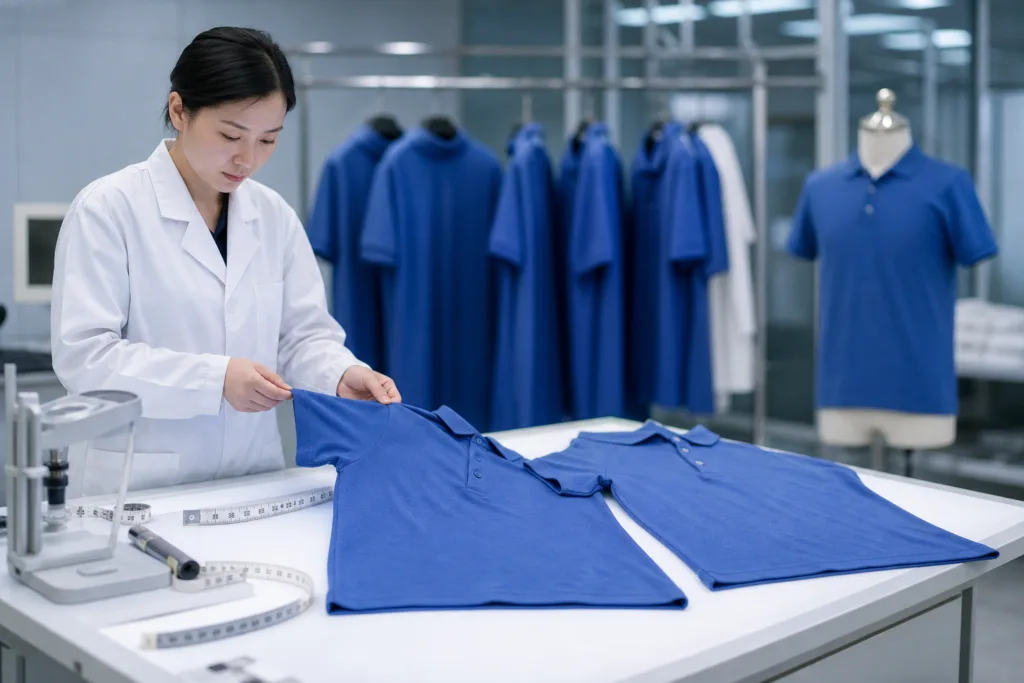
Collar and cuff recovery after washing
The collar is one of the fastest ways to spot poor construction or weak finishing. A collar that curls, twists, waves, or collapses after laundering can make the entire shirt look lower quality, even if the body fabric performs well.
Inspect collar stand height, point symmetry, and edge recovery after drying. The same logic applies to cuffs and plackets, which should return to their intended shape without warping or distortion.
If collar behavior is a key concern, it helps to compare the sample against a focused guide on how polo shirt collars keep their shape after washing. That type of review makes it easier to separate a fabric issue from a construction issue.
How many wash cycles are meaningful?
There is no single cycle count that works for every project, but one wash is rarely enough to approve bulk production with confidence. Brands usually need at least an initial wash, an observation after drying, and a repeat cycle to see whether the garment stabilizes or continues to degrade.
For higher-risk styles, such as dark colors, decorated styles, or lightweight knits, more than one cycle is usually worth the time. The goal is not to simulate every possible use case; it is to catch weak construction, unstable finishing, and decoration failure before bulk cutting begins.
At this stage, the manufacturer and buyer should agree on what constitutes a meaningful test result. A private label project managed through Ninghow Apparel should still be judged by the same principle: the sample must prove it can hold up under the intended care routine.
How to document wash test results
Good documentation makes approval decisions easier and reduces later disputes. Record the sample code, fabric composition, decoration method, wash cycle, detergent type, drying method, and all measurement changes in the same file.
Photographs are also useful, especially for collar shape, pilling, logo condition, and color comparison. If possible, keep one unwashed reference sample for side-by-side review so the changes are visible at a glance.
Many buyers use the review stage to confirm that the sample matches the agreed standard before they release a bulk order. That is the same logic behind the the apparel sample approval process: define the standard, test against it, and document the decision clearly.
Common mistakes brands make
- Approving a sample after visual inspection without washing it first
- Testing only one size and assuming all sizes will behave the same
- Ignoring decoration performance when the fabric itself looks fine
- Using vague pass or fail notes instead of measurement-based records
- Comparing the sample to memory instead of a control garment
- Overlooking collar and cuff recovery because the body still looks acceptable
Another frequent mistake is treating every test as equally important. In reality, brands should focus on the failure points that create the highest commercial risk for their product category and target customer.
When to reject, revise, or retest
Reject the sample when the wash result changes the garment in a way that affects fit, brand presentation, or customer confidence. Revise it when the failure appears tied to a fixable material, construction, or decoration choice. Retest it when the first version suggests the style could pass after a small adjustment.
If the garment is close to passing but still outside tolerance, ask for a corrected sample rather than moving straight to production. That extra step is usually cheaper than dealing with bulk rejects, returns, or inconsistent repeat orders.
For teams managing quality at scale, the approval decision should always be tied to a clear production standard. If you need a broader checklist for release-stage review, production-ready bulk order checklist can help connect wash results to the rest of the approval process.
Conclusion
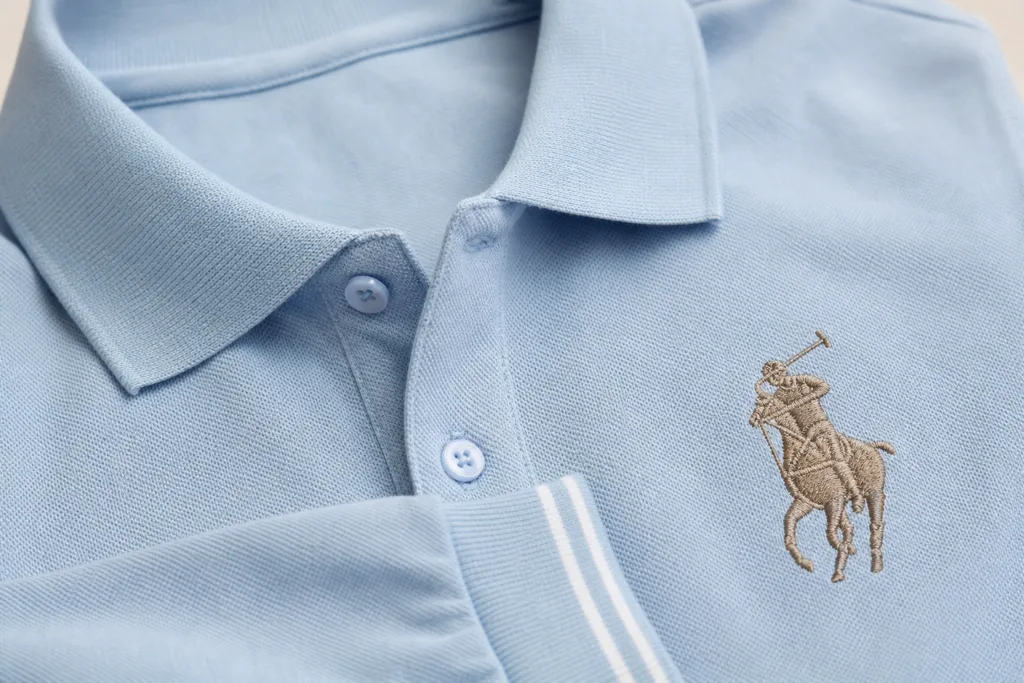
A strong polo shirt wash test is not about being overly strict. It is about proving that the sample can survive real use without shrinking out of spec, fading too quickly, or losing shape and logo quality.
When brands define the test method early, measure consistently, and document the results well, bulk approval becomes much safer and easier to defend. That is the difference between a shirt that simply looks good in sample stage and one that performs well after production.
FAQ
What should a polo shirt wash test include?
It should check shrinkage, colorfastness, pilling, logo durability, and collar and cuff recovery after washing and drying.
How many wash cycles should a polo sample go through before approval?
At least one full wash and dry cycle is useful, but two or more cycles give a better view of shrinkage, fading, and shape stability.
What measurement points matter most in shrinkage testing?
Body length, chest width, and sleeve length are the core points because they affect fit and size consistency.
Why do dark polo shirts need more wash testing?
Dark shades usually make fading, dye transfer, and uneven wash damage easier to see, so they need closer inspection.
What is the biggest risk with logo decoration?
Embroidery, print, or heat transfer may look fine before washing but fail after laundering through cracking, lifting, or distortion.
When should a brand reject a washed sample?
A sample should be rejected when wash results change fit, shape, color, or decoration quality beyond the agreed tolerance.