

Choosing the best fabric for custom polo shirts is less about finding one universal material and more about matching fabric performance to the job the garment needs to do. A polo for office staff, a golf team, a hotel crew, a promotional event, and a retail collection may all look similar at a glance, but they often require very different priorities in comfort, durability, appearance, care, and price.
That is why buyers usually get better results when they start with use case instead of starting with fiber names alone. If you are comparing options with a custom polo shirt supplier for different end uses, the most useful discussion is not simply cotton versus polyester, but how fabric choice affects wear conditions, branding method, wash frequency, fit expectations, and production scale. Once those factors are clear, fabric selection becomes much more practical and much less guesswork.
Why there is no single best polo shirt fabric for every use case
Many buyers ask for the best fabric for custom polo shirts as if one answer fits every project. In manufacturing, that is rarely true. A fabric that feels ideal for premium retail polos may not hold up well in a high-turnover hospitality setting, and a low-cost event fabric may not deliver the structure or handfeel a corporate uniform program needs.
The right choice depends on trade-offs. Softer fabrics can improve comfort and perceived value, but they may cost more or need better finishing control. Polyester-rich fabrics often improve moisture management and wash durability, but some projects still need cotton content for a more natural handfeel. Knit structure, fabric weight, dye method, and finishing treatments all shape the final result.
For buyers, the key is to define success first. If success means a clean office appearance after repeated laundering, the answer will differ from a shirt designed for outdoor movement and sweat management. This is also a good example of how end use changes apparel manufacturing decisions, from fabric sourcing to trims, construction, and testing priorities.
How to evaluate polo shirt fabric by end use
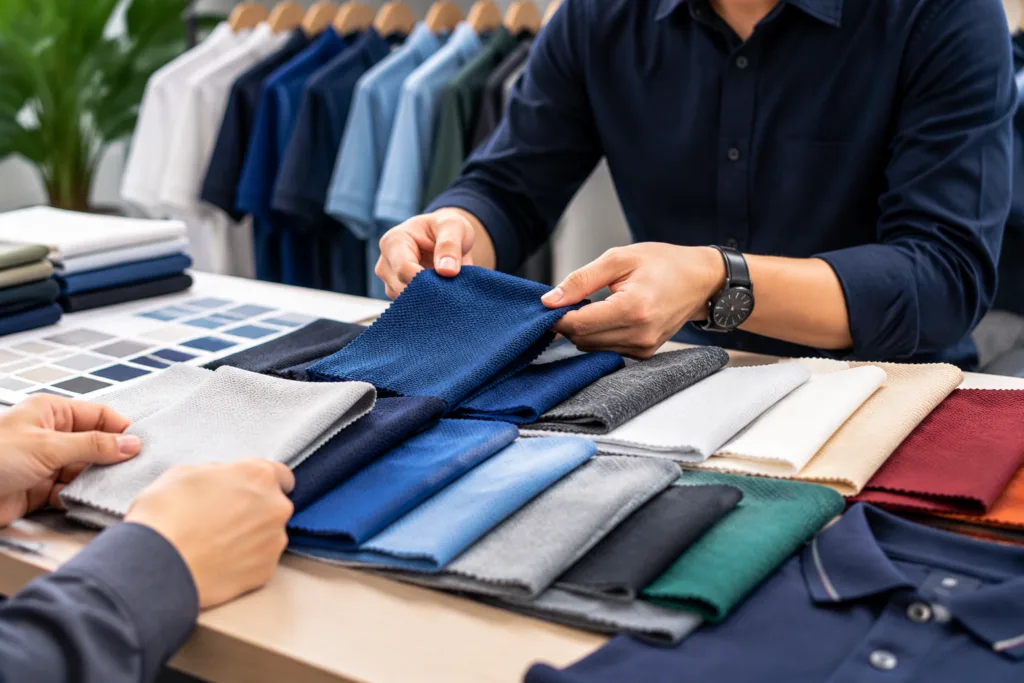
Before comparing specific fabric blends, it helps to evaluate polos through four practical filters: comfort, durability, appearance, and cost. Most sourcing mistakes happen when one of these is prioritized without considering the others.
Comfort
Comfort includes breathability, softness, stretch, moisture handling, and how the fabric feels during a full day of wear. For desk-based uniforms, comfort may mean a balanced, non-clingy fabric with a neat surface. For golf or active use, it usually means better movement, airflow, and sweat management.
Durability
Durability is not just whether the fabric tears. It includes shape retention, collar recovery, colorfastness, pilling resistance, seam stability, and how the shirt performs after repeated washing. Hospitality and corporate programs usually need stronger long-term consistency than short-run event orders.
Appearance
Appearance covers drape, surface texture, luster, wrinkle visibility, color richness, and whether the garment looks structured or casual. A refined retail polo may need a softer premium face, while a staff uniform may need a cleaner and more stable appearance after routine care.
Cost
Cost should be considered across the whole project, not just by fabric price per kilo or per meter. Lower-cost fabrics can still become expensive if they create high rejection rates, poor branding results, or weak wearer satisfaction. Conversely, a slightly better fabric may reduce complaints and improve program longevity.
Office uniforms: fabrics that balance comfort, structure, wrinkle resistance, and easy care
Office uniform polos often need to bridge two expectations: they should feel comfortable enough for all-day wear but still look polished in customer-facing environments. In this category, cotton-poly blends are commonly practical because they balance a natural touch with easier care and better dimensional stability than many 100% cotton options.
A midweight pique or jersey knit can work well depending on the brand image. Pique usually gives a more classic polo look with texture and structure. Jersey often feels smoother and softer, which can suit modern office styling, but buyers should confirm that the fabric still holds shape at the collar and placket.
For office programs, helpful fabric priorities include:
- Moderate breathability for indoor wear
- Reduced wrinkle visibility
- Good color consistency across repeat orders
- Stable collar appearance after laundering
- Comfort without excessive cling or transparency
If embroidery is part of the decoration plan, fabric stability matters. Very light or overly stretchy materials can cause puckering around logos, especially on chest placements. Buyers should also think about whether the uniform program will reorder seasonally, since repeatability in dye lot and handfeel becomes important.
Golf polos: fabrics that support stretch, moisture-wicking, breathability, and UV performance
Golf polos usually require more technical performance than office or casual corporate polos. Here, polyester-rich fabrics with mechanical stretch or elastane blends are often preferred because they help the wearer move comfortably while supporting moisture management and quicker drying.
In this category, fabric handfeel matters almost as much as technical function. A stiff athletic fabric can meet performance goals on paper but still feel too synthetic for a premium golf program. Many buyers look for a smooth knit with enough softness, moderate stretch, and a clean surface that works well for team logos or club branding.
Common priorities for golf polos include:
- Moisture-wicking performance
- Breathability for outdoor wear
- Light to midweight feel
- Stretch for swing movement
- UV-oriented finishing when required by the project
Fabric weight also influences comfort and drape. Buyers comparing lightweight performance polos should understand how GSM affects polo shirt performance, because a small change in weight can alter opacity, structure, heat retention, and perceived quality.
Hospitality polo shirts: fabrics built for frequent washing, breathability, and professional presentation
Hospitality uniforms face a different kind of pressure. The shirt must look presentable across long shifts, repeated washes, and varied work environments such as front desk, housekeeping support, food service, or resort operations. That usually makes durability and care performance more important than ultra-premium handfeel.
Poly-cotton blends are often a sensible starting point for this use case. They can help with wash resilience, color retention, and drying efficiency while still offering enough comfort for daily wear. In warmer environments, a breathable knit becomes especially important, but buyers should avoid choosing a very light fabric if it risks transparency or poor shape retention.
For hospitality projects, manufacturers usually recommend checking:
- How the fabric behaves after frequent laundering
- Whether darker shades hold color well
- How easily the surface shows lint or stains
- Whether collars and plackets stay neat over time
- Whether the fabric remains presentable without intensive ironing
This is also where construction details matter alongside fabric. A good fabric can still underperform if collar interlining, stitching tension, or shrinkage control are not aligned with the use case.
Event and promotional polos: fabrics that prioritize budget, printability, delivery speed, and visual impact
Event polos are often ordered with a different objective: visual consistency at scale, acceptable comfort, and efficient production within a defined budget and timeline. In many cases, the fabric does not need to perform for years. It needs to arrive on time, look good in photos or at the venue, and support the chosen branding method.
That changes the sourcing logic. Buyers may choose more cost-conscious polyester or poly-blend options when they need cleaner sublimation, sharper color, or faster availability. If lead time is tight, fabric availability becomes as important as fabric composition. Understanding when to choose stock fabric or custom-dyed fabric can help buyers avoid preventable delays while still meeting color and quantity needs.
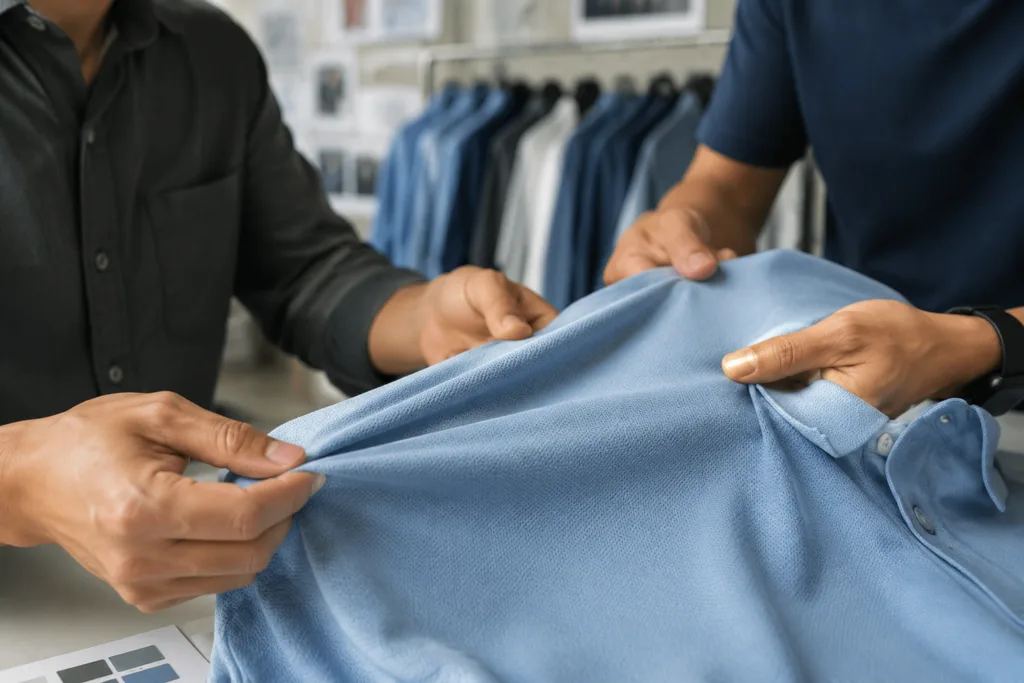
For event and promotional polos, practical priorities often include:
- Budget fit for the target quantity
- Decoration compatibility for print, heat transfer, or embroidery
- Fast production readiness
- Presentable appearance for short to medium wear cycles
- Reliable size run coverage for group distribution
When the project is very price-sensitive, buyers should still protect a few non-negotiables such as acceptable shrinkage control, usable handfeel, and logo application stability. Extremely cheap fabric choices can create issues that outweigh the initial savings.
Retail polo shirts: fabrics that deliver soft handfeel, fit retention, premium look, and higher perceived value
Retail polos usually face higher expectations for touch, silhouette, finish, and brand identity. In this category, buyers are often balancing aesthetic goals with repeat production consistency. Fabrics can include premium cotton pique, cotton-spandex blends, mercerized cotton looks, or refined performance blends depending on the target price point and customer profile.
A retail fabric should not only feel good on a swatch. It should also support fit retention, maintain a clean placket and collar line, and align with the brand’s intended look after washing. A polished premium effect may come from better yarn quality, finishing, knit density, or a more considered blend rather than from fiber label alone.
When discussing retail development with Ninghow Apparel, buyers often get the best results by sharing target positioning clearly: entry premium, classic core, resort-inspired, active-lifestyle, or logo-driven essentials. That context helps a manufacturer recommend fabrics that match both market image and production practicality.
How fabric composition, GSM, and knit construction work together
Buyers sometimes focus too heavily on composition alone, but performance usually comes from a combination of composition, weight, and construction. Two polos labeled as 60% cotton and 40% polyester can behave very differently if one is a loose lightweight jersey and the other is a denser pique knit.
Fabric composition
Composition affects softness, moisture behavior, drying speed, shrinkage tendency, and overall feel. Cotton tends to support a more natural handfeel, while polyester often improves drying time, colorfastness, and performance functionality. Blends help combine strengths, but the blend ratio still needs to match the use case.
GSM
GSM influences thickness, opacity, drape, warmth, and perceived quality. Lighter fabrics may feel cooler and more athletic, while heavier fabrics can appear more substantial and premium. The best choice depends on climate, silhouette, and whether the shirt is meant to feel performance-driven or structured.
Knit construction
Pique, jersey, interlock, and other knit structures change surface texture and wear behavior. Pique is traditional for polos and often gives better body and airflow. Jersey is smoother and can feel softer, but it may show body lines or lose visual structure more easily if not engineered carefully. Interlock can provide a cleaner, denser premium feel for some retail or corporate applications.
Fabric selection matrix for common polo shirt use cases
| Use Case | Recommended Fabric Direction | Main Priority | Watch-Out |
|---|---|---|---|
| Office uniforms | Midweight cotton-poly pique or structured jersey | Polished look and easy care | Too-soft fabrics may lose shape faster |
| Golf polos | Poly-rich performance knit with stretch | Moisture management and mobility | Overly synthetic handfeel can reduce premium appeal |
| Hospitality | Durable poly-cotton knit with breathable structure | Wash resilience and presentation | Very light fabric may become transparent or unstable |
| Events | Cost-efficient stock performance or blend fabric | Budget and speed | Low-cost fabric may weaken logo finish and fit consistency |
| Retail | Premium cotton blend, refined pique, jersey, or interlock | Handfeel and perceived value | Swatch approval alone may miss wash-performance issues |
What to tell your manufacturer when requesting a fabric recommendation
The quality of the recommendation usually depends on the quality of the brief. If a buyer simply asks for the best fabric for custom polo shirts, the answer will stay general. If the buyer explains end use, target price level, decoration method, climate, size range, wash expectations, and delivery timing, the recommendation becomes far more precise.
A useful request should include:
- Who will wear the polo and in what environment
- Whether the shirt is for daily uniform use, active use, promotion, or retail sale
- Target handfeel and visual style
- Preferred branding method
- Target quantity and reorder expectations
- Required delivery window
- Any concerns about shrinkage, pilling, or care
For sourcing teams, it helps to prepare what to include in a better apparel RFQ so the supplier can suggest realistic fabric options instead of guessing from incomplete information.
Common fabric selection mistakes buyers make when ordering custom polo shirts
One common mistake is choosing by touch alone. A swatch that feels soft in the showroom may not perform well after repeated washing, embroidery, or bulk production. Another is over-prioritizing fiber label claims without considering knit construction, GSM, or finishing quality.
Buyers also run into problems when they choose a fabric before confirming the branding method. Sublimation, screen printing, heat transfer, and embroidery all interact differently with fabric surface and composition. A fabric that works for one decoration style may not be ideal for another.
Other avoidable mistakes include:
- Ignoring collar and placket stability
- Approving fabric without wash testing
- Choosing very low GSM for uniforms that need opacity
- Assuming all performance polyester fabrics feel the same
- Failing to align budget with long-term wear expectations
In production, the most reliable outcomes come from aligning fabric, construction, branding, and reorder planning early rather than treating fabric as a standalone decision.
Matching fabric, function, and production requirements
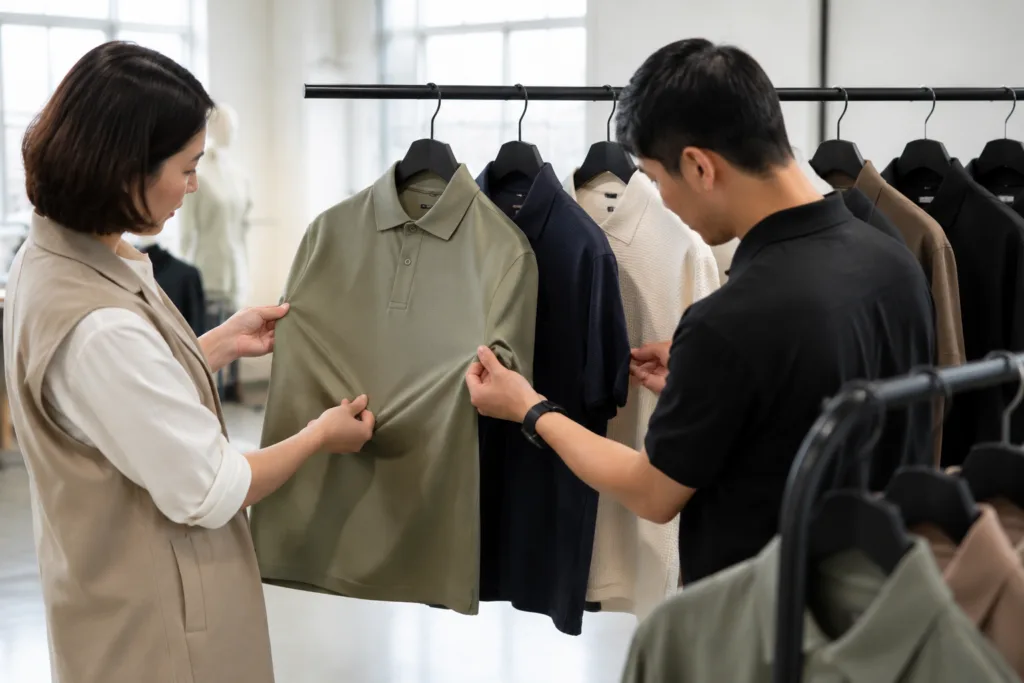
The best fabric for custom polo shirts is the one that fits the real use case, not the one with the most familiar fiber name or the lowest unit price. A strong selection process looks at wearer needs, fabric behavior, brand image, care demands, and production realities together.
From a manufacturer perspective, the most successful polo programs are usually the ones where buyers define use conditions clearly and stay open to a few well-reasoned fabric options. That approach reduces sampling revisions, supports more accurate costing, and improves the odds that the final bulk order performs as expected.
If you are developing polos for uniforms, sports, promotions, or retail, fabric selection should be treated as a sourcing decision as much as a design decision. The earlier those priorities are clarified, the easier it is to build a polo that looks right, wears well, and scales smoothly into production.
FAQ
What is the best fabric for custom polo shirts overall?
There is no single best option for every project. The right fabric depends on whether the polo is for office uniforms, golf, hospitality, events, or retail, because each use case needs a different balance of comfort, durability, appearance, and cost.
Is cotton or polyester better for custom polo shirts?
Cotton usually offers a softer and more natural handfeel, while polyester often performs better for moisture management, color retention, and repeated washing. Many buyers choose blends because they combine practical strengths from both fibers.
What fabric works best for office uniform polos?
Midweight cotton-poly pique or structured jersey is often a practical choice for office uniforms because it can provide comfort, cleaner presentation, and easier care without feeling overly technical or too casual.
What fabric should I choose for golf polos?
Golf polos usually benefit from polyester-rich performance knits with stretch, breathability, and moisture management. Buyers should also check handfeel, since comfort and premium appearance still matter in this category.
How important is GSM when choosing polo fabric?
GSM is very important because it affects weight, opacity, drape, warmth, and perceived quality. Even with the same composition, a different GSM can change how the polo feels, fits, and performs in real use.
What should I send a manufacturer to get the right fabric recommendation?
You should share the end use, target quantity, budget level, branding method, fit expectation, care needs, climate, and delivery timeline. A clearer brief helps the manufacturer recommend fabrics that are more suitable for both wear and production.