

For custom clothing brands, the choice between stock fabric vs custom dyed fabric affects more than color. It can change your MOQ, development timeline, sampling effort, and how easily you can repeat the same product across seasons. If your project is still in an early sourcing stage, it helps to first understand the implications of low MOQ apparel manufacturing because fabric strategy and order quantity are tightly connected.
In practice, the right fabric path depends on how much control you need, how fast you need to move, and whether your brand is testing demand or building a stable core program. A manufacturer-led approach looks at the garment category, the target price point, and the tolerance for shade variation before deciding which route is more practical.
The core difference between stock fabric and custom-dyed fabric
Stock fabric is material that already exists in a mill or supplier’s available color library, so it can often move into sampling and production faster. Custom-dyed fabric starts with a base cloth and is dyed to a specific brand color, which gives more control but usually adds time, approvals, and cost.
The main decision is not whether one is universally better. It is whether your product needs speed and efficiency, or color ownership and repeatable identity. That is why many buyers also compare the hidden trade-offs behind MOQ vs. MCQ in color decisions before locking in a fabric route.
When low MOQ brands should start with stock fabric sourcing
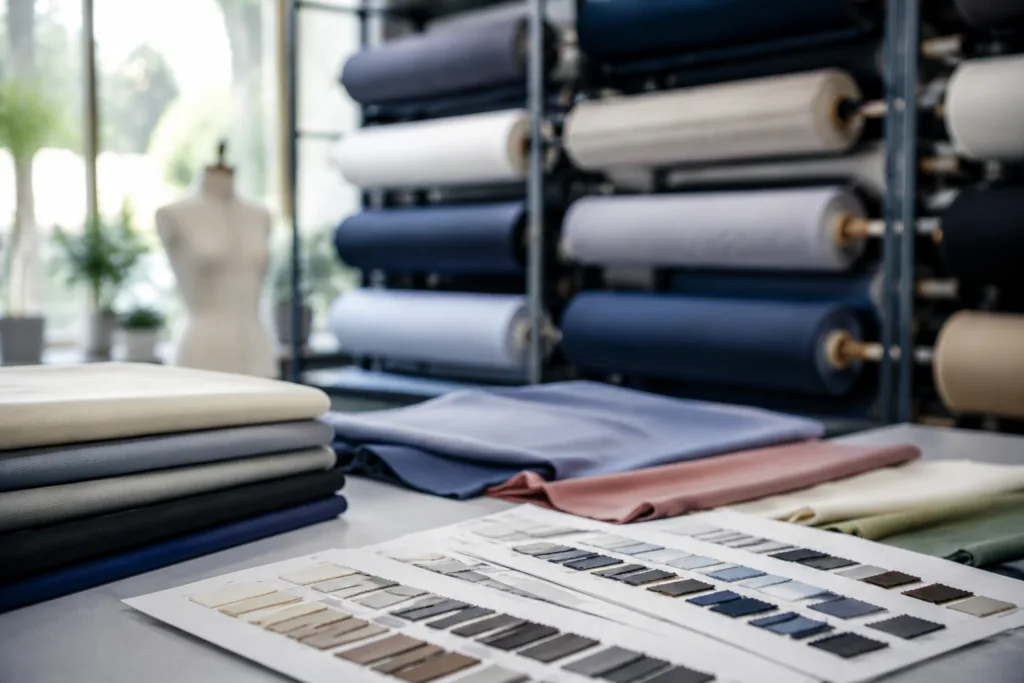
Stock fabric is usually the safer starting point when you are launching a small collection, validating fit, or selling a color that can work within an existing supplier palette. It reduces the risk of being stuck with a large dye commitment before the style has proven itself.
This is especially useful for brands that need to launch quickly or keep development simple. Stock fabric can also lower the chance of expensive rework if your first sample is still changing, because you are not tying a custom dye decision to an unfinished product concept.
For buyers comparing total development effort, the fabric decision should be read alongside the rest of the approval flow. The apparel sample approval process shows why fabric selection, fit approval, and color confirmation often need to progress together instead of separately.
Which brand stages are better suited for custom fabric dyeing
Custom-dyed fabric usually makes more sense once a brand has a stable style, a clear hero color, and enough order confidence to justify extra development work. It is often the better choice for core programs, brand-defining shades, and products that need to look identical across repeated production runs.
Brands that are scaling from testing to standardization benefit the most. At that stage, the added lead time can be acceptable if the custom color helps build a stronger identity and reduces compromises in presentation.
When a color becomes part of a brand system, consistency matters as much as the shade itself. That is why keeping fabric and color consistent on repeat orders becomes a key sourcing concern once the product starts selling steadily.
Lab dip, bulk fabric approval, and color tolerance: how they work together
Custom dyeing is not just a color request. It is a process of matching expectation against material reality. Lab dips are small dye trials used to check whether the target color can be achieved on the chosen fiber and fabric construction, while bulk approval confirms whether the production shade stays within the agreed tolerance.
Even with a strong reference, fabric can look different under lighting, across fiber types, or after finishing. Buyers who understand tolerance windows usually make fewer mistakes, because they are deciding what level of variation is acceptable before production starts rather than after the bulk arrives.
That is also where cost surprises often appear. If a color requires multiple rounds of correction, the real expense is not only the dye itself but the time and rework behind it, which is why it helps to review hidden fabric and development costs early in the process.
Stock fabric vs custom-dyed fabric comparison table
| Factor | Stock fabric | Custom-dyed fabric |
|---|---|---|
| Lead time | Usually faster because fabric is already available | Usually longer due to lab dips, approvals, and dyeing |
| Cost | Often lower development cost | Often higher upfront cost and more process steps |
| MOQ | More flexible for smaller programs | Often tied to dye minimums and larger commitments |
| Color accuracy | Limited to available shades | Better match potential if approved properly |
| Flexibility | Good for testing and quicker launches | Better for branded color systems and repeat programs |
Which colors are most likely to show shade variation or matching issues
Some colors are naturally harder to control than others. Bright reds, deep blacks, dark navies, heathers, and muted fashion tones can reveal subtle shade differences more easily, especially when different fiber lots or dye lots are involved.
Light neutrals can also be tricky because small differences in whiteness or undertone become visible in daylight and under retail lighting. If your brand needs multiple garments to match across tops, bottoms, and layers, it is better to evaluate the fabric system as a whole instead of treating each style as an isolated color request.
How to keep color consistency between first orders and repeat production
The best way to protect consistency is to document the approved reference clearly and keep all sourcing details attached to it. That means recording the fiber composition, fabric construction, dye standard, tolerance level, and any finishing effects that could change the final look.
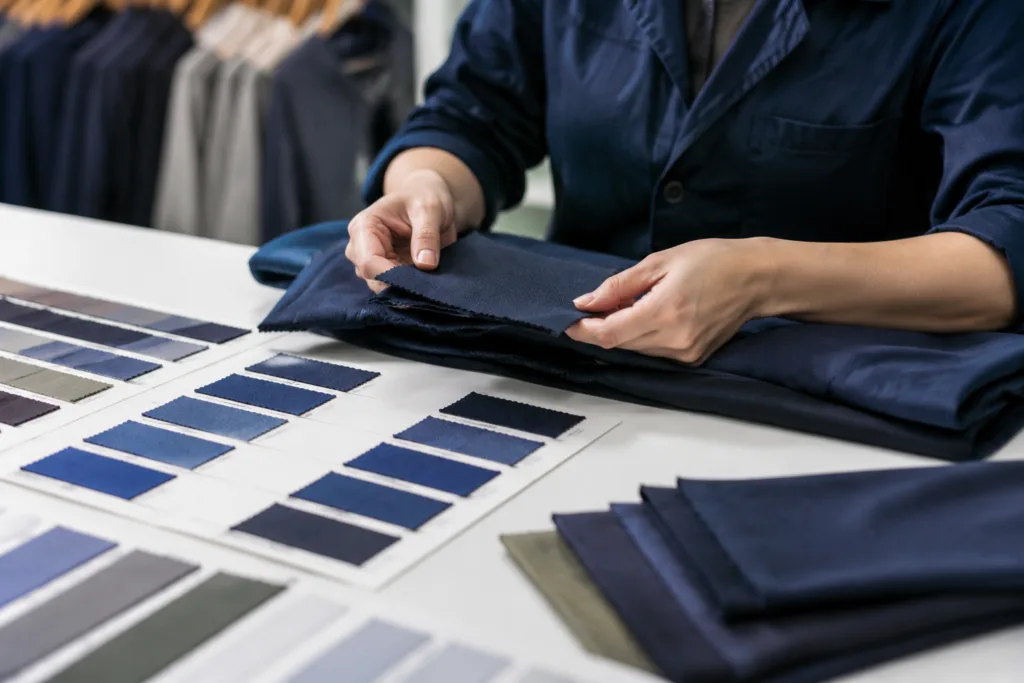
It also helps to hold on to physical approvals, not just digital images. Colors can drift over time if mills change machinery, raw materials, or process conditions, so repeat orders should always be checked against the original approved standard before bulk production starts.
Manufacturer-side controls that help
Brand owners should ask whether the manufacturer can preserve the same fabric source, dye recipe, and approval record across seasons. At Ninghow Apparel, these details are handled as part of the production planning discussion so that the chosen fabric route stays realistic for the order size and timeline.
Best fabric choice by product type
Product type often changes the fabric decision. A T-shirt program may tolerate more stock-fabric flexibility, while a hoodie or teamwear item may need stronger color control because the garment becomes a core identity piece. For polos and shorts, durability, hand feel, and color fastness may matter as much as the shade itself.
Here is a practical view of how the choice often breaks down:
- T-shirts: stock fabric works well for fast launches and testing; custom dyeing is better for signature brand colors.
- Polos: custom dyeing can be useful when the color needs to align with a corporate or team identity.
- Hoodies: stock fabric often helps with lower risk, but custom dyeing is stronger for a consistent core line.
- Shorts: stock options are often efficient, unless the brand needs a strict match to tops or seasonal sets.
Questions to ask your manufacturer before deciding on a color strategy
Before locking in a route, ask what fabric options are already available, what dye minimums apply, how long lab dip approval usually takes, and whether the mill can repeat the same shade later. These questions make the sourcing conversation more practical and reduce the chance of choosing a fabric path that does not fit the production stage.
You should also ask how shade variation is handled across lots, what happens if the first bulk shade misses the target, and whether the fabric choice affects trim, wash, or print compatibility. Clear communication with the factory matters because fabric decisions are rarely isolated from the rest of the production plan.
A simple decision framework for brand owners
Choose stock fabric when you need faster sampling, lower development risk, smaller order flexibility, or a color that can work from existing supplier options. Choose custom-dyed fabric when color identity, repeatability, and long-term consistency matter more than speed.
A good rule is to start simple until the product proves itself. Once a style becomes a repeat seller or a brand hero item, custom dyeing may be worth the added lead time and approval effort. For brands building a more structured program, the decision often fits into a broader sourcing strategy such as fabric platform strategy across styles.
Conclusion: choosing the most practical fabric strategy
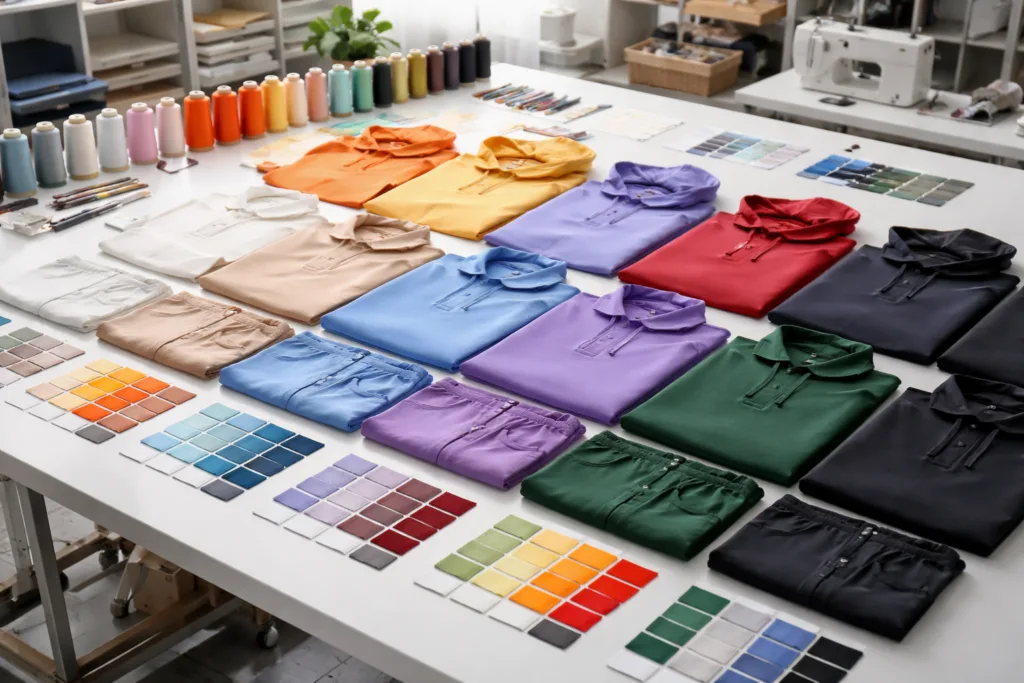
The stock fabric vs custom dyed fabric decision should be based on the stage of the brand, the importance of color accuracy, and the reality of MOQ and lead time. Stock fabric is usually the more practical starting point for smaller or faster-moving programs, while custom dyeing becomes more valuable when a brand needs a controlled, repeatable color identity.
The strongest choice is the one that supports production stability without overcomplicating development. If you are planning a launch, a repeat program, or a private label line, the fabric decision should be made alongside sampling, costing, and production timing rather than as an isolated step.
FAQ
Is stock fabric cheaper than custom-dyed fabric? Stock fabric is often cheaper at the development stage because it does not require a custom dye process, but the final cost still depends on quantity, fabric quality, and the supplier’s available inventory.
When should a brand move from stock fabric to custom-dyed fabric? A brand usually makes that move when a style proves itself, repeat orders become likely, or the color becomes important to brand identity and needs tighter control.
Does custom dyeing always mean a higher MOQ? Not always, but it often does because mills and factories may need minimum dye commitments that are higher than stock fabric sourcing requirements.
Why does my approved color look different in bulk production? Differences can come from lighting, fiber variation, dye lot changes, finishing, or tolerance limits that were not clearly defined during approval.
Can I use stock fabric for a private label line? Yes, stock fabric is often used for private label programs when speed, simpler development, or lower risk is more important than a fully custom color program.
What should I keep on file for future repeat orders? Keep the approved sample, fabric composition, color standard, tolerance notes, and production comments so the next order can be matched more reliably.