

Good manufacturing outcomes usually depend on how clearly the project is confirmed before bulk production begins. If you are still shaping your workflow, it helps to understand the basics of China clothing manufacturer communication early, because most costly mistakes come from assumptions about details that were never formally agreed.
At the inquiry stage, many buyers and factories sound aligned. The real risk appears later, when fabric, fit, artwork placement, and finish details need to be frozen into one version that everyone follows. A practical pre-production agreement gives both sides a shared record and reduces the chance of rework, delay, or avoidable disputes.
Why communication problems usually happen after the first inquiry
Initial messages often focus on broad questions such as MOQ, target price, and lead time. Those are important, but they do not yet define how the garment should actually be made. Problems usually start when a buyer assumes a reference photo is enough, while the manufacturer needs measurable instructions, file formats, and approved samples to proceed safely.
Another common issue is that different people on the buyer side may be thinking about different product versions. One team member wants a softer handfeel, another wants a tighter fit, and a third is focused on cost. If these priorities are not written down before sampling, the factory may try to guess the most likely interpretation, which is rarely ideal.
What to send instead of only reference images

Reference images are useful for style direction, but they do not replace technical information. For a cleaner starting point, send a tech pack, measurement spec, artwork files, color references, intended use, and any fit expectations. If you want a deeper comparison of documentation types, this tech pack vs. spec sheet for production clarity guide helps explain why factories need both design intent and measurable details.
A strong file set should tell the manufacturer what the product is for, who will wear it, how often it will be washed, and what matters most: price, appearance, comfort, durability, or speed. The more clearly you define usage scenarios, the easier it becomes to choose the right fabric and construction method without going through unnecessary sample rounds.
How to confirm product details before sampling
Before sampling begins, confirm the details that affect both appearance and production cost: fabric composition, GSM, color standard, trims, stitching type, seams, labels, packaging, and workmanship level. If you want to verify whether your files are complete enough for this stage, a pre-production tech pack review checklist can help you catch gaps before they slow down sampling.
It is better to ask direct questions now than to approve a sample built on unclear assumptions. For example, do not only ask for “better quality”; specify what quality means in practice, such as cleaner topstitching, tighter neckline recovery, or a more stable print edge. That gives the factory a usable target.
Choose the right communication channel for each stage
Different tools work better at different stages. WhatsApp or similar messaging apps are useful for quick clarification, photos, and short coordination. Email is better for formal confirmations, revised instructions, and records that may need to be referenced later. Spreadsheets work well for tracking measurements, color comments, and sample revisions because they keep multiple versions organized.
At Ninghow Apparel, the most efficient projects usually combine fast messaging with written confirmation. A short message can resolve a question quickly, but it should still be followed by a clear record when the decision affects production. That is especially important when several people are involved in approval.
How to write revision requests clearly
Revision requests should explain what changed, where it changed, and why it matters. Avoid vague instructions such as “make it nicer” or “adjust the fit a little.” Instead, specify the exact area and the direction of change, such as narrowing the shoulder, reducing sleeve width, moving artwork 2 cm lower, or softening the waistband tension.
If the factory is expected to revise a sample, make the comments easy to compare against the previous version. This is where how to give clear sample revision feedback becomes useful, because constructive comments reduce back-and-forth and help the manufacturer respond without guessing.
What to check during sample approval
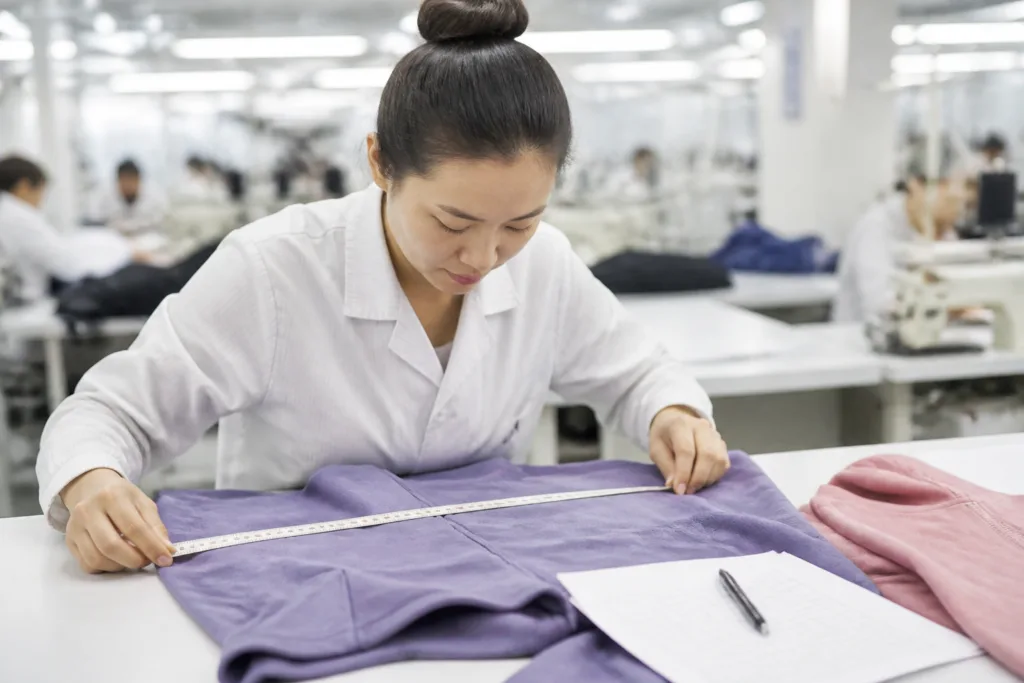
Sample approval is not just about saying yes or no. You should check photos, video, actual measurements, fabric handfeel, fit comments, print placement, and overall workmanship. If possible, compare the sample against the approved spec rather than relying on memory or visual impression alone. That keeps the approval process objective.
For products with more complex shape, stretch, or construction, one sample is often not enough to judge readiness for bulk. In those cases, the PP stage helps confirm whether the approved sample truly reflects what will be repeated in production. If you are unsure how this stage fits into the workflow, see why the PP sample matters before bulk production.
Common terminology gaps that create expensive mistakes
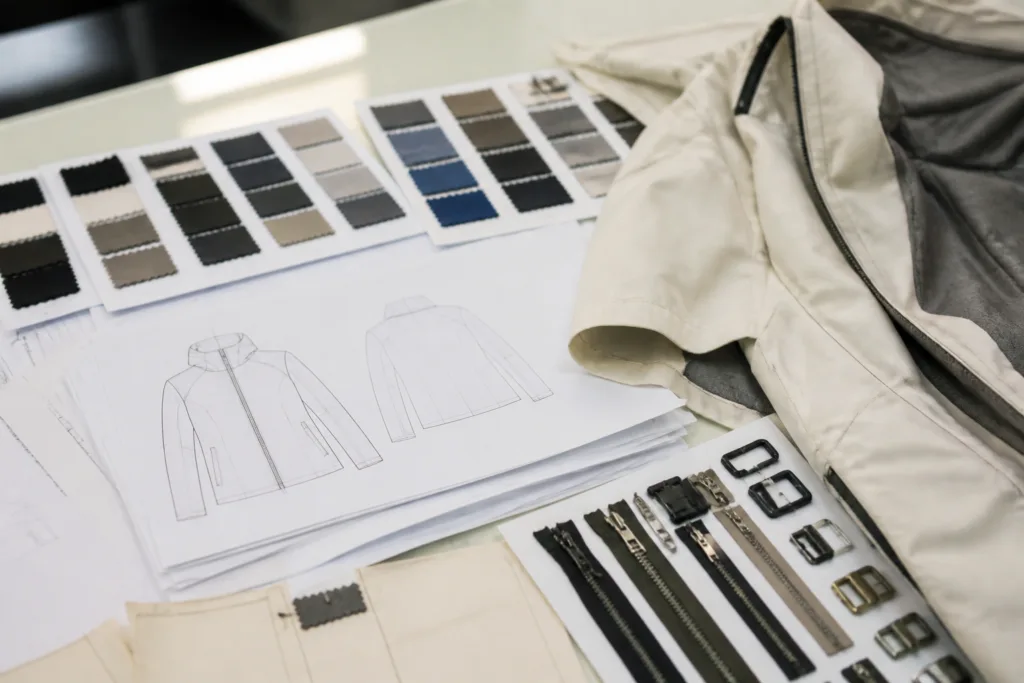
Some production errors are not caused by bad intent; they happen because English and Chinese business terms are not interpreted the same way. Words like “regular fit,” “oversized,” “wash effect,” “slim,” “heavyweight,” or “premium finish” can mean different things to different people unless they are tied to measurements or visual references.
Construction terms also need care. A buyer may say “double stitch,” but the factory may need to know whether that means topstitching, coverstitch, or reinforcement at a specific stress point. The same is true for neckline finish, seam allowance, binding width, and label placement. Clear terminology prevents expensive assumptions.
A practical pre-production confirmation checklist
Before placing the order, both sides should confirm one final written version of the product. Use a checklist that covers the points below.
- Approved tech pack or product specification file
- Final measurements with tolerances
- Fabric type, color, and GSM
- Trims, labels, and packaging details
- Stitching, seams, and workmanship expectations
- Approved sample version and revision history
- Artwork files and placement confirmation
- Lead time, MOQ, and shipment terms
- Named contact person for final approval
This checklist is not only for organizing the buyer side. It also helps the factory protect production consistency. The more items that are confirmed in writing, the less likely it is that a late-stage change will disrupt the schedule.
How to build a smoother communication rhythm for repeat orders
Once a first order is completed, the goal is to make the next order easier. Keep a record of the final approved sample, measurement table, revision notes, color decisions, and any issues that appeared during production. That way, repeat orders begin from a known baseline instead of starting over.
A strong long-term relationship is not built on speed alone. It is built on predictable communication, timely responses, and a shared habit of confirming decisions in writing. When both sides know who is responsible for each approval step, the project moves faster with fewer misunderstandings.
Final best practices for reducing production risk
If you want fewer mistakes before bulk production starts, keep three habits in mind: one decision, one record, one responsible contact person. Every important choice should be confirmed once, saved once, and owned by one person on each side. That simple discipline prevents most avoidable confusion.
When you communicate with China clothing manufacturer teams in this way, the process becomes easier for everyone involved. The factory gets clearer instructions, the buyer gets more reliable execution, and the sample stage becomes a practical bridge to bulk production rather than a source of uncertainty.
FAQ
What should I send first to a China clothing manufacturer?
Start with a tech pack or spec sheet, reference images, target quantities, and the intended use of the garment. That gives the factory enough context to answer accurately and recommend the right materials and construction.
Why is written confirmation so important before production?
Written confirmation creates one shared record of what was approved. It reduces misunderstandings about measurements, colors, trims, and workmanship when the order moves from sampling to bulk production.
Should I use WhatsApp or email with a manufacturer?
Use WhatsApp for fast clarification and photo exchange, and use email for formal approvals, revision summaries, and final decisions. The best process usually combines both.
What is the most common mistake buyers make during sampling?
The most common mistake is giving vague feedback that does not tell the factory exactly what to change. Clear notes with location, direction, and reason are much easier to act on.
How do I know if my sample is ready for bulk approval?
Check the sample against the measurement table, fabric choice, workmanship details, and fit expectations. If the approved sample matches those points and all changes are documented, it is closer to bulk readiness.
How can I reduce misunderstandings on repeat orders?
Keep the final approved version, revision notes, and key production decisions in one file set. That gives both sides a reliable reference for the next order.