

Brands often assume that once the tech pack is done, the order is ready to move into production. In practice, bulk clothing manufacturing only goes smoothly when the product details, materials, approvals, and commercial terms are frozen in a way that leaves little room for interpretation. If you want a practical starting point, this bulk clothing manufacturing checklist can help frame the decisions that need to be locked before a factory releases bulk cutting and sewing.
From a manufacturer perspective, the real risk is not missing one detail; it is having several small ambiguities that compound into delays, rework, or inconsistent output. A production-ready checklist exists to remove those ambiguities before money, fabric, and line capacity are committed.
Why a Tech Pack Alone Does Not Make You Ready for Bulk
A tech pack is important, but it is not the final gate for bulk production. It documents the design intent, yet bulk readiness depends on whether the brand has resolved fit expectations, material standards, workmanship methods, labeling requirements, and commercial approvals in a way the factory can execute consistently.
In many projects, the tech pack still leaves open questions such as acceptable shade variation, trim substitutions, shrinkage tolerances, or whether a decoration method should be screen print, heat transfer, or embroidery. A pre-production tech pack review is useful here because it helps uncover the gaps before the order is treated as production-ready.
What Must Be Frozen Before Bulk Manufacturing

Think of freeze points as decisions that should no longer move unless there is a formal change request. The more stable these decisions are before bulk starts, the easier it is to control cost, timeline, and consistency.
- Product specification freeze
- Fabric and trim freeze
- Workmanship freeze
- Packaging and label freeze
- Sample approval freeze
- Commercial terms freeze
Product Specification Freeze
The first step in any bulk clothing manufacturing checklist is locking the product specification. That means the style details, fit intention, size breakdown, tolerance limits, and any special construction notes should be finalized before the factory starts bulk planning.
For brands, this is where small changes can become expensive. A revised neck opening, a different sleeve length, or a changed grading assumption may seem minor in development, but it can affect pattern work, marker efficiency, and fit consistency across the size run.
What should be confirmed?
- Final silhouette and intended fit
- Grade rules and size range
- Measurement points and tolerances
- Critical construction details
- Approved design amendments
If a brand is still adjusting measurements after samples, it is usually better to pause than push ahead. Bulk production is not the place for unresolved fit debate, especially when the order scale is large or the delivery window is tight.
Fabric Freeze
Fabric is one of the biggest sources of production variation, so it should be fully approved before bulk. That includes composition, GSM, color standard, shrinkage behavior, hand feel, and any lab dip or shade band approval required to control color consistency.
For functional categories like sportswear, golf apparel, or teamwear, the fabric decision often determines not just appearance but also performance and durability. A PP sample approval before bulk production is especially valuable when the garment depends on a specific fabric behavior, because it shows whether the approved material and construction can realistically be repeated at scale.
Key fabric checks before release
- Fiber content and fabric construction
- GSM or fabric weight target
- Color standard and shade approval method
- Shrinkage and recovery expectations
- Hand feel and surface finish
- Substitute fabric rules, if any
One practical manufacturer insight: if a buyer allows too many fabric alternatives at the approval stage, bulk risk rises quickly. It is better to approve one stable option than to leave the factory guessing among multiple “acceptable” choices.
Workmanship Freeze
Workmanship covers how the garment will actually be built. This includes seam type, stitch density, reinforcement points, printing or embroidery method, washing treatment, and final finishing requirements. These details matter because the same style can look and perform differently depending on how it is constructed.
For decorated garments, the approval sample should match not just the artwork but also the placement, scale, durability, and visual balance on the garment. If the order includes repeated production runs, a TOP sample checks for bulk consistency can confirm whether the factory is maintaining the approved workmanship once production is underway.
Confirm workmanship details such as
- Seam construction and stitch type
- Thread color and thread quality
- Decoration method and placement
- Wash process or finishing treatment
- Pressing, folding, and appearance standards
Manufacturers usually see delays when a brand approves the look of a sample but has not clearly defined the construction method behind it. If the method is not frozen, the bulk result can drift even when the first sample looked acceptable.
Packaging and Label Freeze
Packaging and labeling should be finalized before production release, not after bulk goods are already sewn. Hangtags, care labels, size labels, polybags, carton markings, barcode requirements, and folding standards all affect how the order is completed and shipped.
From a factory standpoint, last-minute label edits can be disruptive because they may force reprinting, rework, or packaging delays. This is also where brands should make sure the product information on labels matches the approved spec and the intended market requirements.
Packaging details to freeze
- Hangtag design and attachment method
- Care content and fiber content labels
- Size label format and placement
- Polybag style, warning text, and suffocation notice if required
- Carton dimensions and carton markings
- Barcode and SKU structure
Commercial Terms and Release Confirmation
Production should not begin until the purchase order, pricing, deposit, and payment terms are all clear. Commercial uncertainty is one of the fastest ways to delay a factory release, especially when materials need to be booked or sourced in advance.
Brands should also confirm whether the agreed terms allow the factory to start procurement immediately, or whether production release depends on a specific approval milestone. If the payment structure is not settled, it can affect lead time and supplier commitment. A clear set of payment terms for apparel sourcing helps both sides understand when production can proceed and what triggers the next step.
PPS and TOP Samples: What Each Stage Confirms
Sample stages are not interchangeable, and they should not be treated as formalities. The pre-production sample usually confirms whether the style, measurements, fabric, and construction can be approved together before bulk cutting begins. The TOP sample is more about verifying that bulk output remains aligned with the approved standard.
For many buyers, the mistake is expecting one sample to solve every decision. In reality, each stage answers a different question. A manufacturing team needs to know whether the brand is approving design intent, production method, or bulk consistency.
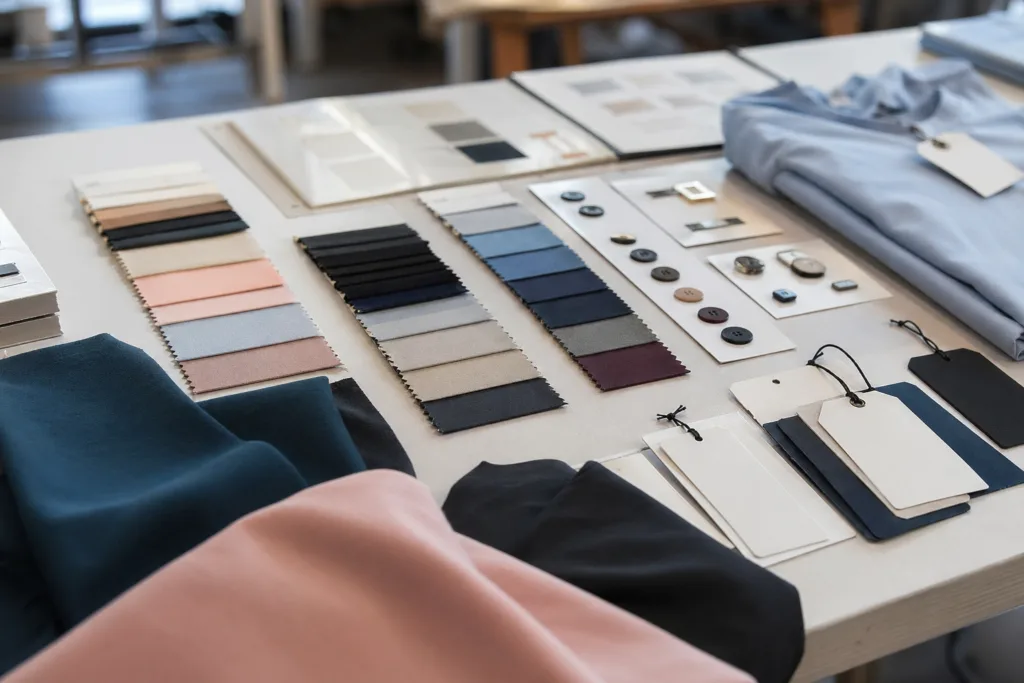
| Sample Stage | What It Confirms | Why It Matters |
|---|---|---|
| Pre-production sample | Final style and construction readiness | Helps decide whether bulk can begin |
| PP sample | Approved materials and workmanship | Reduces risk before mass cutting |
| TOP sample | Consistency against bulk output | Checks whether production matches approval |
For buyers who want a deeper understanding of how sample stages work together, the sampling process should be viewed as a control system rather than a simple approval ritual. That is why the sample stage sequence matters so much in bulk clothing manufacturing.
Pre-Production Risk Check
Before a factory releases bulk production, it should conduct a practical risk check across materials, fit, labeling, sourcing timing, and compliance exposure. This is where brands catch the issues that do not always appear in a sample but can still affect the final shipment.
Common pre-production risks include fabric delays, unapproved trim substitutions, conflicting artwork files, unclear size ratios, and incomplete compliance instructions. Even a strong development process can still fail if the final release package is not complete enough for manufacturing execution.
- Are all approved materials physically or contractually secured?
- Are measurements, tolerances, and grading fully frozen?
- Are labels, cartons, and packaging references complete?
- Have all decoration and finishing methods been approved?
- Are lead times realistic for procurement and production?
- Are market-specific compliance points documented?
Different Checklist Priorities for Low MOQ and Large Bulk Runs
Not every order needs the same level of production control in the same places. Low MOQ projects often focus on faster approval cycles, leaner material commitments, and tighter communication around substitutions. Large-volume bulk production usually requires more discipline around fabric booking, capacity planning, testing, and line-level consistency.
That does not mean small orders are easier. In fact, low MOQ projects can be more sensitive to the cost of changes because there is less room to absorb rework. Large orders, by contrast, tend to magnify even small specification errors across a much bigger quantity.
Manufacturers generally advise brands to match checklist depth to the production scale. A startup making a first run may need more hands-on approvals, while a mature brand placing a repeated order may focus more on maintaining consistency with a previous approved standard.
Common Mistakes Brands Make Before Bulk Clothing Manufacturing
One of the most common mistakes is moving forward with unresolved design decisions because the sample looked “close enough.” That mindset usually creates more cost later than it saves upfront. In bulk manufacturing, small ambiguities often become expensive realities.
Another frequent issue is leaving packaging, label text, or commercial terms until the last minute. These items may seem secondary to the garment itself, but they can still stop a shipment from moving on time. Brands also sometimes underestimate how much a factory depends on complete approvals before it can plan procurement confidently.
- Approving a sample without freezing final specifications
- Assuming fabric availability without confirmation
- Leaving print or embroidery placement open to interpretation
- Forgetting label and packaging sign-off
- Changing size ratios after production planning has started
- Ignoring payment and release timing
If you are still cleaning up the development file, a final garment sampling stages from proto to TOP review can help you understand what should already be locked before bulk begins.
Final Sign-Off Before Production Release
A production-ready checklist is only useful if someone formally signs off on it. Before bulk clothing manufacturing starts, the brand and manufacturer should both confirm that the approved version is the version that will be produced, packed, and shipped.
At this point, the question is not whether the style is good enough. The question is whether the order is complete enough to run without avoidable surprises. That is the difference between development and production readiness.
Final sign-off items
- Approved spec sheet and size breakdown
- Approved fabric and trim references
- Approved construction and decoration methods
- Approved labels, packaging, and carton details
- Confirmed price, deposit, and payment terms
- Signed production release by both sides
When Ninghow Apparel reviews a project at this stage, the goal is to reduce uncertainty before the line starts running. The smoother the sign-off, the lower the risk of delays, avoidable rework, and inconsistent bulk output.
Conclusion
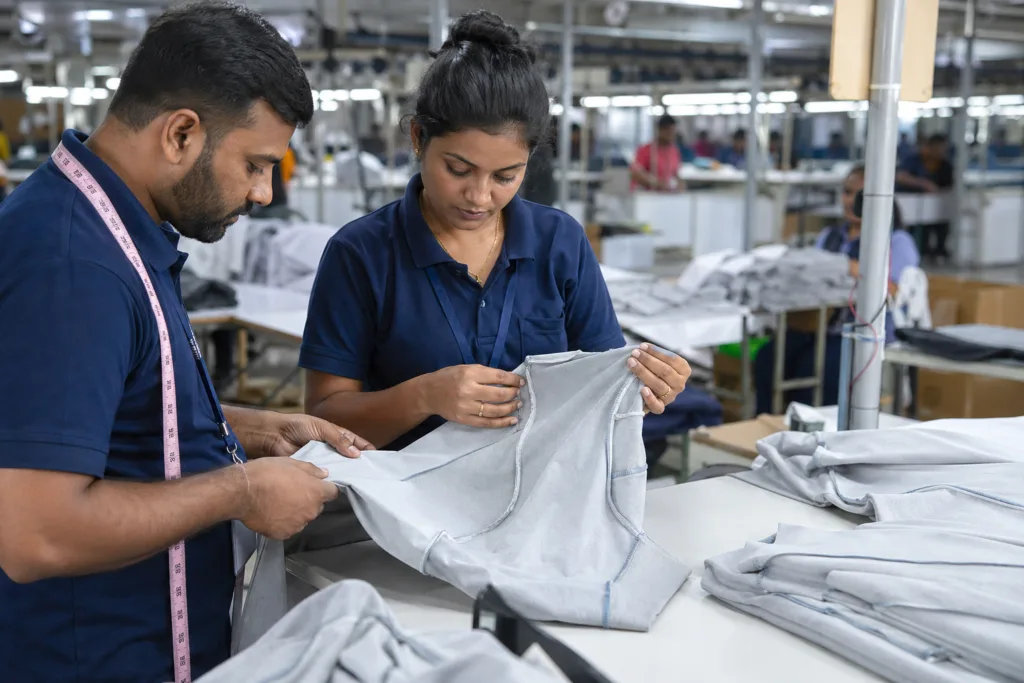
A strong bulk clothing manufacturing checklist is not about adding paperwork. It is about freezing the decisions that make production predictable. When product details, fabric, workmanship, packaging, sample approvals, and commercial terms are all aligned, the factory can focus on execution instead of clarification.
For brands, the lesson is simple: the best time to solve production problems is before bulk starts. Once the order is released, every unresolved detail becomes harder and more expensive to correct.
FAQ
What is the main purpose of a bulk clothing manufacturing checklist?
It confirms that all critical product, material, packaging, sample, and commercial decisions are finalized before bulk production begins, reducing delays and rework.
Why is a tech pack not enough to start bulk production?
A tech pack documents the design, but bulk readiness also requires frozen approvals for fabric, workmanship, labels, packaging, fit, tolerances, and payment terms.
What should be frozen before bulk manufacturing starts?
Style details, measurements, size breakdown, fabric standards, decoration methods, packaging, labeling, sample approvals, and commercial terms should all be finalized.
How do PP samples and TOP samples help before bulk?
PP samples confirm whether the approved materials and construction are ready for production, while TOP samples confirm whether bulk output stays consistent with the approved standard.
What is the biggest mistake brands make before bulk production?
One of the biggest mistakes is treating a sample as approval for everything, then changing details after production planning has already started.
Should low MOQ orders use the same checklist as large bulk runs?
Yes, but the emphasis may differ. Low MOQ orders need tighter control over substitutions and approval speed, while large runs need stronger planning around consistency and procurement.