

The apparel sample approval process works best when each sample has one clear job. If you try to judge construction, fit, grading, trims, and bulk readiness all at once, revisions become slow and comments get mixed together. For brand owners who need a more structured development path, private label clothing manufacturing support is often most useful when the sampling workflow is planned stage by stage rather than treated as a single approval event.
From a manufacturer’s perspective, sampling is not just about making something that looks right. It is about reducing uncertainty in controlled steps so the buyer can make faster decisions with fewer corrections later.
Why a Stage-by-Stage Sampling Workflow Matters
Different samples answer different questions. A proto sample checks whether the design can be built as intended. A fit sample checks wearability and shape. A PPS confirms that the approved version can move into bulk with the correct materials, trims, and workmanship standards. When these goals are separated, each round of feedback becomes more precise.
This is also where many projects become inefficient. Buyers sometimes use one sample round to request design changes, fit corrections, material swaps, and labeling updates at the same time. That creates confusion because the sample is no longer being evaluated against one stable target.
If you want a broader overview of how the early and late stages fit together, the four stages of apparel sampling can help frame the process before you review each stage in detail.
Proto Sample: Checking Structure Before Detail

The proto sample is the first physical version of the garment. At this point, the main goal is to confirm construction logic, design proportions, seam placement, and pattern direction. It is normal if the proto sample does not yet include the final fabric, trims, or perfect finishing.
Buyers should use the proto sample to ask one question: does the design direction work in real life? If the answer is no, the team should adjust pattern or structure before moving on. This stage is not the right place to judge final handfeel or bulk color accuracy.
What to review on a proto sample
- Overall silhouette and proportion
- Construction feasibility
- Panel balance and seam placement
- Style details that affect manufacturing method
Fit Sample: Testing Wearability and Shape
The fit sample is where the garment is assessed on body shape, movement, and comfort. This sample should show whether the pattern creates the intended fit across key points such as chest, waist, hip, shoulder, sleeve length, and body length.
Fit comments should be specific and measurable wherever possible. Words like “too loose” or “slightly tight” are less useful than clear notes about where the issue appears and how much adjustment is needed. The better the fit feedback, the fewer unnecessary revisions later.
For buyers who want to keep fit feedback organized and actionable, how to give clear sample feedback that gets results is a useful reference point for communicating changes without creating back-and-forth.
Size Set Sample: Checking Grading Across Sizes
The size set sample is used to confirm that the approved fit scales correctly across the size range. A garment can look good in one sample size and still fail when graded up or down. That is why this stage matters for brands planning broader distribution or repeat ordering.
Here, the focus shifts from one body shape to proportional balance across multiple sizes. Buyers should look at sleeve balance, rise depth, width changes, opening sizes, and whether the style still looks intentional in every size.
In many projects, this is also the point where size set sampling and grading decisions become important, especially when the style has a narrow fit or a high sensitivity to proportion changes.
| Sample Stage | Main Question | Typical Approval Focus |
|---|---|---|
| Proto sample | Can the design be built correctly? | Structure, pattern direction, construction logic |
| Fit sample | Does the garment wear correctly? | Silhouette, balance, comfort, key measurements |
| Size set sample | Does the style grade consistently? | Proportions, scaling, size range balance |
| PPS | Is the style ready for bulk? | Materials, trims, workmanship, final standards |
Salesman Sample: Preparing the Style for Market Use
The salesman sample is usually made to support selling, showroom, or presentation needs. It should reflect the approved direction closely enough to represent the style to buyers, distributors, or internal sales teams. It may not always be the final bulk standard, but it should look polished and aligned with the intended product story.
For this stage, visual appeal matters more than development experimentation. The sample should be clear enough to present the garment confidently, while still staying within the approved design framework.
Pre-Production Sample: Locking the Bulk Standard
The pre-production sample, or PPS, is one of the most important checkpoints in the apparel sample approval process. This is the version that should reflect the final approved materials, trims, workmanship details, labeling direction, and overall bulk expectations as closely as possible.
At this stage, the buyer should be checking for readiness, not rethinking the style. If a PPS still requires major changes, the project may need another sampling round before bulk can begin. why the PP sample matters before bulk production is worth understanding because PPS approval often becomes the real gatekeeper for production control.
For manufacturers like Ninghow Apparel, the PPS stage is where coordination between design, sourcing, and production matters most, because every approved detail needs to be ready for repeatable bulk execution.
Top Sample: Checking Bulk Consistency After Production Starts
The TOP sample, or top-of-production sample, is pulled after bulk production begins. Its purpose is to verify that the actual production line is matching the approved PPS standard. This is not a redesign stage; it is a confirmation stage.

If the TOP sample reveals a problem, the issue is usually related to process control, material variation, or execution drift rather than a fresh design question. That is why the TOP sample is valuable for protecting consistency before the entire order is completed.
What Buyers Should Comment on at Each Stage
The most useful sample comments are stage-specific. Buyers should avoid mixing construction issues with styling preferences or treating a size grading problem as if it were a fabric issue. Clear feedback keeps the development team focused on the right correction.
A simple rule helps: comment only on what that sample is meant to prove. If the sample is a proto sample, focus on construction and shape. If it is a fit sample, focus on measurements and body balance. If it is a PPS, focus on bulk readiness and final approval.
When teams need a clearer feedback structure, version control for tech pack revisions during sampling helps keep comments, pattern updates, and approval notes aligned across rounds.
- Fit comments: measurement points, balance issues, ease, and comfort
- Construction comments: seam quality, stitch placement, finish quality, and build logic
- Material comments: fabric behavior, weight, stretch, drape, and handfeel
- Approval decision: approve, approve with minor notes, or request a specific revision
How to Avoid Unnecessary Revisions
Most wasted revisions come from unclear scope. If the buyer changes the design after fit has already been approved, the earlier work may need to be repeated. If a sample is approved before fabric and trims are locked, the PPS may expose avoidable differences later.
The easiest way to reduce back-and-forth is to separate decision types. Use one round to check structure, one to check fit, one to confirm grading, and one to lock production details. That makes every comment easier to interpret and reduces the risk of conflicting instructions.
Common approval mistakes
- Mixing style changes with fit corrections
- Approving a sample before all core details are confirmed
- Using the same comment style for every sampling stage
- Skipping version tracking between rounds
- Expecting one sample to answer every approval question
For projects where revision control is a recurring issue, how to give clear sample feedback that gets results can help teams keep comments more actionable and reduce repeated corrections.
A Practical Sample Approval Record System
A simple approval record can save a lot of time. Every sample round should be documented with the version number, date, key comments, open questions, and the decision made at that stage. This creates a clean history that the buyer, merchandiser, and factory team can all follow.
A good record system usually includes the sample type, what was approved, what still needs correction, and which details are frozen. That way, when the process reaches PPS or bulk production, nobody is guessing which version was actually accepted.
How a Manufacturer Supports a Controlled Workflow
From the manufacturer side, good sampling support is mostly about discipline. The team needs to keep pattern changes controlled, materials clearly referenced, and sample comments tied to the correct version. That is especially important in OEM, ODM, and private label projects, where multiple styles or colorways may be moving at once.
In a controlled workflow, the factory helps the buyer avoid unnecessary sample churn by keeping each stage focused on a single approval goal. That does not remove the need for buyer input; it makes the input more efficient and easier to act on.
Conclusion
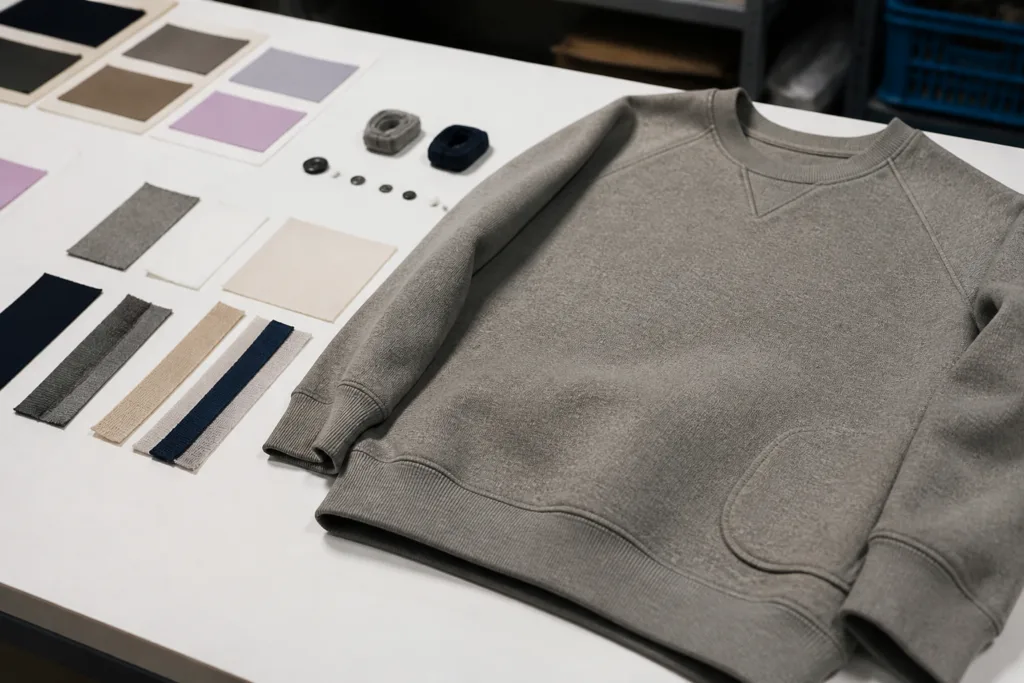
A strong apparel sample approval process is not about producing more samples. It is about producing the right sample at the right time with the right approval question attached to it. When buyers treat proto, fit, size set, salesman, PPS, and TOP samples as separate decision points, the workflow becomes clearer, faster, and easier to manage.
The result is fewer revision loops, cleaner approvals, and a better transition from development into bulk production.
FAQ
What is the apparel sample approval process? It is the step-by-step workflow used to review and approve garments from the first proto sample through fit, size set, PPS, and production checks before bulk manufacturing.
Why can’t one sample cover everything? One sample cannot fully test construction, fit, grading, materials, and bulk readiness at the same time, so each stage focuses on a different approval question.
When should a buyer approve the PPS? A PPS should be approved only after the sample matches the final materials, trims, workmanship, and key measurements expected for bulk production.
What should sample feedback include? Good feedback should identify the sample stage, describe the issue clearly, and separate fit, construction, and material comments so the factory can act on the right point.
How many sample rounds are normal? The number varies by style complexity, fit sensitivity, and how complete the initial tech pack is, but a controlled workflow usually reduces unnecessary repeat rounds.
What causes sample approval delays? Delays often come from unclear comments, late design changes, mixed approval goals, and missing version control between sample rounds.