

An apparel RFQ is more than a price request. For custom clothing projects, it is the document that helps a manufacturer understand what you want to make, how consistent the product must be, what level of customization is needed, and where the biggest production risks may sit. When the RFQ is thin, vague, or missing key specifications, quotes often come back inconsistent, lead times are hard to judge, and both sides may be making different assumptions about the same garment.
If you are preparing an apparel RFQ request, the goal is not to write a perfect technical manual. The goal is to give manufacturers enough structured information to quote accurately, ask better follow-up questions, and recommend the right sampling and production path. A strong RFQ usually saves time on revisions, reduces confusion during development, and makes supplier comparison far more useful.
Why vague inquiries create weak quotes
Many buyers send a short message that says they need hoodies, polos, uniforms, or sportswear with a logo and ask for pricing. That may seem efficient, but a manufacturer cannot price responsibly without knowing fabric type, quantity by size and color, trim details, decoration method, packaging expectations, and timeline. The result is often a rough estimate rather than a real quote.
Vague RFQs also create a second problem: hidden assumption gaps. One supplier may assume basic stock fabric, another may assume custom-dyed fabric, and a third may assume lower-cost print decoration instead of embroidery. Buyers then compare numbers that look similar on the surface but are based on very different product definitions.
A better RFQ does not need to be overly complex. It needs to be clear enough that a manufacturer can identify the garment category, expected quality level, customization depth, and production constraints before quoting.
What a complete apparel RFQ should include

At minimum, your RFQ should define the product clearly. Start with the garment type, such as pullover hoodie, golf polo, team jacket, jogger pants, school uniform shirt, or performance T-shirt. Then add basic construction details like short sleeve or long sleeve, lined or unlined, brushed interior or not, zipper type, pocket count, and fit direction.
Quantity is the next major pricing driver. Total units matter, but breakdown matters too. A request for 3,000 units in one color is different from 3,000 units across 8 colors and many size splits. Manufacturers need to understand both total order volume and production complexity. If you need help with planning size curves and quantity splits, do that before requesting final pricing because size imbalance can affect fabric usage, marker efficiency, and replenishment logic.
Include these core fields in your RFQ:
- Product name or style reference
- Garment category and intended use
- Total quantity
- Quantity per color
- Quantity per size
- Men’s, women’s, youth, unisex, or kids sizing
- Target fit, such as slim, regular, relaxed, or oversized
- Requested Incoterm if already known
If you do not have every detail confirmed, mark uncertain items clearly. A manufacturer can quote with assumptions if those assumptions are visible and acknowledged.
How to describe fabric requirements clearly
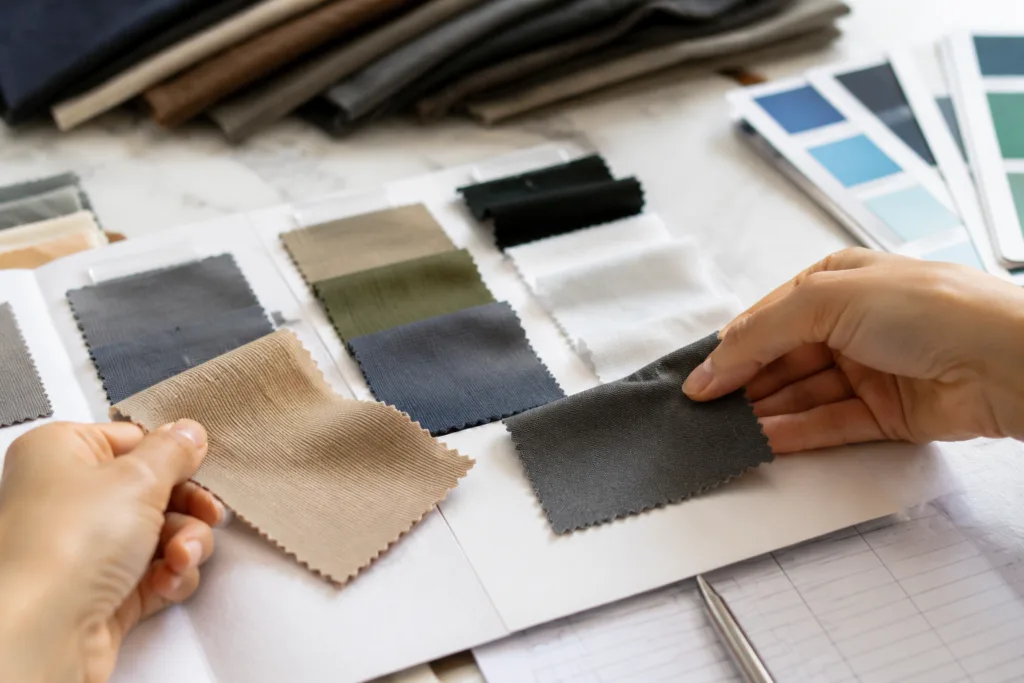
Fabric is one of the biggest reasons quotes vary. Buyers often say they want “cotton,” “stretch fabric,” or “sports fabric,” but those descriptions are too broad. The same garment can change significantly in price, drape, durability, shrinkage behavior, and print compatibility depending on the exact fabric construction.
A more useful fabric section should include:
- Composition, such as 100% cotton, 95/5 cotton spandex, or 88/12 polyester elastane
- Fabric type, such as jersey, interlock, pique, fleece, woven twill, or softshell
- Weight or GSM range
- Special finish, such as brushed, moisture wicking, enzyme wash, peached, or water resistant
- Coloring method if relevant, such as yarn dyed, piece dyed, or heather effect
- Expected hand feel, such as soft, structured, smooth, crisp, or substantial
When buyers are unsure about choosing the right fabric GSM, it helps to explain the end use. A lightweight promotional tee, a premium retail T-shirt, and a training top may all use different fabric weights even if the silhouette looks similar. Manufacturers can usually guide the range better when they understand how the garment will be worn and where it will sit in your product line.
If you already have a sample garment you like, include photos of the care label and fabric close-ups. If you have a tested fabric swatch, note whether the quote should match it closely or only use it as a reference.
How to specify logo decoration and placement
Decoration details affect both unit cost and production method. “Add logo” is not enough for a custom clothing quote. A supplier needs to know whether the logo will be screen printed, heat transferred, embroidered, silicone transferred, sublimated, woven, or applied in another way.
For each decoration, specify:
- Method
- Placement location
- Approximate size
- Number of colors
- Artwork format availability
- Whether the logo is flat, tonal, raised, reflective, or specialty finish
Placement matters because chest embroidery, full-back print, sleeve print, neck print, and woven hem label all carry different labor and setup implications. If the garment has multiple logos, list them separately instead of combining them into one note.
Simple sketches are often enough. Even a front and back flat drawing with marked logo positions will improve quote quality. If exact branding standards are still under review, note which elements are fixed and which are provisional.
Include packaging, labeling, hangtag, and private label details
Packaging is often left out of the RFQ, then added later as an afterthought. That can change cost, packing method, carton count, and lead time. If your project involves private label details, list them early so they are priced from the beginning.
Your RFQ should mention whether you need:
- Main brand label
- Size label
- Care label with content and wash instructions
- Country of origin labeling
- Hangtags
- Barcode stickers
- Individual polybags
- Folded presentation or flat packing
- Special export carton requirements
At Ninghow Apparel, this part of the RFQ is especially useful when evaluating whether a project is straightforward custom production or a fuller private label program. The garment itself may be simple, but branded trims, retail packaging, and specific presentation requirements can increase sourcing steps and approval points.
Communicate sample expectations and lead time clearly
A good RFQ should separate sample needs from bulk production needs. Some buyers want a quick proto sample to validate styling. Others need a fit sample, salesperson sample set, PP sample, or a sealed sample before bulk production. If that is not spelled out, suppliers may quote different development paths.
Useful sample information includes:
- Type of sample needed first
- Number of sample rounds expected
- Whether fit, color, fabric, and branding must all be approved before bulk
- Whether sample materials must match bulk materials exactly
- Desired sample delivery timing
You should also identify your production deadline honestly. A launch event, seasonal selling window, school start date, tournament date, or corporate program rollout will shape how a manufacturer evaluates feasibility. If you are unfamiliar with the apparel sample approval process, build extra time into your sourcing plan because approvals, corrections, and material confirmations often take longer than first-time buyers expect.
Lead time requests are most useful when they are realistic. Asking for a fast quote is fine. Asking for mass production on a highly customized program in an unusually short window may only produce rushed assumptions or narrow supplier options.
Explain end use, target market, and compliance needs
Manufacturers quote more accurately when they understand who the garment is for and how it will be used. A fashion hoodie, a workwear hoodie, and a teamwear hoodie may look similar in silhouette but require different durability, fabric performance, testing attention, or labeling detail.
Your RFQ should state the intended end use and market as clearly as possible:
- Retail fashion
- Corporate uniforms
- Schoolwear
- Golf apparel
- Sports teamwear
- Promotional event wear
- Workwear support garments
- E-commerce private label
If the garment will be sold into a market with specific documentation or performance expectations, mention that upfront. Even if you do not yet have a full compliance list, it helps to state whether the project may require particular labeling standards, restricted substance awareness, fabric testing, or buyer-specific documentation. This allows the manufacturer to identify risk areas early rather than after sampling.
Support the RFQ with visual and technical references
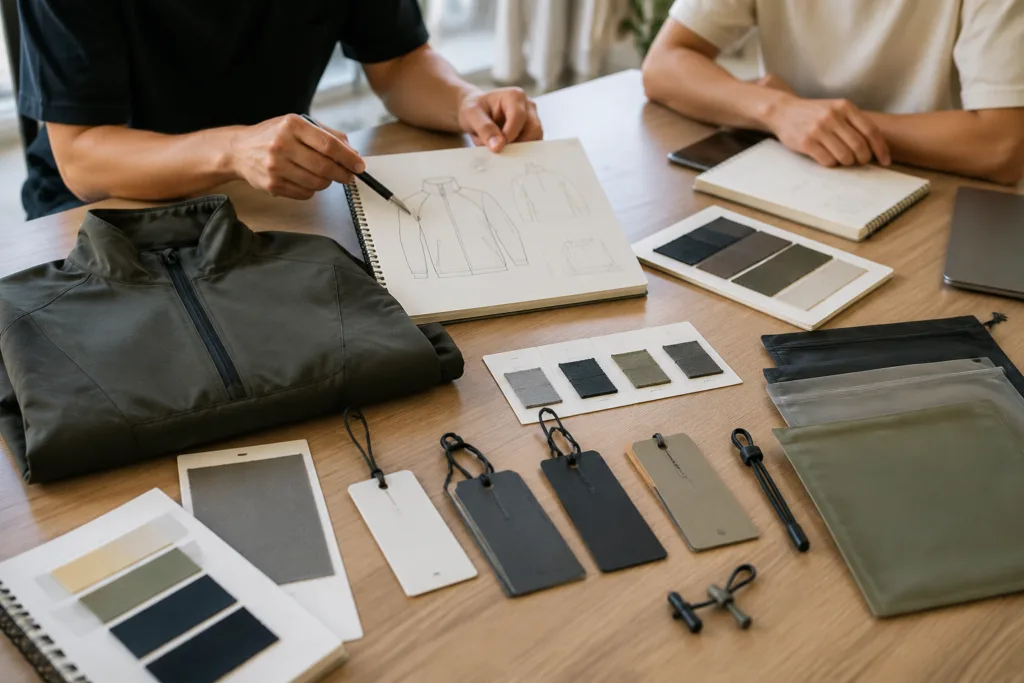
Visual support often turns a usable RFQ into a strong RFQ. A manufacturer can quote more accurately when there is less room for interpretation. Reference images help define styling direction, while technical files help define actual construction.
The best support materials usually include:
- Reference photos of similar garments
- Front and back sketches
- Close-up details of collar, cuff, placket, pocket, or seam construction
- Logo artwork files
- Tech pack or partial spec sheet
- Physical sample garment photos with notes
If you already have a spec sheet, do a pre-production tech pack review checklist before sending the RFQ. Incomplete measurements, unclear construction notes, and missing trim information often cause avoidable quote revisions later. Even a partial but reviewed tech pack is better than a detailed file with conflicting instructions.
A physical reference sample can be very helpful, but explain whether it is a style reference, fit reference, fabric reference, or trim reference. Manufacturers should not have to guess which part of the sample needs to be copied.
A copyable apparel RFQ template
Below is a practical structure buyers can adapt for most custom clothing categories. It is simple enough for early-stage sourcing and detailed enough to improve quote consistency.
| RFQ Section | What to Include |
|---|---|
| Project overview | Brand or company name, garment type, target market, intended use, order stage |
| Product details | Style name, silhouette, fit direction, sleeve type, key construction features |
| Fabric | Composition, fabric type, GSM, finish, color requirements, hand feel target |
| Colorways | Number of colors, color names or references, custom dye needs if known |
| Size range | Size set, gender or age category, quantity per size |
| Order quantity | Total units, quantity per color, quantity per size, forecast if repeat orders are possible |
| Branding | Logo method, placement, size, artwork status, specialty applications |
| Labels and packaging | Main label, care label, hangtag, barcode, folding, polybag, carton notes |
| Sampling | Sample type needed, approval path, number of rounds expected, target timing |
| Timeline | Quote deadline, sample deadline, bulk delivery target, launch date if relevant |
| Compliance and market notes | Country of sale, documentation needs, buyer-specific standards if known |
| Attachments | Reference images, sketches, sample photos, measurement sheet, artwork, tech pack |
You can send this as an email, spreadsheet, PDF brief, or tech pack cover sheet. What matters most is not the format but the clarity of the information inside it.
How manufacturers evaluate a strong RFQ
From a manufacturer perspective, a complete RFQ helps answer four practical questions quickly: what the product is, how difficult it is to develop, what materials and trims are likely required, and whether the requested quantity and timeline are commercially realistic.
When reviewing a new RFQ, manufacturers usually check:
- Whether the garment description is specific enough to quote
- Whether fabric and trim assumptions are visible
- Whether the quantity supports custom development choices
- Whether sample expectations match the project complexity
- Whether packaging and labeling are basic or retail-ready
- Whether the timeline fits sourcing and production reality
This is also the stage where a manufacturer may recommend a different path than the buyer originally requested. For example, one fabric may be better substituted for durability, one decoration method may be more stable in bulk, or one packaging approach may be simplified to protect delivery timing. A strong RFQ does not lock the project too early; it gives enough structure for better recommendations.
That is often how Ninghow Apparel approaches inquiry review: first reduce ambiguity, then confirm the real cost drivers, then identify the most suitable sampling and production route for the garment category. Better RFQs tend to produce better questions, and better questions usually lead to smoother production decisions.
Conclusion
A better apparel RFQ does not need to be complicated, but it does need to be complete. The more clearly you define product details, fabric expectations, branding, packaging, sample needs, and timeline, the more accurate your quotes are likely to be. Just as important, you make it easier to compare suppliers on the same assumptions instead of evaluating mixed estimates.
For buyers, the real benefit is not only faster replies. It is better decision quality. A structured apparel RFQ helps manufacturers identify risks early, recommend suitable options, and set more realistic expectations before development moves forward.
FAQ
What is an apparel RFQ?
An apparel RFQ is a request for quotation sent to clothing manufacturers that outlines the product, quantity, materials, branding, packaging, and timeline needed for a custom garment project.
How detailed should an apparel RFQ be?
It should be detailed enough for a manufacturer to understand the garment clearly, identify cost drivers, and spot missing assumptions, but it does not need to be perfect if uncertain items are marked honestly.
Can I request a quote without a full tech pack?
Yes, but quote accuracy usually improves when you provide at least reference images, basic measurements, fabric direction, logo details, and quantity breakdowns instead of only a general product idea.
Why do manufacturers ask for quantity by size and color?
Because size and color splits affect fabric usage, marker efficiency, dye planning, trim needs, packaging complexity, and overall production cost beyond the total order quantity alone.
Should packaging and labeling be included in the RFQ?
Yes, because private label trims, folding requirements, hangtags, barcodes, and polybag specifications can change both unit cost and production handling requirements.
What attachments make an apparel RFQ better?
Reference photos, sketches, logo files, sample garment images, measurement sheets, and tech packs all help reduce interpretation gaps and improve quote consistency.