
Introduction: Why Tech Pack Mistakes Cause Production Delays
Every apparel production begins with the tech pack—a detailed blueprint that bridges designers and manufacturers. Yet, when mistakes creep in, production timelines slip, costing brands time, money, and sometimes reputation. Avoiding manufacturing errors, tech pack mistakes, and unclear tolerance limits is essential if you want smooth runs and reliable results. This guide reveals the top 5 pitfalls and practical tips to side-step them, keeping your supply chain efficient and your products on track. Let’s dig into the avoidable errors that derail even seasoned brands.
Top 5 Mistakes in Tech Packs That Cause Production Delays
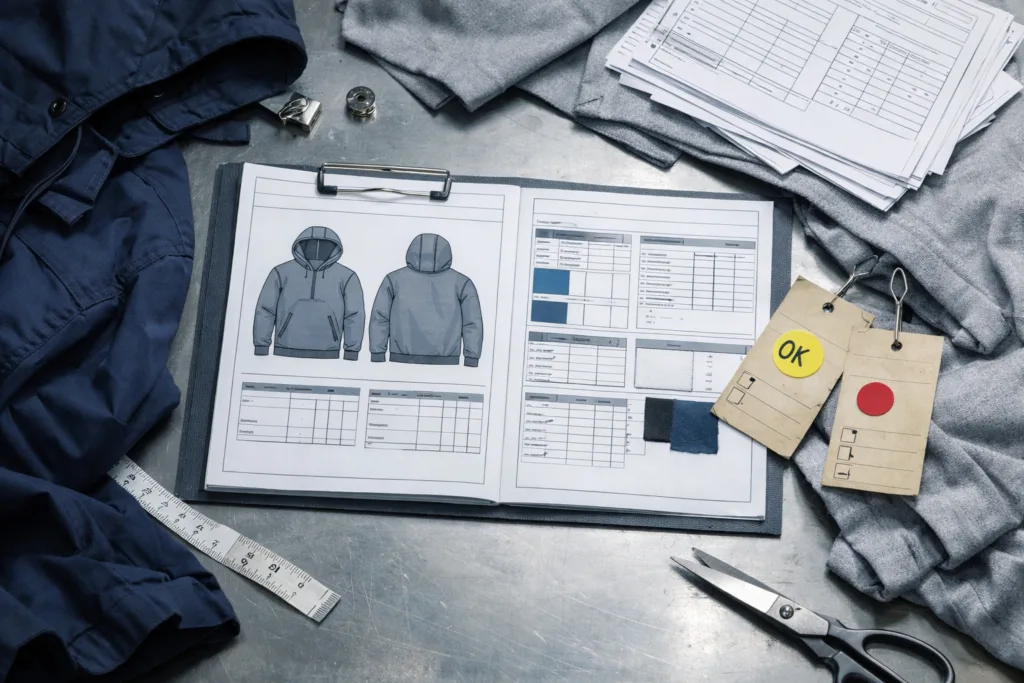
Tech packs are meant to clarify—not confuse. When a mistake slips in, the consequences ripple all the way to packaging and delivery. Here are the five common errors that often trigger manufacturing breakdowns:
Ambiguous Instructions: The Blueprint Has Holes
If your tech pack says “color: blue” or “neckline: standard,” the factory is forced to guess. That guesswork leads to samples that don’t match your vision or bulk production stuck in limbo. Instead, specify Pantone codes, attach visual references, and describe design elements in detail. Brand manufacturers like Ninghow Apparel often encounter vague directives that cause costly sampling rounds and confused production lines.
Missing Details: Leaving Out Essentials
Forgetting information—like label placement, seam allowances, or packaging components—leaves factories uncertain. Missing measurements or unclear sizing charts mean wasted fabric, failed fit tests, and unexpected rework. Every page of your tech pack should answer all “where, what, how” questions so sampling and bulk stages move smoothly. To learn how to structure your tech pack step-by-step, check out the comprehensive guide on tech pack creation.
Unclear Tolerance Limits: No Room for Production Realities
Factories need to know how much measurement variance is acceptable—is a 0.5cm sleeve difference a reject or okay? If tolerance limits aren’t defined, QC teams may reject goods unnecessarily or miss key defects. Clear tolerances in your tech pack prevent endless debates later. For actionable QC strategies, Ninghow Apparel’s apparel manufacturing quality control overview shares real-world tolerance management.
Poor Fabric/Trim Specifications: Material Confusion Reigns
“Cotton blend” isn’t enough—is it 80/20 cotton/poly? Is the trim width 2.5cm or 2cm? Factories may substitute cheaper materials or delay delivery until clarity arrives. Including precise fiber content, finish, sourcing details, and approved alternatives keep production on track and prevent last-minute fabric hunts. Exploring fabric manufacturing services can help clarify expectations between designers and suppliers.
Outdated Versions: Revision Chaos
Sending multiple tech pack versions (without tracking changes) leads factories to work from the wrong instructions. Even a small change can derail the whole process if version control isn’t respected. Always use dated file names, track updates, and communicate every revision clearly to your partners so they never produce from outdated data.
How These Mistakes Lead to Expensive Delays
Each mistake has knock-on effects. Ambiguity means more sampling. Missing detail causes slowdowns as factories wait for clarification. Unclear tolerances result in failed QC and returned batches. Poor fabric specs delay procurement or result in mismatched colors/materials. Outdated versions force costly corrections. The common thread: preventable errors cost you money, time, and sometimes your customer’s trust.
What Makes a Tech Pack Truly “Production Ready”?
A production-ready tech pack:
- Has every piece measured, referenced, and visually supported
- Details fabric, trims, labels, stitching, packaging, and every touchpoint
- Includes tolerance limits for each measurement
- Lists revision history and approval dates
- Is formatted so even non-experts can follow
The Role of Clear Tolerance Limits in Apparel Manufacturing
Tolerance limits are the bridge between perfection and practical reality. Imagine a batch where one shirt measures 1cm wider at the chest than specified—is this a reject or an acceptable difference? Tolerance limits tell factories exactly what’s okay, what’s not, and prevent disputes over minor deviations. They ensure QC isn’t too strict or too lax. For more on setting smart tolerances, explore advanced quality control strategies.
Commonly Overlooked Details in Tech Packs
- Seam allowance (necessary for accurate production)
- Label positioning
- Packaging instructions
- Thread color and type
- Size breakdowns and grade rules
- Wash care label design/content
Real-World Example: A Tech Pack Error Turns Costly
An emerging apparel brand sent a tech pack with “neck trim: rib, width 2.5cm.” But the drawing labeled the trim as 2cm—two teams interpreted differently. Production paused for clarification, samples were remade, and bulk production delayed by two weeks. By tightening instructions and communication, this scenario can be avoided entirely.
Ninghow Apparel’s Practical Insights: Spotting and Preventing Tech Pack Errors
From a factory’s perspective, errors can be subtle. Ninghow Apparel often trains its team to double-check for:
- Conflicting measurements vs visuals
- Missing fabric/trim specs
- Undefined tolerances
- Poor version control
The shop-floor reality: Real clarity means faster setups, smoother sampling, and less bulk rejection—saving brands and factories costly mistakes.

Best Practices for Creating Error-Free Tech Packs
- Always use visuals (sketches, photos, charts) alongside written instructions
- Break down each product component (fabric, trim, packaging, labeling, finishing)
- Add tolerance limits for every measurement; reference industry standards if unsure
- Review draft with your manufacturer before locking in
- Keep all specs updated and clearly versioned
How Smart Brands Avoid Tech Pack Pitfalls
Leading brands invest in tech pack training, collaborate with their manufacturers, and run regular audits to catch silent errors. They understand that a day spent clarifying an instruction can save weeks of delay and thousands in preventable waste.
How Does Tech Pack Quality Impact Lead Times?
A professionally structured tech pack shaves days (sometimes weeks) off production. Factories can start procurement, sampling, and full runs immediately, without endless clarification emails or sample remakes. Slow, patchy tech packs drag lead times, sometimes doubling them.
Building Effective Communication with Your Manufacturer
Open dialogue lets you clarify specs, discuss tolerance challenges, and spot ambiguous instructions before production starts. Brands that share their tech packs early, invite factory feedback, and review side-by-side rarely face massive delays.
Checklist: Is Your Tech Pack Ready?
- Are all measurements and specs clear?
- Are tolerance limits defined for every critical measurement?
- Is the fabric and trim sourcing detailed?
- Are all labels, packaging, and branding instructions included?
- Is your revision history tracked?
- Has the factory reviewed and confirmed understanding?
Summary Table: Impact of Each Tech Pack Mistake
| Mistake | Direct Impact | Cost Consequence |
|---|---|---|
| Ambiguous Instructions | Sample confusion, wrong bulk production | Remake costs, time wasted |
| Missing Details | Factory halt for clarification | Delay, missed deadlines |
| Unclear Tolerances | QC rejects or misses errors | Returns, failed audits |
| Poor Fabric/Trim Specs | Mismatched, delayed production | Procurement waste |
| Outdated Versions | Producing wrong product | Rework, scrap loss |
Action Plan: Fixing Tech Pack Mistakes Before Production
- Have a technical expert review every section
- Run a pre-production meeting with the manufacturer
- Use redlines to clarify ambiguous instructions
- Lock down a version before sampling
- Integrate feedback from the factory into your tech pack
Prevention Tips: Teach Your Team to Spot the Silent Errors
- Internal peer reviews
- Training on measurement and tolerance standards
- Roleplay QC checks with actual tech pack specs
- Set up a “tech pack audit” regular schedule
When to Update Your Tech Pack
Update your tech pack whenever you alter design, material, sizing, labeling, or packaging—even small changes. Every update must be versioned, dated, and approved by both designer and factory. This discipline prevents production from running on old data.
Industry Standards: Tolerance Limits and Spec Sheet Precision
Apparel manufacturing follows ISO and AQL standards. Typically, tolerance limits for chest/waist are ±1cm, sleeve ±0.5cm, but custom products may differ. Always check with your manufacturer what’s standard before locking in your own limits.
What If Production Delays Happen Anyway?
If delays occur, review your tech pack: what’s unclear, missing, or contradictory? Ask your manufacturer for feedback. Adjust your process for the next order, and document lessons learned.
Conclusion: Build Production Success with Clear Tech Packs

Production delays are rarely about unpredictable events—they stem from preventable tech pack mistakes. By tightening instructions, clarifying tolerance limits, adding missing details, and practicing version control, you equip your factory to deliver on time and to spec. Invest in clarity and communication today, and costly delays will soon be only a memory.
Frequently Asked Questions
What are tolerance limits in apparel manufacturing?
Tolerance limits are the acceptable measurement variations allowed on a finished garment. They ensure production stays consistent without being too strict.
How often should I update my tech pack?
Update your tech pack every time you change design, sizing, materials, labeling, or packaging. Each update must be versioned and communicated before production.
What is the most costly tech pack mistake?
Ambiguous instructions often cost the most, as they lead to sample confusion, production errors, and expensive rework or delays.
Can I fix tech pack mistakes after production starts?
It’s possible, but expensive and risky. Factories may need to halt, remake, or scrap items. Prevention and early checks are far better than post-production corrections.
How do I ensure my factory understands the tech pack?
Host a review meeting, clarify ambiguous sections, and invite the factory team to ask questions. Open communication prevents misunderstanding and delays.
Are tech packs required for all apparel factories?
Yes, tech packs are standard for reliable manufacturing, especially when quality, fit, and branding consistency matter. They are critical for OEM and private label production.
Related Reading
- Tech Pack vs Spec Sheet: How to Choose for Accurate Production
- Avoid Costly Mistakes in Private Label Clothing Manufacturing—A Brand-Builder’s Guide
- Why Every Fashion Brand Needs a Tech Pack: The Blueprint Explained
- Unlocking Apparel Manufacturing: A Step-by-Step Guide for Brands
- When Production Goes Wrong: Essential Steps for Manufacturing Disputes and Claims