
Introduction: Why Creating a Professional Tech Pack Matters
Every successful apparel production starts with a clear blueprint. That blueprint is called a tech pack. If you want your T-shirts, polos, hoodies, or any garment to be manufactured exactly as you envisioned, you must provide detailed instructions—and that’s where this guide on How to Create a Professional Tech Pack: A Step-by-Step Guide comes in. Whether you’re a brand owner, designer, or production lead, understanding the tech pack process is the foundation for cost control, quality assurance, and reliable collaboration with factories.
What Is a Tech Pack?

A tech pack (technical package) is the standardized document used by apparel brands and manufacturers to turn a design idea into production reality. It includes essential information such as fashion flats, BOM (Bill of Materials), measurement charts, construction details, and more. This guide will walk you through the exact steps to build a tech pack that communicates clearly and prevents costly mistakes.
Core Sections of a Standard Tech Pack
To create a professional tech pack, you need to organize information into six main sections: design sketches, BOM, measurement chart, construction notes, labeling/packaging, and revision history. Let’s break each down below:
- Fashion Flats
- BOM (Bill of Materials)
- Measurement Chart
- Construction Details
- Labeling & Packaging
- Revision History
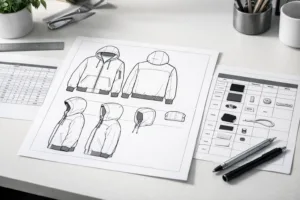
Fashion Flats: The Blueprint of Your Design
Fashion flats are technical drawings showing the garment from front and back (sometimes side). Unlike stylized illustrations, these flats are simple, precise, and purely functional. For accurate production, your flats should:
- Show seam lines, pockets, trims, and design features
- Use simple black-and-white lines
- Be clear enough for pattern makers and cutters to interpret easily
Many brands create fashion flats using Adobe Illustrator or similar tools. If you need inspiration or want to see real manufacturer examples, check out our guide to fabric and clothing manufacturing for insight into how flat sketches inform the production process.
BOM: Bill of Materials Explained
The BOM lists every material and component needed to construct your garment. This includes fabrics, threads, zippers, buttons, labels, and any other trims. For each item, specify:
- Description (e.g., “cotton jersey 180gsm”)
- Color (e.g., Pantone code)
- Supplier or brand
- Quantity per garment
Here is a basic BOM table example:
| Item | Description | Color | Qty | Supplier |
|---|---|---|---|---|
| Main fabric | Cotton jersey 180gsm | Pantone 123C | 1.1m | ABC Textiles |
| Label | Woven main label | Navy/White | 1pc | LabelCo |
| Thread | Polyester | Matching Navy | N/A | ThreadWorks |
Completing the BOM carefully prevents unwanted substitutions and ensures factories order exact materials. For deeper understanding of BOM’s role in apparel cost breakdowns, study open costing transparency in manufacturing.
Measurement Chart: Guarantee Fit Accuracy
The measurement chart is the backbone of sizing and pattern making. It specifies all critical body or garment dimensions for each size you intend to produce. Common measurement points include chest, waist, hem width, sleeve length, and so on. Each point should have:
- Name (e.g., “Chest Width”)
- Position (e.g., “2cm below armhole”)
- Size specs (for S, M, L, XL, etc.)
Here’s a sample chart:
| Measurement Point | S | M | L |
|---|---|---|---|
| Chest Width | 50cm | 53cm | 56cm |
| Body Length | 65cm | 67cm | 69cm |
| Sleeve Length | 19cm | 20cm | 21cm |
Factories rely on these charts for pattern drafting and QC checks. For brands that prioritize sizing reliability, see custom sizing strategies in manufacturing.
Construction Details: Stitching, Finishing, and Techniques
This section describes how the garment is assembled. Include:
- Type of seams (e.g., “overlock” or “flatlock”)
- Stitch count per inch/cm
- Hems, cuffs, waistband treatments
- Special finishes (e.g., “enzyme wash”)
Industry veterans like those at Ninghow Apparel note that specifying stitch methods and thread choices can make or break a product’s durability. Accurate details here help prevent surprises—like fragile seams or unwanted puckering—in bulk production.
Labeling & Packaging Instructions
Tell manufacturers exactly how your products should be tagged, labeled, folded, bagged, and boxed. Outline:
- Label placement (main, care, size, hang)
- Packing unit (e.g., “folded in polybag, 50 pcs per carton”)
- Retail requirements (stickers, barcodes, anti-theft tags)
Clear instructions prevent misunderstandings during shipment and retail preparation. For practical tips, refer to quality control and packaging strategies.
Revision History: Tracking Changes and Updates
Every tech pack evolves—design tweaks, corrected specs, or material adjustments. Include a revision table noting:
- Date of change
- Revision number or version
- Description of the update
This log streamlines communication, so everyone on your team knows which version the factory is using. Miscommunication during revisions is a common pitfall—keep records clean and accessible.
How to Create a Professional Tech Pack: A Step-by-Step Guide
Step 1: Gather Design References
Start with mood boards, inspiration images, target fabric swatches, and any notes about fit or style preferences.
Step 2: Draw Accurate Fashion Flats
Use digital tools or hand sketches to create clean, clear flats—front, back, and any detail views.
Step 3: Build the BOM
List every material, trim, and supply needed, specifying color codes, brands, and quantities.
Step 4: Write the Measurement Chart
Determine key measurement points for your styles, grade them across all intended sizes, and include tolerances (acceptable variance).
Step 5: Detail Construction Methods
Define stitching types, finish treatments, tolerances for seams, and reinforce areas prone to stress (like sleeve cuffs or waistband).
Step 6: Clarify Labels and Packing
Document label types, placements, and packaging instructions—down to folding and carton quantity.
Step 7: Add Revision Tracking
Implement a simple table for logged changes, so your team and factory stay synced.
Why Standardized Tech Pack Processes Accelerate Production
When factories receive clear, standardized tech packs, production moves faster and mistakes are minimized. Formulaic tech packs reduce confusion, help with accurate costing, and increase QC efficiency. See how standardized process unlocks manufacturing speed.
Common Pitfalls and How to Avoid Them
- Vague sketches or missing measurements cause pattern errors
- Incomplete BOM leads to substitute materials
- Lack of revision tracking results in outdated instructions
- Ambiguous label or packaging requirements cause retailer returns
Advice from Ninghow Apparel: Before submitting, double-check every section for clarity. Make sure your measurement chart matches real sample fits, and confirm BOM items are available for purchase in bulk.
Ninghow Apparel’s Perspective: What Factories Prioritize When Reading Tech Packs
Veteran manufacturing teams focus on fit tolerances, fabric matching, and realistic construction notes when assessing tech packs. They pay close attention to:
- Measurement tolerances—Can minor variance be accepted?
- Fabric sourcing—Is the specified material readily available?
- Labeling logistics—Are all label designs provided as artworks?
- Quality control points—Are defect allowance ranges defined?
Ninghow Apparel recommends including diagrams for construction points that are unique or pose stitching complexity. This reduces confusion for operators on the shop floor and helps catch QC issues early.
Digital Tools and Templates for Tech Pack Creation
Many designers rely on software like Adobe Illustrator, Excel, Google Sheets, or specialized platforms to prepare tech packs. Pro tip: Choose tools that allow easy revision history and export to PDF for manufacturers. Templates can save time, but always customize for your garment’s unique needs.
Fabric and Trim Sourcing Challenges in Tech Pack Prep
Real-world challenges often arise with sourcing specified fabrics or trims. Factories may suggest alternatives if supply is limited. Practical tip: Always provide acceptable substitute options and note material tolerances in your BOM.
Measurement Grading: Developing Size Specs for Multiple Markets
If you plan to sell internationally, adapt measurement charts for regional fit norms (e.g., US vs Europe vs Asia). Include outseam, inseam, and sleeve fit options as needed. Consult local grading professionals for best results.
Integrating Quality Control Checkpoints into Your Tech Pack
To ensure consistent product quality, specify QC checkpoints in your tech pack:
- Critical measurements (must be within tolerance)
- Seam security (pull test requirements)
- Trim attachment (standard for buttons/zippers)
- Label placement check
This helps factories review samples and bulk units before shipping. For more, explore detailed QC procedures for apparel.
Packaging, Logistics, and Export Documents: Tech Pack Extensions
Beyond standard tech packs, large brands often add logistics sheets outlining carton packing plans, barcodes, export paperwork, and shipping mark requirements. This ensures smooth transit and customs clearance.
How to Communicate Updates and Changes with Your Manufacturer
Use clear revision history logs, update PDFs, and email change summaries. Always check factory confirmation of each new version.
Best Practices for Tech Pack Submission and Approval
Send tech packs as locked PDFs. Schedule review calls to walk through key sections live. Always ask manufacturers for questions before sample making begins.
Summary Table: Tech Pack Component Checklist
| Component | Purpose | Critical Details |
|---|---|---|
| Fashion Flats | Design clarity | Front/back/detailed sketches |
| BOM | Material sourcing | Description, color, supplier, qty |
| Measurement Chart | Fit accuracy | Multi-size specs, tolerances |
| Construction Notes | Assembly reliability | Stitch methods, finishes |
| Label & Packing | Retail ready | Label positions, packaging instructions |
| Revision History | Version control | Date, description, version |
Conclusion: Launch Your Collection with Confidence

Creating a professional tech pack is your ticket to predictable results, cost control, and efficient production. By breaking down BOM, measurement charts, fashion flats, and more, you set a standard that reduces risks, speeds up sampling, and delivers consistent quality. Start your next collection with standardized tech packs—and enjoy the peace of mind that comes with clarity, precision, and operational control.
Frequently Asked Questions
What is the most important section of a tech pack?
The measurement chart is critical—it defines fit and sizing accuracy for pattern making and QC checks.
How detailed should my BOM be?
List every garment material, with color codes and quantities. More detail prevents substitution and ensures quality.
Can I use templates for tech packs?
Templates save time, but always customize to match your garment’s unique design, fit and fabric requirements.
How do I handle revisions?
Log every change in a revision history table, update tech pack versions, and confirm updates with your manufacturer.
What if my specified fabric is unavailable?
Note alternate options and tolerances in your BOM, so substitutes are acceptable when sourcing difficulties arise.
Do tech packs include packaging instructions?
Yes—specify labeling, folding, boxing, and shipping details to ensure retail readiness and smooth logistics.
Related Reading
- Master Your Brand’s Supply Chain: Private Label Clothing Manufacturing Essentials
- Blueprint for Success: Why Every Fashion Brand Needs a Tech Pack
- The Ultimate 20-Question Checklist for Vetting Apparel Manufacturers
- How to Spot High-Quality Samples When Choosing a Factory
- Unlocking Faster Production: Step-by-Step Apparel Manufacturing Guide