

Introduction: Why Every Fashion Brand Needs a Blueprint
Have you ever wondered how leading fashion brands turn wild design ideas into real, wearable garments? The answer often starts with a set of simple yet mighty documents known as a Tech Pack. If you’ve heard Tech Pack compared to a ‘blueprint,’ that’s no exaggeration—it holds the same importance as an architect’s drawings for a new house. Without a Tech Pack, manufacturers are left guessing, mistakes multiply, and costs escalate. So, what is a Tech Pack? The Blueprint Every Fashion Brand Needs, and why can’t you start production without one? Let’s break it down.
What is a Tech Pack? The Blueprint Every Fashion Brand Needs

In fashion manufacturing, a Tech Pack (short for Technical Packet) is a detailed instruction guide for bringing a clothing design to life. It spells out every measurement, material, color, trim, stitching method, label placement, and packaging requirement for your product. Just as a builder can’t construct a house without detailed plans, a factory can’t produce your garment precisely without a Tech Pack. Miss this step, and both sides are in for surprises nobody wants.
A Tech Pack vs. a Spec Sheet: What’s the Difference?
A Tech Pack includes a spec sheet, but they’re not identical. The spec sheet focuses on measurements—think length, chest width, sleeve circumference, and more. The Tech Pack covers everything, including construction details, artwork placement, and compliance notes. For brands that need accurate specs on fabric and fit, a spec sheet isn’t enough—you need the full Tech Pack for smooth production.
Why a Tech Pack is Essential for Apparel Manufacturing
The Tech Pack bridges the gap between creative vision and factory reality. For manufacturers, it’s the master reference, helping prevent errors, miscommunication, and costly reworks. Without it, small changes can quietly add up to big losses.
Key Components of a Complete Tech Pack
- Cover Page: Style number, season, brand, and contact info.
- Bill of Materials (BOM): All fabrics, trims, and accessories listed with quantities and details.
- Flat Sketches: Clear technical drawings from multiple angles.
- Measurement Spec Sheet: Point-by-point garment dimensions for all sizes.
- Colorway Page: All color options and details.
- Construction Details: Stitch types, seam allowances, and reinforcement.
- Artwork/Print/Embroidery Placement: Clear locations and sizing for design features.
- Labeling & Packaging: Placement of labels, hangtags, and folding/packing instructions.
- Sample & Approvals Table: Document changes and approvals at each step.
Decoding the Anatomy: Breakdown of Tech Pack Sections
Cover Page Essentials
This section pulls together the brand, style number, date, and who to contact if questions pop up during production. It’s like the title page for your garment’s instruction manual.
Bill of Materials (BOM)
List every component, down to the last button and interlining. Manufacturers like Ninghow Apparel rely on this to source and verify everything before production begins.
Flat Sketches / Technical Drawings
Think of these like blueprints for tailors—show the front, back, and side views, with special details highlighted.
Measurement Spec Sheet Explained
This page leaves no room for fit surprises. Each point of measurement gets a value for every production size. For brands focused on consistent sizing, accuracy here is non-negotiable.
Colorways & Artwork Placement
Explain all colors and show exactly where prints, embroideries, or patches go. Clear visual maps avoid misunderstandings on the production line.
Construction, Stitching, and Quality Details
Factories want precision. Lay out seam types, stitch counts, topstitching plans, and reinforcements. This turbocharges quality control.
Label & Packaging Instructions
Spec out label placement, folding, polybags, and cartons. An unclear instruction here leads straight to costly shipping delays.
What Happens When You Don’t Provide a Tech Pack?
- Factories can’t quote accurate prices (or quote at all)
- Mistakes multiply—colors, sizing, trims may be off
- Fit samples and bulk runs often fail approval
- Disputes become hard to solve
In the absence of a Tech Pack, even top factories are unlikely to guarantee outcomes. For a smoother start, see this guide on apparel manufacturing for startups.
How Factories Use Tech Packs in Real Production
- Procurement teams source every item on the BOM list
- Patternmakers use measurements and sketches for cutting templates
- Sewing lines follow stitch/feature instructions step by step
- Quality control performs checks against the Tech Pack spec
Tech Packs are living documents. Changes (like color updates or fit tweaks) get marked, so both brand and factory stay aligned.
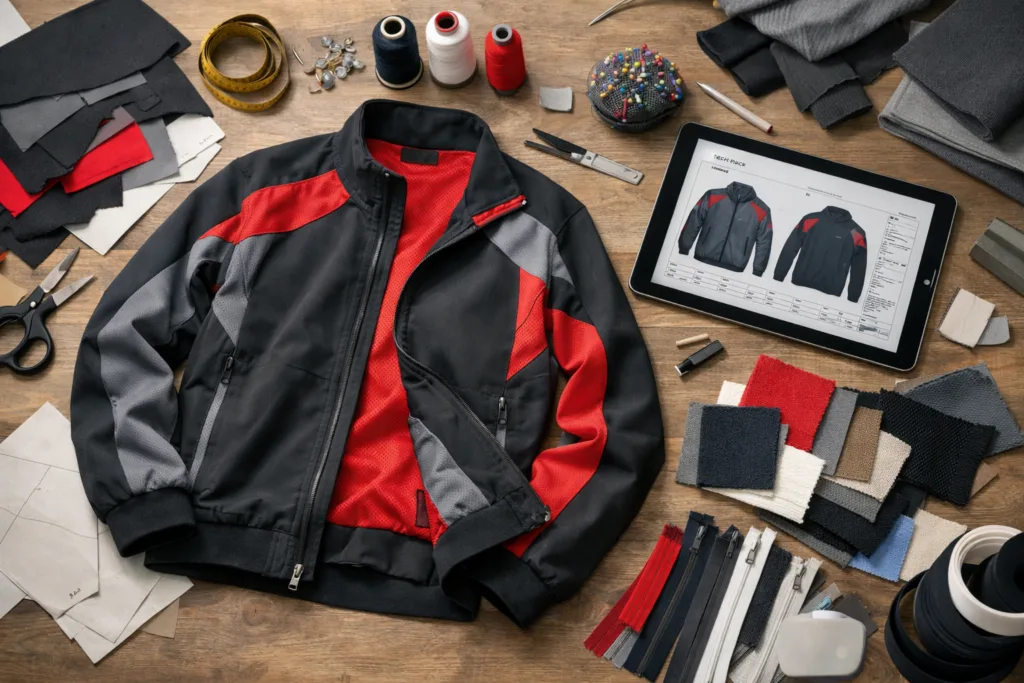
Who Creates a Tech Pack? What Skills Are Needed?
Fashion designers, technical designers, and product developers are typical authors. The critical skill is translating visual and creative design into crystal-clear, factory-readable instructions.
The Evolution: Digital Tech Packs and PLM Systems
Many brands now use Product Lifecycle Management (PLM) tools or cloud platforms for paperless, version-controlled Tech Packs. This streamlines updates, centralizes documentation, and keeps everyone on the same page (literally).
How Much Detail is Enough? Common Mistakes to Avoid
- Don’t skip any trim, embroidery, or special sewing request
- Never write “TBD” (to be determined) for fit points or colors
- Don’t rely only on moodboards or fashion sketches—provide real specs
How to Ensure Your Tech Pack is Factory-Ready
- Show every colorway, trim, and placement with clear visuals
- Double-check all measurement tolerances and grade rules
- Have your Tech Pack reviewed by pattern makers or sample-makers
- Use the final Tech Pack (not outdated drafts) during all development stages
How Tech Packs Save Time, Money, and Frustration
Good Tech Packs prevent production mistakes. Fewer back-and-forth emails, last-minute sample tweaks, or remakes. This means shorter lead times, lower sampling costs, and easier scaling from prototypes to mass production.
Beyond the Basics: Tech Packs for Complex Garments and Customization
Decorative details (like sequins, zippers, or custom trims)? Different sizes for international markets? Special fabrics or sustainability requirements? These all belong in the Tech Pack. For ideas on how to handle more complex customizations, explore clothing customization and sizing solutions.
Sample Tech Pack Walk-Through: A Simple T-Shirt Example
| Section | Example Entry |
|---|---|
| Style Info | Tee 2201, Spring 2024, Brand ABC |
| BOM | 100% Cotton Jersey, Cuffs: Rib Knit, Label: Woven |
| Measurements | Chest: 50cm (M), Front Length: 70cm (M) |
| Sketch | Front/back technical drawing included |
| Colorways | Black, White, Blue |
| Stitching | Overlock side seams, Coverstitch hem |
| Packaging | Flat fold, 1 polybag/unit |
Ninghow Apparel’s Perspective: When Tech Packs Go Right (and Wrong)
From the factory floor, nothing stalls a production run faster than a missing spec or vague sewing detail. At Ninghow Apparel, clear Tech Packs close the gap between designer vision and finished product. The best outcomes always start with tight, reviewed instructions—especially for first-time styles, custom fits, or challenging fabrics.
How to Review, Update, and Finalize Tech Packs Before Sampling
- Cross-check the Bill of Materials for missing trims/components
- Confirm artwork resolutions, scale, and exact placement
- Review measurements using a fit sample or digital pattern
- Digitally lock updated versions and send only the latest spec to your manufacturer
Best Practices: Working with Your Factory Using Tech Packs
- Schedule a joint review: Walk through each page before sampling
- Stay open to practical suggestions from the production team
- Quickly update and resend documents if changes are needed
- Document all communication and approval steps in the Tech Pack log
Tech Packs in Action: Communication, Negotiation & Quality Control
During production, Tech Packs become the primary ‘contract’—every dispute, cost question, or QC check refers to its details. Upfront clarity keeps both sides accountable, especially for features that impact cost or timeline (like prints or hand embellishments).
Conclusion: Don’t Build Without Blueprints—Start with the Right Tech Pack
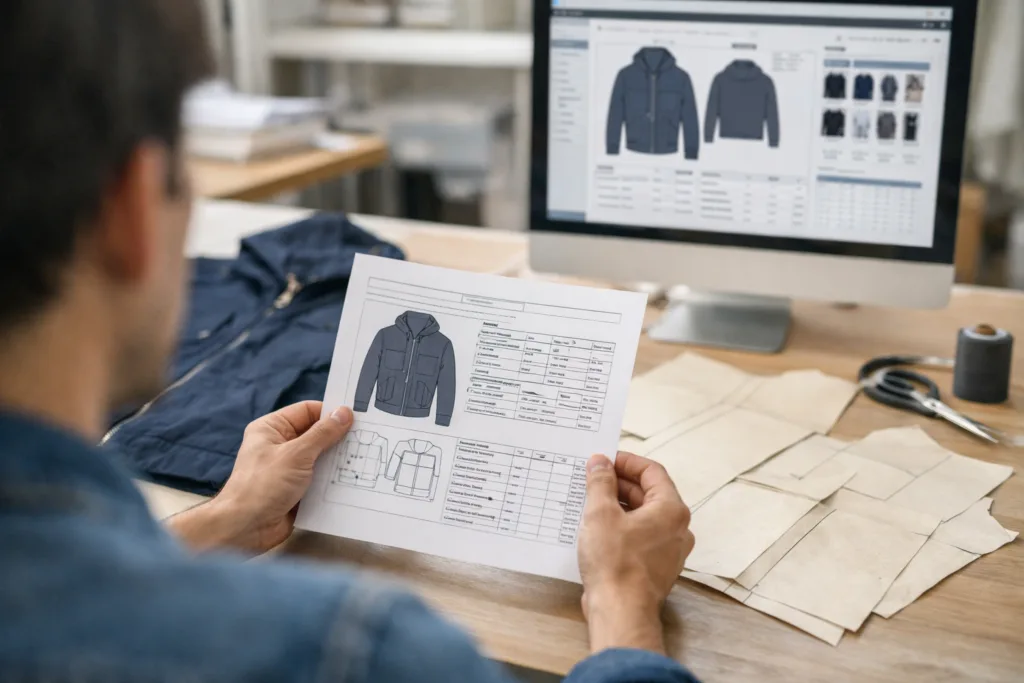
No matter your brand’s size, starting with a thorough Tech Pack saves headaches, money, and time at every production stage. Treat it as your garment’s blueprint. The clearer your vision on paper, the more likely your fashion designs will be produced exactly as you imagine.
Frequently Asked Questions
What is a Tech Pack in simple terms?
A Tech Pack is a detailed instruction manual for manufacturing a garment, outlining every material, measurement, and finishing detail.
Is a spec sheet the same as a Tech Pack?
No—a spec sheet lists only measurements, while a Tech Pack contains all technical details needed for manufacturing.
Who is responsible for creating a Tech Pack?
Designers or technical product developers create Tech Packs, sometimes with help from pattern makers or the production team.
Can you manufacture without a Tech Pack?
It’s possible, but risky—mistakes are common, and most serious factories require a Tech Pack to issue accurate pricing or samples.
How often should a Tech Pack be updated?
Update your Tech Pack at every design or fit revision and make sure the factory uses only the latest version for sampling or bulk production.
What software helps with creating Tech Packs?
Brands use spreadsheets or specialized PLM (Product Lifecycle Management) software to create, edit, and share Tech Packs securely.