

Understanding Open Costing: Demanding Transparency in Price Breakdowns
In apparel sourcing and production, the open costing model is gaining traction—especially among large brands and experienced buyers. Demanding transparency in price breakdowns isn’t a trend; it’s a vital negotiation tool. Factories often present summarized quotes, but high-volume buyers increasingly require a precise account of fabric costs, labor charges, and profit margins. This article unlocks how to utilize open costing for smarter deals, enhanced supplier relationships, and better risk management.
What Is Open Costing? The Foundation of Full Price Transparency

Open costing is a pricing strategy where the supplier shares a detailed breakdown of every cost component in a product. Instead of a lump-sum number, you see what each input—fabric, trims, labor, overhead, and profit—actually costs. This method pushes both sides toward honest, data-driven negotiation and prevents costly surprises down the road.
Why Transparency in Cost Component Matters
Transparency isn’t just about numbers; it’s about leverage and trust. Brands using open costing models reduce hidden markups and make evidence-based decisions. You’ll also notice gaps in cost efficiency, unreliable quotes, or areas where suppliers might pad profits unsuspectingly. For major brands, this transparency is non-negotiable in risk management—especially when producing at scale. If you intend to scale up and need reliable order forecasting, learning about cost transparency is essential. For more insights on how manufacturers build trust, see Open Door, Open Book: 15 Reasons Your Factory Visit Sets the Gold Standard for Supplier Trust.
The Typical Cost Components in Garment Manufacturing
| Component | What It Includes | Negotiable? |
|---|---|---|
| Fabric/Materials | Main fabric, lining, interlining, trims, labels | Yes (for alternatives, bulk buys) |
| Labor/CM (Cut & Make) | Sewing, finishing, direct worker wages | Somewhat (if process can be optimized) |
| Overhead | Factory utilities, depreciation, admin, QA | Limited scope |
| Profit Margin | Factory markup above total cost | Moderately |
| Shipping/Packaging | Cartons, polybags, unit folding, FIS/FOB charge | In some cases |
When Should You Demand an Open Costing Model?
Demanding cost breakdowns is a must if you:
- Place high-volume or recurring orders
- Consider multi-year supplier partnerships
- Have complex designs or custom requirements
- Are negotiating strict target prices
- Face fluctuating raw material prices (e.g., cotton, polyester)
In these scenarios, cost transparency is your shield against price instability and hidden surcharges.
How to Request a Detailed Cost Breakdown from Your Factory
Not every supplier is accustomed to sharing exact costs. Here’s how professionals approach this:
- Politely state that company policy requires a line-item price sheet for auditing
- Explain that transparency is critical for long-term, high-volume cooperation
- Ask for the breakdown: fabric cost (per kg/meter), labor/CM, overhead, trims, packaging, and profit margin
- Mention that this process is standard with other trusted factories
Often, initial resistance is cultural or about business privacy. But for large clients, factories may recognize the value of open negotiation. For practical checklists when vetting factories, see Supplier Vetting: The Critical 20-Question Checklist for Apparel Brands.
Breaking Down Fabric Costs: What to Look For
Fabric usually accounts for 40–60% of the total garment cost. Request line items such as:
- Main fabric (type, GSM, price per meter or kg, wastage % included)
- Lining/interlining (if applicable)
- Trims: zippers, cuffs, labels, brand tags
If sourcing specialty materials (like organic cotton or recycled polyester), insist on source documentation and sample swatches. Brands like Ninghow Apparel regularly highlight that fabric honesty—including test data and actual lot samples—prevents disputes over fiber mislabeling later in production.
Honing in on Labor and CM (Cut & Make) Charges
Labor costs vary by region and process complexity. Open costing should reveal:
- Direct sewing wages (per piece or per hour)
- Additional process costs (embroidery, printing, washing)
- Direct vs indirect labor allocation
If you require specific sewing techniques or QC procedures, clarify these early. Ask for labor escalation charts for style variations (e.g., a hoodie with piping vs. a plain tank top). For detailed guides on how labor impacts apparel pricing, review About Fabric and Clothing Manufacturing.
Unpacking Factory Profit Margins: How Much Is Fair?
A typical open costing sheet will end with a profit line. Most legitimate garment factories aim for net profit margins of 5–15%. If you see factory margin claims above this, ask probing questions: does the quote account for all actual inputs? Are there hidden markups on fabric or trims? A transparent supplier willingly justifies their margin with past order history and cost structure data.
Comparing Open Costing vs. Lump-Sum Pricing
| Aspect | Open Costing | Lump-Sum Pricing |
|---|---|---|
| Transparency | High – all items shown | Low – only total price |
| Negotiation Control | Strong – buyer can target each cost | Weaker – only total can be discussed |
| Risk of Surprises | Low | High |
| Relationship Impact | Builds trust and long-term partnership | Transactional only |
| Supplier Preference | Less preferred by some, but used for big accounts | Easier for factory quoting |
Common Pitfalls in Open Cost Negotiations
While the open costing model creates clarity, it can also reveal knowledge gaps:
- Factories lowball labor or materials to win bids—later adding unforeseen costs
- Buyers overlook exchange rate or customs changes that impact inputs
- “Profit” is artificially shrunk but offset by hidden admin or surcharge fees
- Sensitive suppliers may provide incomplete or generic numbers
Practical Tips for Big Brands and Advanced Negotiators
- Request two open costing sheets (actual order & sample/strike-off)
- Compare supplier costings with trade publication benchmarks
- Don’t obsess over single components; focus on the “cost waterfall” and total margin
- Insist on seeing supporting invoices or bills for bulk fabric purchases
- Use open costing to set up target price agreements for the next 6-12 months
The Role of Third-Party Audits in Cost Verification
Larger brands often rely on external auditors to check provided costing sheets against real invoices and payroll data. This step reduces misrepresentation. Choose audit agencies with apparel experience—and always clarify with factories ahead that audits are part of your process to avoid surprises or conflicts.
Open Costing in Sustainable and Ethical Sourcing
With more brands moving toward BCI cotton, GOTS certification, or recycled fibers, open costing is essential for confirming ethical compliance. Brands can verify premium fiber charges, labor wage allocations, and social/environmental surcharges.
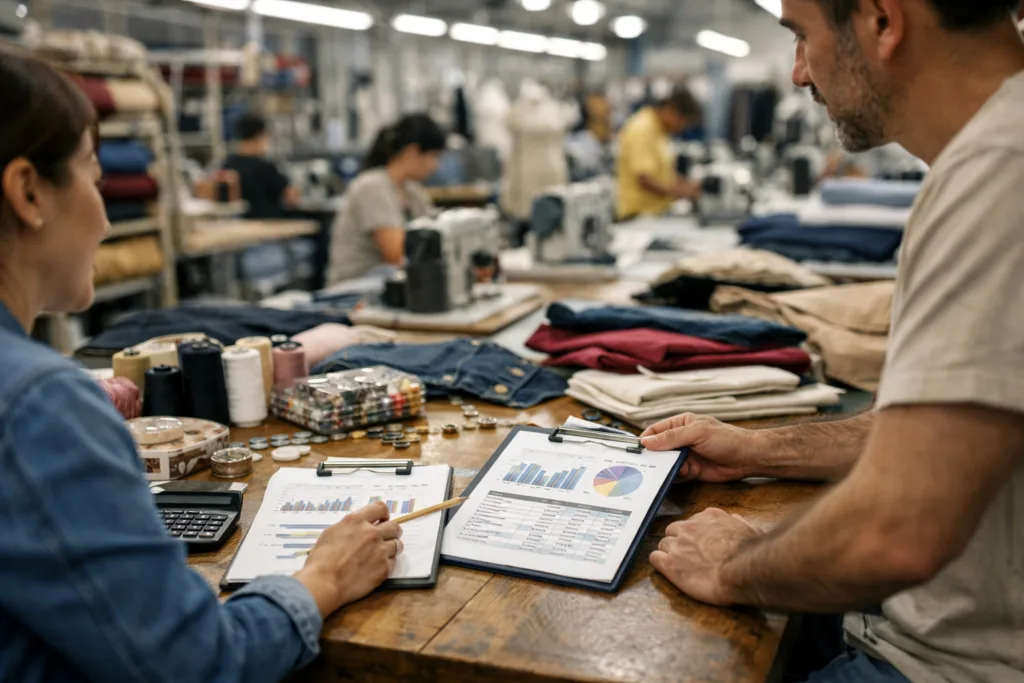
The Power of Open Costing in Avoiding Post-Production Disputes
Many disputes in manufacturing stem from unclear expectations or cost allocation. Open costing prevents “he said, she said” conflicts at delivery: both sides know what was agreed upfront. Clear cost splits also avoid pushback when you request additional quality steps or last-minute changes.
Open Costing: Demanding Transparency in Price Breakdowns
Negotiating with an open costing model not only clarifies price but rebalances power. Instead of price haggling, advanced brands and their factories can collaborate on efficiency and solve problems together. Large buyers now demand clarity on cost structure for every input: fabric costs (down to mill or lot number), labor expenses (per process step), and documented profit margins. They also keep careful email and data records to ensure future disputes can be resolved with evidence, not memory.
Case Study: Implementing Open Costing for a Major Apparel Order
Let’s look at a brand ordering 50,000 polos. Instead of accepting a landing cost per piece, they work with the factory to build a cost sheet that specifies:
- Fabric: $2.50 per polo (175gsm combed cotton, 0.5% wastage)
- Trims: $0.17 (buttons, labels, hem tag)
- Labor/CM: $0.60 (including QA and final folding)
- Packaging: $0.20 (polybag, carton, barcode scan)
- Profit: $0.43 (10% margin)
When raw cotton prices rise, the fabric line is renegotiated, but labor/profit remains stable. This clarity prevents arguments and enables scalable, predictable procurement year-round.
Ninghow Apparel’s Perspective: Shop-Floor Reality Checks
At Ninghow Apparel, production teams emphasize that open costing only works if all specifications are truly “frozen”—style details, trims, washing. If the brand keeps changing requirements, cost sheets lose value and negotiations stall. Skilled factories also use open costing to co-develop win-win solutions: for example, recommending slight pattern tweaks or alternate zippers that bring costs down without hurting the final product. For buyers, honest conversation is just as crucial as auditing spreadsheets.
How Open Costing Impacts Quality Control and Final Inspection
With cost transparency, it’s easier to budget for higher quality and technical checks. QC steps (from in-line checks to pre-shipment inspection) are specifically costed and tracked. This makes sure brands and factories are on the same page—avoiding misunderstandings about who pays for rework or extra testing.
Documenting and Storing Cost Sheets for Repeat Orders
Professional buyers keep digital files for all costing sheets and update them based on real production data. This “cost history” helps track trends, challenge outlier quotes, and speed up negotiations for repeat orders or seasonal restocks—building long-term efficiency across sourcing cycles.
Modern Tools: Digital Platforms for Sharing and Tracking Open Costings
Excel spreadsheets and shared folders are still common, but advanced brands use dedicated software to manage costing, margin analysis, and supplier communication. These tools help with version control—reducing confusion over which cost sheet is “current” and ensuring compliance in audits.
Legal and Contractual Implications of Open Costings
When you make open costing part of the contract (or purchase order), both sides are bound by its terms. This supports legal claims if the factory tries to add surcharges or rework fees later. Smart brands reference the line-item cost sheet as the controlling document for order completion, QA, and payment milestones.
Best Practices to Ensure Ongoing Transparency in Cost Components
- Update cost sheets at every major style or raw material change
- Integrate costing review into your standard sourcing checklist
- Keep digital backups; avoid negotiating off memory
- Build long-term trust by rewarding honest suppliers with consistent orders
- Use side-by-side tables to compare cost changes season to season
Conclusion: The Future of Open Costing in Apparel Sourcing

The future of apparel sourcing is “open”—with brands and factories cooperating transparently. Open costing arms buyers with facts, not hunches, to control their costs, build trust, and avoid disputes that stall growth. Large buyers should make the open costing model non-negotiable in advanced price talks. Ultimately, the practice moves the industry toward more ethical, scalable, and predictable production—benefiting both sides of the table.
Frequently Asked Questions
What information should be included in an open costing breakdown?
A proper open costing breakdown lists line-item costs for fabric, trims, labor/CM, overhead, packaging, and profit, plus any extras like freight or compliance surcharges.
How do I know if a factory’s profit margin is reasonable?
For apparel, factory net profit typically falls in the 5–15% range. Cross-reference with industry standards and check if margins match the order complexity and risk involved.
Can open costing help avoid quality disputes?
Yes, transparency means both sides agree upfront on quality spend—so when issues arise, it’s clear whether a step was omitted for cost reasons or needs corrective budgeting.
Is open costing suitable for small orders or only large ones?
While most useful for large or recurring orders, open costing can clarify discussions for any order—though some small runs may face pushback on sharing detailed costs.
What if a supplier refuses to provide open costing?
If a supplier rejects transparency, it’s a warning sign. Clarify your policies and, if they still decline, consider other partners willing to co-invest in clear, honest sourcing.
How often should cost breakdowns be updated?
Update breakdowns anytime styles, raw materials, or labor rates shift—usually per new season or major order revision—to align with real-world changes and maintain accuracy.
Related Reading
- Crisis Planning for Manufacturing Disputes: Essential Steps
- Negotiation Playbook: Price, Quality & Cost Breakdown Tactics
- 9 Must-Have Clauses for Bulletproof Manufacturing Agreements
- Master Target Pricing: Give Your Factory a Realistic Number
- Apparel Production Demystified: Step-by-Step Process Explained