
What Is Pattern Tolerance and Why Does It Matter?
Pattern tolerance refers to the acceptable range of variation in measurements during garment manufacturing. These ranges, often written as +/– allowance, help define what is considered a ‘pass’ or ‘fail’ for clothing quality. Setting appropriate pattern tolerance is crucial because it ensures products fit properly, production stays efficient, and customers get consistent results—even amid unavoidable manufacturing differences.
Understanding Measurement Tolerance, QC Standards, and +/- Allowance
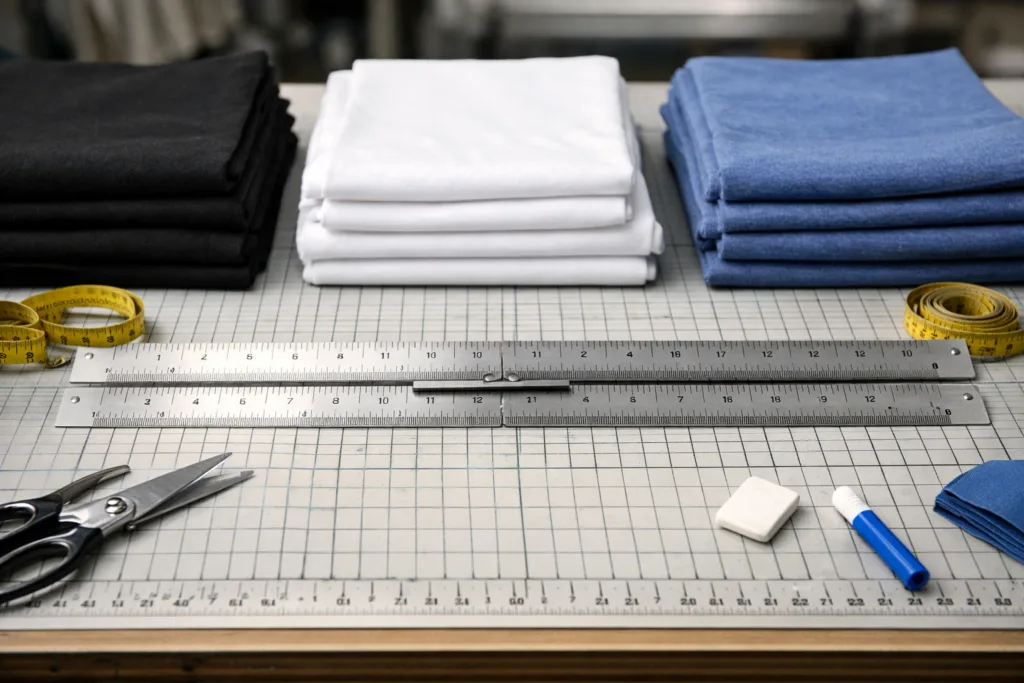
In apparel production, quality and consistency depend on clear measurement tolerances and QC standards. A tolerance lets every fabric cutter, sewing machine operator, and quality checker know which small size differences are permitted—and which are not. This keeps costs in check and reduces the number of garments rejected during quality control inspection.
Why Tolerance Exists: The Inevitable Truth of Production
Perfect uniformity is unattainable in large-scale manufacturing. Materials, tools, temperature, humidity, and even human skill bring small, natural variations. That’s why every professional factory—such as Ninghow Apparel—relies on well-defined pattern tolerance to deliver bulk orders on time, with reliable fit and function.
Common Tolerance Values: Industry Benchmarks
Industry norms help balance fit accuracy and manufacturing efficiency. Typical tolerances include:
- Main circumference (chest/waist/hip): ±1 cm for adult styles; ±0.5 cm for children’s
- Length (body, sleeve, inseam): ±1 cm
- Small components (collar, cuff): ±0.3–0.5 cm
Higher-end brands may demand tighter tolerances, while basics or stretchy fabrics can handle a wider range. For an in-depth look at how sizing is scaled reliably, review pattern grading best practices.
Types of Pattern Tolerance: Dimensional vs. Visual
Pattern tolerance can be:
- Dimensional: Numeric—waist width, sleeve length, etc.
- Visual/subjective: Acceptable for things like appearance, pattern alignment, or seam straightness.
Both types should be documented in the spec sheet or tech pack before production starts.
How to Set Reasonable Tolerance for Your Product
Deciding on a tolerance isn’t guesswork—it involves balancing the product’s end use, fabric stretch, cost, and customer expectation. Here’s how to approach it:
- Review similar market products for clues
- Consider the garment type (e.g., jeans need stricter tolerance than t-shirts)
- Think about fabric properties—stretchy knits allow wider tolerances
- Discuss with your manufacturer’s technical team
Pattern Tolerance: Setting Acceptable Manufacturing Variations
When setting pattern tolerance, document preferred values directly in your tech pack. For example:
| Measurement Point | Spec | Tolerance (+/-) |
|---|---|---|
| Chest Width | 50 cm | 1.0 cm |
| Body Length | 70 cm | 1.0 cm |
| Sleeve Opening | 15 cm | 0.5 cm |
Provide this detail at the sampling stage. Discuss with your manufacturer to see if adjustments are needed based on their standard process or machinery.
How Factories Interpret Tolerance in QC
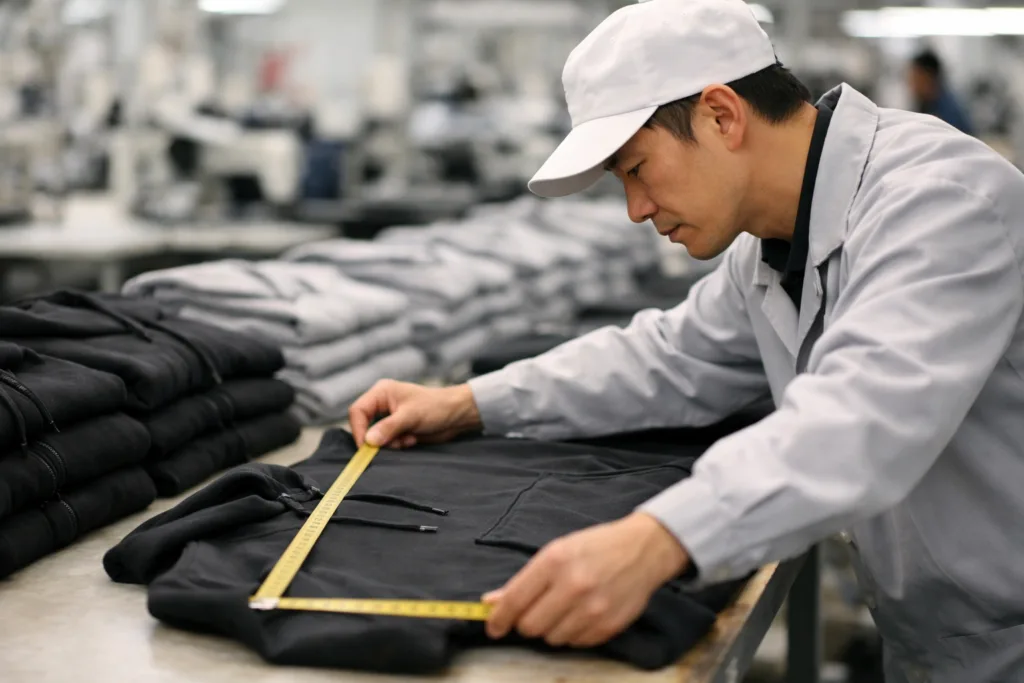
In production, every finished garment is measured. QC staff check that critical points fall within the assigned tolerance range. Items outside the tolerance may be:
- Repaired (if minor and possible)
- Rejected (if unfixable or causing fit issues)
- Accepted (if within tolerance)
To avoid confusion and prevent disputes, all parties must agree on tolerance ranges before bulk production.
Tolerance and Fabric Shrinkage: Planning Ahead
Fabric shrinkage after washing can impact measurements. Proactive manufacturers like Ninghow Apparel pre-wash or test bulk fabric and adjust patterns accordingly—factoring in both shrinkage and pattern tolerance to meet spec even after laundering.
Tolerance in Digital Pattern Making and CAD
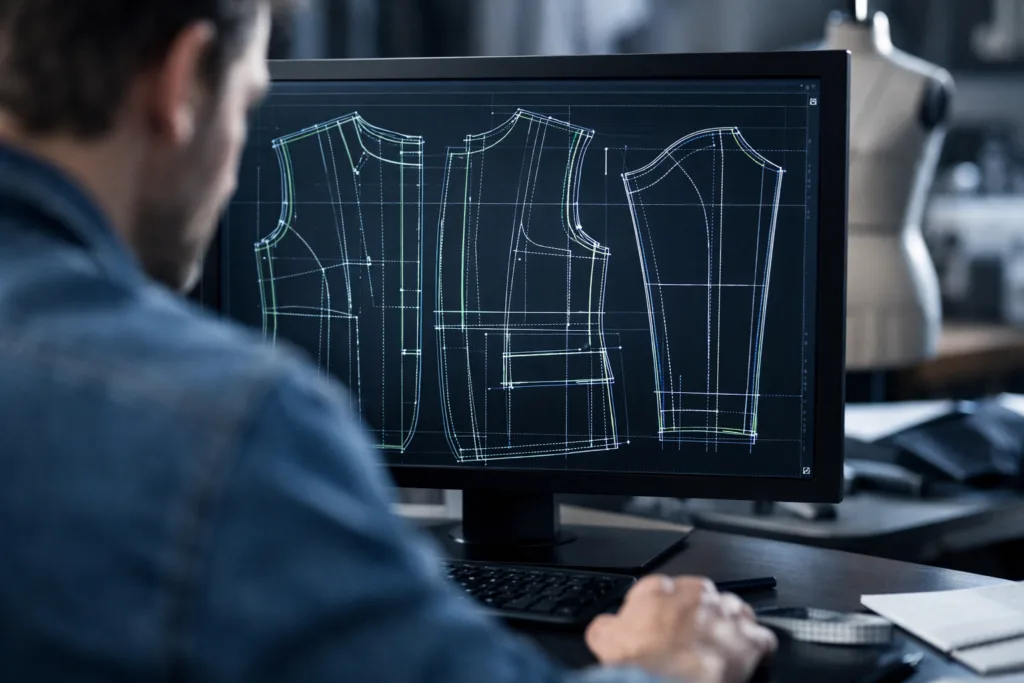
Modern factories use CAD pattern technology to maintain accuracy, but machine limitations still introduce slight tolerances. These digital tools allow settings for seam allowances and can warn if a spec is out of bounds, making it easier to manage consistency.
Creating a Master Block: The Starting Point for Consistent Tolerance
Creating a master block—an original base pattern with known, tested measurements—is crucial for repeatable results. Desired tolerances are then applied to this master pattern to guide subsequent style development and grading.
Documenting and Communicating Tolerances in Tech Packs
A clear, updated tech pack must include:
- All main garment measurements
- Acceptable +/- tolerance for each point
- Measurement method (flat, on body, post-wash)
Updating your tech pack during sampling ensures everyone is aligned on latest tolerances and prevents costly confusion during production runs.
Common Mistakes and How to Avoid Them
Frequent problems brands face include:
- Overly tight tolerances, leading to high rejection rates and cost
- Vague or missing tolerance charts, resulting in inconsistent production or buyer/factory disputes
- Choosing tolerances unsuited for fabric or product type
- Forgetting to adjust for post-laundry shrinkage
The fix: Benchmark tolerance using similar market products, document everything, and get factory input before bulk cutting begins.
How Tolerance Impacts QC Inspection and Acceptance Criteria
Tolerance is at the heart of every factory QC inspection. Inspectors randomly sample finished goods and measure against the spec/tolerance sheet. Too many out-of-range items mean a failed inspection, possible rework, shipment delays, or extra costs.
Tolerance vs. Spec: What’s the Difference?
The spec is your target measurement. The tolerance explains how much the final product can differ from that spec—for example, “Chest width (spec) = 52cm. Acceptable tolerance: ±1cm. Passes if between 51–53 cm.” Both must be set and managed together for efficient manufacturing.
Tolerance and Grading: Scaling Patterns for Size Range
Pattern grading adapts base patterns to different sizes. Each size gets its own spec and may require slightly adjusted tolerances to reflect changing proportions. This process ensures smooth, proportional fit, guided by the size chart and matched by the same +/- allowance logic.
Tolerance, Lead Time, and Cost Pressures
Tighter tolerance demands require more time and precision during sewing and QC—which can slow production and raise costs. Mass-market brands and basics, on the other hand, allow broader tolerances for greater efficiency. Choose your tolerance with your business needs in mind.
Case Study: Tolerance in Action with Bulk Hoodies
When producing 5,000 hoodies, specifying a sleeve length tolerance of ±1 cm means every sleeve should be between (for example) 61 and 63 cm. If a run comes out at 63.5 cm, this triggers review: Is the material extra stretchy or was there a marker or cutting issue? Investigating these small differences ensures knowledge and control for future orders.
Real-World Approaches: Insights from Experienced Manufacturers
Factories with years of experience, such as Ninghow Apparel, know that proactive communication about pattern tolerance—before money or fabric is committed—saves headaches and prevents costly mistakes later. They might recommend test production runs or “first-off” samples to confirm tolerance is dialed in before full-scale output begins.
Best Practices: Setting Tolerance for Different Garment Types
| Garment | Material | Recommended Tolerance |
|---|---|---|
| T-shirt | Cotton jersey | ±1.0 cm |
| Polo shirt | Piqué knit | ±1.0 cm |
| Hoodie | Cotton/poly blend | ±1.0 cm (body), ±1.2 cm (sleeve) |
| Dress shirt | Woven cotton | ±0.8 cm |
| Shorts | Woven twill | ±1.0 cm |
Create a QC Measurement Guide for Your Team
Ensure every garment is checked consistently by preparing a one-page QC guide. This should include clear diagrams or images showing exactly where and how to measure each point, along with the allowed tolerance.
Tolerance Disputes: How to Preempt Factory-Buyer Misunderstandings
Disputes often arise from unclear documentation. To avoid conflict, confirm all tolerances in writing before sampling, include signed agreements, and request sealed pre-production samples measured and approved by both you and your factory.
Keeping Tolerance Under Control: Continuous Improvement
Good manufacturers regularly analyze production results and adjust their process, training, or equipment to tighten tolerances further or catch issues early—for example, by recalibrating cutting machines or training new QC staff.
The Role of Third-Party Inspection in Verifying Tolerance
Brands sometimes hire third-party agencies to independently verify tolerance and QC compliance before goods ship. This is especially common with overseas production or for strict markets with regulated standards.
The Bottom Line: Finding the Right Balance
Well-chosen pattern tolerance values help you avoid over-engineering while still delivering product quality your customers expect. By teaming up with your manufacturer, clearly documenting all allowance values, and maintaining flexibility for product type and market, you set a stronger foundation for lasting quality and fewer production hiccups.
Frequently Asked Questions
What is pattern tolerance in garment manufacturing?
Pattern tolerance is the allowed variation from the specified measurements, guiding what counts as an acceptable product during production and inspection.
How do I decide on the right tolerance for my product?
Consider the garment type, industry standards, fabric properties, customer expectations, and discuss with your manufacturer for practical recommendations.
Can setting a tight tolerance affect production time and cost?
Yes. Tighter tolerances demand greater precision and inspection, which can slow production lines and increase costs. It’s important to balance accuracy and feasibility.
Does tolerance include shrinkage allowance after washing?
Ideally, yes. Anticipate fabric shrinkage through pre-testing and work with your manufacturer to adjust specs and tolerances accordingly before bulk runs.
What happens if an item falls outside tolerance?
Items beyond tolerance may be reworked if possible, rejected during QC, or flagged for review with the brand, potentially delaying shipment or increasing cost.
Are tolerance values different for children’s wear versus adult clothing?
Typically, children’s garments have tighter tolerances due to proportions and critical fit, while adult clothing allows slightly larger variations. Always validate for your market.