
What Is Pattern Grading? The Foundation of Consistent Fit
In the world of apparel manufacturing, pattern grading is the method for scaling a garment design up or down to create a range of sizes without distorting its intended shape or proportions. For fashion brands and clothing factories, maintaining accurate sizing is critical—customers expect the same fit across the size spectrum, not just an enlarged or shrunken version of the original sample. That’s where understanding grading: how to scale sizes without losing shape becomes a core skill for brands that want loyal buyers and low returns.
Why Not All Grading Is Created Equal: The Dangers of Simple ‘Proportional Scaling’
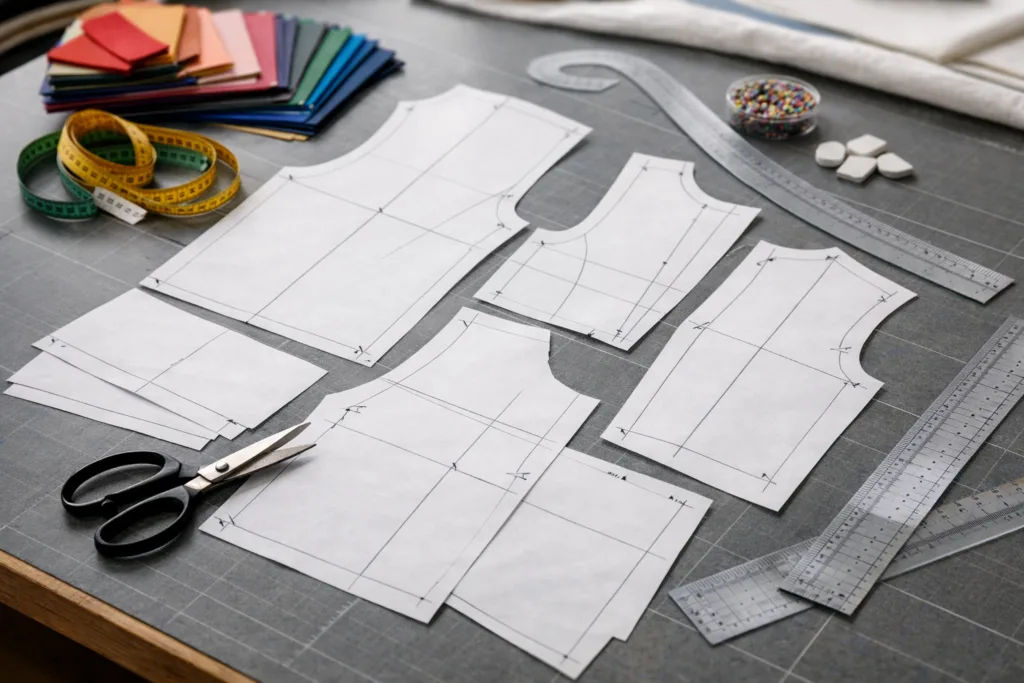
One of the biggest misconceptions in beginners’ pattern making is believing that you can just “scale up everything proportionally”—that is, increase or decrease each measurement by the same percentage. While that seems efficient, this approach almost always leads to poor fit, odd proportions, and garments that look “off” on body shapes outside the base size. Real grading respects anatomical growth patterns—shoulders, chest, waist, and height rarely grow at the same rate, and this is especially true between children’s, women’s, and men’s apparel.
How Professional Grading Works: Balancing Math with Human Anatomy
Pattern grading uses a set of precise rules for how each measurement must change between sizes. Common methods include the cut-and-spread technique (manually adjusting patterns) and computer-aided grading using CAD software, each with unique workflows but the same underlying goal: keep the design’s style lines and fit consistent. The process is informed by industry sizing charts, customer feedback, and sometimes even 3D body scanning to match real-world bodies as closely as possible.
The Difference Between Numeric and Alpha Sizing
In apparel, the two major sizing strategies are:
- Numeric sizing (e.g., 28, 30, 32 or 2, 4, 6): Offers more granular fit, often used in tailored garments and pants, allowing customers to find a “closer to perfect” match.
- Alpha sizing (e.g., S, M, L, XL): Generalizes several numeric sizes into broader categories, simplifying stock management but sometimes sacrificing precision.
The choice between the two depends on product type, brand positioning, and customer expectation. Both require pattern grading to maintain consistent shape across all size groupings.
Introducing Grading Rules: The ‘Increments’ That Guide Size Scaling
Grading rules, or increments, tell you exactly how much to add or subtract at every pattern point as you step from one size to the next. These are not random—in the industry, data from thousands of size charts inform each measurement. For example, the chest circumference might increase 2cm per size, while shoulder width grows by just 1cm, preserving anatomical balance.
| Measurement Point | Grading Increment |
|---|---|
| Bust/Chest | 2 cm per size |
| Waist | 2 cm per size |
| Hip | 2 cm per size |
| Shoulder Width | 0.7–1.0 cm per size |
| Body Length | 1–1.5 cm per size |
| Sleeve Length | 1–1.3 cm per size |
For more background on how digital grading connects with modern manufacturing, see Why Digital Pattern Making with CAD Is Transforming Modern Manufacturing.
Core Problem: Why Proportional Scaling Ruins Patterns
Imagine enlarging a t-shirt pattern by the same 5% all over. In practice, a small chest becomes much wider, but the neckline might grow so large it sags, and the armhole drops out of place. Limbs do not grow at the same rate as torso girth—this is why simple scaling (like you’d do with a photocopier) breaks down, causing production headaches and expensive tweaks. Proper grading solves this by setting unique increments for critical points.
Step-by-Step: How Apparel Factories Grade for S, M, L, and Numbered Sizes
Professional factories follow a sequence:
- Select the base size (often M).
- Apply grading rules—clearly defined changes per measurement (see table above).
- Adjust pivotal pattern points (shoulders, neck, armscye, etc.).
- Cross-check with real sample try-ons or fit models.
This systematic approach ensures each size looks like the original, just in another scale—never distorted. Reliable clothing customization and sizing services can manage these nuances even for complex designs.
Alpha Sizing vs Numeric Sizing: Which Approach to Choose for Your Brand
Alpha sizing (S, M, L) is simpler for brands with broad target markets or casual wear focus, simplifying inventory and production. Numeric sizing offers finer precision for tailored or fitted garments. Each system has its pros and cons:
- Alpha sizing: Less inventory, but risk of less perfect fit for outlier body types.
- Numeric sizing: More complex inventory, but closer fit across a diversity of shoppers.
The decision often comes down to price point, market, and product type. Grading must be adapted to either scheme carefully.
Case Study: Alpha Sizing Applied to Polo Shirts
Polo shirts typically use alpha sizing for simplicity. When manufacturers, such as Ninghow Apparel, scale a base “Medium,” they assign increments for the chest, waist, length, and sleeve in line with target markets’ size charts. A well-graded polo doesn’t just look like a larger or smaller “M”—it adjusts proportions to ensure collar size, armholes, and placket placement remain flattering and functional as sizes shift.
Grading for Special Garments: Hoodies, Tank Tops, Trousers
Each garment type may require its own set of grading rules. Hoodies need extra care in the hood opening; tank tops often require unique treatments at the straps; trousers must balance inseam and rise precisely. This tailoring of grading increments is why professional pattern makers matter so much for quality apparel lines.
Real Production Experience: What Can Go Wrong in Grading?
In bulk manufacturing, the costliest mistakes often spring from inadequate grading. Common issues include:
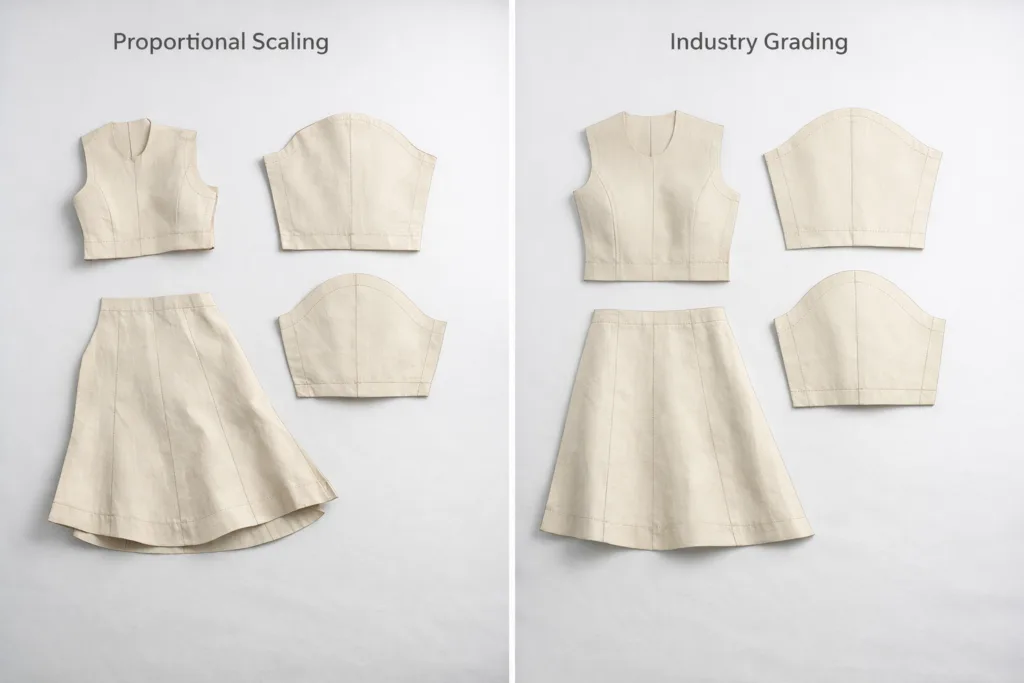
- Armholes that become too tight or loose in extreme sizes
- Plackets or logos drifting off-center
- Poor sleeve pitch resulting from inaccurate grading at the armscye
Reliable manufacturers like Ninghow Apparel emphasize testing each size with sample runs and adjusting grading rules as needed. Inexperienced brands may skip this, risking significant losses when returns spike due to poor fit in smaller or larger sizes.
Common Grading Methods: Manual, CAD, and Hybrid Approaches
There are two main technical approaches:
- Manual (Cut-and-Spread): Pattern pieces are physically cut and adjusted by hand—still used for simple or artisanal pieces, but labor-intensive for many SKUs.
- Computer-Aided Design (CAD): Grading is done digitally, streamlining multi-size rollouts, and allowing quick tweaks for different markets. This is now standard in large-scale and export apparel.
- Hybrid: Some brands start with manual work then refine using CAD for final production.
For a look at the latest grading tech, visit Excel vs. Techpacker vs. CLO3D: 3 Must-Know Differences for Smarter Fashion Production.
Sizing Chart Integration: The Missing Link
A strong grading system is only as good as the data behind it. Most brands now link their production sizing directly to market-validated size charts, or commission surveys to update these for their target audience. This continuous feedback loop is the key to keeping fit reliable season after season.
Tips for Creating and Reviewing Grading Rules
- Start from a “base size” that’s representative of your customer base—not too small or large for your main market.
- Get real feedback from fit sessions before approving the final grade rule set.
- Adjust increments for product type—e.g., more increase in chest for outerwear, more focus on waist/hip for jeans.
- Always check the end-of-line (XS/XL) for proportion problems—they will show distortions first.
Quality Control in Grading: What Factories Watch For
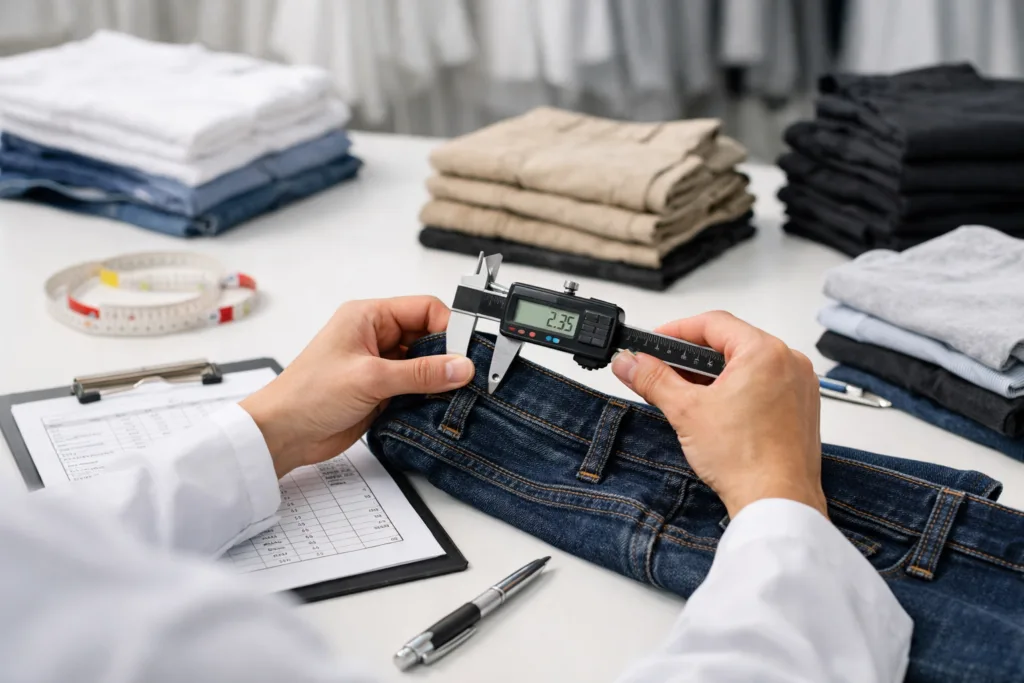
During production, QC teams check measurement specs for every size batch, looking for grading errors that can cascade through a shift:
- Repeat measurements on graded points for random samples in every size
- Flag deviations and audit the pattern files if off-tolerance
- Monitor sample try-on feedback, not just flat measurements
For further insights on quality systems, read apparel manufacturing quality control procedures.
Ninghow Apparel’s Perspective: Practical Tips from the Shop Floor
From years on the factory floor, Ninghow Apparel emphasizes that “measure twice, cut once” matters more in grading than almost anywhere else. A 2mm error in a grading rule can create a cascade of poor fits and expensive re-runs. In our view, sampling every size in a new range—especially the “end sizes”—prevents 95% of catastrophic returns.
Future Trends: Grading Gets Smarter with Digital Data
As mass customization and 3D scanning become more common, grading is increasingly data-driven. Real-world body scans are supplementing or even replacing old size charts, allowing for better “shape management”—particular for markets with high variation or specialty lines, such as plus-size or youth wear.
Conclusion: The Payoff of Good Pattern Grading
Understanding grading: how to scale sizes without losing shape is not just a technical exercise—it’s how brands deliver consistent, trustworthy fit that invites repeat sales and positive reviews. By avoiding the trap of proportional scaling, investing in solid grading rules, and listening to real-world fit feedback, companies set themselves up for smoother production cycles, lower return rates, and satisfied buyers. In short, grading is the silent hero of great apparel fit.
Frequently Asked Questions
What is the main goal of pattern grading?
Pattern grading’s purpose is to create multiple garment sizes from one base pattern, ensuring each size maintains the original style, proportion, and fit without distortion.
Is scaling patterns proportionally ever acceptable?
No, proportional scaling typically distorts garments. Different body parts grow at unique rates, so grading rules must be applied thoughtfully for proper fit.
How are grading rules developed?
Grading rules are based on industry standards, anthropometric studies, brand-specific size data, and real fit testing, refined over time for each product type.
Can clothing factories grade any garment?
With accurate base patterns and grading increments, skilled factories can grade T-shirts, polos, trousers, hoodies, and more. Each type has its own technical considerations.
Should I use alpha or numeric sizing?
Alpha sizing works for broader fits and easier logistics; numeric offers precise fit but can complicate inventory. Match the system to your brand’s target and style.
How do factories check grading accuracy during production?
Factories use measurement checks, sample try-ons, and QC audits for every size to catch and correct grading errors before mass production or shipment.
Related Reading
- Pattern Making Showdown: Flat Method or Draping—What Suits Your Brand?
- All You Need to Know Before Choosing Shirt Types for Production
- Why a Tech Pack Is Your Garment’s Blueprint for Success
- Freelancer vs. Factory: The True Cost of Tech Packs Revealed
- Step-by-Step: Building a Reliable Apparel Manufacturing Process