

Many first-time buyers focus on the quoted unit price, but hidden costs in apparel manufacturing often determine whether a project stays profitable. A supplier can give you a clean per-piece number while other expenses still appear later in sampling, approvals, fabric procurement, labeling, packaging, freight, and rework.
That is why brands comparing private label clothing manufacturing options should look beyond the quote and understand what is included, what is assumed, and what will be charged separately. The real budget picture starts with production structure, not just a single unit price.
The difference between unit price and total landed cost
Unit price is only one part of a much wider sourcing picture. A garment may look affordable on paper, yet the final spend changes once you add development, packaging, freight, duties, and the cost of fixing avoidable mistakes.
Total landed cost is the full cost to get finished goods into your warehouse or fulfillment point. For apparel brands, this includes the sample path, material commitments, production setup, labeling, quality control, and logistics. If you compare suppliers only by the factory quote, you can easily underestimate the real cash needed to launch or restock.
| Cost area | What it may include | Why it matters |
|---|---|---|
| Development | Samples, revisions, pattern changes | Often paid before bulk production starts |
| Materials | Fabric, trims, color matching, MOQs | Can increase cost if quantities are too low |
| Production setup | Printing screens, plates, molds, grading | One-time charges can surprise new buyers |
| Delivery | Freight, duties, taxes, local transport | Changes the final landed cost materially |
If you need a clear way to break down the full sourcing number, how to calculate landed cost is the right next step because it helps separate factory pricing from the real purchase budget.
Sample and revision costs that brands often overlook
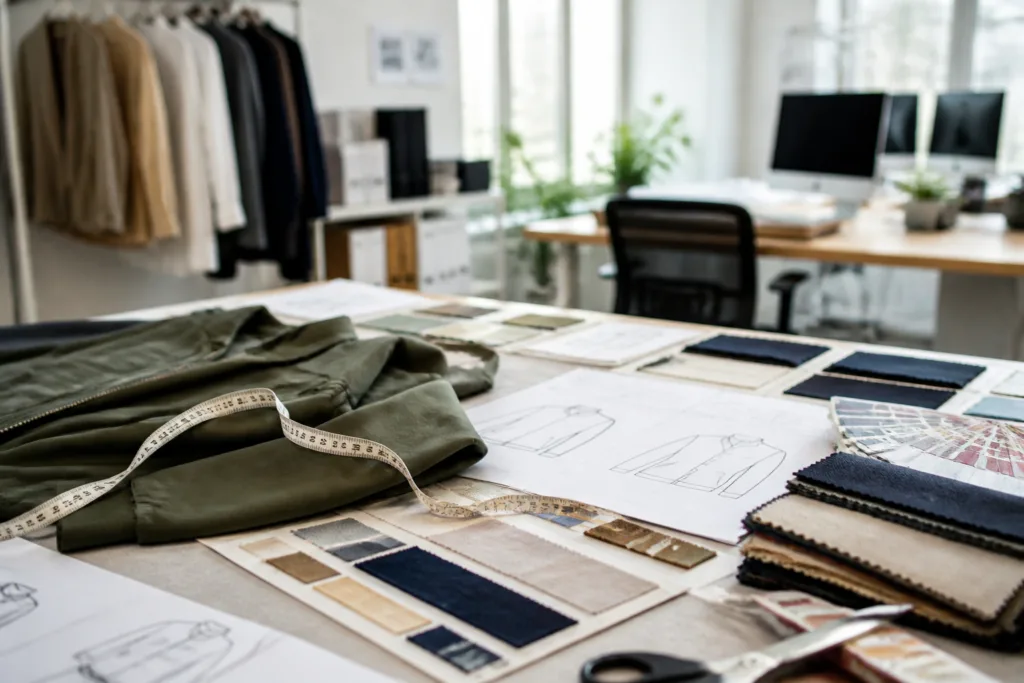
Sampling is rarely a free step in custom apparel. Pattern work, fabric sourcing, fit corrections, and repeat samples all take time and material, especially when the product needs a specific silhouette or performance fit.
Brands often assume one sample is enough, but a technical garment may need several rounds before it is production-ready. Each revision can affect both direct sampling charges and the overall timeline, which then affects launch planning and inventory timing. This is one reason why sample making can add to development costs becomes an important question before any order is placed.
From a manufacturer perspective, the best way to reduce this cost is to prepare a complete tech pack, confirm measurements early, and avoid changing core design details after the first sample. Small changes are normal; repeated direction changes are what turn sampling into a budget drain.
Fabric MOQ and color MOQ can change the math fast
Minimum order requirements are one of the biggest reasons a quote looks lower than the final spend. Fabric mills, dye houses, and trim suppliers often work with minimums that are not obvious to the buyer until the project is underway.
A low garment MOQ does not always mean low fabric commitment. You may be able to produce a modest quantity of finished units, but still need to buy more fabric than planned to satisfy roll minimums or color minimums. This is especially common when brands want multiple colorways or seasonal shades.
That is why minimum color quantity requirements should be checked early. If you ignore them, the cost per finished piece may rise because the material order is being spread across fewer units than expected.
For brands planning a broad color assortment, the real decision is not just whether the factory can make the style, but whether the volume supports the fabric structure behind it.
Setup fees and one-time charges that appear after the quote
Many custom garments require one-time production setup work. Printing screens, embroidery digitizing, logo plates, molds, cutting dies, and specialized sampling all add cost before bulk sewing even begins.
These charges are easy to miss because they are not always part of the unit price. A simple logo can still require file preparation or application setup, and a more technical decoration method may require separate tooling. If the project changes late, some of those costs can repeat.
When a buyer asks what is included in the price, the answer should cover both recurring and non-recurring charges. A manufacturer that breaks out these line items clearly is usually easier to budget with than one that offers only a single all-in number without context.
Size range expansion adds hidden production complexity
Adding more sizes is not just a matter of printing a larger size label. Each size may need grading, marker adjustments, fit checks, and sometimes pattern refinements to keep the garment consistent across the full range.
The more technical the product, the more likely size expansion will create cost pressure. Activewear, fitted tops, and structured pieces often require tighter measurement control than basic silhouettes. A broader size run can also increase fabric waste or raise sewing complexity if the pattern balance shifts across sizes.
pre-production tech pack review is especially important here because accurate specs reduce back-and-forth and help the factory quote the true production effort instead of a simplified version of it.
For brands with growth plans, it is usually better to understand the full size matrix before approving the first sample than to discover extra grading costs after the line is already locked.
Packaging and labeling costs that shape the final cost
Packaging is often treated as a finishing detail, but in custom clothing it can be a meaningful budget item. Woven labels, printed neck labels, hangtags, size stickers, barcodes, polybags, inserts, and branded cartons all add material and handling cost.
The more specific the packaging requirement, the more planning it needs. Retail-ready packaging, ecommerce-ready polybagging, and gift-style presentation all create different cost structures. Even small changes, such as moving from generic packaging to custom printed packaging, can increase both supplier coordination and lead time.
From a budgeting standpoint, packaging should be decided early because it affects materials, labor, and final presentation. If the brand launches with one packaging format and later changes it, the cost impact is often higher than expected.
Quality control, rework, and delay costs
Quality issues are one of the least visible but most expensive hidden costs in apparel manufacturing. If defects are found late, the project may require rework, replacement pieces, relabeling, or extra shipping just to keep the order usable.
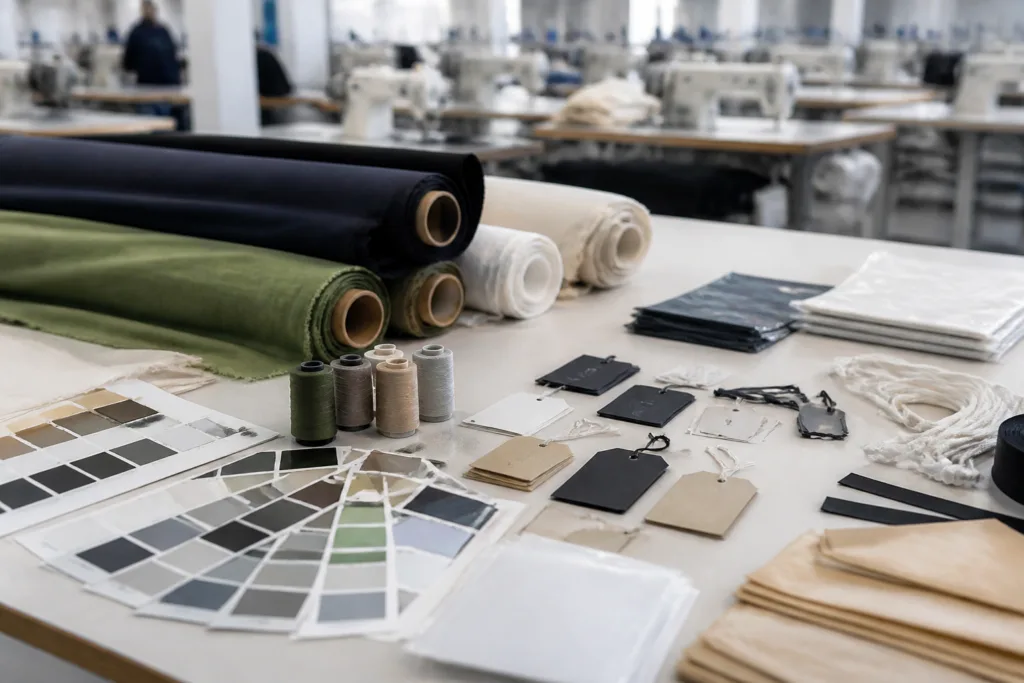
Quality risk is not only about product defects; it also includes missed approvals, incorrect trims, and communication gaps during production. Every correction takes labor and time, and those delays can affect launch dates, retail commitments, and fulfillment plans. In practice, that means poor QC can raise the effective cost of each unit even if the factory quote never changes.
Brands working with a manufacturing partner like Ninghow Apparel usually get the most value when they treat QC as a cost-control step rather than a final inspection step. The earlier issues are caught, the less likely they are to turn into expensive production loss.
Shipping, customs, and import costs can exceed expectations
International freight is often left out of early budgeting, especially when the factory price feels manageable. But once you add international shipping, customs duties, import taxes, and local delivery, the final spend can rise quickly.
Packaging weight, carton volume, and shipping method all affect the landed total. A lightweight style can still become costly if it is packed inefficiently or ships during a high-rate period. That is why sourcing teams should how to calculate landed cost before approving any supplier comparison, not after the goods are already in transit.
For some buyers, the cheapest factory quote is not the cheapest delivered result. The best budget decision is the one that includes the full chain from factory floor to final receiving point.
Inventory risk is part of the production budget
Overordering can be as damaging as underordering. If demand is overestimated, the brand carries unsold stock, storage expense, markdown pressure, and cash tied up in inventory that is not moving.
This matters especially when brands choose a style because the quote looks efficient at a larger order size. A larger MOQ may reduce the unit price, but it can also increase risk if the market response is uncertain. The cheapest per-piece cost is not always the healthiest business decision if it creates excess inventory later.
A more controlled approach is to align order volume with sales confidence, replenishment capacity, and launch stage. Early-stage brands often benefit from smaller test runs, even when the unit cost is slightly higher, because the total business risk is lower.
How to discuss hidden costs with a manufacturer before sampling
The easiest way to manage hidden costs is to ask about them before the sample stage starts. A good conversation should cover what is included, what is excluded, which items are one-time setup charges, and which costs will recur with every order.
Brands should also ask how cost changes when quantities, sizes, colors, or trims change. That gives a clearer picture of which decisions affect the budget most. A strong supplier will usually explain the trade-offs in practical terms rather than hiding them behind a single quote.
Before moving forward, it helps to review the pre-production plan, the sample approval path, and the assumptions behind every line item. Those details create a better budget than a short quote ever can.
A practical budgeting checklist before you place an order
Before approving a custom clothing project, confirm these items in writing:
- What is included in the quoted unit price?
- Are sample fees, revisions, and pattern changes separate?
- Are fabric minimums or color minimums affecting the order?
- Are setup costs such as screens, plates, or digitizing included?
- Are labels, hangtags, packaging, and inserts priced separately?
- What quality control steps are included before shipment?
- Who pays for freight, duties, taxes, and local delivery?
- What happens if production defects require rework?
- How many sizes and colors are covered in the quote?
- What assumptions are built into the lead time?
If your team needs a structured way to compare quotes, this is where a written budget checklist becomes more valuable than a price sheet alone. It helps you compare suppliers on the same basis instead of discovering missing items after approval.
Common mistakes brands make when comparing manufacturers only by quote price
The most common mistake is assuming every factory is pricing the same scope. One quote may include more services, better communication, or a more complete development path, while another may look cheaper because several major items are excluded.
Another mistake is treating development, packaging, and logistics as separate from manufacturing. In reality, they are all part of the same project cost. Brands also underestimate how much sample changes, sizing expansion, and label updates can add over the life of a product.
When a quote looks unusually low, the right question is not why is this cheaper but what is not included. That mindset protects the budget and improves supplier comparison.
Conclusion
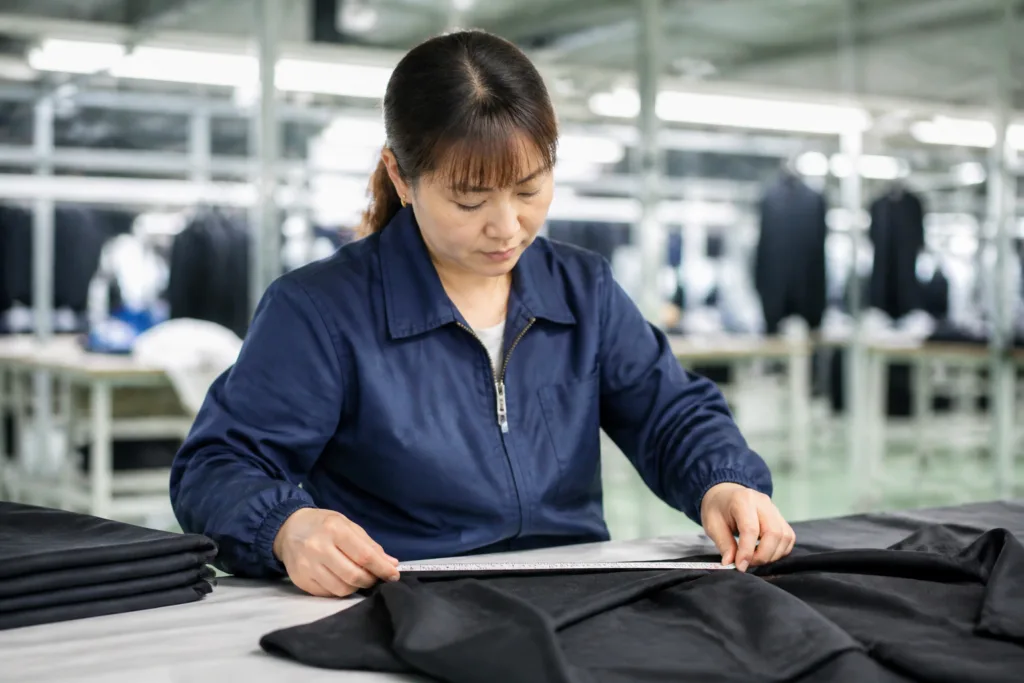
The hidden costs in apparel manufacturing are not hidden because they are impossible to find. They are hidden because many quotes only show the most visible line item: the unit price. Once brands account for sampling, materials, setup, labeling, packaging, QC, freight, duties, and inventory risk, the true budget becomes much clearer.
A realistic clothing production budget is built on complete assumptions, not optimistic estimates. The more clearly you define the scope before sampling, the easier it becomes to control cost, reduce delays, and choose the right manufacturing partner for long-term growth.
Frequently Asked Questions
What are the most common hidden costs in apparel manufacturing? The most common hidden costs are sample revisions, fabric minimums, setup charges, packaging, labeling, quality control, freight, duties, and rework caused by production issues.
Why does a low unit price not always mean a lower total cost? A low unit price may exclude sample work, setup charges, packaging, or shipping, which can make the final landed cost higher than expected.
How can brands reduce sampling costs? Brands can reduce sampling costs by preparing complete tech packs, limiting late design changes, confirming measurements early, and asking what revision fees apply.
What should be checked before agreeing to a quote? Check what is included, what is excluded, the MOQ structure, sample terms, packaging details, QC scope, and who pays for freight and import charges.
Are packaging and labeling always separate costs? Not always, but they often are. Many factories quote them separately because label types, hangtags, inserts, and custom packaging can change the material and labor cost.
How do hidden costs affect smaller orders? Smaller orders usually feel the impact more because setup fees, sampling, and minimum material requirements are spread across fewer units.