

A strong fabric platform strategy helps a brand reduce development friction, keep sampling focused, and make production planning more predictable. For teams building private label lines or scaling a small collection, the goal is not to use one fabric for everything, but to use one well-chosen fabric family across styles that share the same performance and hand-feel requirements. If you are still defining your sourcing approach, it can also help to review private label clothing manufacturing as a broader framework, because fabric decisions are only useful when they fit the larger development and production plan.
From a manufacturer’s point of view, the best fabric platform is one that supports repeatability. It should give you enough room to build variation in silhouette, trim, color, and branding while keeping the base material stable across your line.
What a Fabric Platform Strategy Means in Apparel Development
A fabric platform strategy means selecting one core fabric, or one closely related fabric family, and building multiple styles from it. Instead of sourcing a different fabric for every T-shirt, hoodie, polo, or short, the brand establishes a material foundation that can be reused across product categories.
This approach is especially useful when the brand wants fewer sourcing variables. One fabric can simplify communication with suppliers, reduce approval cycles, and make future reorders easier to manage. It also creates a more cohesive product line, which matters when a brand wants customers to feel continuity across styles.
Why this matters in production
Every new fabric adds complexity. It can require a new hand-feel approval, different shrinkage behavior, different color behavior, and sometimes different MOQ expectations. When a brand keeps changing fabrics too often, the collection becomes harder to plan and harder to scale. A focused platform reduces that burden without eliminating product variety.
Why Small and Growing Brands Should Not Change Fabrics for Every Style

Smaller brands often assume variety comes from changing materials. In practice, too many fabric changes can increase development cost faster than they improve the collection. Sampling becomes more expensive, time lines stretch, and the team has to evaluate too many unknowns at once.
A better approach is to design around a platform that can support several silhouettes. This keeps the collection manageable and helps the brand learn which fit, trim, and color combinations actually sell before expanding the fabric range.
For brands trying to stay lean, the advantage is clear: the same fabric can be used across core basics, seasonal variations, and private label programs with more controlled planning. That is why many buyers start with low MOQ collection planning before they add more fabric variety.
How One Fabric Platform Can Extend Across Multiple Styles
A single platform works best when the fabric supports a similar use case across categories. For example, a midweight cotton jersey may work for T-shirts and long sleeves, while a heavier fleece family may work for hoodies, joggers, and sweat shorts. The key is not exact repetition of the style, but consistency in function and quality expectation.
Brands often ask whether one fabric can really cover different garments. The answer is yes, as long as the fabric’s weight, stretch, recovery, opacity, and drape make sense for each item. In practice, a well-planned platform can support T-shirts, shorts, hoodies, polos, and even layered items if the construction details are adjusted properly.
When one fabric is used across multiple SKUs, the manufacturer can often improve planning around multi-style fabric consolidation. That can make bulk ordering more efficient, especially when the same base material is used in different colorways or garment categories.
Where style variation still happens
Even with one fabric platform, the product line should not feel repetitive. Style differentiation can come from fit block, seam design, rib specification, collar shape, wash treatment, print placement, embroidery, or finishing details. In other words, the fabric can stay consistent while the style identity changes.
How Fabric Standardization Affects MOQ, Dyeing, Pricing, and Inventory Risk
Fabric standardization can improve purchasing efficiency, but it also changes how MOQ and color planning work. A brand may save complexity on the base cloth while still facing minimums for dyeing or color lots. That is why fabric platform planning should always include color strategy, not just fabric selection.
When a style line uses one base fabric, the production team can often forecast demand more accurately. This helps reduce leftover inventory in multiple fabric categories, but only if color planning stays disciplined. If every style has a different fabric and every fabric has multiple colors, the inventory burden multiplies quickly.
Brands should also pay close attention to MOQ and color quantity planning because minimums are not only about fabric yardage. In many projects, the real constraint is the relationship between fabric MOQ, dyeing MOQ, and the number of colorways the brand wants to launch.
Pricing trade-offs to consider
A platform can reduce cost through simplification, but the effect is not always linear. Using one fabric across more styles may support better negotiation, fewer approvals, and more efficient forecasting. However, if the fabric is too specialized or the color strategy is too broad, the savings may disappear.
That is why brands should model the platform before approving the collection. A clear line plan should show expected units, color splits, and repeat order potential. Without that, a fabric platform can look efficient on paper but still create expensive leftovers.
The Relationship Between Color Development and a Fabric Platform
Color development is one of the most important parts of platform planning. A strong fabric platform should behave predictably across the colors the brand intends to use most often. If the fabric takes dye unevenly, distorts in certain shades, or changes hand-feel across lots, the platform becomes harder to trust.
For this reason, color approval should happen early. Brands should review lab dips, strike-offs, and bulk reference standards before they expand the style family. When the base fabric behaves well in a controlled color range, it becomes much easier to build a durable product line around it.
In repeat programs, the real value often comes from keeping fabric, fit, and color consistent. That consistency lowers re-approval effort and helps the brand maintain a stable customer experience across seasons.
Practical color planning tip
If the platform is meant to support long-term replenishment, choose colors that can be repeated reliably. Trend-led colors may still work, but they should not create a dependence on unstable dye lots or highly experimental finishing. The more repeatable the color base, the stronger the platform becomes.
How to Balance Product Differentiation with Manufacturing Efficiency
A fabric platform should not make a collection feel monotonous. The challenge is to keep the manufacturing base stable while making the customer-facing products feel distinct. That balance is usually achieved through design architecture rather than fabric switching.
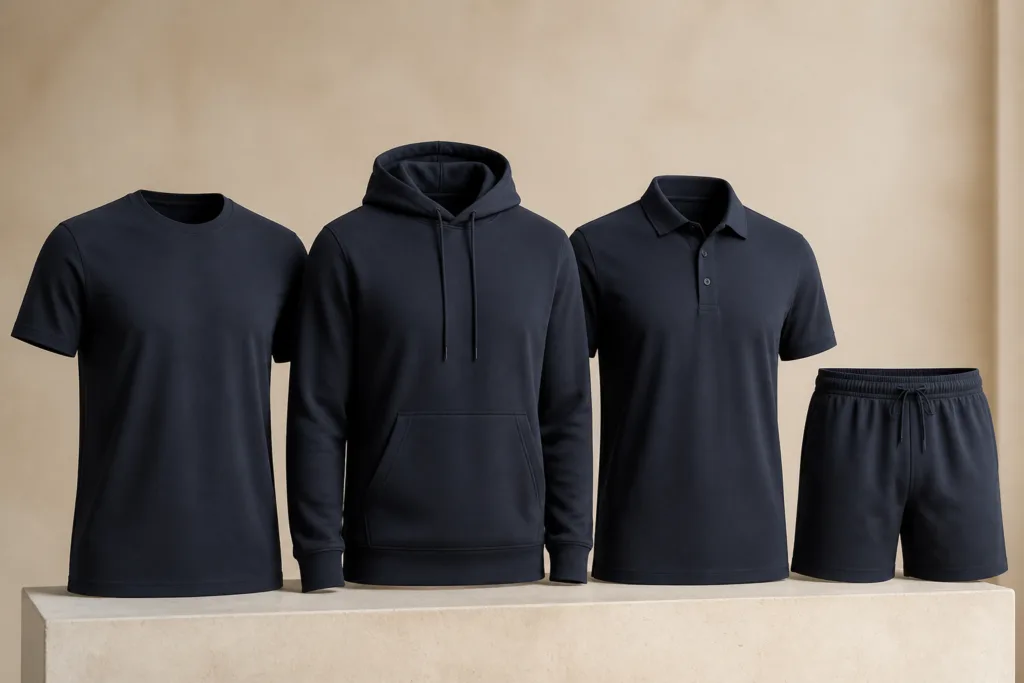
For example, a brand can use the same jersey base across crew necks, oversized tees, fitted tees, and sleeveless styles. A knit fleece platform can support hoodies, zip-ups, and shorts if the pattern and trim specifications are adjusted correctly. The result is a cleaner sourcing model without sacrificing range.
It also helps to define how much differentiation each style needs. Some SKUs are meant to be core, and others are meant to be seasonal or image-driven. Not every style needs a separate fabric to justify its place in the line.
Which Fabric Types Are Best Suited for Platform-Based Product Lines
The best platform fabrics are usually those with stable performance, broad style compatibility, and manageable supplier availability. Common examples include cotton jersey, cotton-spandex jersey, fleece, French terry, pique, and certain woven bases depending on the product category.
There is no universal winner. The right choice depends on the brand’s category, target price point, and construction method. A fashion basics brand may prioritize soft hand-feel and color consistency, while a sportswear or teamwear brand may need better recovery, moisture handling, or durability.
| Fabric Type | Platform Strength | Typical Use Case |
|---|---|---|
| Cotton jersey | Easy to standardize, broad style use | T-shirts, long sleeves, base layers |
| Fleece | Good for core seasonal families | Hoodies, sweatshirts, joggers |
| French terry | Flexible across casual and athletic looks | Shorts, tops, light outer layers |
| Pique | Structured, recognizable texture | Polos, uniforms, casual tops |
| Cotton-spandex jersey | Improved fit and recovery | Fitted tees, base layers, active casualwear |
When the product family is built around one of these fabrics, the supplier can usually support better planning at the cutting, dyeing, and QC stages. For brands that need more technical guidance, a manufacturer such as Ninghow Apparel can help evaluate whether the proposed base fabric is realistic for the intended product mix.
When a Fabric Platform Strategy Does Not Work Well
Not every brand should force a platform model. If the collection includes very different garment functions, such as heavy outerwear, stretch performancewear, and delicate fashion pieces, one fabric family may not serve all categories well.
The strategy also becomes weaker when brand positioning depends on highly differentiated hand-feel or performance claims. In those cases, trying to standardize too much can harm the product rather than help it. The goal is efficiency, not sameness.
Brands should also avoid platform planning if they do not yet have stable sales data. Without a clear understanding of which styles repeat, it is difficult to know whether the fabric platform will actually reduce risk. In those cases, it may be smarter to begin with a smaller launch and expand later.
Key Questions to Ask a Manufacturer Before Building a Fabric Platform
Before committing to a platform, brands should ask practical questions that reveal whether the supplier can support the plan. Can the same fabric be used across different silhouettes without quality issues? What is the realistic MOQ for the base fabric and for each color? How stable is the fabric supply over time? Can the supplier hold shade consistency across reorders?
It is also important to ask how the factory handles testing, sampling, and approvals. If one fabric is being reused across a growing collection, the sample approval process becomes a key control point. A well-managed approval stage can prevent costly mistakes later in bulk production.
For brands developing a more structured sourcing process, understanding the apparel sample approval process can help clarify what must be finalized before a fabric platform is locked in.
Questions that reveal real production fit
- Can this fabric support more than one garment category?
- What changes in fit or construction are needed for each style?
- What are the MOQ implications for base fabric and colors?
- How do shrinkage, recovery, and shade consistency behave across lots?
- What is the backup plan if the fabric becomes unavailable later?
A Practical Framework for Evaluating Whether Your Brand Is Ready

The best way to judge readiness is to look at your product line, your sales repeat potential, and your production capacity together. If your brand has several core styles that can share the same base material, and if your order volumes are still developing, a platform strategy may be one of the most practical ways to simplify sourcing.
As a general rule, brands should evaluate three things: whether the fabric can support the intended styles, whether the MOQ structure is workable, and whether the platform leaves enough room for differentiation. If all three are positive, the strategy is usually worth building.
If your team is still mapping production steps, it can help to review apparel manufacturing step by step and connect fabric planning to the broader production timeline. Fabric selection is most effective when it is aligned with pattern development, sampling, bulk booking, and final QA.
For brands that want a leaner, more scalable line, a well-planned fabric platform can reduce complexity without limiting growth. The key is to choose one fabric family that truly matches your product strategy, then build the line with discipline around fit, color, MOQ, and repeatability. For stronger planning before bulk, it also helps to use the pre-bulk production checklist so the platform is ready for production, not just conceptually appealing.
When the platform is built well, it becomes more than a sourcing shortcut. It becomes a repeatable manufacturing system that supports cleaner development, more predictable reorder behavior, and better long-term control over your collection.
FAQ
What is a fabric platform strategy in apparel?
It is a sourcing approach where one core fabric or fabric family is reused across multiple styles to reduce complexity, improve consistency, and make production planning easier.
Which garment types work best with one fabric platform?
Core basics such as T-shirts, sweatshirts, hoodies, polos, shorts, and light casualwear often work well if the fabric weight and performance match each style’s needs.
Does a fabric platform lower MOQ?
It can make MOQ easier to manage by concentrating volume into fewer fabric choices, but the actual MOQ still depends on the supplier, color plan, and order structure.
How many colors should a fabric platform start with?
Start with a limited color range that matches your sales plan and repeat-order goals, then expand only when demand is proven and the dyeing process is stable.
What is the biggest risk of using one fabric across many styles?
The main risk is forcing the same fabric into styles or performance needs it does not suit, which can hurt fit, comfort, or product quality.
When should a brand avoid fabric platform planning?
A brand should avoid it when the collection needs highly different performance fabrics, when sales data is too limited, or when the supplier cannot support stable repeat production.