

The polo shirt placket looks like a small detail, but it has a direct effect on how the garment presents at retail, performs in use, and communicates brand position. The number of buttons, the opening depth, the reinforcement method, and the trim choices all influence comfort, neckline behavior, decoration compatibility, and overall visual balance.
For buyers developing polos at scale, the placket should be evaluated as part of the full garment system rather than as an isolated style detail. When teams start planning custom polo shirt manufacturing, the placket is often one of the first elements that separates a corporate uniform, a golf polo, a fashion-led private label piece, or a performance product. A practical review at this stage helps reduce sampling revisions and makes later decisions on buttons, collars, trims, and branding much clearer.
Why the polo shirt placket matters
A polo shirt placket affects three things at once: appearance, function, and production complexity. Visually, it shapes the front neckline and changes whether the garment feels classic, sporty, premium, or more fashion-driven. Functionally, it controls how easily the polo opens, how stable the neckline stays during wear, and how comfortable the garment feels in active or uniform settings.
From a manufacturing perspective, the placket also influences pattern making, sewing sequence, reinforcement requirements, and quality control points. Even a simple switch from a 2-button placket to a zipper placket changes materials, operations, and testing considerations.
2-button vs 3-button placket

Where 2-button plackets work best
A 2-button placket is usually the most versatile option. It gives a clean, balanced look that works for corporate uniforms, casual retail polos, schoolwear, and many golf programs. Because the opening is shorter, the front can look slightly neater and less elongated.
This option is often preferred when buyers want broad market acceptance. It suits both men’s and women’s programs, and it generally feels easy to wear across age groups and dress codes.
Where 3-button plackets make more sense
A 3-button placket creates a slightly taller front opening and can give the polo a more traditional or more dress-oriented appearance, depending on the collar and fabric. It is often used when brands want more flexibility in how the neckline is styled, especially for golf, resort, or upscale uniform programs.
A 3-button setup can also visually lengthen the upper torso area. That may be useful for certain fits, but it should be judged together with collar scale, body proportions, and target customer expectations.
How buyers usually choose between them
- 2-button: broad commercial appeal, cleaner front, easier everyday positioning
- 3-button: slightly more classic or elevated look, more neckline adjustability
- Key check: always compare placket length with collar size and chest branding placement
The placket should not be reviewed alone. Buyers who compare button count should also review polo construction details that affect shape retention, because collar behavior and placket proportion work together in the final appearance.
Hidden placket polo designs
A hidden placket covers the buttons with an overlapping front panel, creating a cleaner and more minimal surface. This style works well for premium uniforms, fashion-focused polos, hospitality programs, and private label collections where a quieter front look supports the brand image.
Hidden plackets are especially useful when the goal is understated branding. Without visible buttons interrupting the center front, the garment can feel more refined. However, that cleaner look comes with more construction sensitivity. If the fold, topstitching, or reinforcement is inconsistent, the front opening may twist, ripple, or fail to sit flat.
Buyers should also think about practicality. Hidden plackets can be less intuitive in fast-changing or high-use environments, so they are not always the first choice for workwear programs that prioritize speed and simplicity over presentation.
Zipper polo shirts for performance categories
Zipper plackets are common in performance polos, golf apparel, athleisure, and some teamwear programs. They create a modern, technical appearance and can support a stronger sportswear message than standard button plackets. They are also useful when the brand wants a more streamlined neckline with fewer loose parts.
For active categories, zipper polos can improve convenience and reduce issues like button loss. But not all zipper plackets are equal. Buyers need to confirm zipper type, tape color, puller shape, opening length, and whether the zipper sits exposed or semi-concealed.
Fabric choice matters here. Lightweight performance knits may need careful stabilization around the zipper area to prevent waviness. A technical-looking placket can quickly lose value if the front opening buckles after washing or repeated wear.
Contrast placket designs and branding impact
Contrast plackets use color blocking, tipping, under-placket fabric, piping, or trim details to make the front opening more visible. This can be a strong option for teamwear, schoolwear, club apparel, event uniforms, and casual retail polos where brand identity needs to read quickly.
Contrast details help in two main ways. First, they create visual recognition without relying only on logos. Second, they can connect the placket to other brand elements like sleeve tipping, collar stripes, chest embroidery, or side vent tape.
The main caution is over-design. If the contrast placket competes with the collar, cuffs, logo, and body color all at once, the polo can lose clarity. Good custom development usually means selecting one or two focal accents and keeping the rest controlled.
Button selection options buyers should define
Buttons are part of the placket story, not an afterthought. Material, thickness, diameter, finish, and color all affect the garment’s perceived quality. Standard resin or plastic buttons are practical for many uniform and retail orders, while matte, dyed-to-match, rubberized-look, or logo buttons can push the design toward a more premium or more technical direction.
Buyers should normally confirm:
- button material or appearance target
- button size in relation to placket width
- dyed-to-match or contrast color choice
- 2-hole or 4-hole style
- logo button requirement, if any
- spare button policy
Logo buttons can improve branding, but they also add development steps. Custom molds, artwork review, and color matching may increase sampling complexity, especially for smaller runs.
Placket construction details that affect durability
A good-looking polo shirt placket still has to survive washing, repeated opening, decoration handling, and bulk production variation. Reinforcement at the base of the placket, consistent stitching, clean turn-backs, and proper interfacing or stabilization all contribute to long-term durability.
Some of the most common technical checks include placket width consistency, topstitching straightness, buttonhole alignment, zipper centering, bottom box finish, and neckline recovery after laundering. In bulk production, even small variations become visible because the placket sits in the center front and draws the eye immediately.
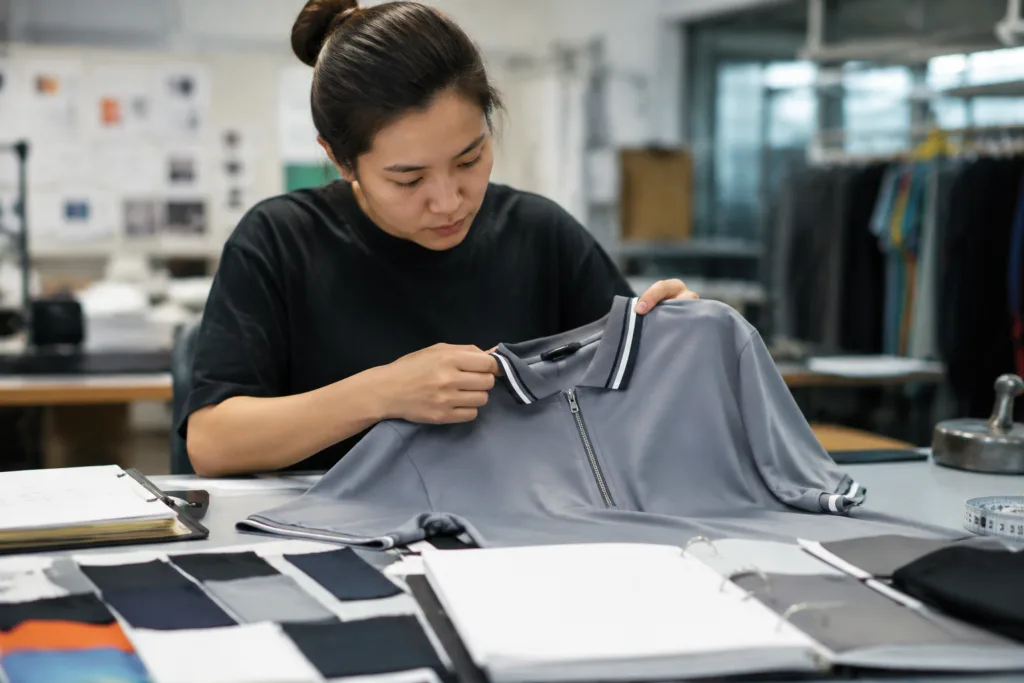
This is where defining acceptable tolerances for placket quality becomes important. Buyers should align with the factory on what level of width variation, stitch deviation, or front-opening asymmetry is acceptable before approval, not after bulk goods arrive.
How placket choice affects cost, MOQ, sampling, and lead time
Not all placket options carry the same sourcing profile. A standard 2-button placket with stock buttons is usually more straightforward than a hidden placket with contrast underlay or a zipper placket with custom pullers. Extra operations, extra trims, and extra approval points typically mean more sampling work.
In general:
- Lower complexity: standard 2-button or 3-button plackets with stock trims
- Medium complexity: contrast plackets, dyed-to-match buttons, special topstitching
- Higher complexity: hidden plackets, zipper plackets, logo buttons, custom trim combinations
MOQ can also be affected by custom components. A buyer may be able to order the garment at one volume level but face higher minimums for custom buttons, zipper colors, or branded hardware. At Ninghow Apparel, this kind of discussion usually needs to happen before sampling is finalized, because trim sourcing and garment construction decisions influence the whole production path.
If the RFQ is vague, the supplier may quote based on assumptions that later change. That is why many sourcing teams benefit from writing a clear RFQ for custom polo specs before requesting final pricing or sample confirmation.
Recommended placket options by use case
Corporate uniform
A 2-button placket is often the safest choice. It looks clean, works across departments, and supports embroidery without making the garment feel too sporty or too fashion-led.
Golf apparel
Both 3-button and zipper plackets can work well. The choice depends on whether the brand image leans more classic golf or modern performance golf.
Teamwear and club programs
Contrast plackets can be effective when paired with coordinated collar and sleeve details. They help create visible identity across teams or organizations.
Casual retail
2-button plackets remain broadly commercial, while selective use of contrast or hidden plackets can create line variety without changing the full garment block.
Premium private label
Hidden plackets or carefully refined 3-button designs often suit a cleaner, more elevated aesthetic. Fabric quality and finishing need to support that direction.
Performance sportswear
Zipper plackets are often the most natural fit, especially when the collection emphasizes lightweight knits, technical trims, and a sharper athletic message.
How to specify placket details in a tech pack
A polo placket should never be left as a rough visual idea. The tech pack needs enough detail for the pattern maker, sample room, and production team to interpret the design consistently. That includes placket type, finished length, width, button count, button spacing, trim callouts, reinforcement method, stitching details, and placement notes.
Useful references include front sketches, close-up construction callouts, measurement points, and sample photos if the buyer is matching an existing concept. Teams that are unsure where to begin should focus on how to specify construction details in a tech pack, because plackets are one of the easiest areas for avoidable interpretation errors.
Common mistakes buyers make
- choosing a placket style based only on appearance without considering end use
- approving buttons without checking scale against collar and placket width
- forgetting to define under-placket contrast, hidden panels, or zipper tape color
- not reviewing wash durability for front-opening stability
- requesting premium details on MOQ-sensitive orders without checking trim minimums
- sending reference photos without written measurements or construction notes
Most sampling issues happen because the placket concept is visually clear in the buyer’s mind but not technically clear in the factory file. A polished inspiration image is not enough on its own.
Manufacturer checklist before sampling and bulk production
Before approving a sample, confirm the placket type, placket length, placket width, collar compatibility, button or zipper specification, trim color, stitching layout, reinforcement method, and expected front appearance after washing. Also verify whether branding elements such as embroidery, heat transfer, or woven labels interact with the placket area.
For bulk readiness, the factory should have a stable method for replication, not just one good-looking salesman sample. Buyers should ask whether the construction is easy to keep consistent across size ranges and production lots. That question matters just as much as the original design choice.
Conclusion
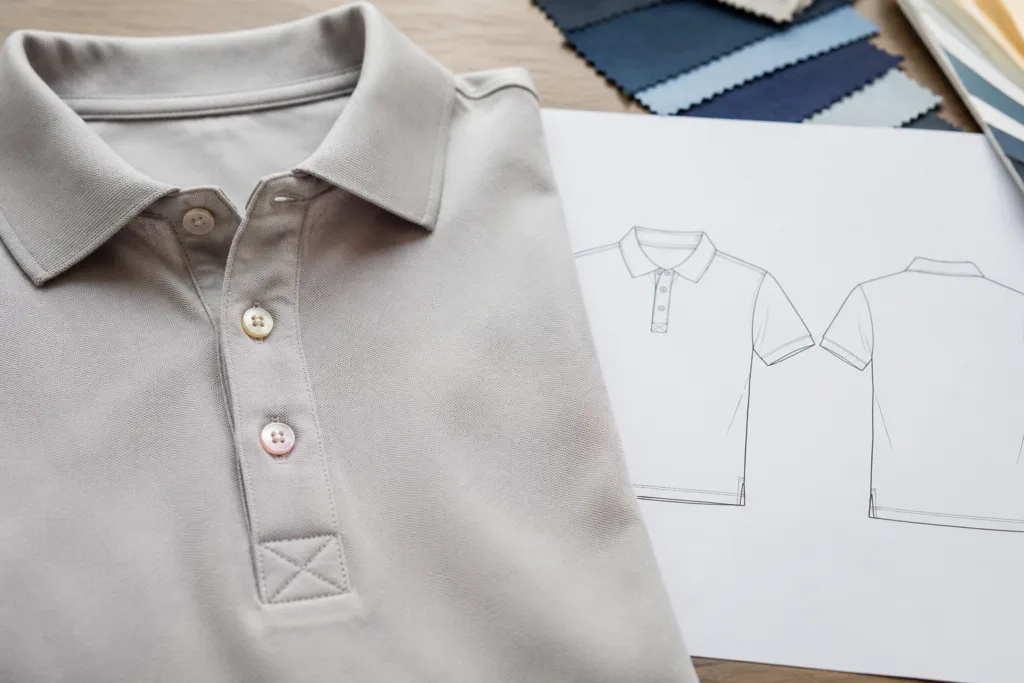
The right polo shirt placket depends on what the product needs to communicate and how it will be used. A standard 2-button placket offers broad versatility, a 3-button version can feel more classic, hidden plackets support minimal premium styling, zipper plackets strengthen technical positioning, and contrast plackets help build visible brand identity.
For sourcing teams and brand owners, the most reliable approach is to evaluate placket choice through both design and production logic. When the front opening is specified clearly in the tech pack and matched to the right end use, the result is a polo that looks more intentional, samples more smoothly, and performs more consistently in bulk.
FAQ
Which polo shirt placket is the most versatile?
A 2-button placket is usually the most versatile because it suits corporate uniforms, casual retail, schoolwear, and many golf programs without looking too formal or too sporty.
Is a 3-button placket better than a 2-button placket?
It depends on the target look and end use. A 3-button placket offers a slightly more classic or elevated appearance, while a 2-button placket is often cleaner and more broadly commercial.
Are hidden plackets harder to manufacture?
Yes, hidden plackets usually require more precise construction because the covered front must sit flat and stay aligned, so they can involve more sampling attention than standard button plackets.
When should I choose a zipper polo placket?
You should usually choose a zipper placket for performance polos, golf apparel, or technical collections where a modern athletic look and easy front opening matter more than a traditional polo appearance.
Do custom buttons increase polo development complexity?
They can, especially if you need logo buttons, special finishes, or exact color matching, because custom trims may add approval steps, minimums, and slightly longer development timelines.
What should a tech pack include for a polo shirt placket?
A tech pack should include the placket type, finished length, width, button or zipper details, spacing, stitching, reinforcement notes, trim colors, and clear visual callouts for the sample room and production team.