

When you place a bulk polo shirt order, the size ratio is just as important as the style spec. If the curve is off, you can end up with too many slow-moving sizes or not enough of the ones your team, customers, or members actually need.
Before you finalize quantities, it helps to think like a factory buyer and a seller at the same time. If you are still comparing suppliers and need bulk polo shirt supplier support, the most useful next step is usually to confirm how the manufacturer handles sample approval, grading, and packing by size. That gives you a cleaner starting point for the order itself.
Why size ratio planning matters before production
A polo shirt size ratio is the quantity breakdown across sizes such as S, M, L, and XL. It is not the same thing as a size chart. The chart tells you the body measurements behind each size, while the ratio tells you how many pieces to make in each size. Both matter because a good chart without a smart ratio can still create the wrong inventory mix.
In bulk production, the ratio affects cutting efficiency, carton planning, stock coverage, and how quickly you can replenish a winning size run. A simple generic split may work for a basic internal uniform order, but it often fails for retail, sports, or mixed customer groups.
For a deeper sourcing framework, clothing size ratio planning is useful when you want to compare sizing logic across different garment categories and avoid treating every order the same way.
What goes wrong when the curve is too generic

The most common problem is over-ordering the middle sizes and under-ordering the sizes that actually move. That can create dead stock, missed reorders, and unnecessary discounting. If the order is for uniforms, the issue may be less visible at first, but it can still create fit complaints and replacement requests later.
A poor ratio also complicates production planning. More size imbalance can increase packing complexity and make it harder to stay within the buyer’s expected distribution. From a factory perspective, a clear size curve helps the production team cut, bundle, and pack with fewer surprises.
- Retail brands risk leftover inventory in unpopular sizes.
- Uniform buyers risk employee complaints and extra remakes.
- Teams and events risk uneven fit across participants.
How order type changes the size breakdown
Different buyers need different starting curves. Corporate uniforms usually lean more heavily on M, L, and XL because the group is known and often mixed in age and body type. Retail brands need a ratio that matches their target market, while event merchandise often uses a safer middle-heavy curve unless participant data is available.
When the order is for officewear or staff apparel, corporate polo shirt ordering guidance can help you think about role mix, gender mix, and employee size spread before you confirm the final quantities.
Here is a practical starting point:
| Buyer type | Starting ratio idea | What to watch |
|---|---|---|
| Corporate uniforms | Lower S, higher M and L, moderate XL | Team demographics and replacement needs |
| Retail brand launch | Balanced M and L, enough S and XL | Target customer profile and sell-through |
| Sports or club order | More M, L, and XL than S | Player build and gender mix |
| Event merchandise | Middle-heavy with safe XL coverage | Attendance profile and leftover risk |
How to estimate S, M, L, and XL without sales history
If you do not have past sales data, start with who will wear the polo shirt. Age range, region, gender mix, and use case all influence the curve. A younger fashion audience may need more S and M. A workwear or teamwear group often needs more L and XL. If the audience is broad and unknown, a middle-heavy curve is usually safer than a highly narrow one.
For new product lines, private label polo shirt line planning is a useful reference because it forces you to think about target customer behavior, not just garment construction.
One simple approach is to start with a sample size set, test fit on real people, and then adjust the ratio based on the group you expect to serve. For example, if your sample try-on group shows that most people are between two sizes, your final order should reflect that spread instead of defaulting to a flat split.
Should you increase XL and larger sizes?
Often yes, but only when the audience supports it. XL and XXL should not be inflated just because they are easy to add. They should increase when the market profile, previous reorders, or fit feedback show a real need. This is especially important in teamwear, workwear, and regions where the customer base tends to run larger.
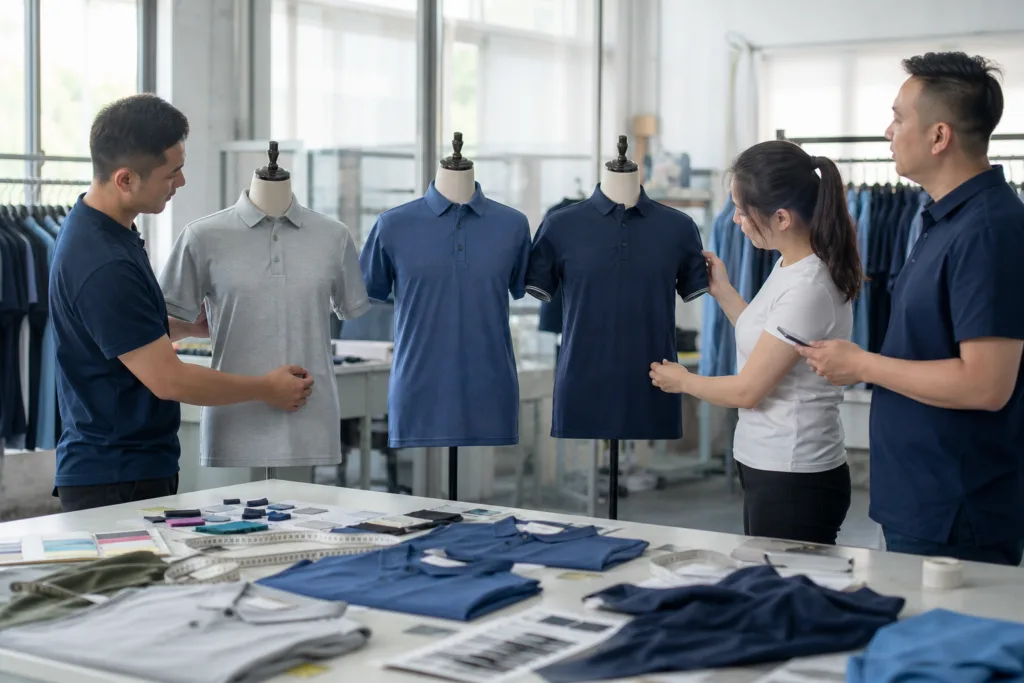
If you are planning a broader assortment, a manufacturer like Ninghow Apparel can help review grading logic, sample fit, and packing ratios so the final order matches the intended audience rather than a generic template.
How to turn past orders into a better size curve
Reorder data is one of the strongest tools you have. Look at which sizes sold fastest, which sizes came back, and which sizes were repeatedly requested after the initial shipment. Returns data can be just as valuable as sales data because it often reveals hidden fit issues or an underweighted size.
If the same sizes keep running short, raise them gradually rather than making a dramatic jump. If a size is consistently left over, reduce it in the next production run and redistribute the volume to the better-performing sizes.
When you want a repeatable planning process, how to prepare a size breakdown in an apparel RFQ is useful because it helps you turn sizing assumptions into clear factory instructions.
How to build a size breakdown sheet for your supplier
A clean size breakdown sheet should show total quantity, size quantities, style name, color, target delivery date, and any special packing or labeling instructions. If your order includes multiple groups, separate them clearly instead of mixing every assumption into one line. This makes it easier for the factory to check feasibility before production starts.
For mixed-gender teams, list the expected wearer group by department or role if that improves accuracy. If the order is for a private label launch, include the intended customer profile so the supplier understands why the curve is built the way it is.
- Total units by color and style
- Exact S, M, L, XL, and larger quantities
- Any special size substitutions allowed
- Packing instructions by size or department
- Notes on fit sensitivity or sample approval
Practical starting curves for bulk polo shirt orders
There is no single correct ratio, but there are sensible starting points. A uniform-heavy order may begin with something like 10% S, 35% M, 35% L, and 20% XL. A retail launch may need a more balanced curve with stronger M and L coverage. A sports team order may lean even further toward L and XL.
The key is to use a starting curve, not a blind default. Then adjust after fit testing, audience review, or historical order data. That is how you reduce inventory risk without overcomplicating the process.
Common mistakes to avoid
The biggest mistakes are treating every customer group the same, ignoring fit feedback, and failing to separate by wearer profile. Another common issue is ordering too many of the easiest sizes to guess. That may feel safe during purchasing, but it often creates the most expensive leftovers later.
It also helps to avoid changing the ratio after approval unless the data really supports it. Once cutting begins, changes become costly. The best time to solve the problem is before the order is confirmed.
Conclusion

A strong polo shirt size ratio comes from practical planning, not guesswork. Start with your wearer profile, compare it against fit data or sample feedback, and then build a ratio that protects both inventory efficiency and customer satisfaction. If you treat the size curve as part of the production plan, not an afterthought, the bulk order is much more likely to work.
FAQs
What is the difference between a size chart and a polo shirt size ratio?
A size chart defines the measurements for each size, while a polo shirt size ratio defines how many pieces to produce in each size. You need both because the chart controls fit and the ratio controls inventory balance.
How do I decide S, M, L, and XL quantities for a first bulk order?
Start with the expected wearer profile, then use a middle-heavy curve if the audience is broad or unknown. Test samples on real people when possible, and adjust the mix based on who is most likely to wear the polos.
Should I increase XL and XXL sizes for teamwear orders?
Increase them when the wearer group, region, or past orders show a real need. Do not add larger sizes just to be safe unless the fit data supports it.
What data should I use to refine a repeat polo shirt order?
Use sell-through data, reorder requests, returns, and fit complaints. Together, these show which sizes were underplanned and which ones were overplanned.
What should be included in a size breakdown sheet for the factory?
Include total quantity, size quantities, color, style, delivery timing, and any packing or labeling notes. If there are multiple buyer groups, separate them clearly so the factory can check the plan accurately.
How can a manufacturer reduce size inventory risk?
A manufacturer can reduce risk by reviewing the target wearer profile, checking sample fit, validating the ratio before cutting, and keeping the production instructions clear. That process helps the order match real demand instead of a generic curve.