
A strong pre-shipment review reduces avoidable returns, rejects, and rework. For buyers managing bulk orders, a polo shirt quality checklist for pre-shipment inspection helps turn quality concerns into a clear, repeatable process instead of a subjective final check.
From a manufacturer’s QC perspective, the goal is not to inspect everything equally. It is to catch the defects that affect fit, appearance, durability, and brand consistency before cartons leave the factory.
Why Polo Shirt Defects Show Up Before Shipment
Most polo shirt defects are visible long before delivery if the buyer knows where to look. Problems often come from fabric variation, unstable collars, inconsistent sewing, decoration misplacement, or poor packing discipline near the end of production.
A practical checklist should focus on the parts customers notice first: collar shape, placket alignment, sleeve symmetry, logo quality, fabric surface, and measurement consistency. If those areas pass, the shipment is usually much easier to accept with confidence.
How to Use This Checklist
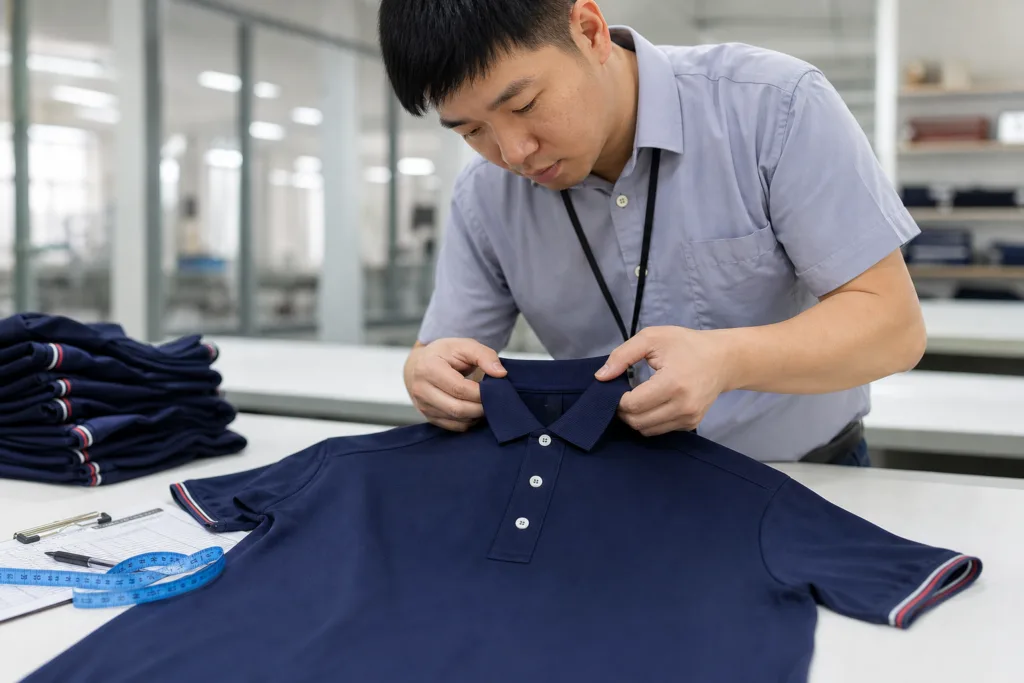
Inspect samples by defect type, not just by carton. Start with overall appearance, then move into measurements, labeling, and packaging. For larger bulk orders, keep notes on whether a defect is isolated, recurring, or spread across sizes or colorways.
When a factory works to a defined inspection standard, the result is far more consistent. If you need a reference point for acceptable variation, apparel quality tolerance standards help buyers separate minor cosmetic issues from true shipment risks.
Collar Defects Buyers Should Check
Collars are one of the most important visual checkpoints on a polo shirt. Common defects include curling edges, uneven collar points, seam twisting, puckering at the neckline, and left-right asymmetry.
A collar should lie flat, sit evenly on both sides, and maintain shape after handling. If the neckline seam is not balanced, the shirt can look off even when the rest of the garment is acceptable. For a deeper look at this issue, see common polo collar quality issues.
What to inspect
- Collar width and shape consistency
- Flatness at the neckline seam
- Left and right collar point symmetry
- Stability after light stretching
Placket and Button Problems
The placket should be straight, smooth, and properly reinforced. Defects often appear as crooked placket stitching, uneven button spacing, loose threads, bad topstitching, or buttons that are poorly secured.
Check whether the button line runs cleanly down the center front and whether the buttonholes are cut and stitched consistently. Wrinkles around the placket usually signal tension problems during sewing or pressing.
| Area | What to Check | Common Defect |
|---|---|---|
| Placket | Alignment and flatness | Twist, ripple, crooked line |
| Buttons | Security and spacing | Loose button, uneven gap |
| Buttonholes | Clean cut and stitching | Fraying, distortion |
Sleeve Cuff Defects
Sleeve cuffs should match in width, stretch, recovery, and seam quality. Common issues include stretched-out ribbing, uneven cuff opening, broken stitches, and size variation between left and right sleeves.
Because cuff performance affects wear comfort and appearance, it is worth checking on multiple size runs. If the cuff shape is inconsistent, the problem may get worse after washing or repeated use, especially on commercial or teamwear orders.
Logo and Decoration Inspection
Decoration errors can damage an otherwise acceptable order. Buyers should inspect embroidery density, print sharpness, color accuracy, placement, and wash durability. Misplaced logos or inconsistent branding are especially costly because they affect every unit’s commercial value.
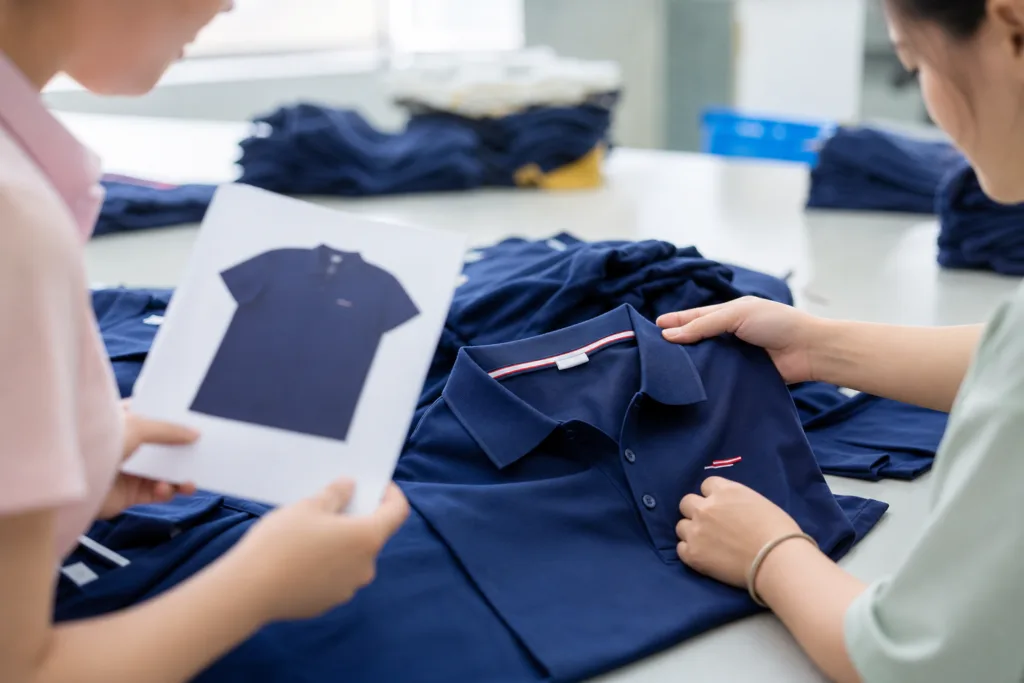
For branded polo programs, even small shifts in logo placement become visible quickly. A useful reference is logo placement and embroidery defects, especially when comparing samples to bulk production.
In supplier audits, decoration should always be checked against approved placement points and approved artwork. If the brand uses multiple decoration methods, each one needs its own tolerance range and inspection method.
Fabric Defects to Watch For
Fabric problems can be cosmetic or structural. Inspect for stains, shade variation, pilling, holes, rough handfeel, fabric slubs, surface contamination, and inconsistent knit texture across panels.
Buyers should also compare shade under consistent light, since fabric variation is easy to miss in mixed warehouse lighting. If the same order contains different production lots, color variation can show up at carton opening even when the shirts looked similar on first review.
To understand how fabric performance changes after laundering, it helps to review polo shirt wash test approval before final shipment decisions are made.
Measurement Points Buyers Should Verify
Measurement checks should focus on the dimensions that affect fit and size consistency. For polos, common points include chest width, body length, shoulder width, sleeve length, collar opening, and cuff opening.
Use the approved spec sheet and check the same points across random samples. Small variation is normal in production, but repeated drift in one direction often points to cutting or sewing control issues.
| Measurement | Why It Matters | Typical Risk |
|---|---|---|
| Chest width | Core fit consistency | Too tight or too loose |
| Body length | Wearability and proportion | Short or uneven hem |
| Sleeve length | Balance and size grading | Uneven appearance |
| Shoulder width | Upper-body fit | Poor drape |
Packaging and Label Inspection
Even when the garment is acceptable, poor packaging can create transit damage or a bad first impression. Check hangtags, care labels, size labels, folding consistency, polybag condition, carton marking, and carton integrity.
Labels should be legible, correctly placed, and consistent with the approved order details. Packaging should also protect the shirt from moisture, dust, and compression during shipping and storage.
How AQL Sampling Works in Practice
AQL sampling helps buyers inspect a manageable number of units while still making a structured shipment decision. The point is to identify whether defects are random, limited, or frequent enough to justify rework or rejection.
For practical use, the buyer and supplier should agree on the inspection level, defect classification, and handling rules before production ends. A clear standard reduces disputes and keeps everyone focused on the same quality target.
When buyers want a better frame for deciding how much variation is acceptable, apparel quality tolerance standards are useful for setting the line between minor inconsistency and serious nonconformance.
A Practical Pre-Shipment Polo QC Checklist
Use the checklist below as a final pass before shipment approval. It is best used on random samples from multiple cartons, not only on hand-picked units.
- Collars lie flat and match left to right
- Placket is straight, smooth, and fully stitched
- Buttons and buttonholes are secure
- Sleeve cuffs match in size and recovery
- Logo or print placement matches the approved sample
- Fabric is clean, even, and free from visible flaws
- Measurements stay within agreed tolerance
- Labels and packaging match order requirements
- Cartons are intact and marked correctly
- Random samples reflect the same quality level across the lot
When to Reject, Rework, or Accept
Reject a shipment when the defects are repeated, structural, or likely to affect customer perception across the order. Rework makes sense when the issue is correctable without damaging the garment or delaying the program too much. Accept only when the defects fall within the agreed tolerance and do not change the product’s commercial value.
In factory practice, this decision is easier when buyers have already approved sample criteria and pass/fail rules. If inspection thresholds were never aligned, shipment disputes usually start at the worst possible time.
Final Buyer Tips for Preventing Future Defects

The best QC outcomes come from early control, not end-stage correction. Confirm the sample approval process, lock measurement specs, review decoration placement, and request production-stage checks when the order is large or time-sensitive.
For brand teams building a repeat order program, it also helps to align packaging, labeling, and size planning early. Ninghow Apparel often sees fewer shipment issues when buyers treat QC as a production workflow, not a last-minute gate.
Factories that build in discipline around cutting, sewing, finishing, and packing usually deliver more stable polo programs. Buyers who document the same checkpoints every time can compare orders more accurately and reduce avoidable surprises.
FAQ
What is the most important defect to check on a polo shirt? The collar is often the first place buyers should inspect because shape, curl, and symmetry strongly affect overall appearance.
Should buyers inspect every carton? Not usually. Random inspection from multiple cartons is more practical, as long as the sampling method is consistent and the order is large enough.
How many defects are too many? That depends on the agreed tolerance and defect severity, but repeated or structural defects usually justify rework or rejection.
Why do polo shirts pass sample approval but fail bulk inspection? Bulk production may use different fabric lots, sewing operators, or finishing conditions, which can introduce variation after the sample stage.
What should be checked on branded polos? Logo placement, embroidery or print quality, color match, and label accuracy should be checked alongside fit and garment construction.
Can wash testing help before shipment? Yes. Wash testing helps reveal shrinkage, collar distortion, color loss, and decoration issues that may not show up in the first visual inspection.