
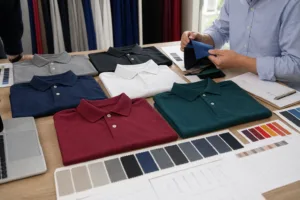
Buying polo shirts for a school, club, or team usually involves more moving parts than a standard office order. Budgets are tighter, size ranges are wider, garments are washed more often, and branding has to stay consistent across repeat orders. That combination makes product selection less about trend and more about long-term practicality.
For buyers sourcing custom polo shirts for teams, the first decision is not just color or logo placement. It is whether the garment can support mixed age groups, repeated wear, replacement orders, and a cost structure that still works when the program grows. A good team polo program usually starts with clear priorities and a product spec that protects the parts of the order that matter most.
Why team polo shirts have different buying priorities
Team and organization orders are usually worn in more demanding conditions than corporate polos. Shirts may be used for school days, events, travel, volunteer work, sideline wear, and weekly club activities, which means they need to handle frequent laundering and broad fit expectations.
These buyers also deal with operational issues that retail shoppers do not face. They may need youth and adult sizes in one order, role-based color distinctions, replacement pieces for new members, and packing methods that make handout day easier. From a manufacturer perspective, the most successful programs define those needs early instead of treating them as late-stage add-ons.
Who this guide is for
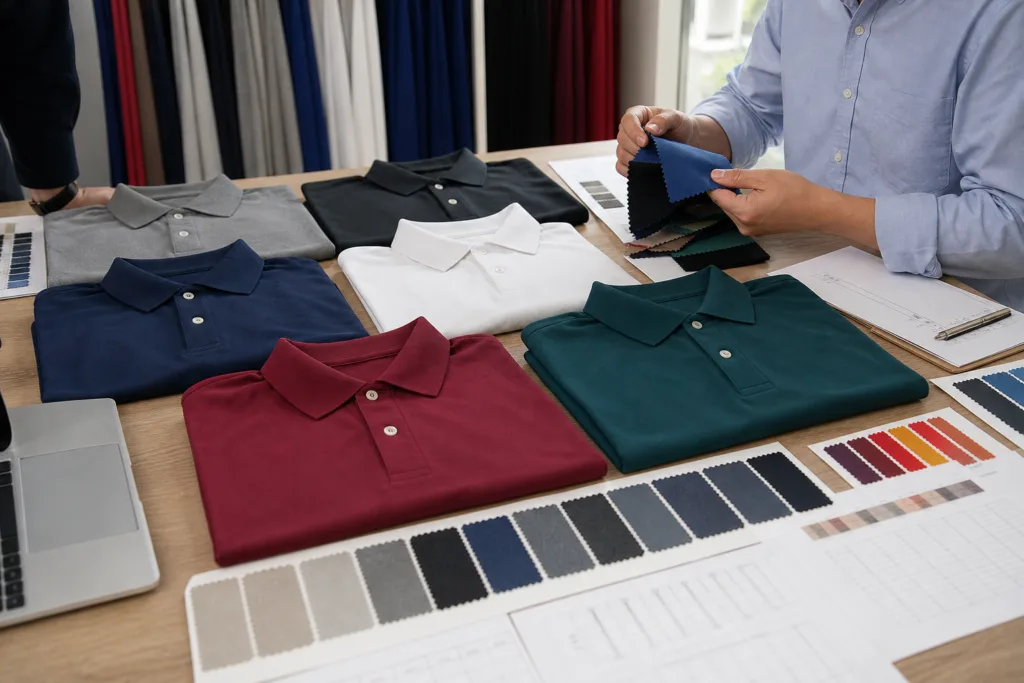
This guide is for procurement teams, school administrators, club organizers, coaches, team managers, and brand owners supplying organized groups. It is especially relevant when one purchase has to satisfy budget holders, end users, and people handling distribution.
It also applies to buyers who expect repeat orders over time. A polo shirt that works for a one-time event may not be the right choice for a team program that adds members every season and needs branding consistency from batch to batch.
How to choose fabric without overbuying features
Fabric affects cost, comfort, durability, and branding results more than many buyers expect. The right choice depends on where the polos will be worn, how often they will be washed, and whether the priority is a cleaner presentation, easier care, or a lower total cost.
When choosing the right fabric for school and team polos, buyers usually compare cotton-rich options, polyester-heavy blends, and performance knits. Cotton can feel familiar and soft, but blends often hold shape better and dry faster in active use. For schools and clubs that need repeatability and easier maintenance, a balanced blend is often the more practical middle ground.
Common fabric trade-offs
- Cotton-rich polos: softer hand feel and traditional look, but may shrink more and take longer to dry.
- Poly-cotton blends: better cost-performance balance for repeated use, easier care, and more stable sizing.
- Performance polyester polos: lighter and faster drying, but not always the preferred look for formal school or club use.
Buyers should also review knit weight, pilling resistance, collar recovery, and colorfastness. Those details often matter more in real use than marketing-style fabric descriptions.
Budget-first sourcing: what to protect when spending is limited
When budgets are tight, the goal should not be to make every element cheaper. It should be to protect the parts that most affect lifespan, appearance, and reorder consistency. Cutting the wrong detail can create higher replacement costs later.
The safest areas to protect are fabric stability, basic stitching quality, color consistency, and logo readability. Areas with more room for cost control usually include packaging complexity, extra trims, specialty finishes, and oversized decoration programs.
| Budget Area | Usually Worth Protecting | Often Flexible |
|---|---|---|
| Fabric | shape retention, wash stability, color consistency | premium hand feel upgrades |
| Branding | clear logo execution, durable placement | multiple logo locations |
| Construction | seam strength, collar structure | decorative details |
| Packaging | correct sorting accuracy | individual premium presentation |
From a costing standpoint, simpler specs often outperform bargain specs. A clean, durable polo with one well-executed logo usually gives schools and teams a better result than a cheaper garment overloaded with custom details.
Balancing durability, comfort, and wash resistance
Durability for team polos is not only about thick fabric. It is about how the garment performs after repeated wash cycles, movement, storage, and reissue between members. Buyers should ask how the shirt holds up at the collar, placket, side seams, and logo area after normal laundering.
One practical way to reduce risk is setting wash-test standards for durable team polos before bulk production. That discussion helps align expectations on shrinkage, color change, logo adhesion or stitch stability, and general garment appearance after care. For programs where shirts are used weekly, wash performance is one of the clearest signals of value.
Ninghow Apparel typically sees fewer repeat-order issues when buyers define acceptable wash behavior during sampling rather than after delivery. Even a simple pre-production check can prevent disagreements around fit change, twist, or logo wear.
Logo application options and how they affect cost and longevity
Logo method has a direct impact on unit cost, visual style, and how the shirt ages. The right option depends on the logo size, detail level, expected wash frequency, and whether the polos are meant to look formal, sporty, or highly branded.
- Embroidery: durable, professional, and common for school crests or club logos, but cost can rise with stitch count and larger designs.
- Screen printing: efficient for bold graphics and larger runs, but less common on more formal polo programs.
- Heat transfer or badge application: useful for sharp detail or special finishes, but requires clear wash expectations.
Buyers who want a polished look without overcomplicating the order should consider controlling logo costs with embroidery choices. Small changes in logo size, thread density, and placement can materially affect pricing without changing the identity of the program.
Managing mixed sizes in one order
Schools, clubs, and teams rarely order from a narrow size range. It is common to combine children’s, youth, women’s, men’s, and larger adult sizes in a single program, which makes size planning more important than many first-time buyers expect.
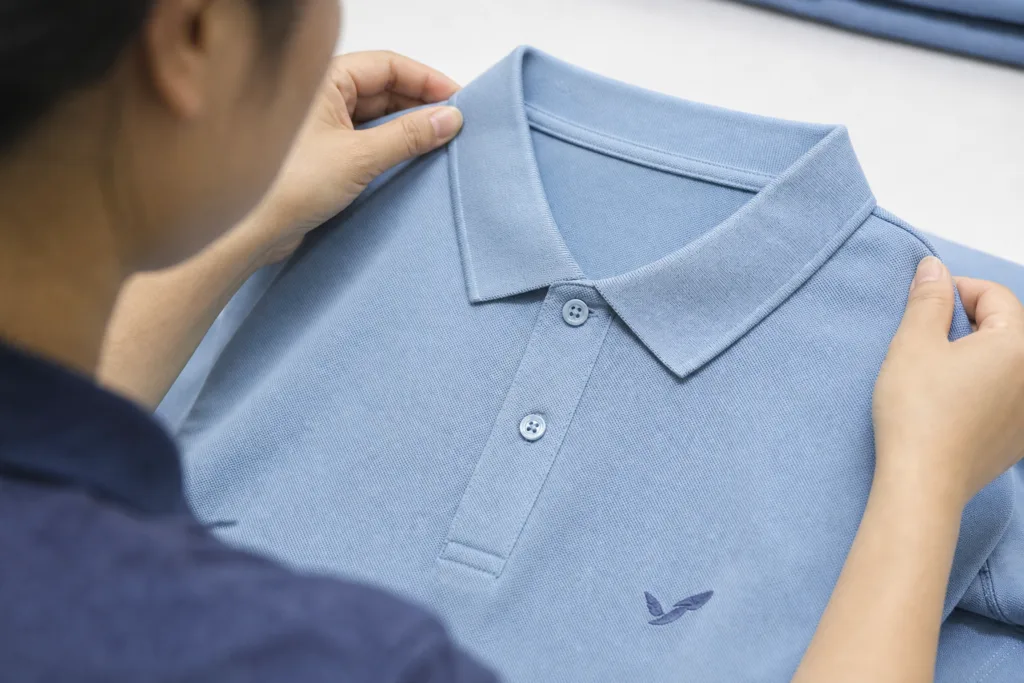
That is why planning size ratios for mixed youth and adult orders should happen before final quotation approval. Size breakdowns affect inventory balance, make-up cost, and the risk of leftover units in unpopular sizes. A realistic ratio, built from actual member lists or prior orders, is usually more useful than estimating evenly across the full range.
How to reduce sizing problems
- Use a measurement chart tied to the approved sample, not generic size labels alone.
- Separate youth and adult fit logic instead of assuming direct scaling.
- Confirm whether women’s cuts are needed or if one unisex shape is acceptable.
- Hold a small contingency quantity for late additions when budget allows.
Common MOQ and ordering challenges
Mixed-size programs can create MOQ pressure, especially when buyers want many colors, several logo versions, or both youth and adult fits in small quantities. Minimums are easier to manage when the program standardizes the base fabric, keeps decoration methods consistent, and limits unnecessary style variations.
It also helps to define which parts of the order must match exactly across future runs. If collar style, fabric color, and logo placement are locked early, replacement orders become much easier even when size demand changes later.
Lead times and what can delay production
Team apparel orders often work against fixed dates such as school openings, tournaments, ceremonies, camps, and registration deadlines. That makes lead-time planning more important than chasing the last possible price improvement.
Typical delays come from unfinished artwork, unclear size breakdowns, fabric approval changes, last-minute logo edits, and waiting too long to confirm samples. A buyer who sends clean specifications early will usually get a more accurate production schedule than one who requests quotes with missing details and fills gaps later.
How to handle reorders and new members later
For organizations with turnover, the first order should be built as the foundation for future replenishment. That means keeping approved fabric references, lab dip records when relevant, logo files, placement measurements, size specifications, and trim details organized from the start.
Repeat-order stability is usually easier when the original product is not over-customized. Standardized polos with well-documented branding can be replenished more reliably than highly customized garments that depend on multiple limited components.
Packaging and distribution for organized groups
Packaging is often overlooked until goods are ready to ship, but it can save substantial labor for schools and team organizers. A program with 200 units sorted by class, team, or roster name is easier to distribute than one large mixed carton shipment.
Useful options include size-sorted bundles, individually bagged units by member, color-grouped cartons, and carton labeling by team or division. The best choice depends on whether one person will distribute everything centrally or multiple coordinators will handle different groups.
What to include in a team polo inquiry
Accurate quotations come faster when the inquiry includes intended use, estimated quantity, size breakdown, target fabric direction, logo method, artwork count, color requirements, and the delivery deadline. Buyers should also state whether the order is a one-time event run or the start of an ongoing uniform program.
If there are budget limits, say so clearly. Manufacturers can usually suggest simpler ways to meet the target if they know which features are essential and which are optional.
A practical checklist for comparing suppliers
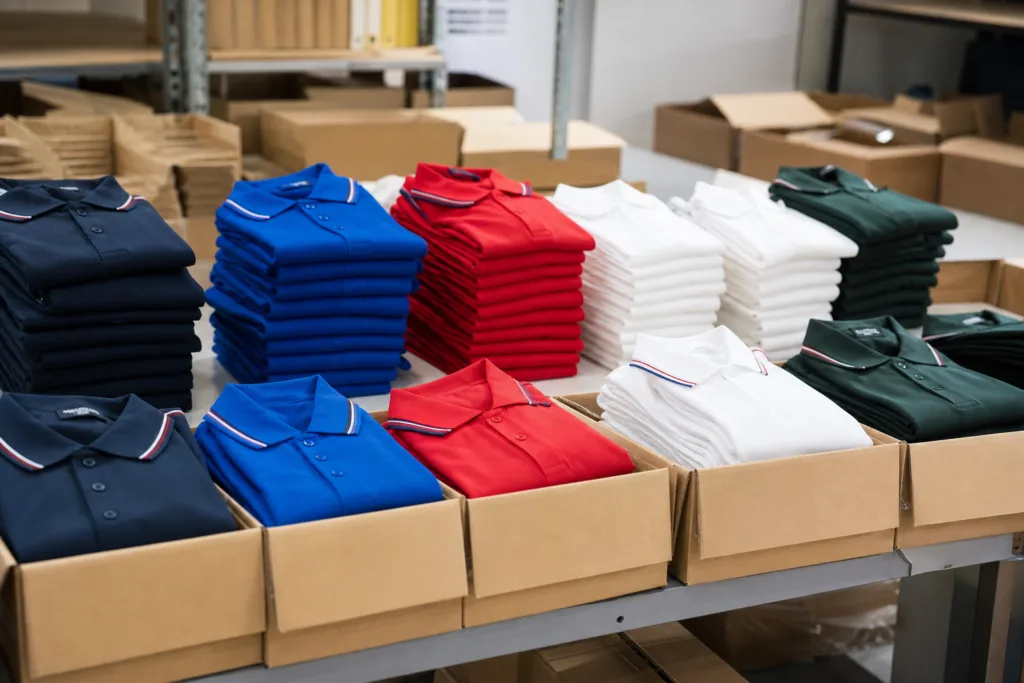
Before placing a custom team polo order, compare suppliers on decision points that affect real program performance rather than just unit price. The cheapest quotation may not be the most stable option once wash results, reorder support, and sorting accuracy are considered.
- Can the supplier support both current volume and future repeat orders?
- Is the fabric recommendation appropriate for your actual use case?
- Are size charts and fit references clear for youth and adult wearers?
- Is the logo method suitable for your budget and expected wash frequency?
- Can the supplier explain likely lead-time risks in advance?
- Will packaging and carton sorting match how you distribute uniforms?
- Are sample approval and quality checkpoints clearly defined?
A strong team polo order is usually the result of good specification discipline, not just hard price negotiation. When buyers protect the right details early, they are more likely to get a program that wears well, looks consistent, and remains manageable when the next order comes around.
FAQs
What fabric is usually the most practical for custom team polos?
For many schools, clubs, and teams, a poly-cotton blend is the most practical balance because it is easier to care for than pure cotton and often more presentation-friendly than fully synthetic performance fabric.
How can we lower costs without making the polos look cheap?
The safest approach is to simplify decoration, reduce unnecessary custom details, and choose a stable base fabric while protecting construction, logo clarity, and wash performance.
Should we order extra sizes for future members?
That depends on turnover and budget, but many organizers keep a small buffer in common sizes if they expect new members soon and want to avoid a separate small reorder.
Is embroidery always the best logo option for polo shirts?
Not always. Embroidery works well for many crests and team marks, but the best method depends on logo detail, garment use, budget, and how formal the final look needs to be.
What causes delays in custom polo production?
Common causes include incomplete size breakdowns, artwork changes after approval, delayed sample confirmation, fabric substitutions, and missing information in the initial inquiry.
What should we send to get an accurate quote faster?
Send the estimated quantity, size range, preferred fabric direction, logo files, decoration method, color requirements, target delivery date, and any packaging or sorting needs.