

Repeat production sounds simple on paper: use the same polo, place the next order, and expect the same result. In practice, polo shirt reorder consistency depends on whether buyers and manufacturers have preserved the right references, locked the right variables, and documented the right decisions from the first run. Without that structure, even a good initial order can drift over time in color, hand feel, fit, logo appearance, and finishing details.
For sourcing teams building a multi-season polo program, choosing a custom polo shirt supplier for consistent reorders is less about one successful shipment and more about repeatable control. A supplier should be able to work from stable production records, approved standards, and archived samples so each reorder starts from evidence rather than memory. That foundation is what makes long-term repeat production more predictable.
Why repeat order polo shirts are harder to control than first production runs
Many buyers assume the first order carries the most risk because the product is new. In reality, reorders often create a different kind of risk: everyone believes the style is already solved, so fewer checkpoints are used. The result is that changes in yarn availability, knitting batches, dye lots, trimming sources, machine settings, or operator interpretation can pass through unnoticed.
Polos are especially sensitive because they combine several variables in one garment. Fabric weight, collar and cuff rib matching, placket construction, button color, logo method, and post-wash behavior all influence how “the same polo” is perceived. If even one of these shifts, the finished reorder may look close on paper but not close enough when placed beside previous stock.
A good way to think about how repeat apparel orders stay consistent is to treat each reorder as a controlled reproduction, not a casual repeat. That means the supplier and buyer should confirm which elements must remain identical, where tolerances are acceptable, and what records will be used as the governing reference before bulk production starts.
The main consistency risks in reorders

Most reorder variation falls into four practical categories: fabric batch variation, color drift, fit changes, and decoration differences. These do not always happen separately. A different fabric lot can change shade perception, shrinkage can change garment measurements, and a small embroidery setting change can make the logo look heavier or less clean than the last run.
Fabric batch variation
Even when the fabric composition is nominally the same, different lots may vary in surface texture, compactness, stretch recovery, and finish. For polo shirts, that can affect drape, body, and wash response. Pique structures can be particularly noticeable because stitch definition changes how color reflects and how the logo sits on the surface.
Color drift
Color consistency is one of the most common reorder problems because buyers often remember the target shade visually rather than maintaining a formal standard. When the new bulk is approved against a general color name instead of a retained fabric standard, small differences can accumulate from one order to the next.
Fit changes
Pattern edits, grading adjustments, or even different sewing handling can alter fit. A polo that is only slightly shorter in body length or tighter in chest may still pass a casual inspection, yet cause issues for uniforms, eventwear, retail replenishment, or club programs where old and new stock must be mixed together.
Decoration differences
Embroidery density, thread sheen, print coverage, transfer temperature, patch edge finishing, and placement tolerance all affect perceived consistency. These details matter even more when the buyer is matching prior inventory already in stores or in end-user circulation.
How fabric lot differences affect hand feel, shrinkage, and custom polo color consistency
Fabric is often the hidden driver of reorder inconsistency. Two polo fabrics can share the same fiber blend and weight target but still behave differently because of yarn source, knitting tension, dyeing conditions, or finishing treatment. That difference may show up first as hand feel, but it usually reaches further into shrinkage performance and visual color match.
When evaluating stock fabric vs custom-dyed fabric, buyers should think about repeatability as much as price or speed. Stock fabric can reduce lead time, but if the stock lot changes between orders, exact color and texture continuity may be harder to maintain. Custom-dyed fabric usually offers better control over brand colors, but only if the standard, dye recipe expectations, and approval steps are preserved carefully.
For long-term polo programs, the practical question is not whether variation can be eliminated completely. It is whether the acceptable range is defined early enough to avoid surprises. A reorder that passes visual review under factory lighting may still feel different in hand or shrink differently after washing if the fabric lot changed and no comparative check was made against the approved reference.
Why an approved sample should always be the reorder reference point
Memory is a weak production tool. Team members change, factories may run the style months later, and written notes alone rarely capture every visual and tactile decision made during development. That is why the approved sample should function as the physical master reference for all future reorders.
The sample should reflect the final approved combination of fabric, color, trim, construction, logo method, logo position, measurement spec, and finishing level. If the sample used for reorder comparison differs from what was actually approved for bulk, confusion enters the process immediately. Buyers should also make sure the sample is clearly labeled and stored in a way that avoids fading, contamination, or mix-ups with older prototypes.
In practice, the apparel sample approval process is what determines whether a reorder will have a strong reference point later. A well-managed approval stage creates a fixed benchmark for color, fit, and workmanship. A rushed sample stage usually forces the reorder team to reconstruct key decisions after the fact.
How to manage color standards for repeat orders
Color control for polos should not depend on a verbal instruction such as “same navy as last time.” That kind of shorthand is one of the main reasons repeat orders drift. Instead, buyers should build a layered color reference system that can still work even if a new merchandiser, technician, or production planner joins the process later.
Use a stable color code
A recognized code or internal brand color ID gives everyone a common language. It should appear consistently on the tech pack, purchase order, sample comments, and factory production sheet. This does not replace a physical standard, but it reduces interpretation errors.
Retain approved lab dips and fabric swatches
Lab dips show the intended shade before bulk dyeing, while approved bulk swatches show how the color actually looked on the final fabric base. Both matter. The lab dip explains the target, and the swatch explains the real approved outcome.
Approve color on the actual fabric structure
A polo body fabric, rib collar, cuff rib, and placket may reflect color differently even when dyed to the same target. Approving all relevant components together helps prevent mismatch in the finished garment.
Review under consistent lighting
Color decisions should be checked under agreed lighting conditions and, when practical, against retained previous-order references. This is especially important for dark shades, heathers, and saturated corporate colors.
How to save logo decoration parameters across production runs
Logos fail consistency checks when teams archive artwork but not execution settings. A vector file or image alone does not preserve thread coverage, stitch density, underlay choice, print ink deposit, transfer pressure, or patch edge treatment. Those process settings often determine whether the reorder looks the same as prior stock.
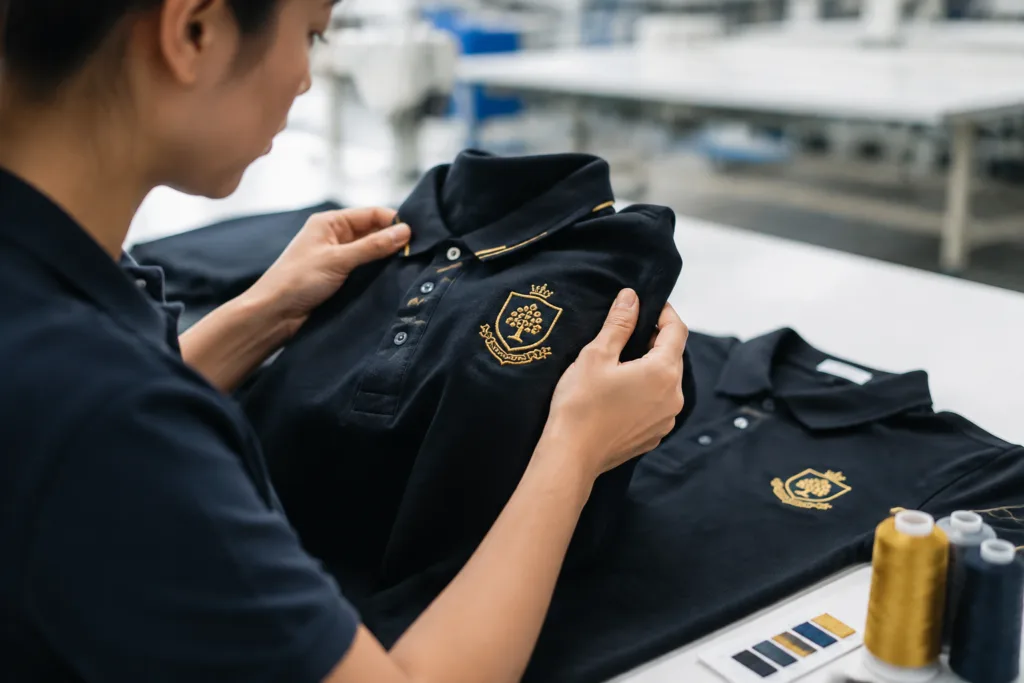
For embroidery, record thread brand or equivalent standard, thread color code, stitch count, density, backing type, hooping method, and final logo dimensions. For screen printing, archive ink type, mesh approach, print order, curing conditions, and placement measurements. For heat transfer, keep transfer source, application temperature, dwell time, pressure, and peel method. For patches, document border style, attachment method, placement template, and approved appearance after washing.
A manufacturer such as Ninghow Apparel typically reduces reorder variation when these parameters are stored as part of the production record rather than left inside one operator’s workflow. That makes the logo method repeatable even when machines, teams, or production dates change.
How to keep pattern, grading, and size tolerance consistent
Fit consistency requires more than saving a size chart. The supplier should preserve the approved base pattern, grading rules, point-of-measure definitions, construction method, and any approved tolerance interpretation used during the original order. Otherwise, a garment can technically follow the same measurement table while fitting differently in wear.
Polos are sensitive to several fit-related details: collar stand shape, placket length, shoulder balance, sleeve opening, side vent length, hem shape, and shrinkage allowance. A small change in any of these can affect how the garment sits on the body. When buyers compare old and new stock side by side, these are often the differences they notice first.
Teams should also work from clear apparel quality tolerance standards so inspection decisions stay consistent across runs. Tolerances help define what is acceptable in bulk production, but they should not be used to excuse avoidable drift. The goal is controlled repeatability, not repeated variation within a wide range.
What purchasing teams should archive for every reorder
A reorder becomes easier when the buyer can pull a complete production file instead of chasing scattered emails and chat messages. The archive should be practical, not theoretical, and it should reflect the actual documents used to approve the prior run.
- Approved sample: the physical garment that represents the final standard
- Tech pack: style details, construction notes, artwork placement, and materials
- Bill of materials: fabric, rib, buttons, labels, packaging, and decoration components
- Color standard: color code, approved lab dip, and retained swatches
- Size spec and grading: point-of-measure chart, tolerance, and shrinkage expectations
- Production notes: approved deviations, special handling points, and known risk controls
- Inspection records: findings from prior bulk production and corrective actions taken
This archive should be available to both the sourcing side and the manufacturing side before the next PO is confirmed. If either side is working from incomplete records, the reorder process becomes dependent on assumptions.
How manufacturers should build a reorder production record
A reliable reorder system is not just a folder of documents. It should work as a production record that ties together what was approved, what was produced, and what was learned. That record becomes more valuable with each repeat order because it captures known sensitivities of the style.
A useful reorder production record for custom polos should include the approved sample ID, fabric lot history, dye approval references, trim sources, logo execution settings, pattern and grading version, previous inspection results, wash-test observations, and final packing notes. It should also flag any substitutions or exceptions, even if they were accepted in the prior run.
From a manufacturer perspective, this record helps production teams avoid restarting the style from zero. From a buyer perspective, it creates accountability because each reorder can be checked against a documented standard instead of informal recollection.
Common mistakes buyers make when placing repeat order polo shirts
One common mistake is placing a reorder with only a past PO number and a short note such as “repeat exactly.” That instruction may be clear in intent, but it does not confirm whether the original order had any approved corrections, substitutions, or quality issues that should be addressed this time.
Another mistake is approving a new fabric or color submission without comparing it directly to the approved reference sample. Buyers also run into trouble when they assume logo placement files are enough, when they skip wash or shrinkage checks on a changed fabric lot, or when they change size ratios without reviewing whether the grading and fit history still align with demand.
Timing is another factor. If the reorder is placed late and the production calendar is compressed, teams often reduce checkpoints to save time. That usually increases the risk of inconsistency rather than solving it.
A practical reorder checklist before confirming the next bulk order
Before approving the next production run, buyers should verify that the reorder is being built from the last approved standard, not simply from the style name. A short confirmation process can prevent most repeat-order surprises.
- Confirm the approved sample and version number being used as the reorder master
- Verify fabric composition, structure, weight target, and lot comparison method
- Reconfirm color standard using code, swatch, and any required lab dip or bulk submission
- Check logo method, dimensions, thread or ink references, and placement template
- Review size spec, grading, shrinkage allowance, and tolerance expectations
- Recheck any prior production issues and how they will be prevented this time
- Clarify whether any raw material substitutions need buyer approval before bulk start
- Align inspection points, approval timing, and shipment expectations
This checklist is most effective when both buyer and supplier sign off on the same reference set before materials are committed.
How Ninghow supports long-term reorder stability for custom polo programs

For repeat polo programs, the practical role of a manufacturer is to reduce preventable variation through documented controls. That usually means preserving approved references, keeping decoration settings traceable, aligning bulk production with archived specs, and checking new material lots against prior standards before output scales up.
When reorder systems are structured properly, repeat production becomes less dependent on individual memory and more dependent on shared records. That is the real basis of polo shirt reorder consistency: stable references, clear tolerances, and disciplined communication across development, purchasing, and production.
FAQ
Why do polo shirt reorders change even when the style name stays the same?
Because style names do not control fabric lots, dye results, logo settings, pattern versions, or production handling. Reorders stay consistent only when those technical references are retained and checked again before bulk production.
What is the most important reference for a polo shirt reorder?
The approved production sample is usually the most important reference because it combines the final fabric, color, construction, logo execution, and fit standard in one physical benchmark.
Should buyers approve a new lab dip for every reorder?
If the fabric is being dyed again or the lot has changed, approving a new lab dip or equivalent color submission is often a practical safeguard, especially for brand colors that need close visual continuity.
How can embroidery stay consistent across repeat polo orders?
Buyers and suppliers should archive more than the logo artwork. They should also retain thread codes, stitch settings, backing type, placement measurements, and an approved decorated sample for comparison.
Do size tolerances mean the fit can change between orders?
Tolerances define acceptable production range, but they should not replace fit control. If the pattern, grading, fabric behavior, or shrinkage allowance changes, the wearer may notice a fit difference even when measurements still fall within tolerance.
What should a purchasing team send with a polo reorder request?
At minimum, send the approved sample reference, tech pack, color standard, size spec, bill of materials, logo details, and any production notes or corrections from the last order.