
Packaging decisions for polos are easier when they are planned with production, not treated as an afterthought. The right pack method affects labor, carton efficiency, size sorting, and how the order is received by retail staff, employees, or event teams.
If you are still defining the garment program itself, it helps to align packaging with the factory’s workflow early. A custom polo shirt supplier can usually confirm which packaging steps are realistic for your order volume, decoration method, and delivery format, so the final packing list matches the way the goods will actually move through production.
Why packaging should be decided before production starts
Custom polo shirt packaging is not just a finishing detail. It can affect folding, labeling, ticketing, carton build, inspection time, and the number of handling steps between sewing and shipment. When packaging requirements are unclear, buyers often see avoidable delays because the factory has to pause and confirm label placement, pack ratios, or special inserts.
For buyers, the main question is not whether packaging looks good. It is whether the pack method supports the use case. Retail orders need shelf-ready presentation. Corporate uniforms need easy internal distribution. Events need fast handout and clear size identification. E-commerce needs protection and a clean unboxing experience.
How packaging needs change by order type
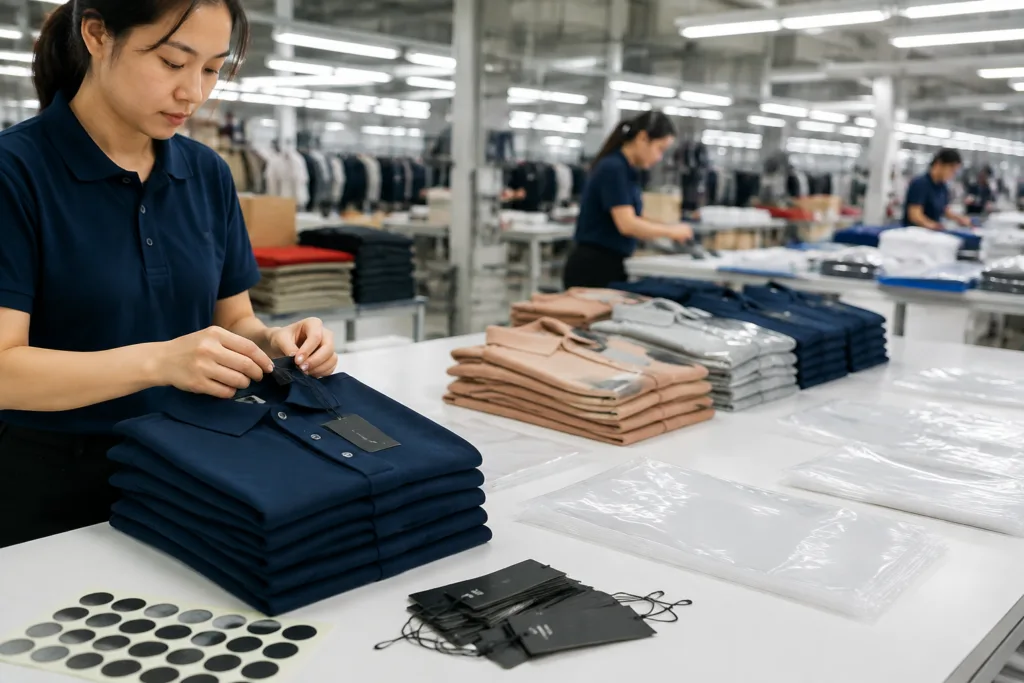
The same polo shirt can be packaged four different ways depending on where it is going. Retail programs usually need branding and retail compliance. Corporate uniforms need order accuracy and fast sorting. Event orders need speed and low handling cost. E-commerce needs protection and compact shipping efficiency.
That is why buyers should define packaging by destination, not by preference alone. A factory can support many pack styles, but each added requirement affects labor and coordination. If the goal is a smooth private label launch, the private label polo shirt line planning stage is where packaging rules should be written down alongside labels, trims, and carton instructions.
Retail polo shirt packaging
Retail packaging usually has the most presentation requirements. Common elements include hang tags, barcode stickers, size stickers, branded folds, tissue or inserts, and individual polybags. The pack should help the shirt look neat on arrival and make it easy for store staff to scan, sort, and display.
For retail buyers, the main trade-off is presentation versus cost. A cleaner in-store appearance can improve shelf readiness, but every added component creates another sourcing item and another production step. If your program is built for stores or wholesale display, retail polo shirt design considerations should be reviewed together with packaging so the final product and pack format support the same brand story.
Common retail pack elements
- Folded shirt with front-facing presentation
- Branded hang tag with product and pricing details
- Barcode or SKU sticker for scanning
- Size sticker for quick sorting
- Individual polybag for dust protection
Corporate uniform packaging
Corporate uniform orders usually benefit from practical sorting more than visual merchandising. A factory may pack by employee name, department, branch, or size range depending on how the buyer plans to distribute the shirts. This reduces confusion at delivery and saves time on the buyer’s side.
For larger internal programs, the best packaging is often the one that minimizes rework after receipt. Clear external carton labels, grouped packs, and accurate size mapping matter more than decorative inserts. The corporate polo shirts buying guide is useful when you need to decide whether the order should be grouped by wearer, department, or store location.
Typical corporate packaging choices
- Pack-by-size for distribution teams
- Pack-by-name for direct handout
- Pack-by-department or branch for multi-site rollout
- Outer carton labels with clear count and size summary
- Simple individual polybags when cleanliness is needed
Event polo shirt packaging
Event orders often prioritize speed over presentation. When shirts must be handed out at a conference, tournament, campaign, or staff function, packaging should make counts easy to verify and sizes easy to identify. Bulk packing can be efficient, but only if the distribution team can still move quickly at the venue.
The best event packaging setup usually depends on who will receive the shirts and how they will be distributed. A simple size-marked bundle may be enough for volunteers, while premium sponsor events may still need a neater folded presentation. If you are deciding on quantities across multiple sizes, polo shirt size ratio planning helps prevent distribution problems before the order is placed.
E-commerce packaging for polos
For online sales, packaging has to protect the product during transit while keeping the unboxing experience consistent. Polos should arrive with limited wrinkling, clean folding, and strong carton protection. Individual polybags are common, but the exact format should be chosen based on shipping method and brand presentation.
Many e-commerce buyers also need packaging that supports returns and reorders without creating confusion. That means consistent labels, simple SKU logic, and a packing method that makes order picking straightforward. The pack process should work for the warehouse, not only for the customer-facing moment.
Sustainable packaging without adding unnecessary cost
Sustainable packaging for polos is usually a matter of choosing fewer layers, lighter materials, and simpler components rather than chasing novelty. Buyers can often reduce waste by removing excess inserts, optimizing polybag use, or selecting recycled-content options where they make sense for the program.
The practical test is whether the pack still protects the product and supports the sales channel. A packaging choice that saves material but increases damage, returns, or repacking labor may not be the better business decision. In other words, sustainability should work with production efficiency, not against it.
How packaging affects unit price, labor, lead time, and MOQ complexity
Packaging changes cost in several ways. It can add material expense, packing labor, label procurement, and QC checks. It may also extend lead time if special inserts, custom bags, or multiple size breaks are involved. For smaller runs, packaging complexity can matter as much as decoration complexity.
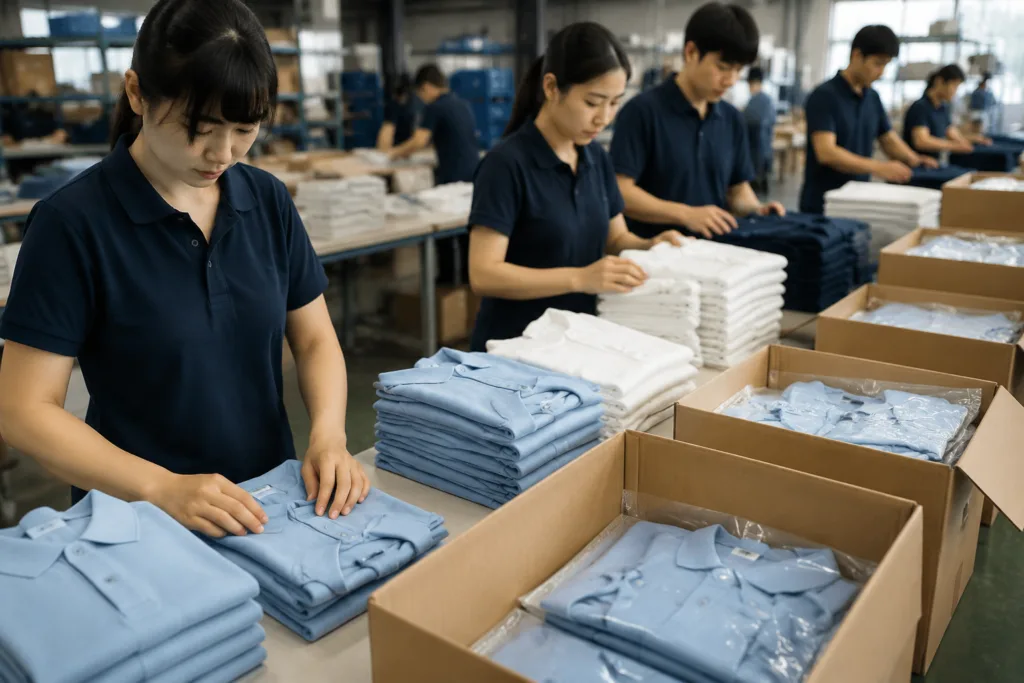
Buyers should treat packaging as part of the total order scope. A simple pack may help control MOQ pressure and reduce approval cycles. A more detailed pack can be justified when the product is retail-facing or when the buyer needs downstream distribution support.
| Packaging choice | Typical buyer priority | Operational impact |
|---|---|---|
| Basic folded bulk pack | Cost control | Lowest labor and fastest handling |
| Individual polybag | Protection | Moderate added material and labor |
| Retail-ready pack | Presentation | More steps, labels, and coordination |
| Sorted distribution pack | Internal delivery | Useful for uniforms and event handoff |
For brands making a first order, it is worth understanding how packaging interacts with product development and cost build. A manufacturer like Ninghow Apparel can usually map those trade-offs early so the pack method matches the channel without surprising the buyer during sampling or shipment.
What to include in a purchase order or tech pack
A good packaging brief should be specific enough for the factory to execute without guesswork. Include the fold method, bag type, insert requirements, label position, size sticker details, carton assortment, and whether the order should be packed by size, name, or branch. If any item has to be approved, that should be stated clearly.
The more exact the instructions, the fewer avoidable questions during production. Buyers who send incomplete packaging notes often discover the issue late, when cartons are already being prepared. For that reason, a precise how to prepare a better apparel RFQ approach is useful even for packaging-heavy polo programs.
Common mistakes buyers make
One common mistake is choosing a packaging style before confirming the distribution channel. Another is assuming the factory will infer the pack method from a product sample. A third is forgetting to specify how cartons should be grouped for shipping and handoff.
Buyers also underestimate the impact of small details. A missing size sticker, unclear carton ratio, or inconsistent pack count can create more downstream work than the packaging itself. When the order is large, those small errors become expensive very quickly.
A final issue is mismatch between sampling and bulk production. If the approved sample includes a certain tag, fold, or insert, the bulk order should follow the same rules unless the buyer formally changes them.
How Ninghow Apparel supports different packaging needs
In manufacturing, packaging works best when it is built into the order workflow from the start. That means the supplier should know whether the polos are going to retail, uniforms, events, or e-commerce before cutting and assembly are complete. With that information, the pack plan can be aligned to the right handling sequence.
For buyers comparing options, the practical approach is simple: decide what the end user needs, then choose the lightest packaging that still supports that outcome. A consistent sample approval process also helps lock in pack details before bulk production begins, which reduces risk across reorders and future programs.
Conclusion
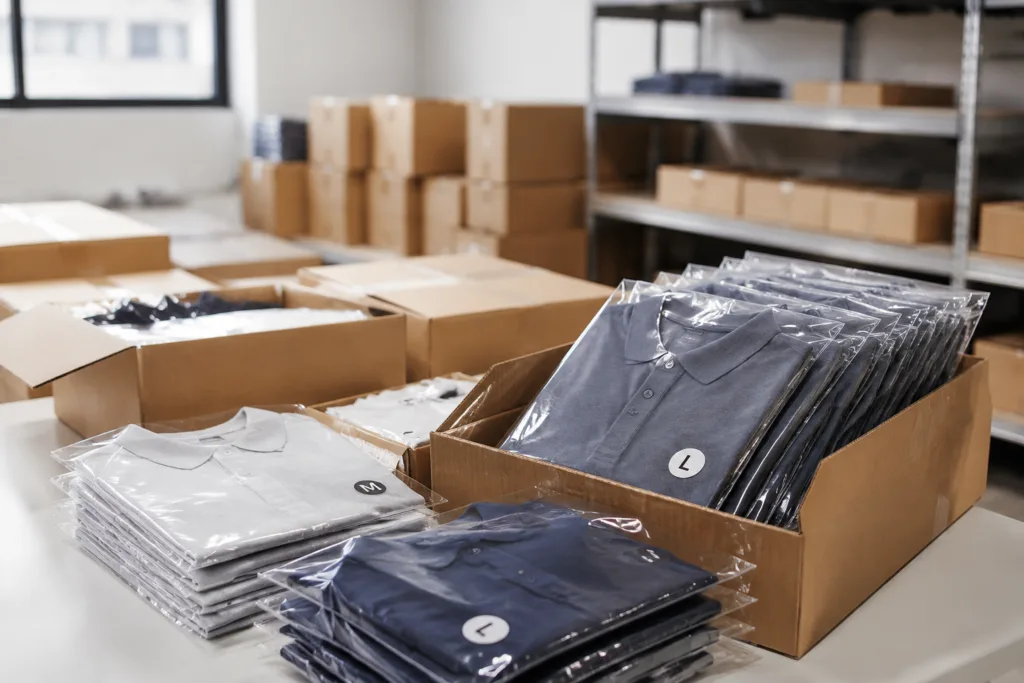
Custom polo shirt packaging should be chosen as part of the sourcing decision, not as a last-minute add-on. Retail programs need presentation and compliance. Corporate uniforms need sorting logic. Event orders need speed. E-commerce needs protection and consistency. When the packaging brief matches the channel, production runs more smoothly and the final order is easier to use.
For buyers, the real goal is to make the packaging useful, not complicated. A clear pack plan helps control cost, reduce errors, and keep the full order aligned from sample to shipment.
FAQ
What is the most common packaging for custom polo shirts?
The most common setup is a folded shirt in an individual polybag with size labeling. It gives basic protection, keeps counts manageable, and works for many retail, uniform, and e-commerce orders.
Can packaging be different for each size in the same order?
Yes. Factories can often pack by size, but the size ratio and carton instructions must be clear before production starts so sorting is accurate.
Do retail polo shirts usually need hang tags?
Retail programs often use hang tags because they support branding, pricing, and store presentation. Whether they are required depends on the sales channel and the buyer’s retail standards.
How does packaging affect MOQ?
More complex packaging can increase MOQ pressure because it adds materials, handling, and coordination. Simpler packaging is usually easier for smaller runs.
Is sustainable packaging always more expensive?
Not always. Some sustainable choices reduce material use or simplify the pack, but custom or specialized materials can raise cost. The best option depends on volume and protection needs.
What should buyers confirm before approving bulk packaging?
Buyers should confirm fold style, labels, bag type, carton assortment, size sorting, and any inserts or barcode requirements before bulk production starts.