
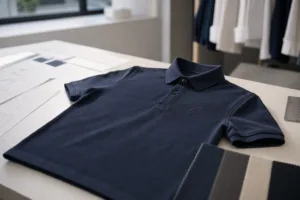
Retail polo shirt design is less about adding decoration and more about controlling how the garment feels, fits, and finishes. A polo can look promotional when the fabric is too flimsy, the collar loses shape, or the branding feels oversized for the market it is meant to serve.
For brands planning a custom line, the most useful next step is usually a clearer sourcing path, which is why retail-ready custom polo manufacturing matters early in development. It helps you think beyond artwork and toward the construction choices that make a shirt feel like a retail product instead of a giveaway item.
Why promotional polos look cheap
Promotional polos often fail because they solve the wrong problem. They are usually made to be easy to produce and easy to brand, not to hold shape, layer well, or sit comfortably in a retail price tier.
The biggest visual cues are simple: a collar that curls, a body fabric that feels thin or unstable, and logo placement that dominates the chest. Retail buyers notice these details quickly, even if they cannot name the construction issue behind them.
| Detail | Promotional feel | Retail-ready feel |
|---|---|---|
| Fabric | Soft but weak, sometimes see-through | Stable hand feel with enough structure |
| Collar | Thin, floppy, or curled | Neat shape with better recovery |
| Branding | Large, loud, and obvious | Controlled, balanced, and market-appropriate |
| Finishing | Basic trims and rough interior details | Clean labels, neat stitching, and polished presentation |
Fabric choice sets the tone for the entire polo
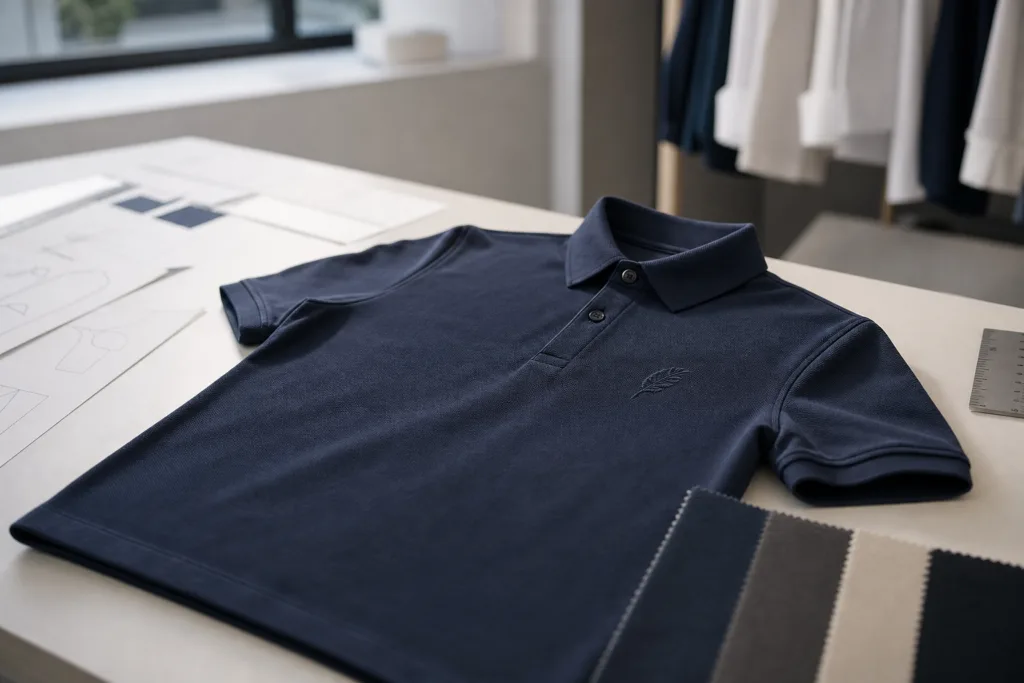
The fastest way to improve perceived value is to choose fabric that looks intentional, not generic. If you are comparing blends, knit structures, and weight levels, choosing premium fabric for custom polos is usually the first decision that changes how the shirt reads on the rack.
In retail polo shirt design, hand feel matters, but so does structure. A fabric that is too light can collapse after washing, while a fabric that is too heavy may feel stiff and limit comfort. The right middle ground depends on the target market, climate, and price point.
Many buyers also overlook surface consistency. A fabric with a smoother, denser finish often looks cleaner under store lighting and photographs better for e-commerce, which can make the product appear more premium without changing the design at all.
Collar and placket details do more than most buyers expect
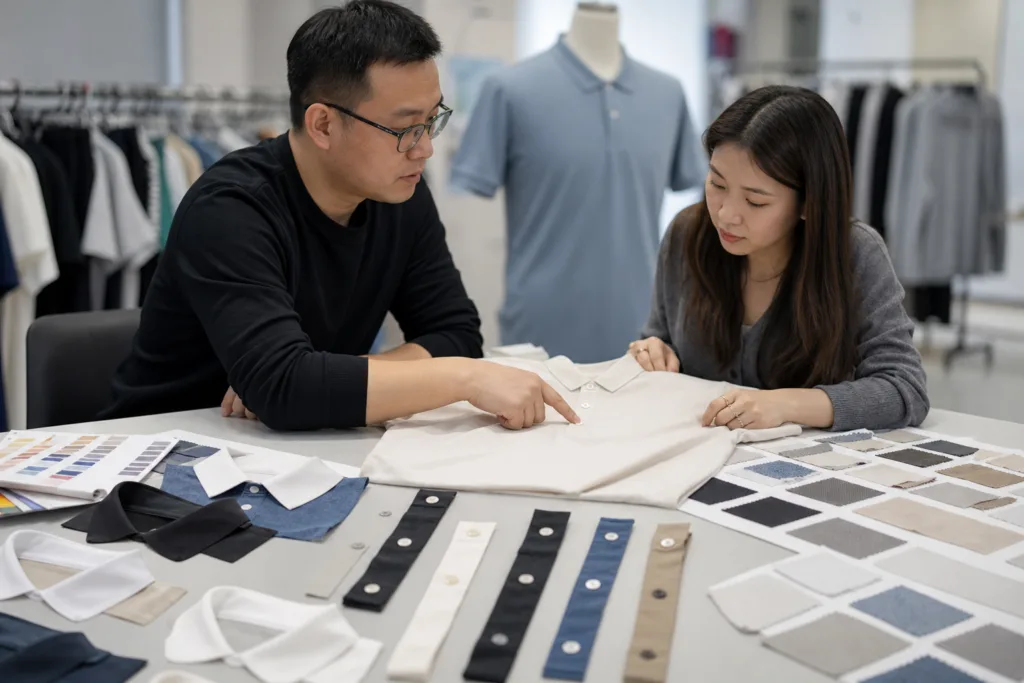
The collar is one of the first places a customer judges quality. If the collar edge rolls, gaps at the neckline, or loses its shape after wear, the entire shirt can feel promotional even when the rest of the garment is well made. For a closer look at the construction choices that matter, collar construction and shape retention should be reviewed before sampling.
The placket works the same way. A neat placket length, clean topstitching, and balanced button spacing can make the shirt feel more deliberate. If you want the shirt to read as retail, you should pay attention to placket options that change the shirt’s retail feel rather than treating the front opening as a standard detail.
Small construction differences are easy to miss in a tech pack, but they are visible on the finished garment. The collar, placket, and button area should feel aligned and stable, not improvised.
Logo placement should support the garment, not overpower it
Branding looks more premium when it feels integrated into the shirt. That usually means keeping the logo size controlled, placing it where it does not fight the placket or pocket area, and making sure embroidery density or print quality matches the shirt’s price position. If you are deciding how to scale the mark, logo placement and embroidery quality is a useful reference point.
As a rule, retail polos usually benefit from restraint. A smaller, cleaner logo often looks more expensive than a large mark that tries to do all the branding work alone.
Fit and color shape how the market reads the product
Fit should match the customer base, not just the trend. A classic fit may work better for corporate, team, or broad retail programs, while a slimmer profile can support fashion-led private label lines. Relaxed fits can work too, but only when the overall silhouette feels intentional.
Color is equally important. Deep, clean shades usually feel more premium than flat, washed-out tones, especially when the knit structure and trim colors are chosen carefully. If the main body color is strong but the collar contrast is weak, the shirt can lose visual balance.
When product teams ask how to turn a basic polo into a stronger retail program, the answer is often to treat fit and color as a system rather than separate choices. A manufacturer perspective helps here because construction, trim, and sizing should all support the same market position.
For that reason, Ninghow Apparel usually approaches retail polos by aligning fabric, fit, and finishing in sampling before a buyer scales the order. That reduces the chance of approving a shirt that looks good in isolation but promotional in real use.
Interior details signal quality even when customers do not name them
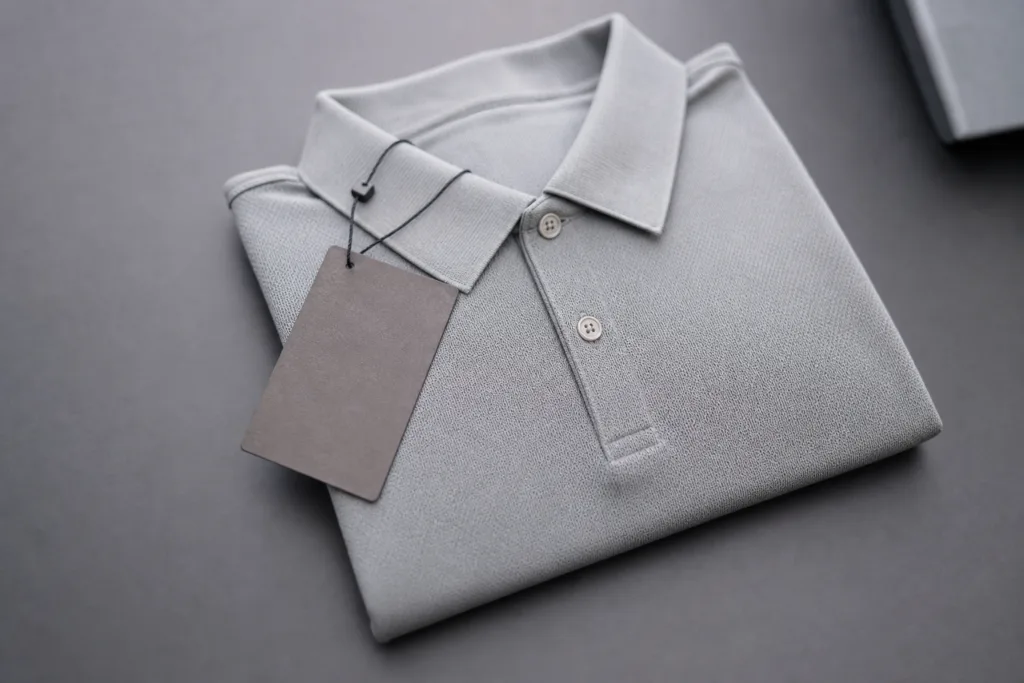
Neck tape, neck labels, care labels, and hangtags all contribute to the first impression. These details do not need to be expensive, but they do need to feel organized and consistent. Uneven label placement or low-grade packaging can undermine an otherwise good shirt.
Interior finishing also matters for buyer confidence. Clean seam work, tidy overlock edges, and sensible fold presentation suggest that the product was built for retail, not just for fast logo placement.
What to check in sampling before bulk production
Sampling is where promotional-looking problems are easiest to catch. Check the collar after a few wears, inspect the placket for symmetry, compare left and right sleeve balance, and review the logo from both a close and a normal viewing distance.
This is also the moment to evaluate whether the shirt still looks premium after handling. If the fabric loses shape quickly, the buttons look undersized, or the neckline sits unevenly on the body, those issues usually become more visible in bulk.
- Confirm that the collar holds shape after washing and recovery.
- Check that stitching remains even across the placket and shoulder areas.
- Review logo size, placement, and thread or print quality in daylight.
- Verify label placement, hangtag setup, and final fold presentation.
Photography and presentation can strengthen or weaken the premium story
Even a well-made polo can look basic if the product photography is flat. Good lighting, a clean background, and a model or mannequin that shows drape and fit can reinforce the retail position. Bad presentation can make a carefully developed shirt look no different from a uniform piece.
For e-commerce, the front view should show collar shape clearly, while the close-up images should show texture, placket detail, and branding scale. These visuals help customers understand why the product deserves a stronger position.
Small-batch testing helps protect the final product
Before scaling, many brands benefit from a small-batch market test. This allows them to compare fit feedback, return risk, and customer response without committing to a large run too early.
At this stage, you are not just testing demand. You are testing whether the polo reads as premium in the market context you chose, which is often a better predictor of performance than design approval alone.
Questions to ask before ordering custom premium polos
Before you place a bulk order, ask how the factory will manage fabric consistency, collar recovery, logo placement, and trim control across sizes. A premium result depends on repeatability, not just one good sample.
You should also ask how the factory handles approval rounds, shade matching, and packaging standards. Those answers reveal whether the supplier understands retail presentation or is only set up for basic promotional production.
For brand owners, the best retail polo shirt design decisions are usually the ones that reduce risk while improving clarity. When the construction, branding, and presentation all point in the same direction, the polo stops looking like a giveaway and starts looking like a product customers are willing to pay for.
FAQ
How do you keep a polo from looking promotional?
Use a stable fabric, a collar that holds shape, balanced placket construction, and restrained logo placement. Small improvements in finishing and presentation can change the shirt’s entire market perception.
Is pique or jersey better for retail polos?
It depends on the target market. Pique usually feels more structured and classic, while jersey can feel softer and more casual if the fabric weight and finishing are controlled.
Should the logo be embroidered or printed?
Embroidery often feels more premium for polos, especially when the size is controlled and the placement is balanced. Printed logos can work, but they need careful execution to avoid a promotional look.
What fit works best for retail polo shirt design?
Classic fits work well for broad retail and team programs, slim fits suit fashion-led lines, and relaxed fits can work when the brand position supports them. The best choice depends on your customer and size range.
What should I check in a polo sample?
Check collar recovery, placket symmetry, logo quality, stitch consistency, label placement, and how the shirt looks after handling. A sample should prove that the garment still feels premium outside the photo shoot.
Can a small MOQ polo order still look premium?
Yes, if you keep the design focused, limit unnecessary trim complexity, and use a supplier that can control fabric and finishing at low volume. A smaller order is often the right time to simplify and test one strong retail-ready version.