
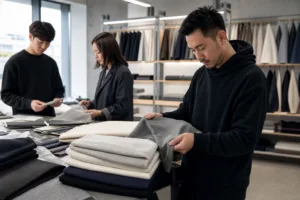
Choosing the best fabric for custom hoodies is less about finding one universally superior material and more about matching fabric behavior to the job the hoodie needs to do. A streetwear drop, a gym layer, a company uniform piece, a campus program hoodie, and an outdoor garment can all require very different priorities in weight, hand feel, durability, and cost.
That is why buyers should think about custom hoodie manufacturing for the right use case before narrowing fabric options. The right fabric decision usually comes from balancing brand positioning, target price, decoration method, expected wear conditions, and production scale rather than choosing a fabric name in isolation.
Why there is no single best hoodie fabric for every use case
Many buyers start by asking for cotton, fleece, or French terry as if the fabric name alone will solve the product decision. In practice, the same fiber family can perform very differently depending on GSM, knit structure, brushing, blend ratio, finishing, and intended end use.
A heavyweight cotton-rich fleece that works well for premium streetwear may feel too warm for gym use and too costly for a large campus order. A lightweight performance knit that suits activewear may not deliver the structure and visual heft expected in a fashion-focused hoodie. The best choice is the one that aligns technical performance with the commercial goal of the project.
How to evaluate hoodie fabric by application instead of by fabric name alone
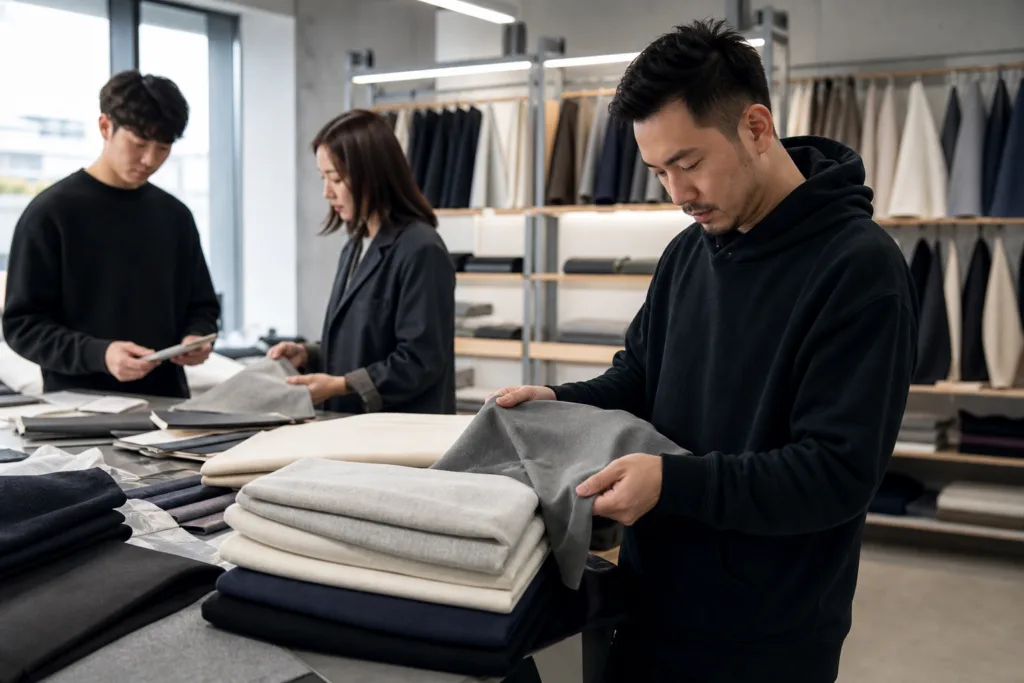
Buyers usually get better outcomes when they evaluate fabric through a use-case lens. That means asking what the hoodie must achieve in real use rather than asking only what the fabric is called.
- Purpose: casual fashion, active movement, staff uniform, student merchandise, or outdoor layering
- Feel: soft, structured, smooth, brushed, technical, or natural
- Weight: light, midweight, or heavyweight based on climate and positioning
- Durability: wash resistance, pilling control, shape retention, and seam stability
- Brand image: premium, practical, budget-conscious, team-oriented, or performance-driven
- Cost target: sampling budget, bulk target price, and acceptable material upgrade range
- Decoration compatibility: screen print, embroidery, patches, heat transfer, or mixed branding methods
From a manufacturing perspective, this approach reduces revision cycles because the fabric recommendation is connected to a clearer product brief. It also makes it easier to compare alternatives that may achieve a similar result at different price levels.
Streetwear hoodies: why GSM, drape, and structure matter most
For streetwear, fabric often defines perceived value before the customer even notices trims or graphics. Buyers in this segment usually care about silhouette, body, drop-shoulder behavior, surface quality, and the way the hoodie holds shape over time.
Heavier fleece or dense cotton-rich blends are common starting points because they create a fuller look and stronger hand feel. If the brand wants a boxier or more substantial silhouette, fabric weight and compactness matter as much as fiber composition. This is where understanding how GSM shapes hoodie weight and drape becomes especially useful when deciding between a soft relaxed look and a more structured premium profile.
Key fabric considerations for streetwear hoodies include:
- Higher GSM for substance and visual presence
- Stable fleece or terry construction for shape retention
- Good surface quality for clean printing or embroidery
- Low twist-out risk after washing
- Balanced softness without losing body
If the target customer expects a premium hoodie, buyers should avoid choosing fabric purely on softness. A very soft fabric can still feel thin, limp, or less substantial if the structure is weak.
Best fabric considerations for gym hoodies: stretch, breathability, and wash durability
Gym hoodies have different demands. Here, mobility, moisture management, recovery, and repeated laundering often matter more than heavy structure. Cotton can still be used, but many active-focused hoodies perform better with polyester blends or fabrics that include elastane for movement and shape recovery.
For warm-up hoodies, lightweight to midweight knits can work well, especially when the garment needs layering versatility. French terry is often a practical option because it is less insulating than brushed fleece while still giving a hoodie identity. Polyester-rich blends may improve drying speed and durability, especially for teamwear or fitness programs with frequent use.
Buyers should check:
- Whether the hoodie is for pre-workout layering or all-session wear
- Whether stretch is needed for overhead movement and training comfort
- How the fabric reacts after repeated washes
- Whether branding will be heat applied, printed, or embroidered
- Whether the end user prefers a technical or more casual athleisure feel
For startup active brands, fabric selection also has to match order planning. If the program is still testing demand, it helps to think about low MOQ hoodie development for new collections so the material choice stays realistic for smaller runs and follow-up replenishment.
Corporate hoodies: balancing comfort, cost, and brand presentation
Corporate hoodies usually sit between promotional apparel and long-term uniform use. The fabric should feel comfortable and presentable, but it also needs cost discipline, repeatability, and compatibility with company branding.
Midweight cotton-poly blends are often practical here because they balance softness, stability, and budget. Pure cotton can feel appealing, but blends frequently offer better shape retention and easier care for repeated employee use. If embroidery is part of the branding plan, the fabric should also be stable enough to support neat logo application without distortion.
For this category, buyers should focus on:
- Clean appearance across many sizes
- Consistent color continuity for reorder programs
- Moderate weight that suits office, travel, and casual work environments
- Cost control for larger staff quantities
- Reliable shrinkage and pilling management
At Ninghow Apparel, projects in this category often benefit from keeping the fabric practical rather than over-engineered. A hoodie used for company identity usually performs better when the material is stable, easy to reorder, and visually clean across bulk production.
Campus hoodies: durability, size range, and budget-friendly fabric choices
Campus hoodies are often volume-driven. They may be used for school programs, clubs, student stores, events, or alumni merchandise, so the fabric decision usually needs to satisfy broad size curves, budget expectations, and dependable wear.
Midweight fleece blends are commonly effective because they provide enough warmth and familiarity without pushing cost too high. Buyers should think carefully about how the hoodie will be worn: daily casual use, seasonal events, club merchandise, or school identity programs. These details influence whether a softer fleece, basic brushed knit, or sturdier cotton-poly blend makes the most sense.
Campus programs also carry more size variability than many fashion projects. That means fabric should support grading consistency and bulk cutting efficiency. When buyers review sample sets, it helps to use the hoodie sample approval process to check fit balance, cuff recovery, print behavior, and overall feel before committing to large size runs.
For campus orders, practical fabric priorities usually include:

- Affordable cost per unit
- Comfort for broad user acceptance
- Reasonable warmth for general wear
- Stable quality across many sizes
- Good print performance for logos and graphics
Outdoor hoodies: warmth, wind resistance, and functional performance
Outdoor hoodies need a more functional evaluation. The fabric must match weather exposure, layering intent, and activity level. A hoodie for light commuting or transitional weather has different needs than one used for hiking support, travel, or cool-condition workwear.
Heavier brushed fleece can provide warmth, but warmth alone is not enough. Buyers should also think about wind exposure, drying time, and whether the hoodie is an outer layer or a mid layer. Polyester blends or engineered performance fabrics may be more suitable when moisture movement and faster drying matter. Cotton-rich fabrics may still work for casual outdoor use, but they are usually less efficient in damp or highly variable conditions.
Important considerations include:
- Insulation level needed
- Layering compatibility under outerwear
- Wind resistance expectations
- Weight-to-warmth balance
- Recovery after repeated outdoor use and washing
Outdoor projects also benefit from a more precise brief because fabric upgrades can quickly change price. If the hoodie has a technical role, buyers should document expected conditions and performance priorities early.
How GSM, fiber composition, fleece, and terry construction affect hoodie performance
Fabric performance comes from a combination of weight, fiber, and structure rather than any single factor.
GSM
Lower GSM fabrics generally feel lighter and may suit gym or mild-weather use. Higher GSM fabrics often deliver more warmth, body, and premium perception, especially in streetwear and cold-weather products.
Fiber composition
Cotton improves natural hand feel and can support a more classic hoodie identity. Polyester often helps with durability, drying speed, and shape retention. Blends are frequently used because they balance comfort and performance. Elastane may be added in smaller amounts where stretch and recovery matter.
Brushed fleece
Brushed fleece creates warmth and softness on the inside, making it a common choice for colder conditions, streetwear heaviness, and general comfort. The trade-off is that it can feel too warm for active use or warm climates.
French terry
French terry usually feels lighter and more breathable than brushed fleece. It can be a strong option for gym hoodies, layering pieces, and transitional-season programs.
Fabric comparison matrix by use case
| Use Case | Recommended Fabric Direction | Main Priority | Common Trade-Off |
|---|---|---|---|
| Streetwear | Heavyweight cotton-rich fleece or dense blends | Structure, drape, premium hand feel | Higher cost and added warmth |
| Gym | French terry, poly blends, stretch knits | Breathability, movement, wash durability | Less heavy premium feel |
| Corporate | Midweight cotton-poly fleece | Balanced comfort, cost, and presentation | Less fashion-specific identity |
| Campus | Midweight fleece blends | Budget control, comfort, size-range consistency | Fewer premium material details |
| Outdoor | Brushed fleece blends or technical performance knits | Warmth, function, layering performance | More complex costing and sourcing |
What to tell a hoodie manufacturer when requesting fabric recommendations
Manufacturers can usually recommend better fabric options when the request is based on performance goals instead of broad statements like “premium fabric” or “best hoodie material.” A clearer brief shortens development time and reduces avoidable sampling rounds.
Useful information to provide includes:
- Target use case and customer profile
- Desired fabric feel and weight range
- Climate or season
- Target price band
- Decoration method
- Order quantity and reorder expectations
- Fit direction such as oversized, standard, or athletic
- Any shrinkage, pilling, or wash concerns
It also helps to prepare how to write a stronger hoodie RFQ so the supplier can compare fabric paths more accurately and advise on sampling, MOQ, and production suitability.
Common fabric selection mistakes buyers make when sourcing custom hoodies
The most common mistake is choosing by generic fabric label alone. Asking for cotton fleece without specifying weight, blend, finish, or target use can lead to samples that feel technically correct but commercially wrong.
Other frequent mistakes include:
- Prioritizing softness while ignoring structure
- Choosing high GSM for all projects, even when breathability matters more
- Using performance fabrics for branding programs that need a more classic casual hand feel
- Ignoring decoration compatibility
- Approving fabric swatches without full garment testing
- Underestimating cost impact from technical upgrades
- Failing to align material choice with MOQ and reorder plans
From a sourcing standpoint, the fabric should not only look right in development. It must still make sense in bulk, across sizes, under wash testing, and within the brand’s target margin.
Final checklist for choosing the right hoodie fabric for your project
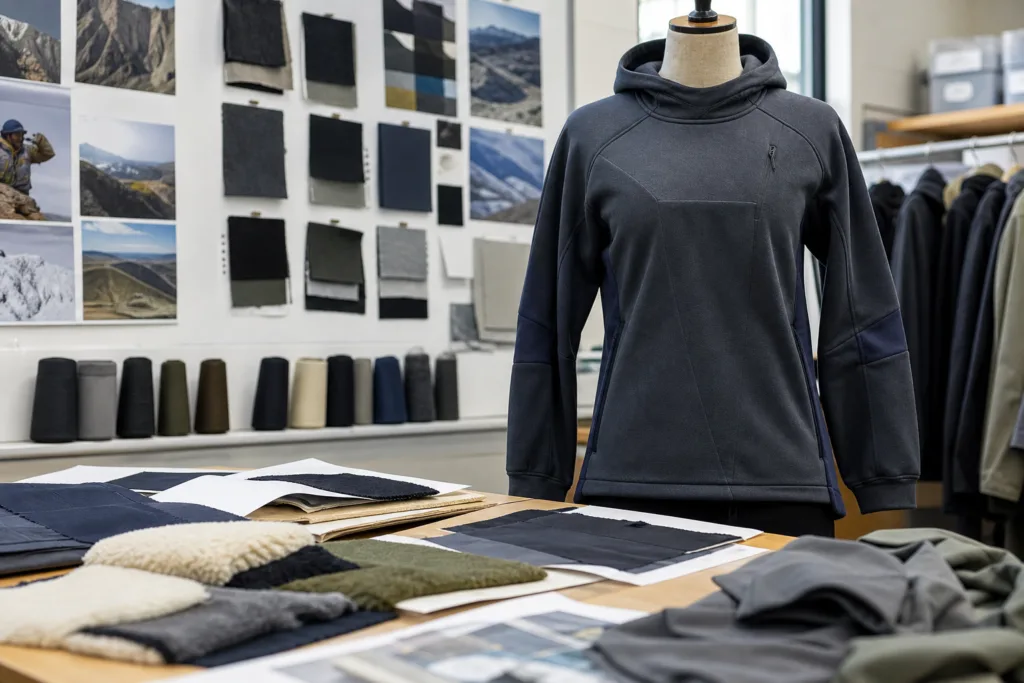
The best fabric for custom hoodies becomes easier to identify when buyers work through a simple decision sequence. Start with use case, then narrow by weight, feel, performance, and budget instead of beginning with broad fabric names.
- Define the hoodie’s primary use: streetwear, gym, corporate, campus, or outdoor
- Set a realistic target price before approving upgraded materials
- Choose the right weight range for climate and brand positioning
- Match fiber content to comfort, durability, and care expectations
- Check compatibility with print, embroidery, or other trims
- Review samples in actual garment form, not swatches alone
- Confirm size-range consistency and bulk repeatability
A well-chosen fabric improves more than comfort. It supports better fit perception, stronger branding, fewer production surprises, and a cleaner path from sample to bulk order.
FAQ
What is the best fabric for custom hoodies overall?
There is no single best fabric for custom hoodies overall because the right choice depends on the use case, target price, fabric weight, and brand positioning.
Is cotton or polyester better for custom hoodies?
Cotton is often better for natural hand feel and classic casual appeal, while polyester is often better for durability, faster drying, and active or uniform-oriented use.
What GSM is good for a hoodie?
A good hoodie GSM depends on the product goal, with lighter weights often suiting active or mild-weather use and heavier weights working better for premium streetwear or colder conditions.
Is French terry good for gym hoodies?
Yes, French terry is often a practical choice for gym hoodies because it is usually lighter and more breathable than brushed fleece while still feeling appropriate for a hoodie silhouette.
What fabric works best for corporate hoodies?
Midweight cotton-poly blends are often a practical choice for corporate hoodies because they balance comfort, clean presentation, cost control, and repeatability in bulk production.
Should I approve hoodie fabric from a swatch only?
No, it is usually better to review the fabric in a full hoodie sample so you can evaluate weight, drape, fit, wash behavior, and decoration performance in real garment form.