

Hoodie pocket design affects much more than storage. The pocket choice changes the garment’s visual balance, front-body shape, print space, sewing sequence, material usage, and how the hoodie performs in daily wear. For apparel buyers, that means pocket decisions should be made early, not treated as a minor trim detail at the end of development.
When brands start comparing custom hoodie manufacturing options, pocket construction is one of the details that quickly separates a simple fleece program from a more technical product. A kangaroo pocket, side seam pocket, and zipper pocket can all work well, but each creates different trade-offs in appearance, usability, cost, and production risk. Choosing the right one depends on your target customer, price level, branding plan, and how much complexity your product can carry.
Why hoodie pocket design matters beyond decoration
Pockets influence function first, but they also affect merchandising and production in ways buyers sometimes underestimate. A pocket changes the front panel layout, how the fabric drapes over the torso, where stress points occur, and how much reinforcement is needed. On heavier hoodies, a pocket may sit cleanly and feel stable. On lighter knits or brushed fleece, the same pocket can pull, sag, or distort more easily if the opening and attachment are not engineered well.
From a buyer perspective, the right pocket should match the product story. Streetwear styles often accept a more visible, casual pocket expression. Retail basics may need a cleaner face. Performance and teamwear hoodies often need more secure storage. The wrong pocket can create a mismatch between brand positioning and actual garment use.
Kangaroo pocket hoodie: when it works best
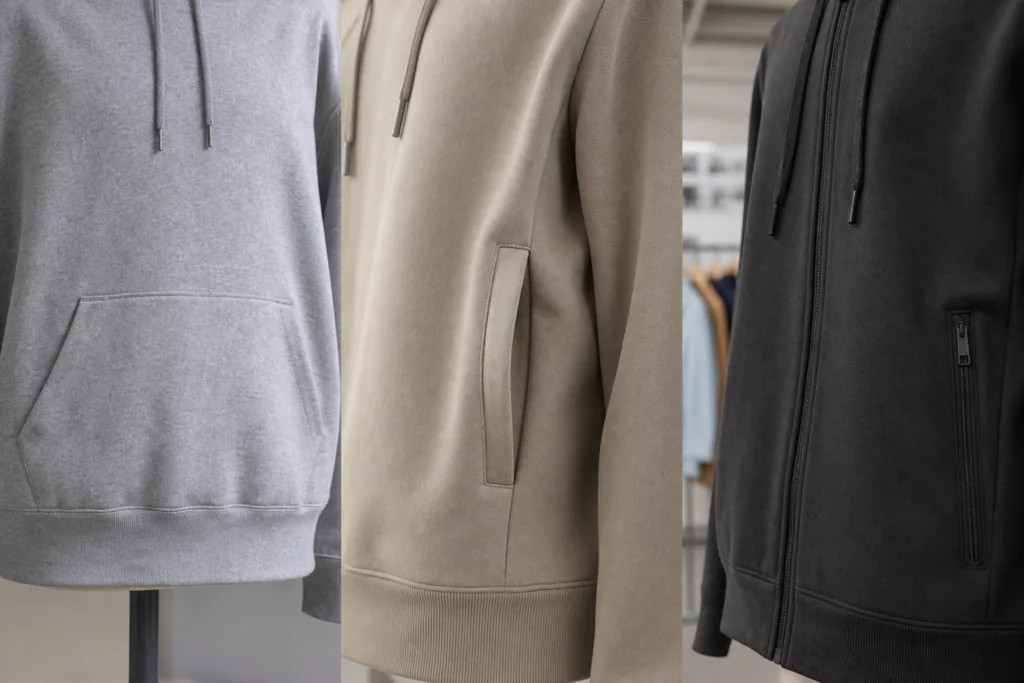
The kangaroo pocket is the most familiar hoodie pocket format. It is practical, easy for customers to recognize, and usually the most commercially accessible option for casual and promotional programs. It works especially well on pullover hoodies aimed at lifestyle, school, club, merch, and general streetwear markets.
Its strength is simplicity. The pattern is relatively straightforward, the storage area is large, and it creates the classic hoodie identity many buyers want. However, it also adds bulk across the abdomen and takes away a significant front print zone. If the garment will carry a large chest graphic or center-front decoration, the kangaroo pocket may create layout limits.
In production, kangaroo pockets are usually cost-efficient compared with more technical pocket systems, but they still require attention to opening reinforcement, topstitch accuracy, and placement symmetry. If the pocket is slightly off-center, the defect is highly visible. Buyers should also consider whether bar tacks, double-needle stitching, or edge fold dimensions need to be standardized. This is where knowing how to specify construction details clearly helps reduce back-and-forth during development.
Side seam pockets: cleaner appearance, different trade-offs
Side seam pockets create a cleaner front view because the opening is hidden within the side panel or seam line rather than placed visibly on the body. Brands often prefer this option when they want a hoodie that feels more retail-ready, more minimal, or less obviously athletic. It can work well for premium casualwear, elevated basics, and some resort or golf-adjacent layering products.
The cleaner look comes with technical considerations. Side seam pockets often depend on body shape, seam angle, and bag depth to function well. If the opening is too short, the pocket feels cramped. If the pocket bag is too deep or unsupported, the lower side area may droop. On some fits, especially slimmer silhouettes, the pocket can also push outward and interrupt the intended side line.
From a manufacturing perspective, side seam pockets are not automatically difficult, but they do increase the importance of pattern precision. Pocket bags need to sit cleanly inside the garment without twisting. Fabric bulk at the seam junction should be reviewed early, especially if the hoodie uses heavier fleece, rib side panels, or contrast inserts.
Zipper pocket hoodie: security and premium function
A zipper pocket hoodie is common in sportswear, travel, and utility-driven categories where secure storage matters. Customers use these pockets for keys, cards, earbuds, and phones, so the feature has clear functional value. It also signals a more technical product direction, which can support a higher perceived value if the execution is clean.
The added function comes with more components and more failure points. Zippers introduce trim sourcing, color matching, slider selection, opening stabilization, and attachment consistency. If the zipper waves, the pocket opening ripples, or the seam stretches during sewing, the garment can look lower quality even if the rest of the hoodie is well made. That is why many teams build extra review checkpoints into the apparel sample approval process when zippered pocket styles are involved.
Zipper pockets are often a strong choice for activewear hoodies, commuter layers, and premium private label programs, but they are usually less suitable for entry-price bulk orders where every extra operation matters. The right choice depends on whether the product needs secure utility or just a technical-looking detail.
How pocket structure affects silhouette, drape, and comfort
Pocket design changes how a hoodie sits on the body. A kangaroo pocket adds a visible front layer, which can make the midsection look fuller but also gives the garment a familiar relaxed structure. Side seam pockets preserve a smoother front but may add volume at the hips depending on pocket bag depth. Zipper pockets can look sleek, but if the opening is stiff or the tape is heavy, they may create hardness on an otherwise soft fleece body.
Comfort matters too. Pocket entrances should feel natural for hand placement and easy for the wearer to use without overreaching. A pocket that sits too high forces the elbows up. A pocket placed too far toward the side seam can feel awkward in motion. For brands building a specific fit identity, it helps to evaluate pocket interaction during wear testing, not only on a flat sample.
At Ninghow Apparel, this is often where buyer intent becomes clearer: some projects need a classic fleece silhouette, while others need a sharper retail look or a more technical hand-feel. The pocket decision should support that wider product goal rather than compete with it.
Common production issues to watch closely
Several pocket defects appear repeatedly in hoodie development. The first is opening deformation. This usually happens when the opening edge is not stabilized properly, the fabric has too much stretch, or sewing tension is inconsistent. Over time, the opening may wave or collapse.
The second issue is sagging. Deep pocket bags, soft fabrics, or insufficient reinforcement can pull the garment down visually, especially after washing or repeated wear. The third is shape distortion, where the pocket outline shifts, corners curl, or the left and right sides fail to mirror each other. These problems become more obvious on solid-color garments with clean front panels.
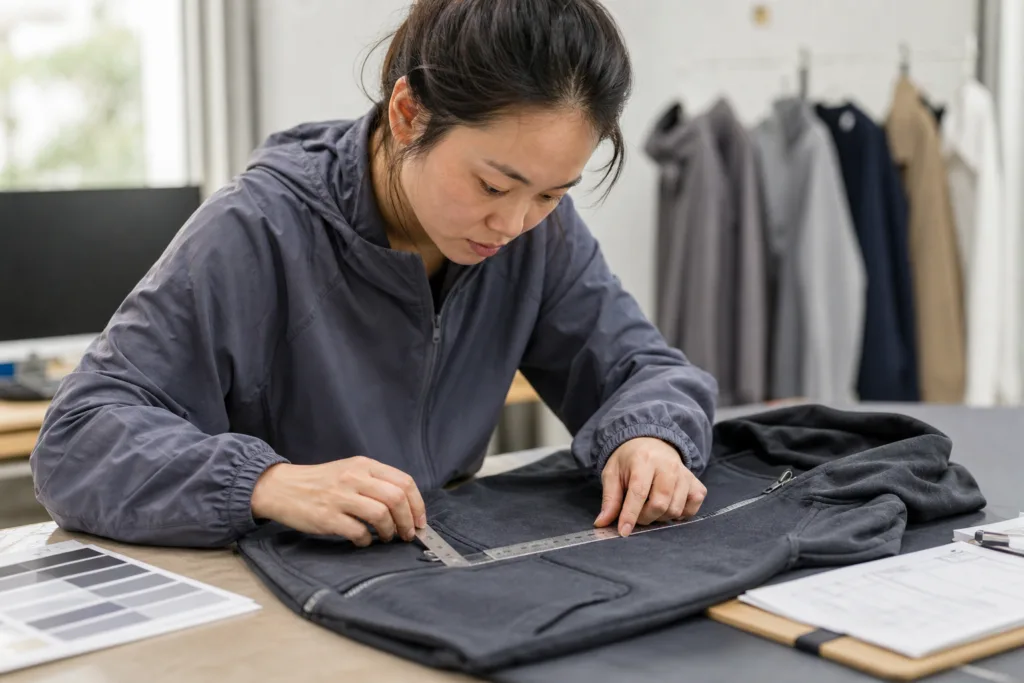
Buyers should define acceptable variation early and align it with realistic manufacturing control. Pocket symmetry, opening measurement, zipper alignment, and seam tolerance should all be reviewed against practical apparel quality tolerance standards so approvals are based on clear expectations instead of subjective reactions after bulk production begins.
Pocket placement and branding conflicts
Pockets compete for space with decoration. A kangaroo pocket reduces the available area for center-front prints and can interrupt oversized graphics. Side seam pockets preserve more of the front panel, which is useful when branding is a major selling point. Zipper pockets can look premium, but visible zipper lines may compete with minimalist branding or embroidery layouts.
Embroidery placement also needs planning. Thick embroidery near a pocket edge can reduce flexibility and affect drape. Heat transfers placed too close to openings may distort under wear. If the brand identity depends on clean logo execution, pocket type should be selected together with decoration strategy, not in isolation.
In tech development, one practical method is to mark pocket openings, pocket bag boundaries, and decoration no-go zones directly on the front-body spec. That helps prevent a situation where the design team approves a graphic that the pattern team cannot place cleanly once the pocket is added.
Which pocket type fits which product goal
| Pocket type | Best for | Visual effect | Production complexity | Cost tendency |
|---|---|---|---|---|
| Kangaroo pocket | Casual pullovers, merch, schoolwear, streetwear basics | Classic, visible, relaxed | Low to medium | Usually lower |
| Side seam pockets | Elevated basics, minimal retail styles, cleaner silhouettes | Subtle, cleaner front | Medium | Medium |
| Zipper pockets | Sportswear, travel, technical, premium utility | Functional, technical, higher perceived value | Medium to high | Usually higher |
This comparison is useful as a starting point, but fabric weight, fit, branding, and target price will still influence the final decision. A low-cost hoodie can still use side seam pockets if the pattern is simple and the fabric cooperates. A premium hoodie can still use a kangaroo pocket if the brand wants a traditional streetwear look with strong execution.
How pocket choice changes manufacturing difficulty and lead time
Every extra operation affects workflow. A basic kangaroo pocket usually fits efficiently into standard sewing lines, while side seam pockets may require more control around alignment and bag attachment. Zipper pockets add trim procurement, extra machine handling, and more inspection points.
Sampling risk increases when the pocket needs to perform visually and functionally at the same time. For example, a zipper pocket may look good on paper but create front-body waviness in the first sample. A side seam pocket may appear clean on a hanger but bulge during wear. These issues are easier to catch when buyers spend enough time reviewing a tech pack before production and checking whether placement, opening size, reinforcement, and trim details are truly buildable.
Lead time can also be affected by trim readiness and approval cycles. If zipper colors need lab dips or custom pulls, the style may move more slowly than a plain kangaroo version. For bulk programs with tight calendars, pocket simplicity can be a strategic decision rather than just a cost decision.
What to include in a hoodie pocket tech pack
For manufacturers, vague pocket instructions are one of the main reasons samples miss expectations. A good tech pack should not just say “add side pockets” or “zip pocket at front.” It should define the structure clearly enough that pattern making, sampling, and QC teams interpret it the same way.
- Pocket type and construction method
- Pocket opening length and finished dimensions
- Placement from center front, hem, side seam, and other key points
- Pocket bag depth, shape, and fabric type
- Topstitch width and stitch type
- Reinforcement method such as bartacks or stay tape
- Zipper type, coil size, color, puller, and exposed or concealed application
- Allowed tolerance for opening width, symmetry, and position
- Interaction with print, embroidery, labels, or branding elements
If sketches and callouts are incomplete, the factory may make reasonable assumptions that still do not match brand intent. This is especially true with hidden pockets or mixed-material constructions.
Manufacturer tips for avoiding misunderstandings
The simplest way to avoid pocket-related errors is to align design language with production language. Instead of using only visual references, define measurements, seam handling, and reinforcement points in writing. If the garment is meant to look flat and minimal, say that clearly. If the pocket should hold a phone without sagging, that performance goal should also be stated.
It is also wise to approve pockets in motion, not only on a table or mannequin. Ask whether the opening stretches after hand insertion, whether the pocket bag shows through, and whether branding still sits correctly once the garment is worn. In many private label developments, these questions matter more than whether the first prototype simply looks close to the original sketch.
For programs with multiple colorways or sizes, brands should confirm whether the pocket dimensions grade proportionally or stay fixed. Small inconsistencies become more noticeable in bulk when pocket alignment shifts across sizes, especially on minimalist styles where the pocket is part of the visual identity.
Choosing the right hoodie pocket design for your market
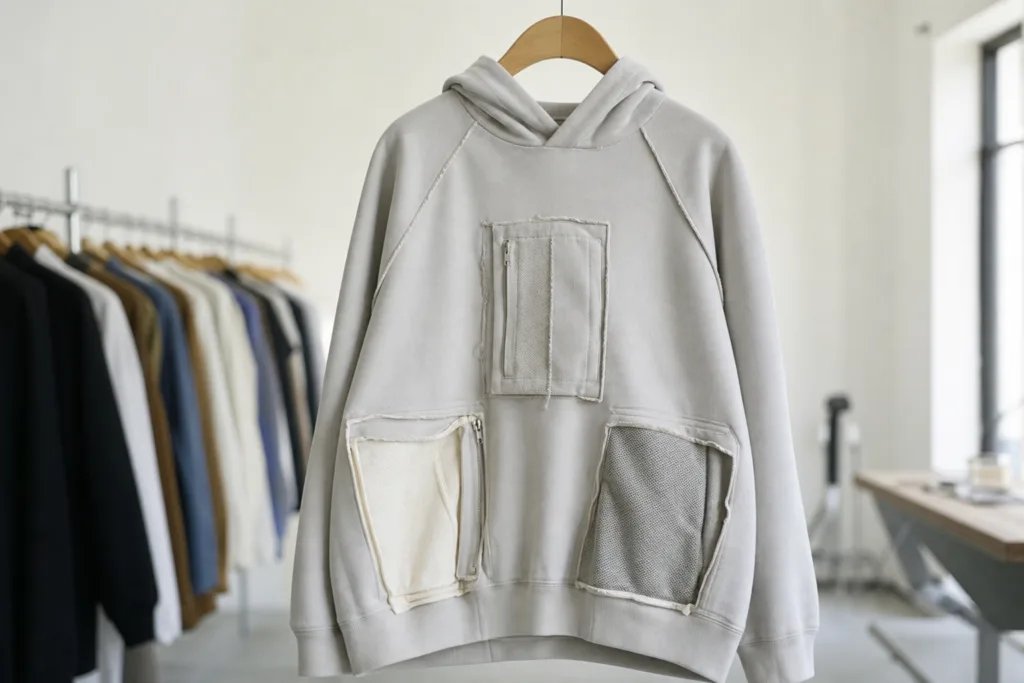
The best hoodie pocket design is the one that supports the product’s actual job. Kangaroo pockets suit classic casual volume and cost-sensitive programs. Side seam pockets suit cleaner retail presentation and front-panel branding flexibility. Zipper pockets suit utility, movement, and a more technical or premium direction.
For most buyers, the right decision comes from balancing four things: how the hoodie should look, how the customer will use it, how much construction complexity the budget can support, and how much development time the team can absorb. When those points are aligned early, pocket selection becomes a strong product decision rather than a late-stage compromise.
FAQ
Which hoodie pocket type is usually the most cost-effective?
Kangaroo pockets are usually the most cost-effective because they use a familiar construction method and fewer extra components than zipper pockets, though exact cost still depends on fabric, stitching, and order setup.
Are side seam pockets better for premium hoodies?
They can be, especially when a brand wants a cleaner front appearance and a more refined retail look, but they still need careful patterning so the pocket bag does not distort the side shape.
Do zipper pockets always make a hoodie look more technical?
In most cases yes, because visible zippers signal utility and secure storage, but the overall effect still depends on zipper exposure, trim quality, fabric choice, and the rest of the garment styling.
Can a kangaroo pocket interfere with printing?
Yes, a kangaroo pocket takes up a large part of the center-front area, so it can limit graphic scale, interrupt artwork placement, and reduce flexibility for certain branding layouts.
What pocket details should buyers always include in a tech pack?
Buyers should include pocket type, opening size, placement measurements, pocket bag depth, stitching details, reinforcement method, closure specifications if used, and tolerances for symmetry and position.
When should pocket construction be finalized in development?
Pocket construction should be finalized before sample approval and well before bulk booking, because late pocket changes can affect pattern work, decoration placement, trim sourcing, and production timing.