

A hoodie hood is a small part of the garment, but it has a large effect on perceived quality. When the hood stands unevenly, collapses backward, twists after washing, or looks lopsided at the neckline, buyers often read that as a sign of weak construction and inconsistent manufacturing control. For brands, that means hood shape is not just a styling issue; it directly affects fit perception, product approval, and confidence in bulk production.
For teams developing fleece, streetwear, teamwear, or private label basics, it helps to evaluate hoodie manufacturing and hood quality control as part of the full garment specification rather than treating the hood as a secondary detail. Hood stability depends on how the hood pattern, fabric weight, layering, neckline attachment, and finishing methods work together. When those decisions are made early, brands have a much better chance of getting a hood that looks balanced on the hanger, on-body, and after laundering.
Why hood shape matters for perceived quality and brand value
Many buyers judge a hoodie within seconds, and the hood is one of the first details they notice from the front, side, and back. A well-shaped hood frames the neckline cleanly, sits evenly when worn down, and keeps a stable opening when worn up. A poorly made hood can make even a good body silhouette look cheaper than it is.
From a sourcing perspective, hood shape also influences returns risk, approval friction, and long-term brand consistency. If a hood collapses too much, it may feel underbuilt for premium positioning. If it twists after wash testing, it can signal fabric or sewing imbalance. If the left and right sides do not match, it raises concerns about pattern control and sewing discipline across the production line.
Hoodie hood quality: what buyers should evaluate beyond appearance
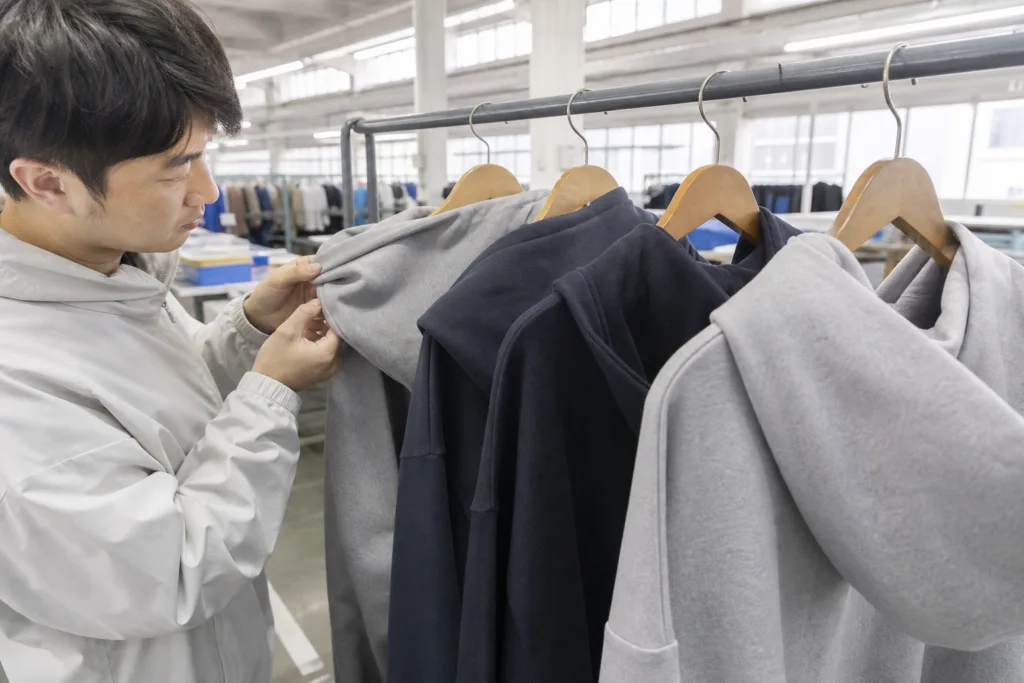
It is easy to approve a hood based on a quick visual review, but appearance alone does not tell the full story. Brands should ask whether the hood is structurally appropriate for the garment category, whether the opening holds a clean shape, and whether the hood remains balanced after wash and handling.
- Pattern balance: left and right hood panels should match and align correctly at key seams.
- Neckline integration: the hood must attach smoothly without puckering, stretching, or distortion.
- Fabric support: the shell and any lining should provide enough body for the intended look.
- Opening stability: drawcord channel, eyelet placement, and front edge construction should stay symmetrical.
- Post-wash recovery: the hood should return to an acceptable shape after laundering and drying conditions defined in development.
One of the most useful checkpoints is the apparel sample approval process, because hood problems often show up only after revisions, wear trials, and wash review. A hood that looks acceptable in an early proto can still fail once the exact production fabric, stitching tension, or trim package is used.
Single-layer, double-layer, and three-panel hoods
Single-layer hoods
Single-layer hoods are lighter, simpler, and often more cost-efficient. They can work well for lightweight hoodies, performance styles, or casual basics where a softer drape is acceptable. The trade-off is that they usually provide less structure, so the hood may collapse more easily unless the fabric itself has enough body.
Double-layer hoods
Double-layer hoods are common in premium fleece and private label streetwear because the second layer adds substance and improves the visual finish inside the hood. They often hold shape better, hide seam allowances, and create a fuller look around the neckline. However, the benefit depends on proper panel matching and compatible fabric layers. Two unstable layers can still twist if the cutting or sewing is off.
Three-panel hoods
Three-panel hoods usually offer a more contoured shape because the center panel helps the hood sit more naturally over the head. This construction can improve balance, reduce flatness, and support a cleaner silhouette when worn up. It is especially useful when brands want a more refined fit rather than a basic mass-market hood profile.
The right choice depends on target price, brand positioning, intended silhouette, and fabric behavior. There is no universal best option; there is only the option that fits the garment objective and production reality.
Why hoods collapse, twist, or become asymmetrical
Most hood shape failures come from a combination of small issues rather than one dramatic mistake. A hood may collapse because the fabric lacks body, because the hood is oversized for the neckline, or because seam construction does not provide enough support at the opening. Twisting often comes from fabric torque, off-grain cutting, mismatched panels, or uneven feeding during sewing. Asymmetry can result from pattern imbalance, trim placement inconsistency, or inaccurate attachment to the body.
Another frequent issue is that hood proportions are approved visually without enough on-body testing. A hood can look neat on a table but pull backward once worn if the neckline opening, hood height, and front overlap are not balanced. That is why buyer-friendly specifications still need technical review during development.
Fabric GSM, recovery, and drape
Material choice strongly influences hoodie hood quality. Fabric that is too light for the desired shape may drape well in the body but fail to support the hood opening. Fabric that is heavy but unstable can still distort if recovery is poor or shrinkage is not controlled. In practice, brands should evaluate weight together with stretch, resilience, brushing finish, and how the fabric behaves after wash.
A useful reference point is how fabric GSM affects garment structure. Higher GSM alone does not guarantee a better hood, but fabric weight does change how the hood falls, how much the seam line can support, and whether the hood keeps a fuller shape at the opening. The goal is to match fabric behavior to the visual result the brand wants.
- Low to mid-weight fleece: softer drape, lower structure, more risk of hood collapse if single-layered.
- Mid to heavy fleece: fuller appearance, better support potential, but more demand on neckline construction.
- Stretch-heavy blends: comfortable, but may distort if panel cutting and recovery are not well controlled.
- Brushed interiors: can affect thickness and hand feel, which changes how the hood stands or folds.
Lining, interlining, and seam construction
The hood does not keep its shape from fabric alone. Lining choice, seam allowance handling, edge finishing, and stitch type all influence whether the hood stays balanced over time. Double-layer hoods gain support from the extra layer, but if the two layers shrink differently or are sewn under uneven tension, the hood can torque after washing.
Brands should pay attention to construction details that affect shape retention because these are often where visible quality differences come from. A cleaner front edge, stable seam joining, and balanced topstitching can help the hood keep a more controlled opening. Poorly managed seam bulk, skipped reinforcement, or inconsistent channel width can create distortion even when the base pattern is correct.
Interlining is not always necessary, but in some fashion or premium programs it may be considered for added body in selected areas. If used, it must be tested carefully so it does not create stiffness, bubbling, or uneven shrinkage relative to the shell fabric.
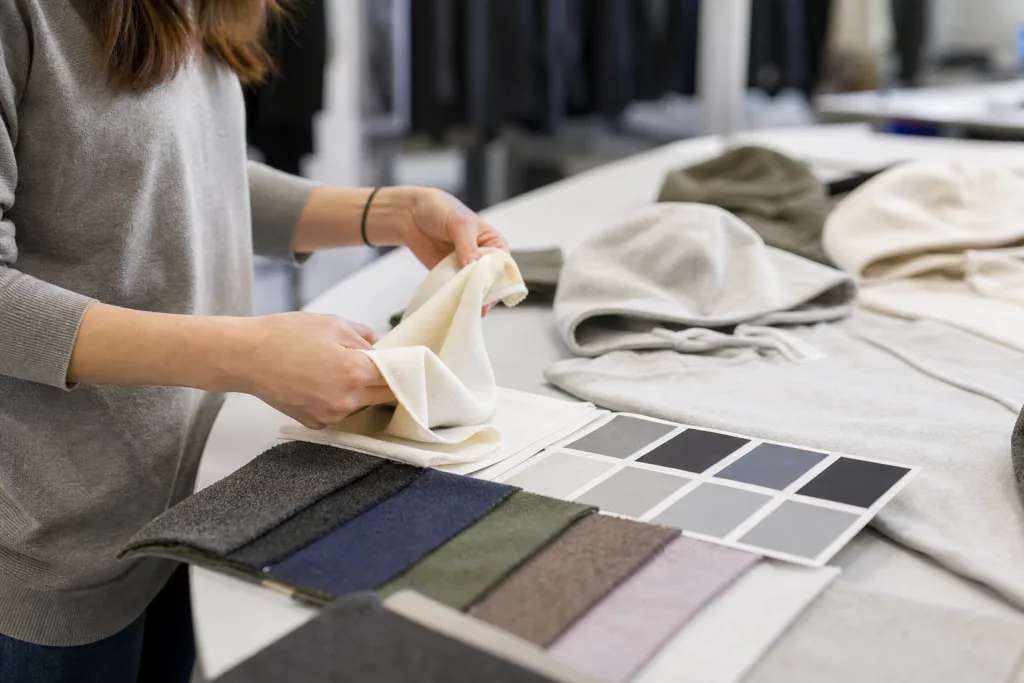
Small details that affect hood shape
Drawstrings and channels
Drawstrings add both function and visual structure, but only when the channel is balanced. If the channel width varies, if the opening seam is stretched during sewing, or if the cord is too heavy for the fabric, the hood front can pucker or collapse unevenly.
Eyelets and placement
Eyelets that are set too high, too low, or inconsistently between left and right sides can distort the hood opening. Reinforcement behind the eyelet area may also matter, especially on softer fleece constructions where the shell fabric alone may not hold the trim neatly.
Neckline stitching
The neckline is a high-stress connection point. If the hood is attached with poor alignment or tension imbalance, the hood may sit backward, roll outward, or create a visible wave where it joins the body. This can make the entire garment look off, even when the body fit is otherwise acceptable.
Common manufacturing defects behind poor hood performance
- Off-grain cutting: panels shift and twist after washing.
- Mismatched hood panels: one side is slightly larger, creating asymmetry.
- Uneven topstitching: opening looks unbalanced and may not lie flat.
- Poor neckline attachment: hood pulls backward or collapses at the join.
- Inconsistent drawcord channel: front edge puckers or tunnels unevenly.
- Uncontrolled shrinkage: shell and lining react differently after laundering.
- Trim misplacement: eyelets or labels create visual imbalance.
These issues are easier to prevent than to correct after bulk sewing starts. In many programs, the most important review point is why the PP sample matters before bulk production, because it shows whether the approved construction still works with the final fabric lot, trim set, and production methods. If a hood problem appears at PP stage, brands still have time to adjust before full output is committed.
How to check hood shape during sample development and fit approval
Brands should review the hood in more than one condition. Flat-table review helps identify symmetry and sewing cleanliness, but on-body review is what reveals whether the hood sits correctly at the neckline and maintains the intended silhouette. It is also useful to review the hood both worn up and worn down, because some defects are visible only in one position.
- Compare left and right hood height and opening shape.
- Check whether the center line sits straight when worn up.
- Look for torque or pulling after a basic wash test.
- Confirm the hood does not drag the neckline backward.
- Assess whether drawcord exits are level and visually balanced.
- Review hanger presentation, especially for retail-facing programs.
When working with Ninghow Apparel, many of these checks are easier to manage when the brand shares intended hood look, target fabric hand feel, and acceptable tolerance early. The clearer the expectation, the easier it is to align pattern development, sample review, and production control around the same hood standard.
Key hood specs to lock before bulk production
Brands reduce risk when hood specifications are written clearly instead of being left to visual interpretation. A tech pack should define the hood type, panel count, seam construction, opening width, topstitch direction, drawcord details, eyelet placement, and target measurements. If wash effect matters, approved after-wash appearance should also be documented.
| Spec Area | What to Define | Why It Matters |
|---|---|---|
| Hood construction | Single-layer, double-layer, or three-panel | Sets structure, cost, and silhouette |
| Measurements | Height, width, opening, overlap | Controls fit and neckline balance |
| Fabric | Shell, lining, GSM, stretch behavior | Affects drape, recovery, and wash stability |
| Seams | Seam type, allowance, topstitching | Influences shape retention and appearance |
| Trim | Drawcord, eyelets, label placement | Prevents visual and structural imbalance |
| Testing | Wash review and tolerance expectations | Reduces bulk-stage surprises |
Wash stability and production testing
Hood shape problems often appear after laundering, not before. That is why pre-bulk evaluation should include a wash method that reflects the intended market use as closely as possible. The goal is not to promise perfect permanence, but to identify whether the hood remains commercially acceptable after realistic handling.
Useful checkpoints include pre-wash and post-wash measurement comparison, visual review of hood symmetry, inspection of neckline distortion, and trim stability at the opening. If shell and lining behave differently after wash, the hood may twist or ripple even if the original sample looked clean.
Manufacturers should also review cutting accuracy, panel pairing discipline, and sewing consistency during inline production. Good quality control is not only a final inspection task; it starts with pattern approval, fabric relaxation, cutting control, and process consistency at each operation.
A practical manufacturer perspective on hood consistency
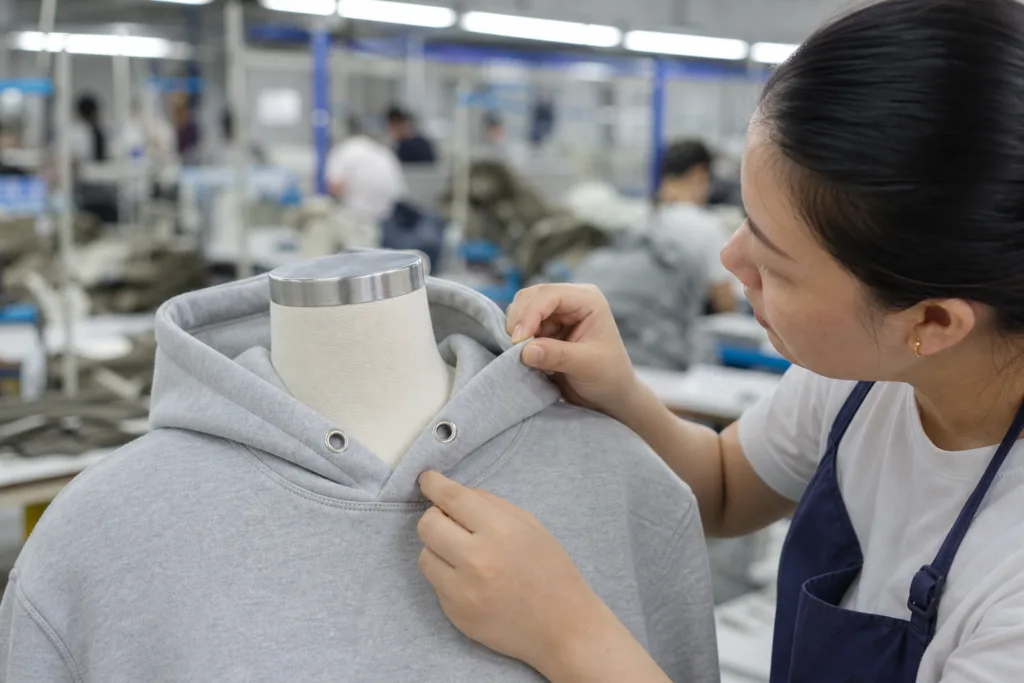
From a production standpoint, hoodie hood quality is usually the result of disciplined basics rather than one special trick. Stable hood performance depends on compatible fabric selection, an appropriate hood construction, accurate cutting, and clear production checkpoints. When those elements are aligned, the hood is more likely to keep its intended shape through sampling, bulk sewing, and routine washing.
For brands, the main lesson is simple: do not approve the hood based only on how it looks in one sample photo. Evaluate shape, balance, and recovery as technical quality points. That approach makes sourcing decisions stronger and helps prevent avoidable bulk issues that are expensive to correct later.
FAQ
Why does a hoodie hood collapse even when the body fabric feels heavy?
A heavy body fabric does not automatically create a stable hood because hood shape also depends on panel design, layering, neckline attachment, and opening construction. A hood can still collapse if the proportions or sewing methods do not support the intended silhouette.
Is a double-layer hood always better than a single-layer hood?
Not always. A double-layer hood usually adds body and a cleaner finish, but it can still twist or lose balance if the layers shrink differently or the sewing is inconsistent. The better option depends on fabric behavior, target price, and the brand’s desired look.
What is the main cause of hood twisting after washing?
The most common causes are off-grain cutting, fabric torque, mismatched panel sewing, and different shrinkage behavior between shell and lining. Twisting is usually a production control issue rather than a simple appearance defect.
What should brands check on a hoodie sample before approval?
Brands should check hood symmetry, opening balance, neckline attachment, drawcord and eyelet alignment, and post-wash appearance. Reviewing the hood both flat and on-body helps reveal problems that a quick visual check can miss.
Can drawstrings and eyelets really affect hood shape?
Yes. If eyelets are placed unevenly, the channel width is inconsistent, or the drawcord is too heavy for the fabric, the hood opening can pucker, pull, or sit unevenly. Small trim details can change the overall hood appearance more than many buyers expect.
When should hood issues be finalized before bulk production?
They should be finalized by the PP sample stage, when the garment reflects final fabric, trims, measurements, and construction methods. Waiting until bulk sewing starts makes hood-related corrections slower, more expensive, and harder to standardize.