

Launching a new polo program is often less about having more options and more about making fewer, better decisions. For small brands, distributors, teamwear programs, and startup apparel labels, a tight collection can make sampling easier, simplify buying, and reduce the inventory pressure that comes from spreading demand across too many similar products.
That is why many buyers start by evaluating what a private label polo shirt manufacturer can support in terms of fit development, fabric consistency, trim choices, labeling, and manageable order structure. When the manufacturing path is clear early, it becomes much easier to build a focused range instead of creating unnecessary SKUs that are difficult to reorder and harder to sell through.
Why new brands should not launch too many polo SKUs at once
A large first collection can look impressive on paper, but it often creates sourcing complexity without adding real buying power. Every extra silhouette, colorway, trim variation, and size run increases development time, sample review work, and production coordination.
For a first launch, the bigger risk is not usually having too little choice. It is dividing demand across too many options, which can leave brands with slow-moving inventory in some SKUs and stockouts in the few styles customers actually want. A smaller launch gives clearer feedback on fit, color preference, and logo acceptance before more styles are added.
From a manufacturer perspective, a streamlined line is also easier to control for quality and consistency. Fewer variables usually mean clearer tech packs, easier approval decisions, and a smoother path from sample to bulk.
Start with one core fit and expand through color

The most practical starting point for private label polo shirts is one dependable block. That usually means choosing a single body fit, collar construction, placket style, and hem approach, then building visible variety through color rather than through multiple competing silhouettes.
This approach helps buyers test market response without multiplying development costs. If the base fit works well, the collection can still look complete through color planning, logo application, and a disciplined size range.
Fabric selection matters here because the same fit can behave differently depending on weight, stretch, and yarn structure. Before locking your first development round, it helps to review the best fabric choices for custom polos so the hand feel, durability, and intended use stay aligned with your target customer.
What a strong core fit usually includes
- A commercially safe body shape that suits the target buyer
- A collar and placket structure that can be repeated across seasons
- A fabric that balances appearance, comfort, and production stability
- A size range wide enough to sell, but not so wide that fringe sizes create dead stock
Once that core is proven, expansion becomes more intelligent. The next season can add another fit or fabric only after real sales data shows there is demand for it.
How color count affects MOQ, cost, and inventory pressure
Color is one of the easiest ways to make a collection look broader, but it is also one of the fastest ways to create hidden complexity. Every additional color may affect fabric dyeing, trim matching, thread selection, packing separation, and final inventory allocation.
For a small first order, it is often smarter to choose two to four colors with clear commercial roles: one core neutral, one dark staple, one seasonal option, and possibly one brand-signature shade. This gives the collection enough visual range without forcing the MOQ into inefficient territory.
Too many colors can also weaken reorder logic. If one color performs strongly but the others do not, the brand may still be left with leftover stock across the full set. A narrower color plan keeps purchasing decisions more disciplined.
| Color Strategy | Operational Effect | Commercial Impact |
|---|---|---|
| 1 to 2 colors | Simpler development and purchasing | Lower inventory risk but less visual breadth |
| 3 to 4 colors | Balanced MOQ and assortment control | Often the most practical first-launch range |
| 5+ colors | More planning, splitting, and stock complexity | Higher chance of uneven sell-through |
Choosing between men’s, women’s, and unisex polo shirt lines
Many small brands feel pressure to launch separate men’s and women’s styles immediately, but that is not always the strongest first move. A split line can double sampling work, fit comments, grading review, and inventory management.
If the customer base is broad or the brand is still testing product-market fit, a unisex-forward strategy may be more practical for the first collection. It allows the brand to validate fabric, decoration, and price positioning before investing in multiple pattern systems.
That said, some markets require gender-specific fit from the beginning. Corporate uniform buyers, golf programs, and premium retail labels may need a cleaner distinction. In that case, it is still wise to keep the styling architecture close so both lines share the same fabric platform, trim logic, and visual identity.
Construction details should also stay controlled. Reviewing polo placket design options early can help brands avoid introducing unnecessary front-opening variations that make the line look fragmented and create extra development work.
How logo placement and decoration method shape collection consistency
Decoration is often where collections become inconsistent. A left chest embroidery on one style, a sleeve print on another, and a back neck transfer on a third may all be valid choices individually, but together they can make a small line look unplanned.
For first-season private label polo shirts, consistency usually matters more than novelty. A limited set of branding rules helps the collection feel unified even when the color range is small. This can include standardizing logo size, placement, thread color logic, and decoration method across the line.
Before approving final artwork positions, many buyers benefit from reviewing embroidered logo placement on polos because decoration affects not only branding but also garment balance, stitching visibility, and repeatability in bulk production.
Common decoration decisions to lock early
- Primary logo position
- Embroidery versus print versus patch
- Whether all colors share the same branding treatment
- How decoration interacts with placket, chest width, and fabric texture
These choices are much easier to manage before sampling is finalized than after line sheets and sales materials are already in use.
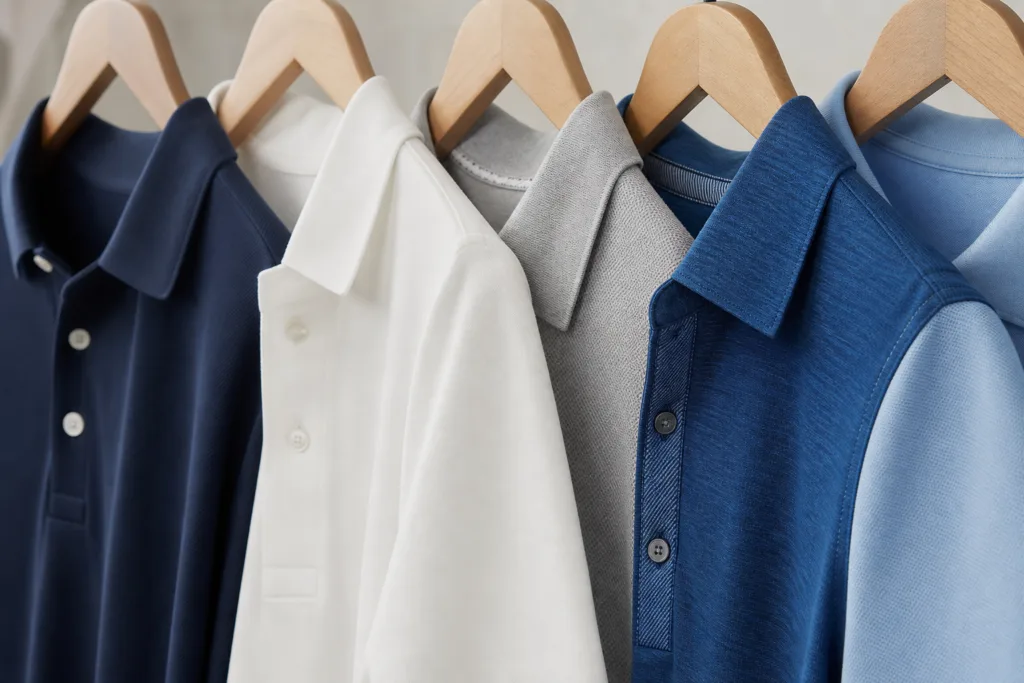
Building a small polo collection around polos, T-shirts, hoodies, and shorts
A polo line does not always need to stand alone. In many cases, a smarter small collection pairs one polo program with a few adjacent categories such as T-shirts, hoodies, and shorts. This creates a more complete brand presentation without requiring many polo variations.
The key is to keep the collection architecture disciplined. For example, the polo can act as the structured hero style, the T-shirt as the entry style, the hoodie as the layering item, and the short as the matching casual bottom. That gives customers multiple price and use points while keeping SKU growth under control.
Ninghow Apparel commonly sees stronger early collection planning when brands define each garment’s job clearly instead of asking every style to do everything. A small range can still look considered if the product roles, color story, and branding system are aligned.
How to plan the first order to minimize stock risk
The first order should be built around realistic demand, not idealized assortment depth. That means prioritizing the styles and colors most likely to sell first, then limiting speculative variants until reorder behavior becomes visible.
A practical first-order plan usually includes one core polo body, a narrow color set, and a size curve based on target customer reality rather than broad assumptions. Brands should also separate what they need for launch presentation from what they need for scalable replenishment.
Quality details matter here because early product issues can distort sell-through data. If collars curl, lose structure, or vary from sample to bulk, even a well-planned SKU strategy can underperform. It is worth reviewing how to prevent collar shape problems before bulk approval so the first delivery reflects the intended standard.
Questions that help reduce first-order risk
- Which color is most likely to become the repeat order base?
- Which sizes are essential and which are optional in the first run?
- Can trims, labels, and fabrics be shared across related products?
- Does the order quantity match expected sales speed, not just factory convenience?
Using sell-through and reorder data to plan the second season
The second season is where disciplined brands gain an advantage. Instead of expanding based on opinion, they expand based on what customers actually bought, returned, reordered, and ignored.
Good sell-through analysis does not need to be complicated. Look at which color sold first, which sizes lagged, whether customers favored a certain fit profile, and whether the logo treatment helped or limited appeal. That information should guide whether the next step is a new color, a women’s fit extension, a performance fabric option, or simply a deeper order in the same proven SKU.
Reorder behavior is often more valuable than launch excitement. A style that reorders cleanly is usually a stronger long-term product than a style that generated early interest but left uneven stock behind.
Low MOQ polo shirts: what brands should ask a manufacturer before sampling
Low MOQ conversations are more useful when they go beyond the headline number. Buyers should understand whether the MOQ applies per style, per color, per fabric, or per full order, because each structure affects planning in a different way.
It is also important to ask how customization affects minimums. A simple stock fabric with custom labels may be easier to develop at a smaller scale than a fully custom dyed program with unique trims and multiple logo applications. Sampling should clarify which parts of the concept are commercially efficient and which parts create avoidable complexity.
Useful manufacturer questions before sample approval
- What is the MOQ by style and by color?
- Which trims or fabric choices raise the minimum order threshold?
- Can one fabric platform support polos plus related styles?
- What elements can stay standard while branding remains private label?
- How should size breaks be planned for smaller total volumes?
These questions help brands compare suppliers more realistically and avoid building a collection structure that only works on paper.
Conclusion
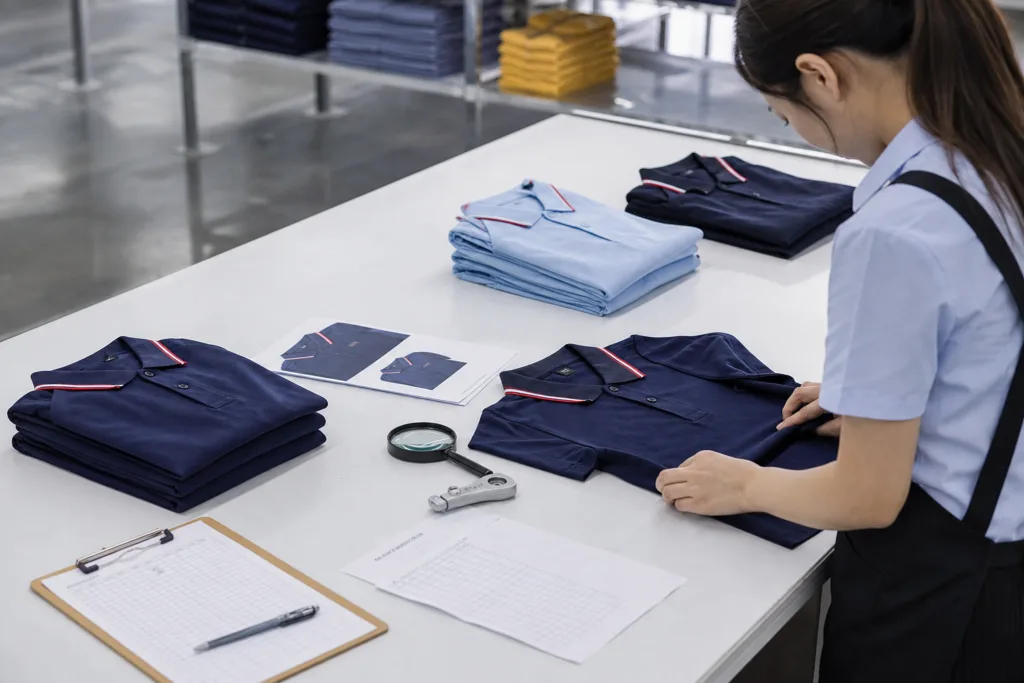
A small private label polo shirts collection does not need many SKUs to be commercially credible. It needs a clear fit strategy, controlled color planning, disciplined decoration choices, and an order structure that matches real demand.
For most new programs, the strongest launch is not the broadest one. It is the one that can be sampled clearly, produced consistently, sold through with less friction, and reordered with confidence once the first season reveals what the market actually wants.
FAQ
How many polo SKUs should a new brand launch with?
Most new brands are better served by starting with one core polo style and a limited color range, then expanding after they see which sizes and colors actually sell.
Is it better to add more colors or more polo styles first?
In many cases, adding a few well-chosen colors to one proven fit is safer than launching several different polo bodies that split demand and increase development complexity.
Should a startup launch men’s and women’s polos at the same time?
Only if the target market clearly requires separate fits from the beginning, because launching both at once increases sampling, grading, and inventory planning workload.
What affects MOQ most in a private label polo program?
MOQ is commonly affected by style count, color count, fabric customization, trim differences, and decoration methods, so a simpler collection structure usually improves flexibility.
Why is logo placement important in a small polo collection?
Consistent logo placement helps a small line look intentional, supports cleaner branding, and reduces unnecessary variation across styles and colorways.
What should brands confirm before approving polo shirt samples?
They should confirm fit, fabric hand feel, collar stability, placket construction, logo execution, labeling details, and how the approved sample will translate into bulk production.