

Scaling apparel production works best when the first order is treated as a test of the product system, not a race to maximize margin. Brands that plan clearly from the start usually make fewer costly changes later, especially when they build their process around a thoughtful private label clothing manufacturer partnership that can support sampling, revisions, and reorder planning in a structured way.
For a manufacturer, the real goal of the first production run is to prove whether the garment can be repeated reliably. That means confirming the pattern, fabric performance, trim availability, labeling method, packing format, and communication flow before the order size grows.
Why the first order should validate the product, not maximize profit
The first order should answer practical questions. Can the garment be made consistently? Are the fit and construction stable? Does the fabric behave the same way in production as it did in sample approval? If the answer is unclear, scaling too quickly usually creates avoidable rework.
Brands sometimes try to squeeze the most units into a first order to lower cost per piece. That can be risky if the product is still being refined. A smaller trial order may look less efficient on paper, but it often protects the brand from inventory problems, customer complaints, and future production delays.
What a smart trial order should prove before you scale

A trial order should validate the parts of the garment that are hardest to change later. The most important checks usually include fit, shrinkage behavior, color consistency, seam strength, trim compatibility, and packaging accuracy.
It also helps to review what happened during sampling. If you want a structured way to think through approvals before bulk production, the apparel sample approval process can help you see which issues should be locked before a larger order is released.
From the manufacturer side, a strong trial order also tests communication discipline. The brand should see whether revisions are documented clearly, whether approvals are timely, and whether the factory can follow the same standard across repeated production steps.
How to move from sample to bulk production without surprises
Moving from sample to bulk production should never feel like a fresh start. The sample set, comments, approved measurements, approved fabric references, and labeling decisions should all become production controls, not just reference files.
Before bulk begins, both sides should agree on what is fixed and what is still flexible. If the brand expects one detail to remain exact, that point should be written down. If a detail may change because of sourcing conditions or cost targets, it should be flagged early rather than discovered mid-run.
At this stage, brands working with Ninghow Apparel or any production partner should also confirm lead time logic. A factory can scale more smoothly when it knows the target quantities, reorder window, and any seasonal deadline in advance.
The key data points that tell you it is time to reorder
Reorder timing should be based on data, not guesswork. The most useful signals are sell-through pace, customer return reasons, size distribution, stock cover, and whether the first production run matched the approved standard.
If the product is selling steadily and the construction has held up, the brand can use those results to plan the next round more confidently. If the first order exposed avoidable issues, the reorder should include corrections before quantity increases.
It also helps to compare what the market wants against what the factory can repeat efficiently. That balance is central to keeping repeat orders consistent and avoiding subtle changes that confuse customers between seasons.
| Decision signal | What it usually means | Action before reorder |
|---|---|---|
| Strong sell-through | Demand is validating the product | Reserve material and production capacity early |
| Return complaints on fit | Pattern or grading may need review | Check measurements before repeating |
| Color or trim variation | Production controls need tightening | Lock references and approved standards |
| Late inventory pressure | Demand exceeds current coverage | Plan reorder timing before stock runs low |
How to review fit, fabric, workmanship, and packaging before the next round
Before scaling, the brand should review the garment in four layers: fit, fabric, workmanship, and packaging. Fit confirms whether the customer experience matches the intended silhouette. Fabric checks whether handfeel, recovery, durability, and color behavior are still acceptable.
Workmanship review should focus on stitching, seam alignment, finishing consistency, and any points where the first order was difficult to reproduce. Packaging review matters too, because a good garment can still feel inconsistent if folding, labeling, or carton packing changes from one round to the next.
When a style starts expanding into multiple versions, a fabric platform strategy for multiple styles can make sourcing simpler by reducing unnecessary material variation while keeping the brand’s look coherent.
When to add new colors, sizes, or styles to the range
Expansion should follow proof, not pressure. New colors make sense when the base style is already stable and the brand understands which shades sell best. New sizes make sense when fit data shows clear demand gaps or when customer groups are underserved.
New styles should usually come after the original product line has shown repeatability. A factory can often support more variation than a brand expects, but each new style adds development time, extra testing, and more opportunities for inconsistency.
If the brand is still stabilizing its current line, adding too many options can stretch both inventory and production control. It is usually better to expand in a sequence: core style first, then proven colorways, then adjacent products.
When to change fabric, improve trims, or upgrade construction
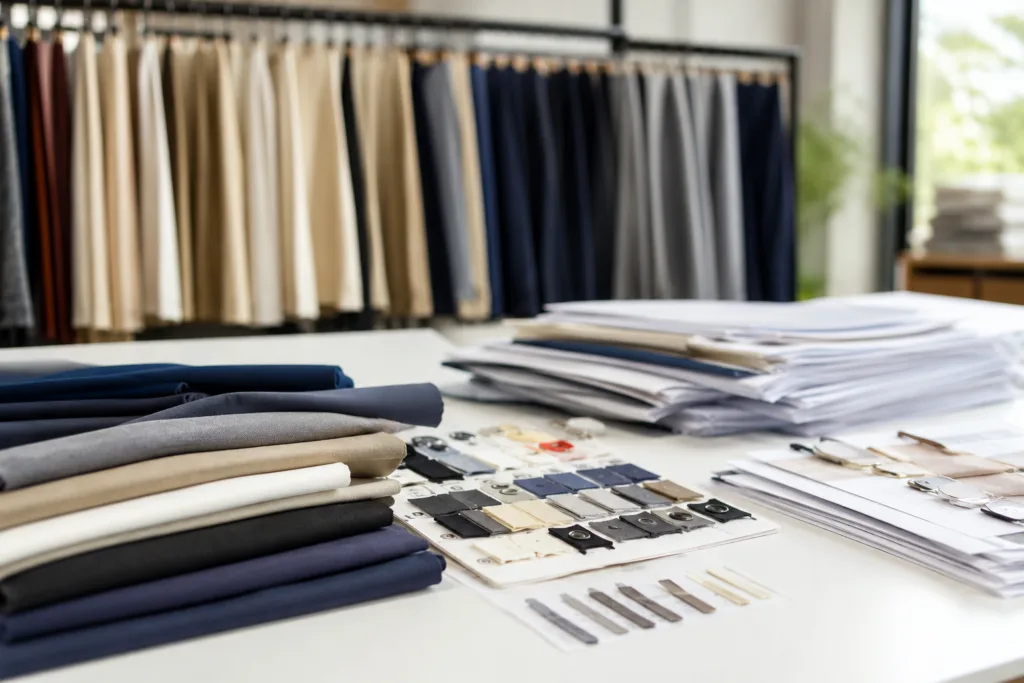
Not every reorder should copy the first order exactly. Sometimes the market response shows that the garment would benefit from a stronger fabric, better recovery, improved trim quality, or a cleaner construction method.
Those upgrades should be made for a reason. If customers want a softer handfeel, a more durable knit, or a sharper finish, the next order can improve the product without changing the brand identity. But if changes are made too often, repeat production becomes harder to control.
This is where a manufacturer’s experience matters. A good production team can explain whether a requested upgrade is likely to improve long-term wear, increase cost too much, or introduce a sourcing risk that the brand may not want.
How to reserve production capacity before demand grows
Once a style proves itself, the brand should start talking about capacity before the reorder becomes urgent. Planning early helps the factory reserve machines, line time, raw materials, and packing resources more efficiently.
That becomes especially important when the brand is moving into larger programs or seasonal launches. A factory that knows the forecast can organize work more smoothly than one that receives a last-minute purchase order and has to reshuffle production.
If growth is moving toward larger volumes, it helps to understand graduating from small batch to mass production so expectations about setup, lead time, and process control stay realistic.
How scaling expectations change from 100 pieces to 1,000 pieces to 10,000 pieces
At 100 pieces, the focus is usually on proof: fit, workmanship, and communication. At 1,000 pieces, the focus shifts to repeatability, size consistency, and supply planning. At 10,000 pieces, the focus becomes process stability, material availability, quality control checkpoints, and production capacity discipline.
Each stage changes what the brand should watch most closely. Smaller runs tolerate more manual handling, but larger runs require more documentation and tighter coordination. What worked well in a small trial may need stronger controls once the order grows.
Brands that scale well usually adapt their expectations instead of assuming the same workflow will fit every volume level. The manufacturer’s job is to help the brand understand where the process needs to become more formal as volume rises.
What production records and communication history should be kept
Good reorder planning depends on clean records. The brand should keep approved specs, fit notes, fabric references, trim codes, color approvals, packaging instructions, correction history, and final sign-off documents in one organized place.
Communication history matters too. If a detail was discussed by email, message, or call, it should be captured in a way that is easy to reference later. That reduces confusion when a product returns months later or when a new team member joins the project.
Clear records also help the factory work faster on repeat programs because they reduce the need to reconstruct decisions. That is one reason pre-production communication with a manufacturer becomes so important as the relationship matures.
Common scaling mistakes apparel brands make
One common mistake is assuming the sample automatically predicts bulk results. Another is increasing quantity before the first order has been fully reviewed. Brands also sometimes change too many details at once, which makes it difficult to identify what improved or caused a problem.
Another frequent issue is underestimating hidden costs such as rework, freight timing, testing, packaging changes, or extra approvals. When the order gets bigger, these issues matter more because they affect both margin and delivery reliability.
Brands that want a fuller view of these cost drivers should also consider the hidden costs in apparel manufacturing before they lock in a scaling plan.
A practical manufacturer collaboration roadmap for sustainable scaling
The most reliable scaling path is simple: validate the first order, document what worked, correct what did not, then repeat with clearer controls. Each round should make the next one easier to manage, not more chaotic.
For long-term growth, the brand and manufacturer should discuss forecast timing, reorder triggers, acceptable tolerance ranges, and which details must stay unchanged. That conversation helps both sides plan capacity and avoid last-minute surprises.
When the brand is building a long-term line, it is also useful to connect production planning with merchandising strategy. If the goal is to build a durable category, the work is not only about one order; it is about building a system that supports future collections and reorders. That is why building a private label apparel line should always include a clear production scaling plan from the beginning.
Conclusion
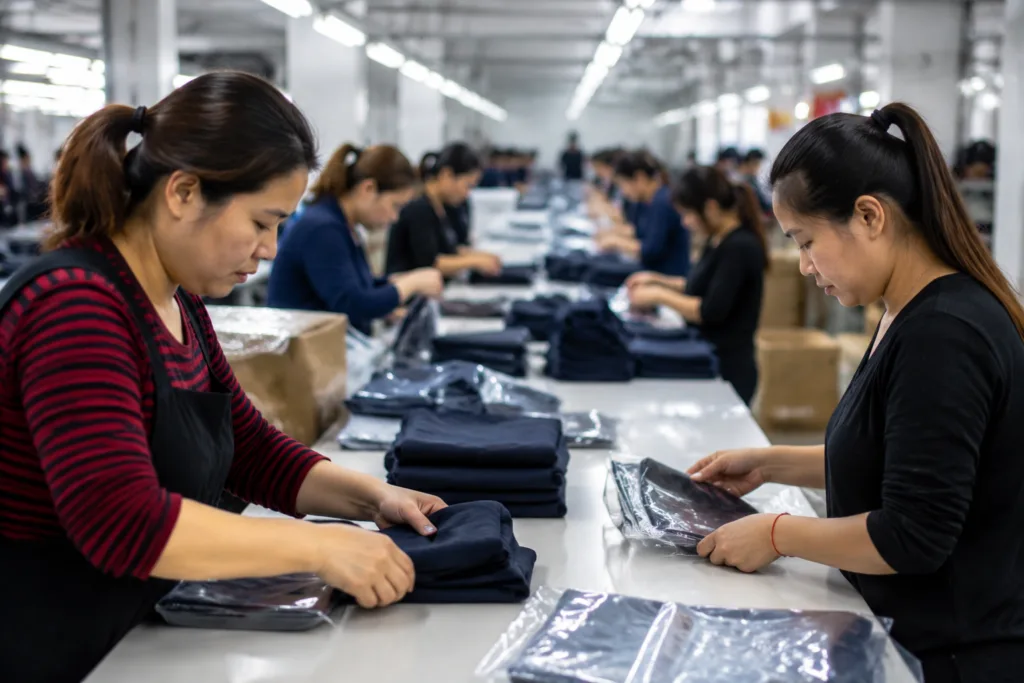
To scale clothing production successfully, apparel brands need more than a larger purchase order. They need a repeatable process, clear records, realistic timing, and a manufacturer relationship that can support both trial orders and long-term reorders.
When the first order is used to validate product quality, the second order becomes easier to manage. When the brand and factory share expectations early, scaling usually becomes more predictable, less stressful, and more profitable over time.
FAQ
How do I know if my first order is ready to scale?
Your first order is ready to scale when fit, fabric behavior, workmanship, and packaging are stable, and when customer feedback does not point to major product flaws.
Should I increase order quantity before or after reorder testing?
Increase quantity only after the first order has been reviewed in real use or sales, so you can confirm the product performs as expected at market level.
What should I document before placing a repeat order?
Keep approved specs, fabric references, trim details, packaging instructions, correction notes, and final approvals so the next order can match the last one more easily.
When should I add more colors or sizes?
Add more colors or sizes after the core style has proven itself and the current line has enough demand data to support expansion without overcomplicating production.
How can I avoid quality changes in repeat production?
Lock down approved references, review deviations quickly, and make sure the factory knows which details must remain unchanged across every reorder.
What is the biggest mistake brands make when scaling?
The biggest mistake is scaling too fast without enough product validation, which often leads to inconsistent quality, stock issues, or expensive corrections.