
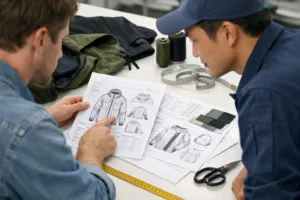
Understanding the Importance of Tech Pack Review
Before sending your apparel designs to the factory, conducting a thorough review of your tech pack is crucial. A tech pack is more than just a set of drawings – it’s the blueprint that instructs manufacturers on exactly how you want your garments produced. Any misunderstanding or omission here means wasted time, costly mistakes, and delays in production. If you want smoother sampling, better costing, and fewer surprises at the factory, careful pre-production auditing is non-negotiable.
What Is a Tech Pack and Why Does It Matter?

A tech pack is a comprehensive set of files that outlines every essential production detail for your apparel design. This includes everything from technical sketches and construction details to fabric specs and packaging requirements. Think of it as your garment’s instruction manual – and the firsthand evidence of your brand’s professionalism.
Failing to properly review your tech pack before submission can create confusion or costly errors. For example, an overlooked zipper placement or fabric color code can force an entire production run to a halt. As one of the foundational tools for apparel manufacturing, investing the extra time in a solid tech pack checklist pays off during every stage of the process.
Why Factories Value Complete Tech Packs
Factories like Ninghow Apparel receive dozens of tech packs each week – and they can quickly tell the difference between rushed and carefully reviewed submissions. A complete, clear tech pack reduces factory questions, shortens the sample lead time, and even helps secure better production pricing since uncertainty or guesswork always leads to padding costs. Additionally, manufacturers can plan production with confidence, even when multiple styles or short deadlines are involved.
Tech Pack Checklist: Your Pre-Submission Audit
This master checklist is designed for apparel brands and designers who want seamless communication with their clothing manufacturers. Use this step-by-step guide each time before pressing send.
Basic Information Section
- Style Number/Project Name
- Brand/Season/Delivery
- Intended Gender/Age/Market
Technical Sketches & Design Details
- Clear front, back, side flat sketches (preferably vector format)
- Zoom-ins for special construction (collars, pockets, plackets)
- Label placements marked visually
If you need a refresher on communicating construction, read: Speak the Language of Apparel Construction: 15 Steps to Seam, Stitch, and Finish Like a Pro.
Bill of Materials (BOM)
- All main and contrast fabrics (weight, content, supplier info, color code)
- Trims (thread, buttons, zippers, cords, embellishments, etc.)
- Labels, hangtags, care labels (artwork and placement included!)
Colorways & Artwork Files
- Pantone/TCX/HEX color codes per part
- Print artwork attached (clearly named & layered, vector if possible)
- Clear placement and scale of print/embroidery
Size Specifications
- Completed measurement chart for all planned sizes
- Tolerances (plus/minus allowances for each point)
- Grading breakdown: show how the sample will be graded across S-XL (or other range)
Double-check this section with clothing sizing customization services to prevent fit surprises in production.
Construction & Stitching Instructions
- Seam type and stitch specifications (for each section – main seams, pockets, hems, etc.)
- Hemming, binding, and finishing methods
- Row/frequency of top-stitching, bartacks, reinforcing as needed
Labeling & Packaging Requirements
- Placement of main/brand/care labels (clear callouts on sketches)
- Packing format: folded/flat/hanger, polybag, hangtags attached?
- Outer carton specifications/count per box, labeling for export compliance
Pre-Production Testing Clauses
- Wash, shrinkage, and colorfastness requirements (attach test method or ask for 3rd party test)
- Attachment of sample test reports when required
Clear Photos & References
- Attach reference samples if requesting special processes (e.g. pucker-free seams, heavy enzyme wash)
- Photos for hardware, trims, or non-standard requests
Contact Details & Revision Control
- File naming with date/version number
- Contact details for the person authorized to answer questions
- Revision history included if rerunning previous styles
The Role of a Pre-Production Audit in Tech Pack Approval
Pre-production audits are a game-changer for smooth launches. In practice, this means assigning someone besides the creator (an internal tech designer, QC manager, or your manufacturer’s account handler) to check the tech pack line-by-line using the checklist above. This independent review almost always exposes any assumptions or knowledge gaps that could result in sampling errors or costly rework.
Top 10 Most Common Tech Pack Mistakes (and How to Avoid Them)
| Mistake | Result | Prevention Tip |
|---|---|---|
| Missing tolerances | Factory guesses; inconsistent sizing across production | State specific (+/-) tolerance for all measurements |
| Unclear color codes | Wrong dye lot, mismatched trims | Pantone/HEX for every fabric and thread |
| Forgotten trims | Production delays when sourcing missing items | Double-check BOM list against physical sample or photos |
| No packaging instructions | Poor shelf presentation or customs delay | List folding, bag, hangtag, and carton rules |
| Missing fit comments | Poor sample fit, rework cycles | Include fit reference/target and warnings for style details |
| Revision confusion | Wrong version produced | Date & number all file versions, log changes |
| Missing care label info | No regulatory compliance for some markets | Attach required label text/artwork by region |
| Ambiguous construction method | Samples don’t match expectations | Use visual callouts for unique seams or finishes |
| Poor image naming/organization | Files get lost, slow reply from factory | Use project/style numbers, date/version on all attachments |
| Lack of approval sign-off process | Confusion about who is final decision maker | Include factory and brand sign-off lines as a standard |
For an in-depth breakdown of typical pitfalls, see Avoid Production Delays: 5 Tech Pack Mistakes to Prevent Costly Errors.
A Real-World Example: How Tech Pack Reviews Catch Small Errors
Ninghow Apparel often receives tech packs from both new and established brands. In one case, a reusable tote bag project nearly launched with handles too short for over-the-shoulder carrying, simply because the measurement chart and design sketch weren’t cross-checked during the internal audit. By testing the drawings with a ruler and clarifying “intended wear,” the confusion was caught—preventing a costly round of samples and incorrect bulk goods. Even seasoned teams benefit from a second set of eyes.

How to Communicate Tech Pack Revisions to the Factory
Never assume that your manufacturer knows which details have changed since your last tech pack submission. Always provide a change log and highlight any major updates in both the email and the tech pack file. If there’s urgency, mention that up front and ask the factory to confirm receipt and understanding.
Insider Tips for Reviewing Your Tech Pack Before Sending
- Have a non-designer review key specs with “fresh eyes” – especially measurements, colors, trims
- Use a physical sample as a reference: check BOM, trims, and construction match tech pack files
- Rename all files clearly (style_project_version_date), bundle in a single compressed folder
- Ask your manufacturer how they want files organized for their production team
- Send a “final” version only once you’re confident; limit micro-updates that confuse the process
How to Handle Tech Pack Changes After You’ve Sent to Manufacturing
Last-minute changes create risk once production is in motion. If you must issue a revision after sending, contact your manufacturer’s account handler immediately. Provide updated and clearly named files with careful change logs. Be open to feedback – some changes (e.g. a size spec) are easy before samples, while others (like a fabric type) could reset your costs or lead times entirely. Factories like Ninghow Apparel appreciate direct, early notification so changes can be planned with minimal disruption.
The Role of Tech Pack Templates and Digital Tools
Consider using professional tech pack templates or platforms (like Techpacker, Excel, or CLO3D) for organization, version control, and collaboration. Digital tools can reduce human error, but ultimately, a responsible pre-production audit remains mandatory. Never assume that software alone prevents transmission mistakes – human review is still king for apparel production files. For a template breakdown, see Unlock Apparel Success: Downloadable Tech Pack Template Essentials Explained.
Ready to Send? Final Tech Pack Checklist Before Hitting ‘Send’
- All required sections attached and complete?
- Files named clearly and consistently?
- No placeholders (“TBD,” “to confirm”) left in the document?
- All artwork is supplied in correct format (vector/print-ready)?
- Contact info and sign-off box included for reference?
- Document is under the file size limit (for email/WeTransfer)?
How to Review a Tech Pack Before Sending to Manufacturers

Conducting a thorough pre-production audit using the checklist above every single time is your single strongest defense against frustration, expensive errors, and delays. Prioritize this review process, create a master checklist that fits your brand and the manufacturer’s preferences, and you’ll be rewarded with faster approval, lower costs, and a better product outcome. Remember: time spent on tech pack details today saves weeks of pre-production firefighting tomorrow.
Frequently Asked Questions
What happens if my tech pack has errors when sent to factories?
Errors can result in incorrect samples, miscommunication, wasted materials, and costly production delays. Factories may stop until corrections are made, extending the timeline.
Can I use the same tech pack for multiple colorways?
Yes, but you must specify every color code and related BOM change for each colorway in the tech pack to avoid wrong production.
How detailed should sketches and diagrams be in my tech pack?
Include clear front, back, and side technical flats, zoom-in details for construction, and label all unique features. Greater clarity means fewer questions at the factory.
Is it necessary to specify every trim and label in the BOM?
Absolutely. Missing trims and incomplete labeling are a leading cause of production errors and delays. List all details to avoid confusion.
Can I send tech pack updates after production has started?
It’s possible, but expect extra costs and lead time. Inform your factory ASAP and confirm which changes are realistically feasible based on current status.
Who should review my tech pack before submission?
Ideally, someone other than the creator—like a technical designer, QC manager, or an experienced factory partner—should perform the audit to catch blind spots.