
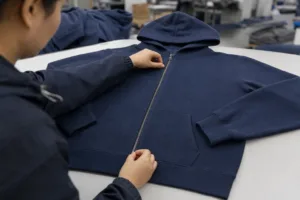
Zip-up hoodies look simple at a glance, but the front opening adds one of the most sensitive construction areas in the garment. A pullover hoodie can often hide minor panel tension issues, while a zip-up style exposes them immediately through front-panel distortion, zipper waviness, hem imbalance, and visible asymmetry. For buyers, that means zipper quality is not just a trim decision; it is a combined result of fabric behavior, pattern accuracy, sewing control, and finishing stability.
When evaluating custom zip-up hoodie manufacturing, it helps to treat the zipper area as a construction system rather than a single component. A good-looking hoodie front depends on how the zipper, tape, placket seam, fabric weight, and panel shape work together from development through bulk production. That perspective makes it easier to spot risk early, especially before approvals lock in costly defects.
Why Zip-Up Hoodies Are Harder to Produce Than Pullover Hoodies
Adding a center-front zipper splits the garment into two panels that must remain balanced after cutting, sewing, pressing, washing, and packing. Even small differences in panel length, seam feeding, or shrinkage can make the zipper look uneven. In a pullover hoodie, those differences may be less visible because the front remains a single uninterrupted panel.
The zipper area also combines rigid and flexible materials in one line of construction. Hoodie fabric may be soft, stretchy, brushed, heavyweight, or loosely knit, while the zipper tape is comparatively stable. If the sewing process forces those materials together without proper control, one side can ripple, bubble, or twist. That is why strong zip up hoodie zipper quality starts long before final inspection.
What Zipper Waves, Bulging, and Misalignment Look Like in Finished Hoodies
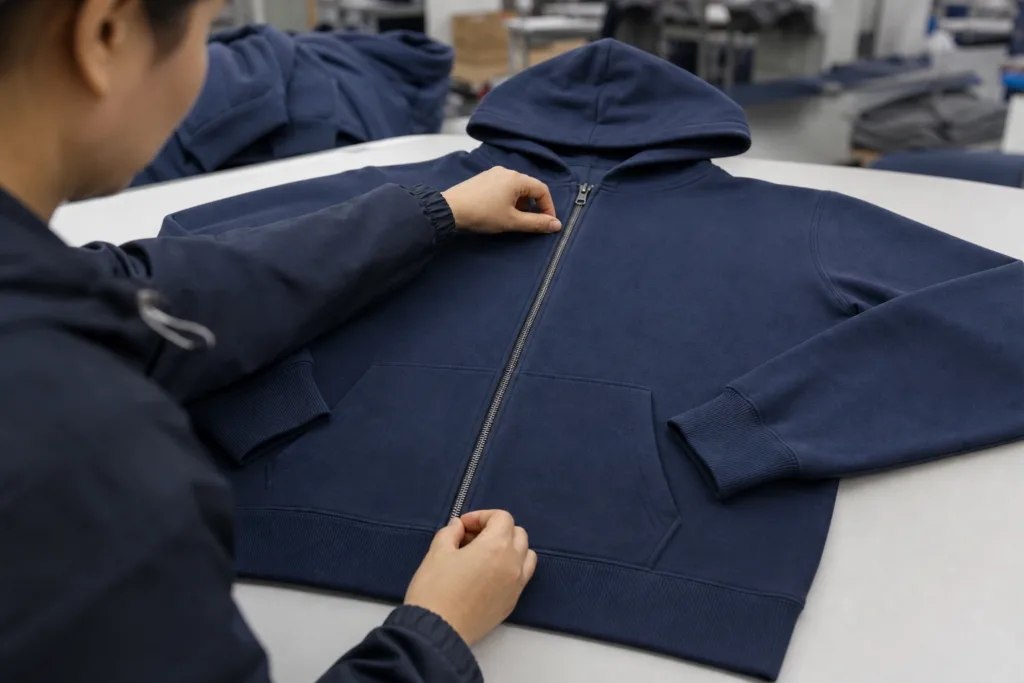
These issues show up in different ways, and buyers should learn to separate them because the cause is not always the same.
- Zipper waves: visible rippling along the zipper line, often caused by differential feeding, fabric stretch, or shrinkage imbalance.
- Bulging: fullness or puffing near the zipper seam, usually caused by excess fabric, incorrect seam allowance control, or mismatch between zipper tape stability and garment fabric behavior.
- Misalignment: the left and right front panels do not meet evenly at the neckline, pocket seam, hem, or style lines when zipped closed.
- Twisting: the zipper pulls the front body off grain, making the garment hang unevenly.
- Front-edge collapse: the zipper area looks weak or bends inward because the fabric and zipper combination lacks support.
In production reviews, these defects should be checked both zipped and unzipped, laid flat and worn on body. Some issues look minor on a table but become obvious when the hoodie is worn and the front panel is under tension.
The Main Causes of Hoodie Zipper Defects in Custom Production
Most zipper defects are not caused by one mistake alone. They usually come from a chain of small inaccuracies that build up across development and production. Common root causes include incorrect pattern balance, unstable fabric, poor cutting control, zipper selection mismatch, uneven sewing tension, and wash shrinkage that was not properly tested.
Another common problem is treating the zipper as a standard trim without adjusting the rest of the garment around it. A heavy fleece body, for example, may need different front-edge stabilization than a lighter French terry style. Likewise, cropped fits, oversized silhouettes, and dropped shoulders can each change how the zipper line behaves during assembly and wear.
How Fabric Stretch and Fabric Weight Affect Zipper Stability
Fabric is often the hidden driver of zipper appearance. Light or highly elastic knits can stretch during sewing, which creates a wavy front edge once the garment relaxes. Heavy brushed fleece can create bulk pressure around the zipper seam, especially if seam allowances are not graded or controlled well. Both extremes can cause trouble, just in different ways.
That is why many sourcing teams should evaluate choosing fabric for custom hoodies together with zipper construction, not as separate approval decisions. Fabric weight, knit structure, surface finish, and recovery all influence whether the zipper area stays flat after assembly, washing, and repeated wear.
Some practical fabric-related risk points include:
- High-stretch knits that elongate while the zipper tape does not
- Heavy fleece that creates bulk at the front seam and neckline
- Poor recovery fabrics that bag out after repeated unzipping and wearing
- Unstable brushed interiors that shift during sewing
- Shrinkage differences between shell fabric and zipper tape after washing
For this reason, a zipper should never be approved only by color or tooth style. It must be reviewed with the actual garment fabric in the intended construction method.
Why Pattern Matching and Panel Alignment Matter at the Cutting Stage
A zip-up hoodie depends on left-right symmetry. If the pattern is slightly off at center front, or if cutting drifts from the grain line, the problem will often show up only after the zipper is installed. At that point, sewing operators may try to compensate, but forced correction during stitching usually creates waves instead of solving the source issue.
Buyers should ask whether the factory checks center-front lengths, neckline match points, pocket placement symmetry, and hem balance before sewing starts. If stripe, color block, seamline, or pocket placement must match across the zipper, cutting precision becomes even more important. Misalignment at the cutting stage cannot be fully repaired by later QC.
How Sewing Tension, Stitch Density, and Machine Setup Create or Prevent Distortion
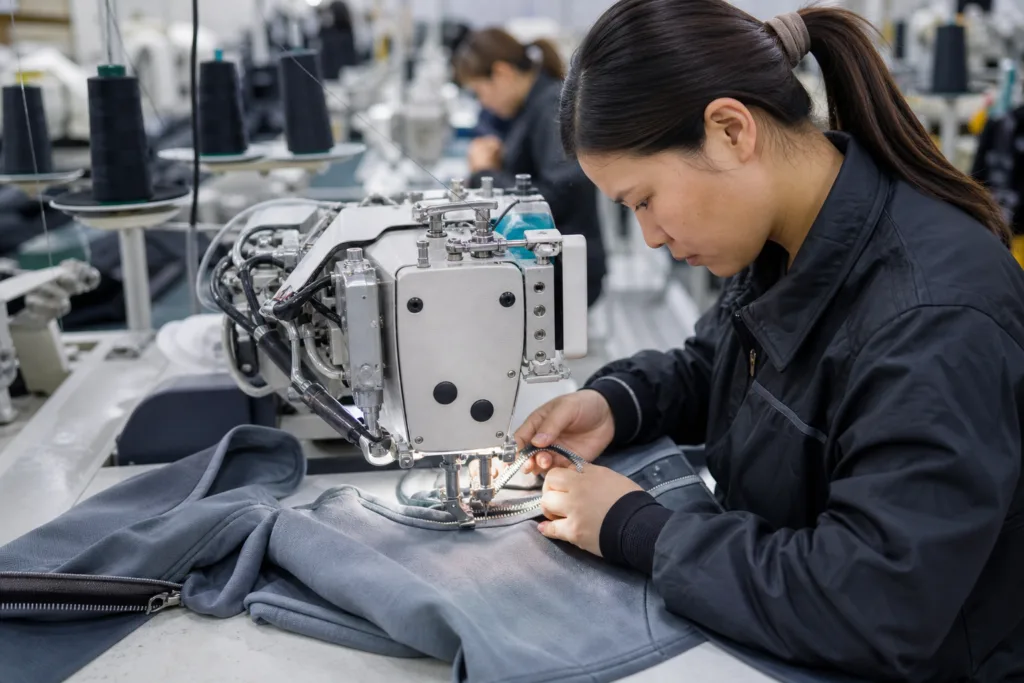
Sewing is where many visible zipper problems are created. If thread tension is too high, the seam can draw the fabric inward and form ripples. If stitch density is too tight for the fabric, the seam line may become rigid and pull the zipper area out of shape. If operator feeding is uneven, one front panel may stretch more than the other even when the original cut parts were correct.
Machine setup matters just as much as operator skill. Presser foot pressure, feed balance, needle selection, and seam sequence all affect the final appearance. On soft hoodie fabrics, slight overhandling can distort the front edge before the zipper is fully secured.
A capable factory will define seam methods, test machine settings on sample runs, and confirm acceptable variation levels using clear apparel quality tolerance standards. Without that discipline, teams may approve a sample that looks fine individually but cannot be repeated consistently in bulk.
Choosing the Right Zipper Type for Zip-Up Hoodies
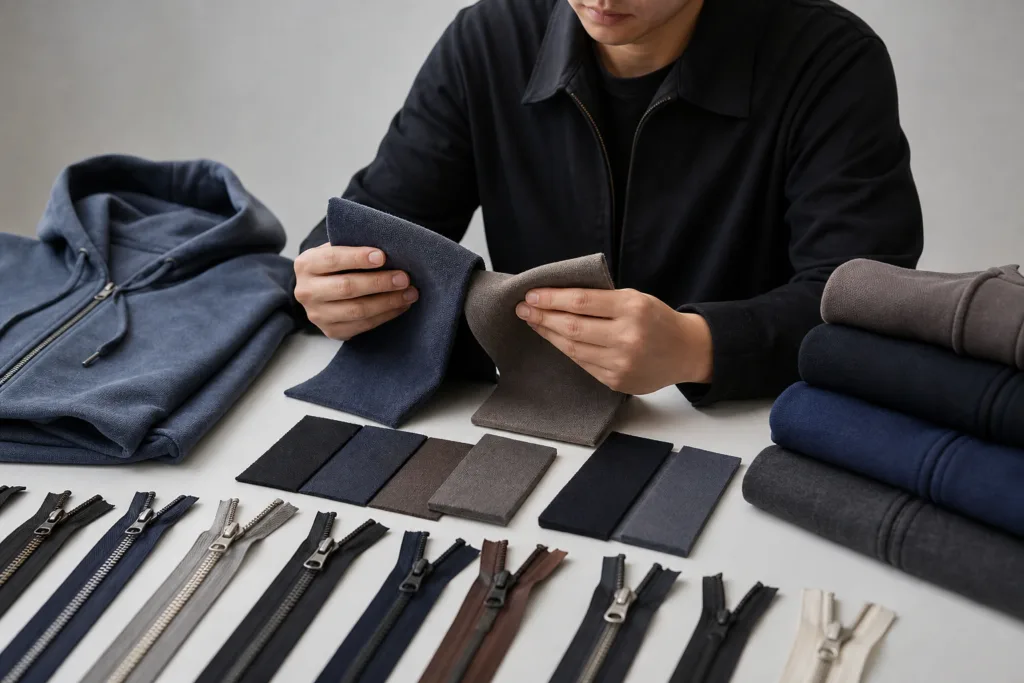
Metal, nylon coil, and resin zippers each behave differently in hoodies. The right choice depends on garment weight, brand positioning, hand feel, wash expectation, and front appearance.
| Zipper Type | Typical Strengths | Common Risks in Hoodies |
|---|---|---|
| Metal | Premium look, durable feel, strong structure | Heavier weight can pull lighter fabrics; may create front-edge sag if unsupported |
| Nylon coil | Flexible, smooth, often suitable for soft casual styles | Can look too soft on heavy fleece; front may appear less crisp |
| Resin | Balanced structure, visual presence, many color options | Incorrect tooth size can look bulky or stiff on lighter hoodies |
There is no universal best option. A lightweight lifestyle hoodie may benefit from a softer zipper, while a heavyweight streetwear style may need more visual structure. The decision should also consider puller weight and how the front neckline behaves when the garment hangs on a rack or on body.
How Zipper Tape Width, Teeth Size, and Puller Weight Affect Hoodie Appearance
Buyers often focus on zipper color and tooth finish, but the supporting specifications can matter more for appearance. If the tape is too narrow for the fabric and seam method, the zipper may not sit securely. If the teeth are too large for the garment scale, the front can look bulky. If the puller is too heavy, it can drag the neckline downward over time.
These details are especially important in private label development where brand image depends on clean execution. At Ninghow Apparel, zipper selection for hoodies is usually reviewed in relation to fabric weight, silhouette, and intended use rather than trim aesthetics alone. That helps reduce the mismatch that often causes front-edge distortion in bulk production.
What to Check During the Sample Stage for Zipper Alignment and Front-Panel Symmetry
The sample stage is where buyers should slow down and inspect the front opening carefully. A sample can pass general fit review while still hiding zipper risks that become expensive later. The safest approach is to review zipper behavior under several conditions: laid flat, zipped, half-zipped, worn, and after basic handling.
It is useful to build these points into the formal apparel sample approval process so zipper quality is not treated as an informal visual comment. Teams should check whether the hem meets evenly, whether hood seam points align, whether pockets remain level after zipping, and whether the front edge stays flat without hand smoothing.
- Zip the hoodie fully and confirm neckline and hem meet evenly
- Check left-right panel width from underarm to hem
- Lay the garment flat without stretching and inspect for waves
- Open and close the zipper several times to detect torque or catching
- Review pocket and seam alignment when zipped
- Inspect the front after light steaming or pressing to see whether distortion returns
Wash and Wear Testing for Shrinkage, Waviness, and Deformation
Some zipper problems do not show up until the hoodie has been washed. Fabric may shrink while zipper tape remains stable, creating rippling along the front. In other cases, pressing during sample finishing temporarily hides distortion, but the issue returns after laundering. Buyers should not rely only on a fresh sample appearance.
Wash and wear testing should check front-panel symmetry, zipper smoothness, seam puckering, and edge recovery after drying. If the product is intended for repeat casual use, the zipper should also be tested after multiple open-close cycles. This is especially important for brushed fleece, garment-washed styles, and any fabric with notable shrink potential.
Factory QC Standards to Control Zipper Quality Before Bulk Production
Good factories control zipper quality through checkpoints rather than final inspection alone. The most useful standards are simple, repeatable, and tied to actual defect risk. That includes cut panel verification, in-line sewing checks, zipper function tests, post-wash assessments when relevant, and final symmetry review.
Before bulk approval, buyers should also ask what PP sample checks before bulk production are used to confirm the approved zipper construction is repeatable. A strong PP review helps verify that the same zipper, fabric lot behavior, sewing method, and finishing process can produce stable results at scale.
Useful zipper-related QC points include:
- Center-front seam allowance consistency
- Left-right front length comparison before zipper insertion
- Zipper tape alignment to notch points or reference marks
- Thread tension and stitch density confirmation
- Finished garment flatness when zipped on a table
- Neckline, hem, and pocket symmetry review
- Function testing for smooth opening and closing
- Post-finishing inspection for waves, bubbling, or front torque
Common Supplier Mistakes That Lead to Hoodie Zipper Defects
Many zipper issues come from preventable process shortcuts. One common mistake is using a zipper that was selected mainly for price or appearance without checking compatibility with the actual hoodie fabric. Another is approving a development sample made with one sewing setup, then switching machines, operators, or trim specifications in bulk without revalidation.
Other frequent mistakes include skipping grain-line control during cutting, pressing panels aggressively to force them flat, neglecting wash testing, and relying on final inspection to catch construction problems that should have been prevented much earlier. Buyers should be cautious if a supplier explains waves or misalignment as normal for all zip-up hoodies. Minor variation can happen, but repeated front distortion usually points to process weakness.
Buyer Checklist for Approving a Custom Zip-Up Hoodie Before Mass Production
Before giving bulk approval, buyers should confirm both the visible result and the process behind it. A clean sample is helpful, but it is not enough if the factory cannot explain how the result will be repeated consistently.
- Confirm zipper type matches fabric weight and garment positioning
- Check center-front symmetry at neckline, chest, pocket, and hem
- Review the garment both flat and worn
- Verify no visible waves, bubbling, or seam draw along the zipper
- Ask whether the sample has been washed or if shrinkage testing was done
- Confirm stitch density and seam method are locked for bulk
- Check that zipper puller weight suits the hoodie construction
- Approve a PP sample, not only an early development sample
- Define acceptable tolerances for front alignment and appearance
- Document any correction points clearly before production starts
Conclusion
Zip-up hoodies demand more control than pullovers because the zipper exposes every inconsistency in fabric, cutting, sewing, and finishing. If buyers want reliable zip up hoodie zipper quality, the right approach is to assess the whole construction system: fabric stability, panel balance, zipper specification, machine setup, wash behavior, and QC checkpoints.
The most effective way to prevent waves, bulging, and misalignment is to identify risk before bulk production rather than trying to sort defective pieces at the end. For brand owners and sourcing teams, that means asking better questions during development, reviewing samples more critically, and choosing suppliers that can explain how zipper quality is built into the process.
FAQ
Why do zip-up hoodies show more construction defects than pullover hoodies?
Zip-up hoodies have a split front, so any difference in panel length, stretch, sewing tension, or shrinkage becomes visible along the zipper line, while pullovers can hide minor imbalance more easily.
What usually causes a wavy zipper on a hoodie?
A wavy zipper is often caused by fabric stretching during sewing, mismatched shrinkage between fabric and zipper tape, incorrect thread tension, or a zipper type that does not suit the fabric weight and structure.
Should buyers approve hoodie zippers based only on sample appearance?
No, because pressing can temporarily flatten the front, so buyers should also review zipper behavior after handling, washing when relevant, and PP sample confirmation before bulk production.
Is a heavier zipper always better for premium hoodies?
No, a heavier zipper may add structure, but it can also drag lighter fabrics, distort the neckline, or create excess bulk if the hoodie construction is not designed to support it.
What is the most important QC check for hoodie zipper alignment?
One of the most important checks is confirming left-right front symmetry at key points like neckline, pocket seam, and hem when the garment is fully zipped and laid flat without stretching.
Can zipper defects be fixed during final inspection?
Some minor issues can be reworked, but most waves, bulging, and alignment problems come from earlier pattern, fabric, or sewing errors, so prevention during development and in-line control is much more reliable.