
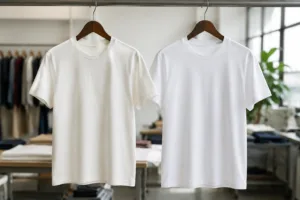
When buyers compare blank or custom T-shirts, fabric weight and print method usually get most of the attention. But construction can change how the shirt fits, how stable the side profile looks, how the print sits on the body, and how consistent the result feels across a bulk run.
That is why it helps to review custom T-shirt construction options before locking in a style for production. A side-seamed body and a tubular body can both work well, but they serve different goals in fit, branding, price positioning, and manufacturing control. For brand owners and sourcing teams, choosing the right construction early reduces avoidable revisions later.
What is a side-seamed T-shirt?
A side-seamed T-shirt is made from separate front and back panels that are joined together at the side seams. This gives the factory more control over body shape, armhole balance, waist sweep, and overall silhouette.
Because the pattern is cut in panels, side-seamed shirts are commonly used for retail-focused products, private label programs, fashion basics, and fitted or modern silhouettes. They allow more intentional shaping than a tube body and make it easier to build a cleaner profile across sizes.
For buyers evaluating garment construction details for seam placement and finishes, side seams also create clearer specification points for body measurement, seam allowance control, and sewing quality review.
What is a tubular T-shirt?
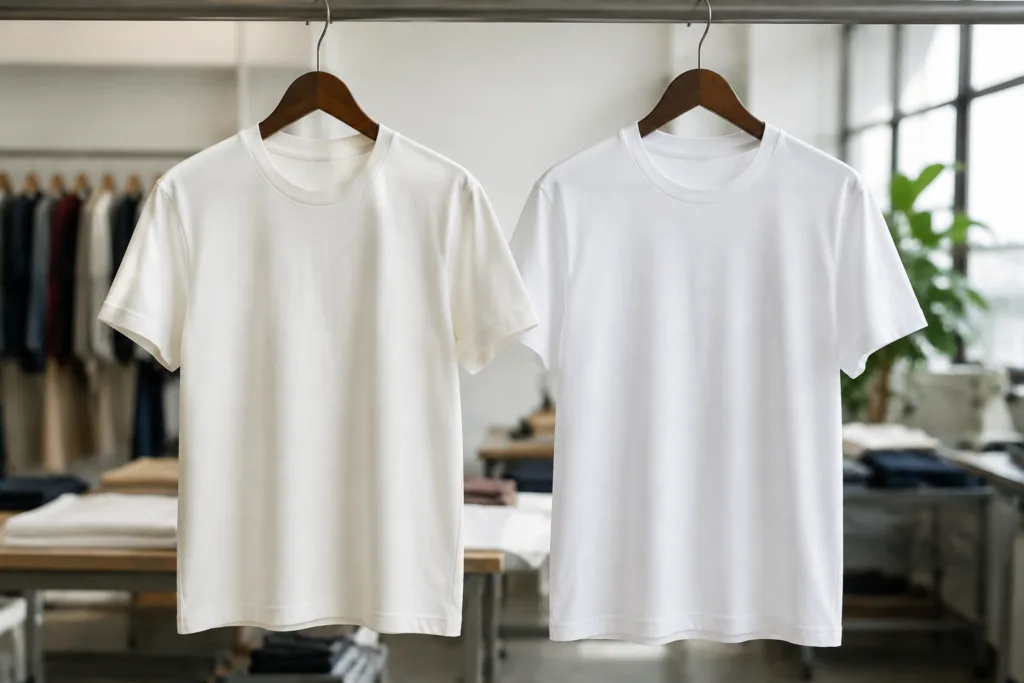
A tubular T-shirt is made from a circular knitted body, so the main body has no side seams. The fabric comes off the knitting process as a tube, which can reduce cutting and sewing steps compared with a panel-built garment.
Tubular bodies are often used for promotional T-shirts, event shirts, basic merchandise, and value-driven bulk orders. The construction is straightforward and can be efficient for large-volume production when the target is cost control and a more relaxed, standard fit.
That does not automatically make tubular worse. It simply means the shirt has fewer shaping points, which affects how it hangs, how refined it looks on body, and how suitable it is for premium private label positioning.
Side-seamed vs tubular T-shirt: the core differences at a glance
| Factor | Side-seamed | Tubular |
|---|---|---|
| Body construction | Front and back panels sewn at sides | Seamless tube body |
| Fit control | Higher | More limited |
| Retail appearance | More structured and polished | More basic and casual |
| Print alignment | Often easier to manage on shaped bodies | Good for standard front and back prints, but body twist can be more noticeable |
| Cost position | Usually higher | Usually lower |
| Private label suitability | Strong | Depends on brand level and target price |
| Promotional use | Possible, but not always necessary | Very common |
Which construction is better for retail brands and premium private label lines?
For most retail brands, side-seamed construction is the safer choice. It supports a more intentional fit, helps the shirt keep a cleaner shape after sewing, and generally presents better on a model, hanger, or folded retail display.
It is especially useful when your brand cares about silhouette, graded fit, and a more elevated handoff between design concept and final bulk product. If the T-shirt is part of a premium basics line, side seams usually give the product a more developed feel.
This is also where a manufacturer perspective matters. At Ninghow Apparel, projects aimed at private label development often benefit from side-seamed bodies because buyers want more control over width, length balance, and how the shirt represents the brand rather than just covering a low unit cost target.
Which construction is better for promotional T-shirts and cost-sensitive orders?
Tubular construction is often the practical answer when the order is driven by budget, volume, and basic wearability. School events, campaign merchandise, giveaways, staff shirts, and large promotional runs commonly use tubular styles because the body can be simpler and more cost-efficient to produce.
If the buyer is less concerned about a fashion-forward fit and more focused on hitting a target price, tubular can be the better sourcing decision. It can also work well for unisex event shirts where the expectation is a straightforward, easy fit rather than a refined retail silhouette.
That said, cost-sensitive does not mean detail-free. Buyers should still confirm measurements, shrinkage expectations, neck rib quality, and print position tolerance during the apparel sample approval process so the finished run matches the approved standard.
How side seams affect fit, drape, and the retail look
Side seams give pattern makers more ways to shape the body. Even subtle adjustments at the waist, chest, and hem can improve how the shirt drapes on the wearer. This matters for men’s fitted tees, women’s fashion basics, and streetwear silhouettes that depend on deliberate proportion.
Side seams also make it easier to maintain a visual line from underarm to hem. On a retail shelf, that can create a tidier impression than a tube body that feels more generic. If your brand identity depends on fit consistency between repeated drops, side-seamed construction usually gives you a stronger starting point.
How construction affects print placement, logo alignment, and decoration flexibility
Both constructions can be printed successfully, but they behave differently in production. A side-seamed body gives clearer reference points for the center front, side profile, and label placement. That can help when a design includes front chest logos, oversized graphics, hem branding, or combined print-and-label programs.
Tubular shirts are still widely used for front and back prints, especially in promotional programs. However, if the body twists after wash or if the garment does not sit symmetrically on body, a print that was technically centered can appear visually off when worn.
Construction should also be considered alongside fabric recovery, print area size, and wash behavior. Buyers planning complex decoration should confirm acceptable tolerances early and review pattern tolerance and manufacturing variation before approving bulk production expectations.
Tubular T-shirt cost advantages: where the savings come from
The main savings in tubular T-shirts usually come from reduced cutting complexity and fewer body assembly operations. With no side seams to sew, the construction process can be more direct, which supports value-focused production.
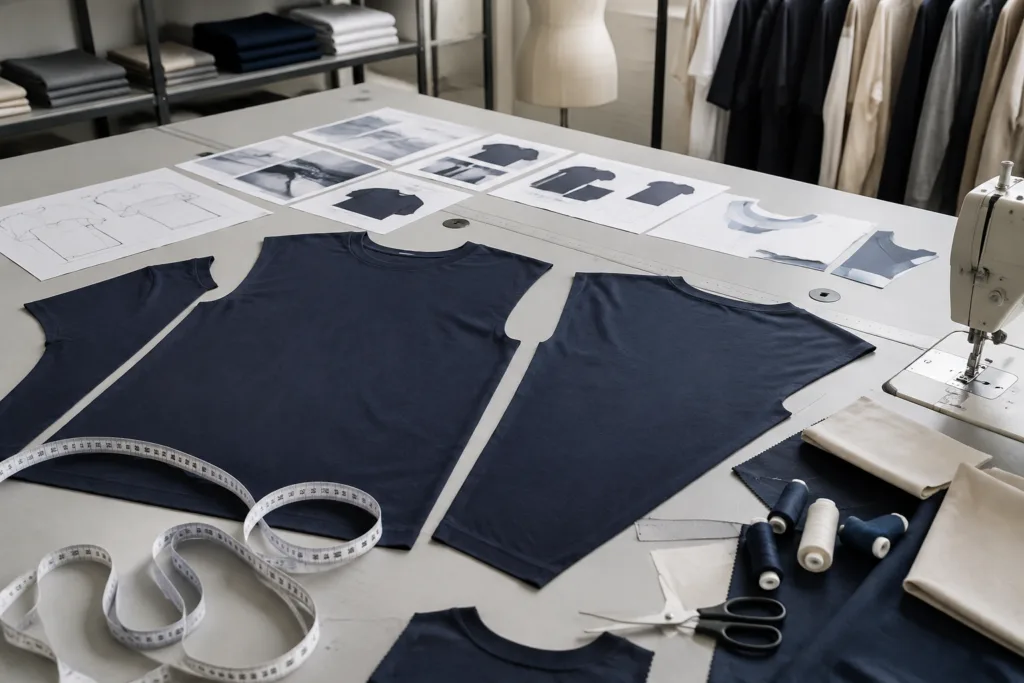
For large-volume orders, that efficiency can matter. If the product is meant for one-time campaigns, broad-size event distribution, or budget-driven resale, the cost difference may outweigh the need for a more tailored shape.
Buyers should still keep total value in mind, not just unit cost. A cheaper body can become expensive if the final fit, shrinkage result, or visual presentation does not match the use case.
Limitations of tubular T-shirts in fit, branding, and presentation
The main limitation of tubular construction is reduced control over body shape. Since there are no side seams, the silhouette depends more heavily on the knitted tube dimensions and overall cut. That can make it harder to build a more refined profile.
Branding options can also feel more limited when the garment is intended to communicate a premium identity. A shirt may still look good, but it may not deliver the same polished impression as a well-developed side-seamed style in a private label collection.
For buyers selling through retail channels, photography, product pages, and in-person merchandising all magnify these differences. A basic body can work, but it needs to align with the price point and customer expectation.
Bulk production considerations: size consistency, shrinkage behavior, and quality control
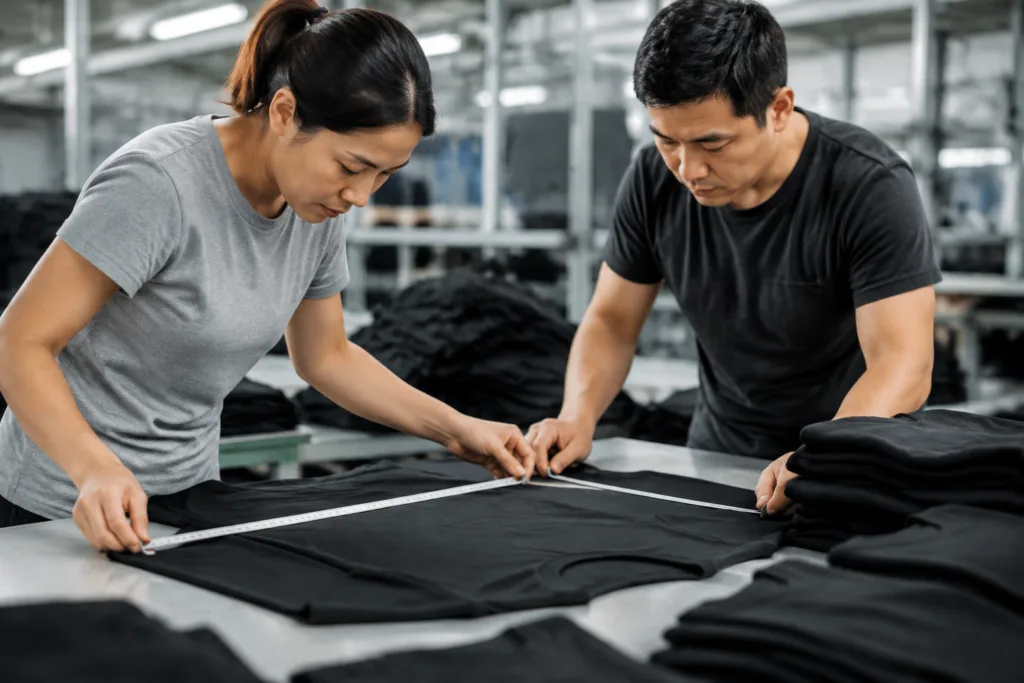
Construction choice affects production control as much as appearance. Side-seamed shirts offer more measurable checkpoints because body panels, seam lines, and finished dimensions can be reviewed against specs in a more structured way.
Tubular shirts can still be controlled well, but buyers need to pay close attention to knitting stability, body skew, and post-wash behavior. If the fabric shifts or twists, the lack of side seams can make visual distortion easier to notice on the finished garment.
In bulk runs, the important question is not whether one construction is universally better. It is whether the chosen construction fits the fabric, target fit, and tolerance standard of the order. That is why sample review, wash testing, and size-set checking should happen before bulk approval.
How to choose based on order type, target price point, and end use
If you are building a branded retail product, side-seamed is usually the better default. If you are sourcing for promotions, events, giveaways, or tight cost brackets, tubular is often the more efficient option.
- Choose side-seamed for premium basics, private label collections, shaped fits, fashion retail, and image-sensitive branded merchandise.
- Choose tubular for high-volume promotions, budget-focused orders, standard unisex event shirts, and projects where cost efficiency matters more than silhouette refinement.
- Compare both when your brand sits in the middle and needs to balance presentation with margin.
Best T-shirt construction for different custom order scenarios
| Order scenario | Better construction | Why |
|---|---|---|
| Premium private label basics | Side-seamed | Better shape control and stronger retail presentation |
| Fashion brand launch tee | Side-seamed | Supports fit development and brand positioning |
| Large event giveaway | Tubular | More budget-friendly for high volumes |
| Corporate promotion shirt | Tubular | Efficient for standard logo placement and cost control |
| Higher-end merch line | Side-seamed | Improves perceived value and consistency |
| Basic resale tee at low price point | Tubular | Matches value-focused product strategy |
| Multi-size branded collection | Side-seamed | Usually easier to refine fit across grading |
How to specify side-seamed or tubular construction clearly in a tech pack
Do not assume the factory will infer construction from a reference photo. Your tech pack should state the body construction directly, include garment sketches, specify fit intent, and note any important measurement points affected by seam structure.
It is also smart to include sewing notes, neck rib details, hem construction, label position, and post-wash expectations. A clear document reduces preventable misunderstandings, especially when the body silhouette is central to the product concept. If your team needs a stronger handoff into production, use a pre-production tech pack review checklist before confirming the final sample.
Common sourcing mistakes when choosing T-shirt construction
- Choosing by price only: A lower unit cost can create a mismatch with brand positioning.
- Skipping wear testing: Construction differences become clearer when the shirt is actually worn and washed.
- Using the same body for every channel: Retail, promo, and team orders may need different construction logic.
- Ignoring tolerance planning: Fit and alignment expectations should match the chosen construction and fabric behavior.
- Approving from photos alone: A physical sample tells you much more about drape, twist, and perceived quality.
Final recommendation
For most custom retail and private label programs, side-seamed T-shirts are the better option because they support a more controlled fit, stronger presentation, and clearer brand positioning. For cost-sensitive bulk promotions, tubular T-shirts remain a practical and proven choice.
The right answer depends on the role the shirt plays in your product line. If fit, silhouette, and premium presentation matter, side-seamed usually wins. If budget efficiency and large-volume simplicity matter more, tubular may be the smarter construction.
The key is to decide based on end use, not habit. When buyers align construction with target customer, price point, and production expectations, custom T-shirt sourcing becomes more predictable and easier to scale.
FAQ
Is a side-seamed T-shirt always higher quality?
No. Side-seamed construction often looks more refined and allows better fit control, but quality still depends on fabric, sewing, finishing, and bulk consistency.
Are tubular T-shirts good for screen printing?
Yes. Tubular T-shirts are commonly used for screen printing, especially for promotional orders, but buyers should still confirm print placement tolerance and post-wash alignment.
Which construction is better for private label T-shirts?
Side-seamed T-shirts are usually better for private label programs because they support more intentional fit development, cleaner presentation, and stronger retail positioning.
Do tubular T-shirts fit looser than side-seamed styles?
Often yes, but not always. Tubular bodies are commonly associated with a more basic or relaxed fit, while side-seamed bodies allow more shaping through the pattern.
Can two shirts with the same measurements still feel different because of construction?
Yes. Even if listed measurements are similar, side seams, body shape, fabric behavior, and garment balance can make the shirts feel different when worn.
What should buyers check before approving bulk production?
Buyers should check fit, body measurements, print alignment, shrinkage, twisting risk, sewing quality, and whether the approved sample matches the intended end use.