

Custom T-shirts should not be specified the same way for every order. A shirt made for a one-day event has different requirements from a retail garment, a premium merch drop, or a corporate uniform program. The intended use affects fabric, fit, decoration, packaging, quantities, approval standards, and the acceptable balance between cost and durability.
For buyers comparing production options, the most useful starting point is to define where and how the shirt will be worn, distributed, washed, and judged. Reviewing a suitable custom t-shirts for events, merch, and retail manufacturing route can help clarify which specifications need to be fixed before requesting a quote, especially when the same artwork or logo may be used across different order types.
Why end use should determine the production plan
End use is a practical manufacturing variable, not only a marketing description. It determines how much attention should go to speed, hand feel, color consistency, decoration durability, presentation, or repeat-order control. A low-cost event shirt may need broad size coverage and simple packing, while a retail shirt may require a more refined fit, branded labels, individual packaging, and tighter tolerance expectations.
Start by answering four questions: Who will wear the shirt? How long should it remain presentable? Where will it be distributed or sold? What will the buyer notice first? The answers help a manufacturer recommend a specification that supports the actual use rather than adding unnecessary features or underbuilding the product.
Event T-shirts: prioritize timing, coverage, and efficient distribution

Event T-shirts are commonly used for races, festivals, conferences, school activities, club programs, fundraisers, and promotional campaigns. Their production plan often has to accommodate a fixed event date, a mixed audience, and a distribution process that may involve bulk delivery to one location or sorting by participant, team, or size.
Fabric and fit decisions
For many events, a standard cotton or cotton-blend jersey offers a sensible balance of comfort, printability, and cost. A lightweight fabric may be appropriate for warm-weather outdoor use, while a slightly heavier shirt can feel more substantial and reduce transparency. If the event involves physical activity, a polyester performance fabric may manage moisture more effectively, but it changes the decoration approach and the expected hand feel.
Size coverage is often more important than a fashion-oriented silhouette. Buyers should provide a clear size range and estimate the demand for each size before production. Unbalanced size planning can leave surplus in less-used sizes while creating shortages in common sizes, particularly when participants select sizes individually.
Lead time and decoration
Fixed event dates make approval discipline essential. Artwork, garment colors, size ratios, delivery addresses, and packing instructions should be confirmed before production begins. Simple screen printing is often efficient for larger quantities with limited colors, while heat transfer can be useful for smaller runs or variable names and numbers. The right choice depends on artwork, fabric, quantity, and required durability.
Buyers comparing custom apparel printing methods should evaluate the finished shirt, not only the quoted decoration price. Ask how the method behaves on the selected fabric, whether stretch affects the design, how color coverage will be controlled, and what testing will be completed before bulk production.
Merch T-shirts: protect perceived value through better specification
Merchandise T-shirts are often judged as products rather than disposable event materials. Customers may compare the shirt with other garments in their wardrobe, so softness, fit, print appearance, fabric weight, and branding details all contribute to perceived value. A low unit price is less useful if the product feels generic or the artwork loses definition after a few washes.
Hand feel and fabric weight
Combed cotton and ringspun cotton are frequently considered when a smoother, softer surface is important. These options can support a more refined wearing experience, although the final result also depends on yarn, knitting, finishing, garment construction, and washing. Heavyweight fabric can create a premium streetwear impression, but it may increase material cost, shipping weight, and heat retention.
Merch buyers should decide whether the shirt is meant to feel relaxed, structured, vintage-inspired, athletic, or minimal. That positioning should guide fabric weight, collar construction, body length, sleeve proportion, and wash or finishing treatments. A premium graphic may deserve a fabric and fit that make the complete garment feel intentional.
Artwork and branding
Large graphics, tonal logos, sleeve prints, woven labels, embroidery, and special finishes all create different cost and sampling implications. Artwork should be checked for dimensions, color references, transparency, line thickness, and placement before a sample is approved. Clear t-shirt artwork file preparation reduces avoidable interpretation during sampling and helps the factory quote decoration accurately.
Merchandise orders also benefit from a deliberate approval sample. Review the print scale on the actual size, the relationship between artwork and garment color, collar balance, and how the shirt feels after decoration. If the order will be replenished, record the approved fabric, color standard, artwork version, print location, and measurement specification so later production can be compared with the original.
Retail T-shirts: build the product around fit, presentation, and margin
Retail T-shirts need a more complete product plan because the garment is sold individually and must perform across customer expectations, merchandising requirements, and margin targets. The basic shirt may look simple, but retail readiness can involve development samples, size grading, branded labels, care information, hang tags, barcodes, folding, polybags, and carton packing.
Fit and construction
Retail buyers should provide a measurement chart or reference garment whenever possible. Important points may include chest width, body length, shoulder width, sleeve length, armhole, collar opening, and tolerance. A sample should be evaluated on the intended body type or compared carefully with the approved reference. Fit problems are more expensive to correct after bulk production than during development.
Construction details should match the target price and positioning. Collar rib, shoulder taping, stitch density, seam appearance, fabric recovery, and surface cleanliness can influence both fit consistency and customer perception. The manufacturer should understand which details are essential to the product and which are optional cost drivers.
Labels and retail-ready packing
Retail presentation must be planned before the quote is finalized. Buyers should specify whether the shirt needs a private label neck label, printed label, size pip, care label, hang tag, barcode, individual bag, sticker, tissue, or a particular folding method. These elements require artwork, samples, purchasing time, and inspection points.
Margin planning should include more than the garment and print. Development samples, labels, packaging components, testing, freight volume, sorting, and rework risk can all affect landed cost. A clear cost model helps the buyer choose where a premium is commercially justified and where a simpler option is adequate.
Corporate T-shirts: design for durability and repeat consistency
Corporate orders may be used for staff uniforms, trade shows, onboarding packs, internal campaigns, field teams, or customer-facing activities. The product may need to look consistent across departments, remain presentable after repeated washing, and be reordered months later with minimal variation.
Durability should be considered in relation to the work environment. A soft fashion jersey may suit an office event, while a stronger blend or performance fabric may be more appropriate for outdoor staff or active use. Decoration must also withstand the expected washing method and frequency. Before approving bulk production, buyers should define what acceptable fading, cracking, peeling, distortion, and shade variation look like.
Quality control for corporate programs should include measurements, fabric appearance, garment color, logo placement, print or embroidery quality, stitching, labels, and packing accuracy. Reviewing print durability testing before bulk production can help establish an objective approval point instead of relying only on a visual inspection of a new sample.
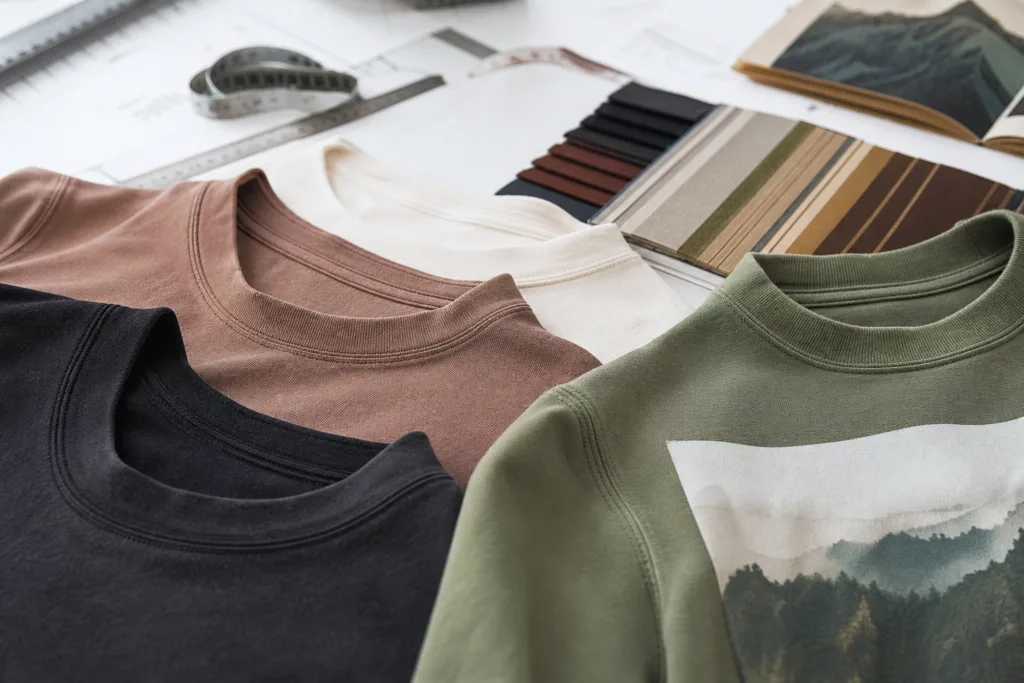
Repeat ordering requires good records. Keep the approved sample, measurement chart, fabric composition, color reference, artwork file, decoration method, label details, and packing instructions together. When the program is likely to continue, ask how color and fabric continuity will be managed between production cycles.
Fabric choices by end use
Fabric selection should connect performance requirements with the shirt’s position, expected life, and cost target. There is no universal best fabric; the correct option depends on the use case and the rest of the product specification.
| Fabric option | Often suitable for | Key considerations |
|---|---|---|
| Standard cotton jersey | Events, promotional orders, general use | Comfortable and economical, but confirm shrinkage, weight, and color consistency. |
| Combed or ringspun cotton | Merch and retail products | Smoother hand feel and surface, with cost and finishing factors to review. |
| Cotton blend | Corporate programs and practical uniforms | Can balance comfort, recovery, durability, and care performance. |
| Heavyweight jersey | Premium merch and structured silhouettes | Creates a substantial feel but may increase cost, weight, and warmth. |
| Performance polyester | Sports events and active corporate use | Useful for moisture management, but print compatibility and hand feel require testing. |
Ask for the actual fabric details that affect production: composition, weight, finish, color range, shrinkage expectation, pilling behavior, and availability for the required quantity. A fabric that works for a sample may create a different risk if the mill supply, color lot, or finishing route changes during bulk production.
Printing methods by use case
Decoration should be selected after considering artwork complexity, fabric, quantity, color count, placement, touch, and expected wash life. Screen printing can be efficient for repeatable graphics and larger quantities. Direct-to-garment printing may suit detailed, multicolor artwork on compatible cotton surfaces, particularly when quantities or artwork variation make screens less efficient.
Heat transfer can support names, numbers, small batches, or designs that require flexible placement, but the transfer material and application settings matter. Embroidery creates a dimensional appearance for small logos and corporate decoration, although it adds weight and may not suit large detailed artwork or lightweight jersey.
Decoration quotes should identify the print size, locations, number of colors, underbase requirements, special effects, and whether setup charges are included. Ask for a decorated sample on the actual fabric and color, because an approval on a different blank shirt may not represent the final result.
Packaging and fulfillment choices
Packaging is part of the production plan because it affects labor, materials, carton volume, warehouse handling, and the customer’s first interaction with the product. Event orders may only need folded shirts packed by size in larger cartons. Retail orders may need individually bagged, tagged, barcoded, and size-sorted units. Corporate programs may require department or location sorting.
- Folded bulk packing: efficient for centralized distribution when individual presentation is not important.
- Individual polybagging: useful for protecting garments and simplifying warehouse handling.
- Size-sorted cartons: helpful for events, teams, and organizations distributing shirts quickly.
- Retail-ready packing: may include labels, hang tags, barcodes, stickers, and a defined folding standard.
- Location or employee sorting: requires accurate lists, clearly identified cartons, and an agreed tolerance for packing errors.
Provide packing instructions before sampling if the order has special requirements. The sample should show not only the garment but also the folded dimensions, accessories, label positions, unit packing, carton marks, and sorting logic that will be used in production.
How MOQ, sampling, and color matching change by use case
MOQ should be evaluated against the product plan rather than viewed as one fixed number. A simple event shirt with one fabric and one print may be easier to consolidate than a retail range with several colors, sizes, labels, and packaging components. Custom dyeing, special fabrics, multiple decoration locations, and separate size or color runs can increase material and production complexity.
Sampling also varies. Event buyers may focus on artwork placement, size availability, and delivery readiness. Merch buyers may need several blank and decorated samples to compare hand feel and print quality. Retail buyers often require fit development, graded sizes, label samples, and packaging approval. Corporate buyers may prioritize logo consistency, wash performance, and a repeatable reference standard.
Color matching needs a defined reference. A digital screen color is not always sufficient for fabric or print approval. Use a physical standard where color is commercially important, and state whether the tolerance applies to the garment, print, embroidery thread, label, or packaging. Record approved references so production inspection has a clear basis.
For garments where dimensional stability affects fit, include shrinkage testing before bulk approval. This is especially relevant for retail and repeat corporate programs, where inconsistent measurements can create returns, complaints, or visible differences between order cycles.
What to tell a manufacturer before requesting a quote
A useful RFQ gives the manufacturer enough information to price the actual product and identify risks early. Include the following:
- Intended use, audience, distribution channel, and target wearing conditions.
- Expected quantity by color and size, plus any repeat-order expectation.
- Preferred fabric composition, weight, finish, color, and reference garment.
- Fit direction, measurement chart, garment construction, and tolerance requirements.
- Artwork files, decoration locations, dimensions, color references, and artwork version.
- Labels, hang tags, barcodes, stickers, bags, folding, carton marks, and sorting instructions.
- Required sample stages, approval deadlines, shipping destination, and target delivery date.
- Budget or target cost range, while recognizing that specification changes affect the quote.
The more clearly the use case is described, the easier it is to compare quotations on equal terms. A manufacturer such as Ninghow Apparel can assess the product more accurately when the request explains the commercial purpose and operational requirements, not just the phrase “custom T-shirt.”
Common mistakes when every order is treated alike
- Choosing the cheapest blank for every project: an economical event shirt may not provide the hand feel or fit expected in retail merch.
- Approving artwork without a decorated sample: print scale, color, placement, and surface coverage can look different on the actual garment.
- Leaving packing details until the end: late packaging changes can affect labor, materials, carton planning, and delivery timing.
- Ignoring wash and shrinkage behavior: a new shirt may look acceptable before washing but fail to meet the required use standard later.
- Using vague color references: “match the logo” is difficult to inspect without a defined physical or digital standard.
- Failing to document the approved version: repeat orders become harder to control when the original sample, artwork, and measurements are not recorded.
- Comparing quotes with different assumptions: one quote may include bags, labels, or multiple print locations while another does not.
A practical end-use checklist
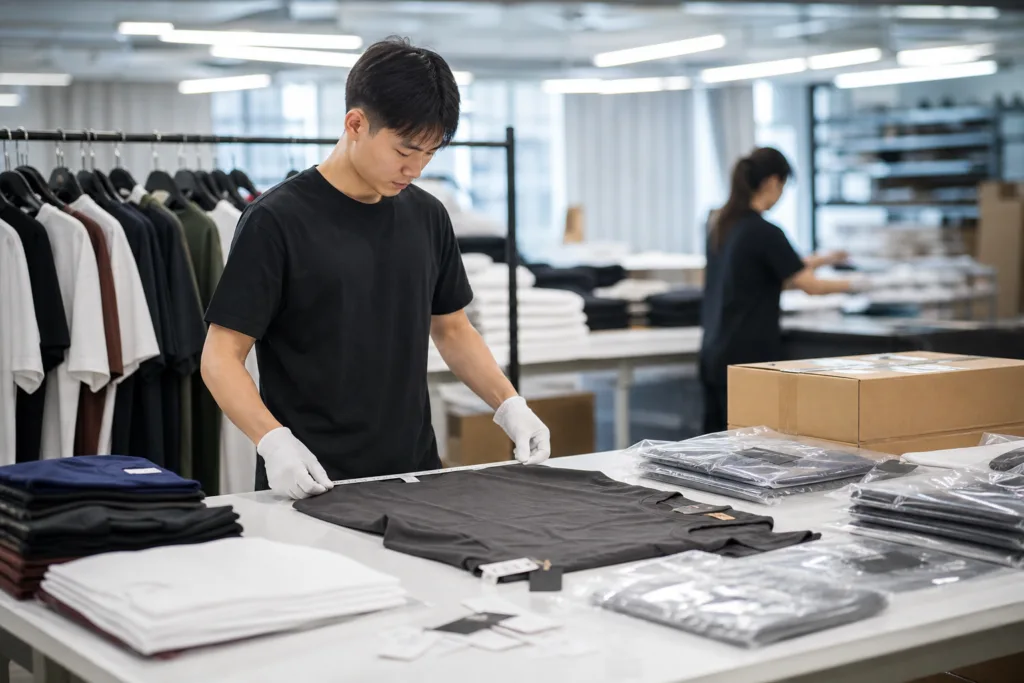
Before selecting a custom T-shirt production route, confirm the following points:
- What is the primary use: event distribution, merchandise, retail sale, or corporate wear?
- How long must the shirt remain comfortable and presentable?
- Which fabric weight, hand feel, stretch, and performance characteristics fit the audience?
- What decoration method suits the artwork, fabric, quantity, and wash expectation?
- Does the fit need a reference garment, graded measurement chart, or multiple approval sizes?
- What labels, tags, bags, folding, sorting, and carton markings are required?
- What quantity is needed by size and color, and how might MOQ affect the range?
- Which tests or inspections must be completed before bulk approval?
- What information must be retained to make future orders consistent?
The central sourcing decision is not simply which custom T-shirt costs less. It is which combination of fabric, fit, decoration, packing, quantity, and quality controls gives the intended user the right product at an acceptable total cost and risk. Defining end use early makes supplier comparisons clearer and reduces changes after sampling or production has started.
Frequently Asked Questions
What fabric is most suitable for custom T-shirts for events?
Standard cotton or a cotton blend is often practical for general events because it balances comfort, printability, and cost. Outdoor sports events may justify a performance fabric, but the decoration method and final hand feel should be tested on the actual material.
Should merch T-shirts use heavyweight fabric?
Heavyweight fabric can support a structured or premium product position, but it is not automatically the right choice. Consider climate, silhouette, shipping weight, customer expectations, decoration, and margin before selecting the fabric weight.
Which printing method is best for a corporate T-shirt order?
The suitable method depends on artwork, fabric, quantity, logo size, and expected washing. Screen printing may suit repeatable larger runs, heat transfer may support variable names or small batches, and embroidery may work well for compact logos.
Do retail T-shirts need individual packaging?
Not every retail program requires the same packaging, but individual bags, hang tags, barcodes, and consistent folding can simplify warehouse handling and improve shelf or e-commerce presentation. Confirm the retailer’s requirements before production is quoted.
How early should event T-shirts be sampled?
Sampling should begin early enough to allow artwork approval, garment or fabric adjustments, decoration review, quantity confirmation, and production scheduling before the event date. A fixed delivery date leaves less room for changes, so approvals should be documented promptly.
Why is repeat-order documentation important for corporate T-shirts?
Records of the approved fabric, color, artwork, measurements, decoration, labels, and packing instructions give later orders a clear reference. This helps reduce variation when the program is repeated after a gap in production.