
Launching a streetwear-ready hoodie collection sounds simple until the SKU count starts multiplying. A few fits, a few colors, a few logo treatments, and suddenly a small launch turns into a difficult production plan with higher development cost, more inventory exposure, and slower decision-making. For most emerging and growth-stage brands, a better approach is to build a private label hoodie line around a tight structure that protects brand identity while keeping manufacturing practical.
That is where early product architecture matters. If your collection needs guidance on fit direction, construction options, and realistic launch scope, reviewing private label hoodie manufacturer support can help clarify what should be standardized first and what should stay flexible. The goal is not to make the line smaller for its own sake, but to make it more coherent, easier to sample, and easier to reorder once the strongest styles are proven.
Why hoodie brands lose control of SKUs so easily
Hoodies are highly customizable, which is exactly why many brands overbuild their first range. They add pullover and zip-up versions, then split each into oversized and regular fits, then add different fleece weights, pocket formats, trim colors, embroidery placements, and wash options. Each new variation may feel minor from a design standpoint, but in production it can create a separate SKU path with different material needs, pattern requirements, and quality checkpoints.
The main problem is that SKU growth often happens before demand has been tested. Instead of proving one strong concept, the brand spreads budget across too many options. That usually leads to smaller quantities per SKU, less efficient material use, more complicated size balancing, and leftover stock in low-performing colors or fits.
A disciplined private label hoodie line starts by asking a simple question: which differences will customers actually notice and buy for, and which differences mainly create internal complexity? That distinction is where better line planning begins.
How many hoodie styles a first collection should really launch with
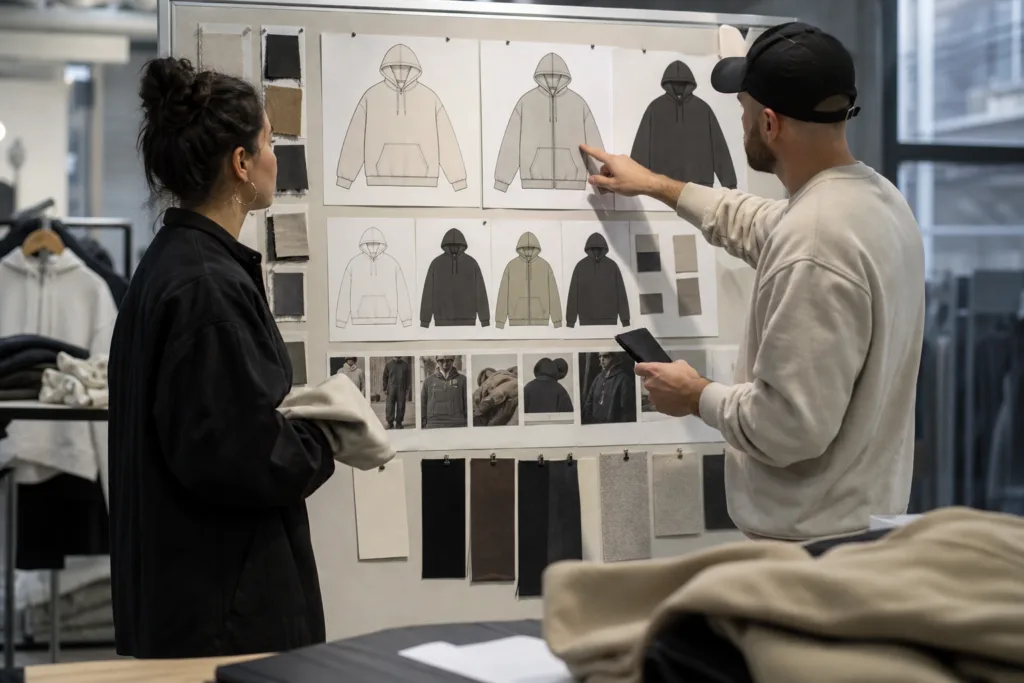
For many first drops, two to four core styles are enough. That usually gives a brand enough room to express its aesthetic without creating unnecessary fragmentation. A common setup is one hero pullover, one zip-up or alternate silhouette, and possibly one heavier or more oversized interpretation if that reflects the target market.
It is usually smarter to go deeper on fewer styles than to go shallow across many. A compact launch allows better focus on fit, fabric hand feel, finishing, and brand presentation. It also makes it easier to commit enough units per style and per color to support more stable production economics.
This is especially important when the brand is balancing design ambition with budget reality. A practical approach to low MOQ collection planning helps founders understand how fewer, better-defined SKUs can reduce risk while still leaving room for strong visual merchandising and future expansion.
A practical first-drop structure
- 1 hero pullover hoodie in two core colors
- 1 secondary silhouette, such as a zip-up or boxy oversized fit
- Shared fabric and shared trim where possible
- One clear logo system across the collection
- Optional limited color or graphic variation only after the base styles are validated
This kind of structure gives the line enough variety to feel intentional, while keeping development and reorder planning manageable.
Pullover vs. zip-up vs. oversized: how to choose the right mix
Each hoodie format carries different commercial and production implications. Pullover hoodies are often the simplest starting point because they are widely accepted, efficient to merchandise, and easier to keep visually clean. They also work well as a brand canvas for embroidery, screen print, applique, or subtle label-focused branding.
Zip-up hoodies add styling flexibility and can broaden the line, but they also introduce extra construction details. Zipper quality, front balance, placket alignment, and neckline behavior all need more attention. That does not make zip-ups a poor choice, but it does mean they should usually be included for a clear reason rather than as an automatic second option.
Oversized hoodies are often central to streetwear positioning, yet they require more discipline than many buyers expect. Oversized is not simply sizing up. The shoulder drop, body width, sleeve volume, rib proportion, and hood scale all need to be drafted to produce the intended silhouette. If an oversized fit is your signature look, make it one of the core development priorities rather than a late-stage variation.
Many brands benefit from choosing one silhouette as the volume driver and one as the image builder. That way, the line has both commercial focus and visual interest without multiplying every style across every fit concept.
Using one fabric platform to build multiple hoodie styles
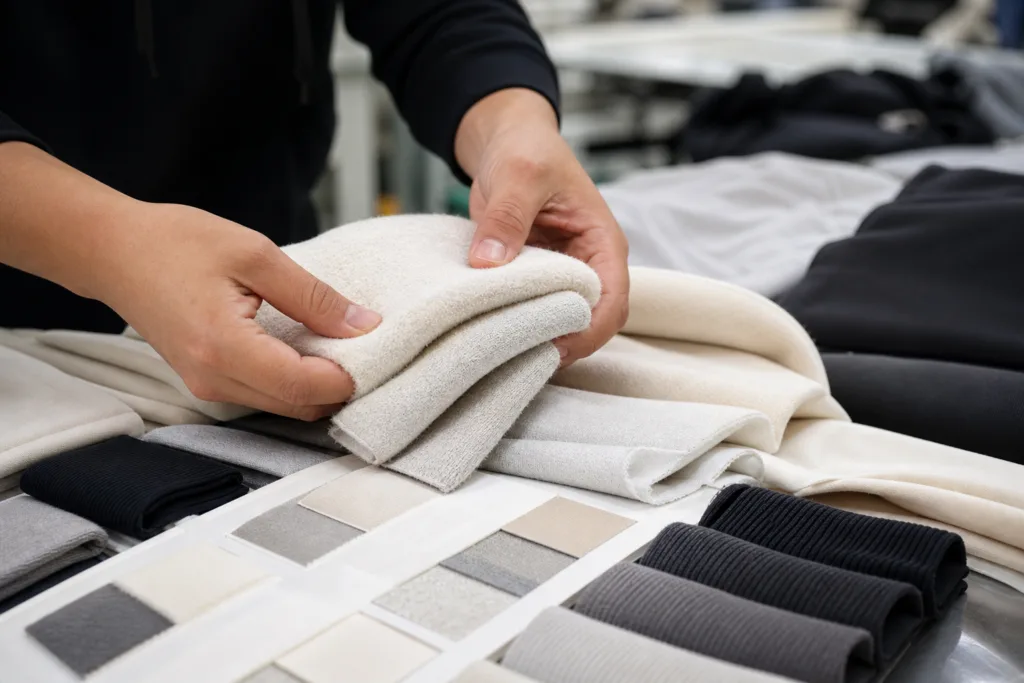
One of the strongest ways to control SKU sprawl is to standardize the fabric platform. If two or three hoodie styles can share the same main fabric, rib, and color card, the collection becomes much easier to source, sample, and scale. This can also help maintain a cohesive hand feel across the line, which matters in streetwear where customers often compare pieces side by side.
A solid fabric platform strategy for multiple hoodie styles lets a brand create variety through silhouette and branding detail rather than by introducing a new fabric for every idea. For example, a pullover and zip-up can often use the same fleece base, while differences are created through fit, closure, pocket type, and trim execution.
Fabric standardization does not mean the collection looks repetitive. It means the technical base is controlled. That usually improves purchasing efficiency, keeps color matching more consistent, and simplifies repeat ordering if a style performs well.
What to standardize first
- Main body fabric composition and weight range
- Rib quality and color matching method
- Core color palette
- Label package and branding placements
- Drawcord, eyelet, zipper, and other trim standards where applicable
Once those elements are stable, it becomes easier to build visual differentiation without creating unnecessary sourcing fragmentation.
How color count affects MOQ, inventory risk, and cash flow
Color is one of the fastest ways to overcomplicate a private label hoodie line. A style may look attractive in six shades, but every added color can affect fabric booking, trim coordination, stock balancing, and sell-through risk. For a first launch, it is usually wiser to choose two or three strong colors that match the brand story and customer profile.
Neutral colors often carry less inventory risk because they are easier to sell over a longer period, while one statement color can bring seasonal energy or campaign value. This approach creates a balanced line: enough variation to feel curated, but not so much that budget gets diluted into slow-moving inventory.
Color planning should also consider size depth. If each color needs a full size curve, the inventory commitment rises quickly. A narrower color count helps preserve budget for better fabric, stronger finishing, and more consistent production execution.
How GSM and fit shape streetwear positioning
Streetwear customers often judge hoodies by silhouette and hand feel before they notice smaller details. That is why fabric weight and fit must be planned together. A wide, cropped, or dropped-shoulder fit behaves differently depending on whether the fabric is lighter and softer or heavier and more structured.
Understanding how GSM shapes hoodie positioning is important when deciding whether the line should feel premium and substantial, relaxed and easy, or transitional across seasons. A higher GSM can support a more sculpted oversized profile, while a lighter option may feel more versatile but less architectural.
Fit and GSM should never be decided in isolation. If a brand wants a streetwear silhouette with body and drape, the pattern and fabric choice need to support each other. At Ninghow Apparel, this is often where early development conversations become most useful, because silhouette expectations can look very different once sample fabric and actual garment construction are involved.
Fit decisions that affect perceived value
- Shoulder drop and sleeve volume
- Body length relative to width
- Rib tension at hem and cuffs
- Hood size and shape retention
- Fabric recovery after wash and wear
These details influence whether the hoodie feels intentional and premium or generic and inconsistent.
How logo application and trim details create a unified collection feel
A tight collection often feels more premium than a larger but inconsistent one. One reason is that branding systems can carry the line visually, even when the number of base styles is small. The same embroidery scale, label package, neck tape approach, and hardware finish can make separate hoodies feel like part of the same family.
For a streetwear-focused launch, it is often better to choose one or two core branding techniques and repeat them well. For example, a tonal embroidery on one style and a clean screen print on another may be enough if the placement logic, scale, and trim direction are aligned. Too many decoration methods in one small range can increase sampling rounds and reduce cohesion.
Trim details should be handled the same way. Matching drawcord logic, eyelet finish, zipper tone, woven labels, and care label presentation helps create a collection identity without forcing extra silhouettes into the line. In manufacturing terms, this type of consistency can also reduce errors during bulk setup.
How to structure a first-order test run and plan for repeat orders
A first order should be treated as both a sales launch and a learning phase. That means building quantities around testable demand, not around every possible design idea. Brands often benefit from assigning more depth to one or two hero SKUs and reducing commitment on secondary options.
Before bulk production, it is important to use the apparel sample approval process to confirm fit, fabric behavior, logo execution, color expectations, and construction details. A clean approval stage reduces repeat mistakes later and gives the brand a more dependable baseline for reorders.
Repeat-order planning should start before the first bulk order is finished. If a style has strong potential, document what must stay fixed: pattern version, approved measurements, fabric code, trim references, artwork size, label placement, and packing logic. This creates a cleaner path when the brand needs to restock a winning hoodie instead of redeveloping it from scratch.
A simple first-order logic
- Identify 1 hero SKU expected to carry the most volume
- Assign secondary styles smaller but still meaningful quantities
- Limit the color count early
- Approve one fit standard before expanding variants
- Prepare reorder specifications during first production, not after sell-out
Common SKU-planning mistakes that inflate cost and slow production
The most common mistake is confusing design possibility with launch necessity. Just because a hoodie can be offered in many fits, fabrics, and finishes does not mean all of those options belong in the first collection. Every extra decision creates more room for cost increase, delay, and inconsistency.
Other frequent issues include adding too many colorways before sell-through is known, mixing fabric types without a strategic reason, creating separate branding systems for each style, and approving samples without a clear measurement and construction record. Brands also run into trouble when they develop oversized and regular fits at the same time without defining which one reflects the label’s core market.
| Planning choice | Lower-risk approach | Higher-risk approach |
|---|---|---|
| Style count | 2 to 4 focused styles | 6 or more loosely defined styles |
| Fabric use | Shared platform across styles | Different fabric for each concept |
| Color range | 2 to 3 intentional colors | Wide palette from launch |
| Branding | Consistent logo system | Different treatment for every SKU |
| Fit direction | One core fit identity | Multiple fit identities at once |
When these decisions are tightened early, the collection usually becomes easier to cost, easier to merchandise, and easier to scale.
What a private label hoodie manufacturer can support in development and production
A capable manufacturer can help narrow options before complexity spreads. That support may include reviewing which silhouettes can share fabric, identifying which trims should be standardized, flagging how color count affects MOQ logic, and advising where technical differences will require separate patterns or setup.
In practical terms, this means the manufacturer is not only producing garments but helping the brand turn creative direction into a workable line plan. That includes sample sequencing, fit refinement, label and packaging choices, and decisions about which styles are realistic for the first order versus later expansion.
For buyers building a private label hoodie line, the most useful manufacturing input often comes from questions such as: which details increase production risk, which variations are visually meaningful enough to justify separate SKUs, and which standardizations will make repeat orders easier? Those are the questions that protect margin and speed.
How Ninghow Apparel supports private label hoodie line planning from concept to bulk production
When a brand is trying to build a hoodie collection that looks streetwear-ready but remains commercially disciplined, the real challenge is usually not creativity. It is structuring that creativity into a range that can be sampled clearly, approved efficiently, and reordered with confidence. That is where manufacturer-side planning can add value without overwhelming the design vision.
In that process, Ninghow Apparel can be part of the practical discussion around silhouette selection, fabric consistency, logo application, trim coordination, sampling checkpoints, and bulk production logic. The strongest outcomes usually come from treating the first collection as a controlled system: fewer but stronger SKUs, clear fit priorities, and enough consistency to make repeat business easier.
Conclusion

A successful private label hoodie line does not need a large number of SKUs to look complete. It needs a clear point of view, disciplined fit and fabric choices, controlled color planning, and a launch structure that supports both production efficiency and future repeat orders. For most brands, fewer well-planned hoodies create a stronger first impression than a broad range that is expensive to sample, hard to stock, and difficult to scale.
If the collection is designed around a shared fabric platform, a focused silhouette mix, and a consistent branding system, it can look more intentional while remaining easier to manufacture. That is the balance most buyers should aim for: streetwear credibility without avoidable SKU complexity.
FAQ
How many styles should a first private label hoodie line include?
For many brands, two to four styles are enough for a first launch because that gives variety without spreading budget too thin across sampling, inventory, and production.
Is it better to start with pullovers or zip-up hoodies?
Pullovers are often the simpler starting point because they are easier to standardize and usually require fewer construction variables than zip-up hoodies.
Can multiple hoodie styles use the same fabric?
Yes, many collections work better when several styles share one fabric platform, since that helps with sourcing consistency, sampling efficiency, and reorder planning.
How many colors are practical for a first hoodie launch?
Two or three well-chosen colors are often more practical than a wide palette because they reduce inventory risk and make MOQ planning easier.
Why does GSM matter in hoodie development?
GSM affects weight, structure, drape, and perceived quality, so it plays a major role in whether a hoodie feels light, premium, oversized, or more fashion-basic.
What should be approved before bulk hoodie production starts?
Before bulk production, the brand should approve fit, measurements, fabric, color, logo placement, trim details, and key construction points to reduce avoidable errors in the final run.