
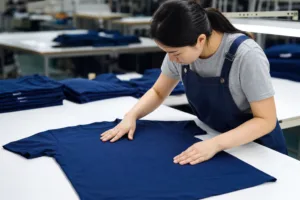
A pre-shipment T-shirt inspection should do more than confirm that the artwork looks right from a distance. Buyers need to verify fabric condition, sewing quality, measurements, decoration performance, finishing details, and packaging accuracy before approving release. A practical t-shirt defect checklist helps brand owners and sourcing teams catch avoidable problems while there is still time to rework, replace, or hold shipment.
That matters even more for custom programs, where print placement, sizing consistency, private label details, and color matching all affect sell-through and customer complaints. If you are comparing factory capability as well as shipment quality, it helps to review a manufacturer page that covers t-shirt supplier and quality inspection support so you can connect the inspection process with sourcing expectations, sampling control, and bulk approval standards.
Why T-shirt inspection should go beyond checking the print
Many buyers look at the front chest graphic first because it is the most visible feature. But a T-shirt can pass a quick visual print check and still fail in the market because of shade variation, seam twisting, poor stitch security, collar distortion, sizing errors, or mislabeled packaging.
From a manufacturer perspective, inspection works best when buyers separate defects into categories and prioritize what affects wearability, appearance, and order accuracy. A shirt with a clean logo but unstable side seams or incorrect measurements still creates returns and brand damage. Good inspection is not about finding every tiny imperfection on every piece; it is about using a clear standard to identify defects that materially affect the shipment.
How to use this T-shirt defect checklist before shipment
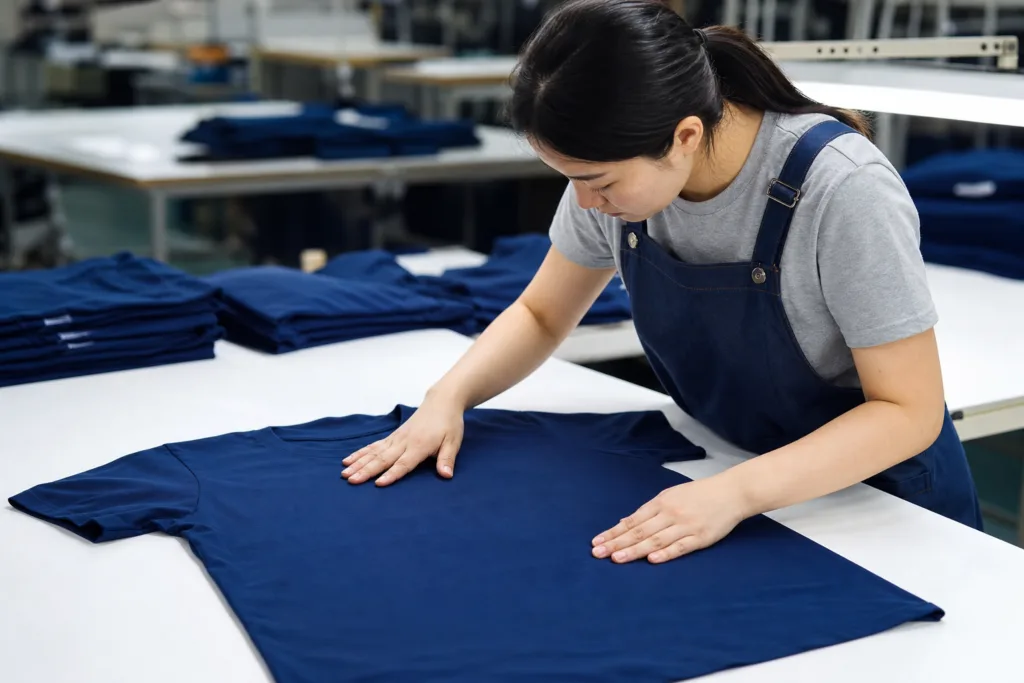
Start by checking approved references before touching bulk cartons. That usually means the confirmed size spec, color standard, approved lab dip or strike-off if applicable, approved sample, packing list, labeling details, and any special comments added during production. Without those references, inspectors often rely on memory, which leads to inconsistent decisions.
Then inspect in layers rather than all at once:
- Visual fabric review for stains, holes, knitting defects, and shade issues
- Sewing review for seam quality, thread trimming, reinforcement, and symmetry
- Measurement review against approved tolerances
- Decoration review for print, embroidery, heat transfer, or patch quality
- Finishing and packaging review for labels, folding, assortment, and carton accuracy
This sequence helps buyers avoid missing structural problems while focusing only on decoration. It also makes defect reporting clearer when communicating with the factory.
Fabric defects to inspect
Stains, contamination, and oil marks
Check the front body, hem area, sleeve openings, underarm zones, neckline, and folded lines where marks are often hidden. Stains may come from handling, machine oil, printing residue, or warehouse contamination. Some marks disappear after washing, but pre-shipment approval should not assume they will. If the order is sold as ready-to-wear, visible stains are a real defect.
Holes, yarn defects, and needle damage
Look for pin holes, broken yarns, snags, and small cuts around seams and decoration areas. Dark colors and heavily brushed fabrics can hide these issues until garments are stretched. Inspectors should open the garment fully and review under good lighting rather than relying on folded presentation.
Shade variation and lot inconsistency
Bulk T-shirts can vary in color from panel to panel, size to size, or carton to carton. Compare garments within the same colorway side by side, especially when production may have used more than one dye lot. Shade variation becomes more obvious in black, navy, red, and pastel programs. If the order includes matching sets or strict visual merchandising requirements, even moderate variation may be unacceptable.
Pilling and surface appearance
Surface fuzziness, excessive pilling, or abrasion can make garments look old before sale. This matters for jersey knits, triblends, and softer handfeel fabrics. If the project has performance concerns, buyers often review methods similar to a polo shirt defect checklist because many knit fabric inspection principles carry across categories.
Sewing defects to inspect
Skipped stitches and weak seam formation
Check side seams, shoulder seams, armholes, neck binding, sleeve hems, and bottom hems for skipped stitches or inconsistent stitch formation. Stretch the seam lightly to see whether the thread opens or breaks. Skipped stitches may not look serious on the table, but they often fail after first wear.
Loose threads and poor trimming
Loose threads do not always mean structural failure, but they signal weak finishing control. In private label orders, poor thread trimming lowers perceived quality immediately. Review whether loose thread ends are isolated cosmetic issues or signs that seam ends were not secured properly.
Uneven shoulder seams and construction mismatch
Lay the shirt flat and compare both shoulders, sleeves, and side seams. Uneven joining, puckering, twisting, or incorrect panel alignment can distort the garment shape. Watch for seam grin, differential feed problems, or rib joining that pulls one side higher than the other.
When a program has a history of wash-related instability, it is smart to connect sewing inspection with a t-shirt shrinkage test before bulk production. Shrinkage and seam tension interact, and a shirt that measures correctly before washing can still become unsellable if the fabric and sewing setup are not stable.
Fit and measurement defects to inspect
Twisting and garment torque
One of the most common knitwear complaints is side seam twisting, where the seam rotates toward the front or back after washing or even before sale. This affects appearance, fit, and customer confidence. Buyers should inspect garments laid flat and compare side seam position, hem alignment, and grain direction. If this is a recurring issue, review how to prevent side seam twisting and garment torque so the root cause is addressed instead of only rejecting finished units.
Shrinkage risk and wash response
Pre-shipment inspection cannot fully replace pre-production testing, but buyers should still verify whether the bulk goods reflect approved wash expectations. If fabric handfeel, panel dimensions, or finish look different from the approved sample, inspect more deeply. Shrinkage problems often show up first as short body length, sleeve variation, collar waviness, or mismatched spec results between sizes.
Size tolerance issues
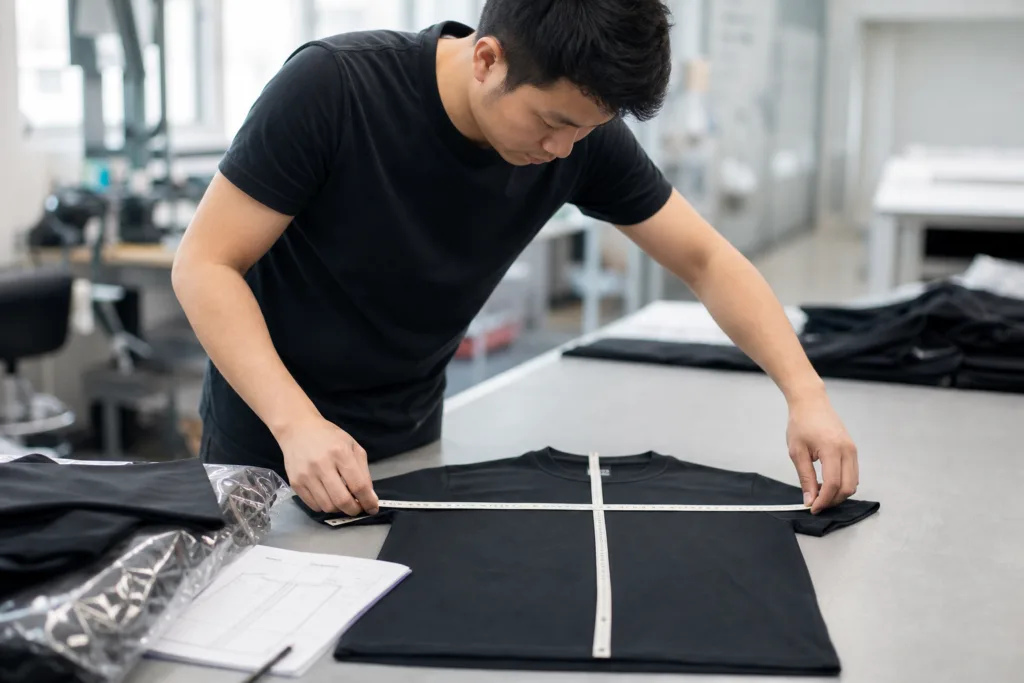
Measure key points such as chest width, body length, shoulder width, sleeve length, sleeve opening, neck width, and bottom opening according to the approved spec method. Use the tolerance clearly agreed before production. A few random checks are not enough if the order includes multiple sizes or factories. Spread measurements across sizes, colors, and cartons to see whether the problem is isolated or systemic.
| Inspection area | What to compare | Why it matters |
|---|---|---|
| Chest and body length | Approved size spec and tolerance | Affects fit, grading accuracy, and returns |
| Shoulder and sleeve | Left-right symmetry and spec | Shows sewing control and garment balance |
| Neck opening | Shape, width, recovery | Impacts comfort and appearance |
| Hem alignment | Flat lay straightness | Reveals torque and construction distortion |
Print and decoration defects to inspect
Cracking, peeling, and poor adhesion
Screen prints, heat transfers, plastisol prints, puff prints, and specialty finishes all need close review. Look for cracking, incomplete adhesion, pinholes, tackiness, lifting corners, or brittle ink film. Fold stress points can hide transfer failures, so open garments fully before inspection.
Misalignment and placement errors
Compare actual print position against the approved sample or artwork placement comments. Misaligned chest logos, off-center back prints, uneven sleeve graphics, and tilted neck labels are common reasons for rejection in custom orders. Placement should be judged consistently, especially if the artwork is large or highly visible.
Color inconsistency and finish mismatch
Check print color from piece to piece and carton to carton. Ink tone can drift during long runs, especially when more than one machine setup or print batch is involved. Also compare gloss level, handfeel, opacity, and edge sharpness. If decoration quality is a high-risk area for the program, use the same discipline applied in how to test t-shirt print durability so approval covers both appearance and likely end-use performance.
Neckline and cuff checks
Shape and symmetry
The neckline is one of the fastest ways buyers judge overall sewing quality. Check whether the collar sits evenly, whether rib height is consistent, and whether the front and back neck shape matches the approved sample. V-necks and contrast rib collars need even tighter visual control because asymmetry is easier to see.
Stretch recovery
Neck rib and cuff rib should recover after reasonable extension. If the opening stays wavy or stretched out, the garment may have poor rib quality, incorrect attachment tension, or fabric mismatch between body and trim.
Finishing quality
Inspect topstitching, seam joins, taping, and edge cleanliness. A clean neckline improves perceived value, while rippling, exposed overlock, or bulky joins create immediate quality concerns even if the rest of the shirt looks acceptable.
In projects with multiple construction options, Ninghow Apparel typically sees neckline issues become easier to control when approved samples clearly define rib weight, attachment method, seam allowance, and wash expectations before bulk starts.
Label, hangtag, and packaging checks before final approval
Shipment accuracy is not only about the garment itself. Buyers should confirm main label content, size label placement, care label attachment, country of origin requirements where applicable, hangtag version, barcode or sticker details, folding method, polybag warnings if needed, carton marks, assortment ratio, and purchase order matching.
Wrong labels or mixed sizes inside correct outer cartons create expensive downstream problems because they are often discovered only after arrival or during fulfillment. For private label orders, packaging checks deserve the same attention as sewing checks because relabeling and resorting after shipment is slow and costly.
AQL inspection basics for T-shirt buyers
AQL inspection helps buyers make decisions from a sample rather than opening every unit. The exact acceptance level depends on the order, customer standard, and defect risk, but the principle stays the same: classify issues by severity and judge whether the sampled shipment falls within the agreed acceptance limit.
Sample size
Sample size is usually based on lot quantity. Larger orders require larger samples, but buyers should also consider complexity. A simple blank T-shirt order may not need the same focus as a private label fashion tee with multiple prints, special wash, and custom packaging.
Defect levels
Most inspections group defects as critical, major, or minor. Buyers should align these definitions before inspection starts.
- Critical defects: safety, legal, or completely unacceptable issues
- Major defects: problems that reduce saleability, function, fit, or appearance
- Minor defects: small issues that do not seriously affect use but still fall below expectation
What matters most
The most useful AQL result is not just pass or fail. It is understanding whether the defects are random or repeated, cosmetic or structural, isolated to one carton range or spread across the lot. Repeated major defects usually signal a process issue, which means extra sampling or shipment hold may be more sensible than a quick partial rework.
Common custom T-shirt defects buyers should flag with suppliers
- Fabric stains or oil marks
- Holes, slubs, or needle cuts
- Panel shade variation
- Skewed or twisting side seams
- Skipped stitches or open seams
- Uneven collar shape or poor stretch recovery
- Body length or chest measurement out of tolerance
- Print cracking, peeling, or tackiness
- Graphic placement errors
- Incorrect labels, size stickers, or packing ratios
When reporting these issues, add photos, quantity affected, carton numbers, size breakdown, and a clear defect description. That allows the supplier to judge whether the right action is rework, replacement, sorting, or a wider production review.
Pre-shipment T-shirt QC checklist
Before final approval, buyers can use this summary as a quick working list:
- Match bulk garments to approved sample, color standard, and size spec
- Check fabric for stains, holes, shade variation, and pilling
- Review seams for skipped stitches, puckering, trimming, and symmetry
- Measure key points across sizes and cartons
- Inspect side seam alignment, hem balance, and overall shape
- Check print appearance, placement, adhesion, and consistency
- Review neckline and cuff recovery, shape, and finishing
- Confirm labels, hangtags, folding, polybags, and carton marks
- Record defect counts by severity and by carton range
- Decide release, rework, replacement, or hold based on agreed standard
What to do when defects are found

Not every defect requires rejecting the full order. The right response depends on severity, repeat rate, delivery timing, and whether the issue can be corrected without creating new risk.
- Rework fits removable stains, thread trimming, relabeling, or some packing issues
- Replacement fits defective units that cannot be repaired to approved quality
- Shipment hold fits repeated major defects, measurement instability, or unresolved print and fabric issues
- Sort and segregate fits mixed-quality lots where acceptable goods can be clearly separated
From a practical manufacturer viewpoint, faster decisions happen when the buyer shares objective evidence instead of broad statements like “quality is bad.” Photos, measurements, defect counts, and reference to the approved standard make corrective action much easier.
A solid t-shirt defect checklist gives buyers a repeatable way to protect quality before goods leave the factory. It reduces subjective judgment, improves supplier communication, and helps teams focus on the defects that truly affect sellability, fit, and customer satisfaction. For custom T-shirt orders, that discipline matters far more than a quick glance at the print.
FAQ
What is the most important part of a t-shirt defect checklist?
The most important part is checking against approved references such as size specs, color standards, sample approvals, and packaging requirements, because defects are hard to judge consistently without a clear benchmark.
Should buyers inspect every T-shirt before shipment?
No, most buyers use sampling methods such as AQL, but they should increase inspection depth when the order is complex, the supplier is new, or earlier production stages showed quality risk.
Are loose threads always considered a major defect?
No, loose threads are often minor if they are easy to trim and do not affect seam security, but they can point to weak finishing control if they appear repeatedly across the shipment.
How do buyers check size consistency in bulk T-shirt orders?
They should measure key points across different sizes, colors, and cartons using the approved measurement method and compare results against pre-agreed tolerances instead of relying on a few random pieces.
What should buyers do if they find print cracking during inspection?
They should isolate affected units, compare them with the approved standard, review whether the issue is repeated or isolated, and decide with the supplier whether rework, replacement, or shipment hold is necessary.
Why do packaging checks matter in a T-shirt inspection?
Packaging checks matter because incorrect labels, mixed sizes, wrong assortments, or carton marking errors can create fulfillment problems even when the garments themselves meet quality expectations.