

An oversized hoodie can look simple on a mood board, but production usually exposes the difference between a clear fit direction and a vague one. If a brand only tells a factory to make the hoodie “boxier” or “bigger,” the result can easily become sloppy, long in the wrong areas, or heavy without the intended shape. For that reason, oversized hoodie fit needs to be defined through measurable proportions, not general styling language.
For brands moving from concept to development, it helps to treat fit as a balance of silhouette, fabric behavior, and grading logic rather than a single size decision. When buyers need more category-specific guidance, oversized hoodie manufacturer support becomes relevant because hoodie development often depends on construction details such as shoulder drop, rib tension, fabric weight, and pattern balance. A good production brief makes those variables clear early, which reduces unnecessary sample rounds later.
Why oversized hoodie fit is not the same as simply sizing up a regular hoodie
A regular hoodie that is sized up usually gains width, length, sleeve length, and armhole dimensions in a standard grading ratio. That may create a bigger garment, but not necessarily an intentional oversized silhouette. In many cases, the body becomes too long, the sleeve hangs past the hand without enough volume, and the shoulder point stays visually wrong for the intended look.
A true oversized hoodie fit is usually designed from a different proportion strategy. The chest width may increase more aggressively than body length. The shoulder can be extended or dropped to change the line of the upper body. Sleeves may need more width, not just more length. Hem shape and rib recovery also become more visible because they control whether the garment looks structured, rounded, relaxed, or collapsed.
This is why brands should not rely on “just use one or two sizes up” as a development method. Oversized is a fit category with its own pattern decisions.
How drop shoulder construction changes silhouette, proportions, and perceived volume
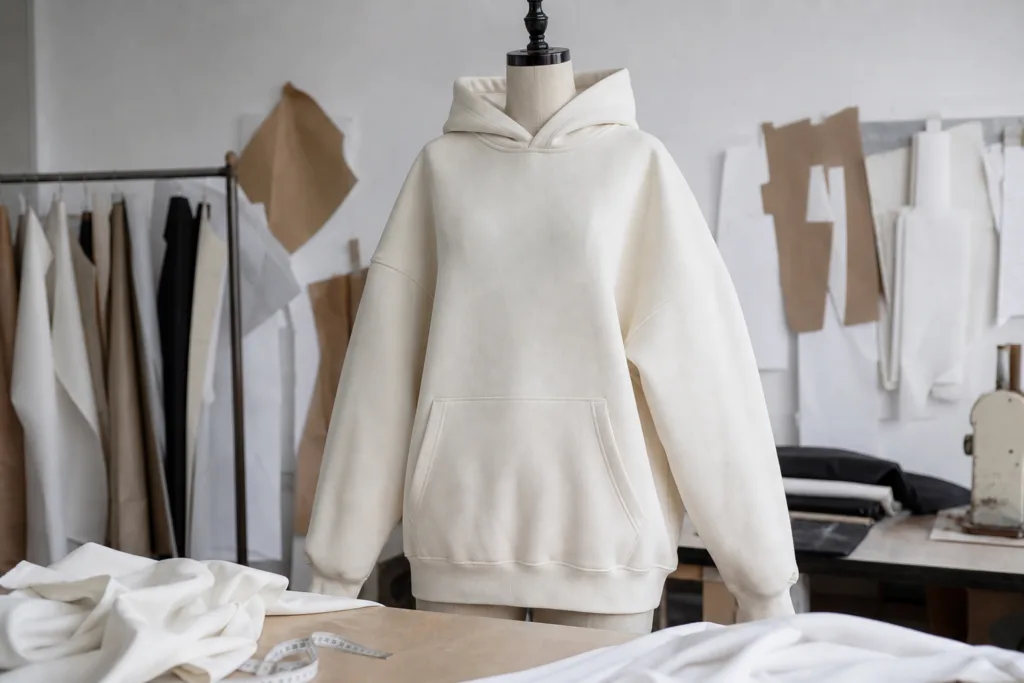
Drop shoulder is one of the most important elements in oversized hoodie development because it changes where the eye reads the garment’s width. When the shoulder seam moves down the upper arm, the body immediately appears broader and more relaxed, even before chest measurements are increased significantly.
However, the amount of drop matters. A slight shoulder extension can create a modern relaxed fit, while a deeper drop creates a stronger oversized identity. If the drop is too aggressive without enough sleeve volume, the arm can look narrow and disconnected from the body. If the drop is too deep with excessive bicep width, the garment may feel bulky rather than intentional.
In practice, brands should review drop shoulder together with armhole depth, sleeve cap shape, and cuff opening. These pattern areas work as a system. A nice oversized silhouette usually comes from coordinated proportions, not one exaggerated detail.
Balancing body length, chest width, sleeve volume, and sleeve length
The most common fit problem in oversized hoodies is imbalance. A hoodie can have a wide chest and still look off if body length is too long, sleeves are too slim, or the hem pulls inward too tightly. Oversized fit works best when each major measurement supports the same visual idea.
Body length
Body length determines whether the hoodie feels cropped, classic, or elongated. Many oversized styles use added width with controlled length so the silhouette feels broad and substantial rather than stretched. If length increases too much, the garment often starts reading as simply up-sized instead of fashion oversized.
Chest width
Chest width drives the main body volume. This is usually where brands create the strongest oversized identity. But width alone is not enough. The side seam fall, armhole shape, and hem behavior decide whether that width hangs cleanly or balloons awkwardly.
Sleeve volume
Sleeves should support the body proportion. For a heavier oversized look, added bicep width and forearm volume can create a fuller sleeve shape. For a cleaner premium look, brands may keep volume concentrated near the upper sleeve and taper more carefully toward the cuff.
Sleeve length
Sleeve length affects both comfort and styling. Slight stacking at the cuff can look intentional, but too much length makes the hoodie feel poorly engineered. Because the shoulder is dropped, the total sleeve measurement should be considered from the new shoulder position, not from a standard set-in reference.
At Ninghow Apparel, oversized hoodie development typically becomes easier when brands approve fit by silhouette goals first, then confirm the measurements that create that silhouette. That approach avoids chasing isolated numbers that do not work together in the final garment.
How high GSM fabric affects drape, structure, weight, and the final oversized silhouette
Fabric weight changes how oversized fit is perceived. A lighter fabric can make the hoodie look more fluid and casual, while a heavier fabric tends to create more structure, volume retention, and visual density. That means the same pattern can look very different depending on GSM, fiber content, and finishing.
High GSM fleece or French terry usually gives oversized hoodies more body. The shoulder drop may look more defined, the sleeves can hold shape better, and the hem line may appear more architectural. But heavier fabric also adds physical weight, which can pull length downward and change how the garment settles after washing and wear. Brands comparing options should understand how GSM affects hoodie drape and structure before locking fit comments.
A practical development habit is to fit the hoodie in the actual or very similar production fabric. If the proto is made in a lighter substitute, sleeve hang, torso drop, and hood behavior may not represent bulk reality. This is especially important for structured oversized styles where the fabric itself is part of the look.
How hem and cuff tension control the overall outline and visual proportions
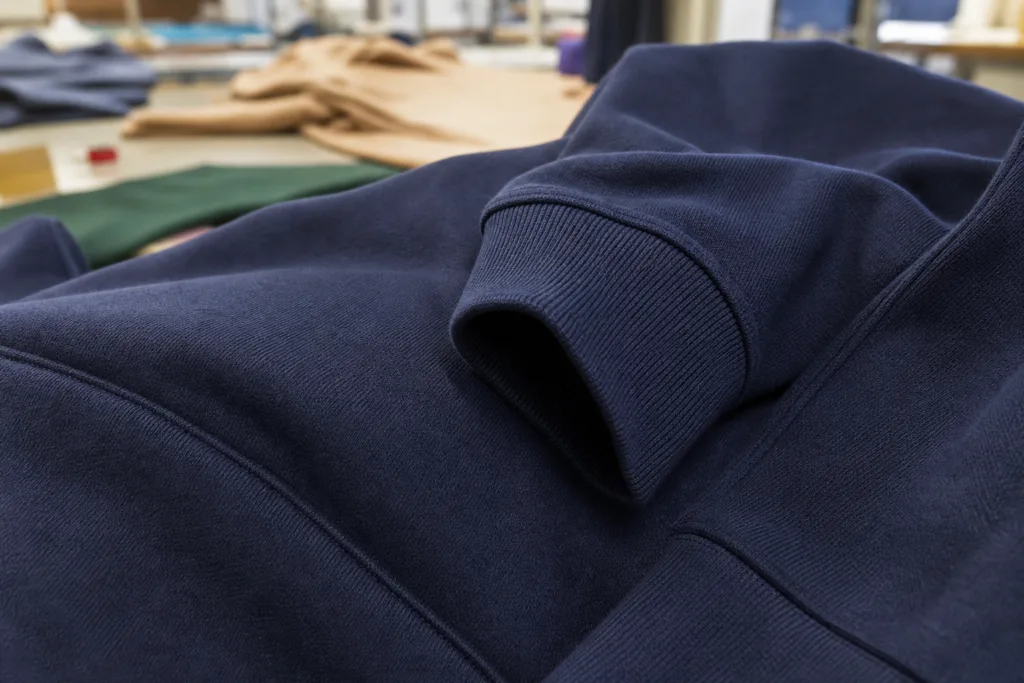
Brands often focus on chest and length, but rib tension at the hem and cuff has a major effect on the final shape. A stronger hem can pull the body inward and create a rounded blouson effect. A softer hem can let the body fall more vertically. Neither is automatically better; the right choice depends on the intended silhouette.
Cuffs work the same way. Tight cuffs can create sleeve stacking and a more pronounced balloon sleeve. A more open cuff can make the sleeve look straighter and less styled. When the hoodie is oversized, these details become even more visible because the garment has more volume to control.
For production clarity, brands should specify not only rib height, but also desired tension, stretch recovery, and whether the body should sit at the high hip, full hip, or below. Those details help the factory understand visual intent rather than guessing from measurements alone.
How to adapt oversized hoodie fit for unisex styles and size grading
Unisex oversized hoodies require careful baseline decisions. If the base fit is built too closely around one body type, the grade can become distorted in larger or smaller sizes. Good unisex development usually starts with a clear target wearer profile and then adjusts shoulder width, chest ease, body length, and sleeve balance to stay visually consistent across the range.
Grading matters even more for oversized styles because a large silhouette can become extreme very quickly if standard grade rules are applied without review. A small size may lose intended volume, while a larger size may become too long or too broad in the wrong areas. Brands that need a deeper framework for grading oversized fits without losing shape should align grade rules with silhouette goals, not only measurement increments.
In many cases, it is helpful to approve one core sample size and then review a second confirmation size at another point in the range. That extra check can reveal whether the oversized concept still holds across the full size set.
How to document sample fitting feedback so factories can act on it
Fit feedback should be specific, visual, and measurable. Comments such as “make sleeve better” or “body feels strange” are hard to execute because they do not identify the issue clearly. Better feedback explains what changed on the body, where it changed, and what outcome is expected in the next sample.
Useful feedback examples include:
- Reduce front body length by 2 cm while keeping back length unchanged.
- Add 3 cm total bicep circumference to increase sleeve volume without changing cuff opening.
- Move shoulder seam 1.5 cm higher to reduce excessive arm drop.
- Increase hem rib relaxation to reduce strong cinching at the waist.
Photos are also important. Front, back, side, and arm-raised views help the pattern team identify whether the issue comes from balance, ease, or construction. Brands that build a repeatable review system around the apparel sample approval process usually reach bulk approval with fewer subjective misunderstandings.
What oversized fit specs should be included in a tech pack
An oversized hoodie tech pack should translate aesthetic intent into production language. If the pack only contains a sketch and a few standard points of measurement, the factory may still be missing the information needed to reproduce the intended silhouette consistently.
Key fit-related items usually include:
- Garment measurement chart with tolerance guidance
- Target fit description such as relaxed, boxy oversized, structured oversized, or longline oversized
- Shoulder drop amount or shoulder seam position reference
- Body length intent and where the hem should sit on body
- Sleeve width, sleeve length, and cuff opening behavior
- Fabric composition, GSM, and finish assumptions used for fitting
- Rib height and desired hem or cuff tension
- Hood size and overlap or neckline behavior if relevant to silhouette
- Reference photos with marked fit comments
Before sample launch, it is worth reviewing what to check in a tech pack before production so the factory receives a document that supports accurate pattern work instead of creating preventable interpretation gaps.
Common fit mistakes brands make when developing custom oversized hoodies
One common mistake is chasing trend language without defining the actual shape. Terms like “vintage oversized” or “luxury streetwear fit” may sound useful internally, but they are not enough for pattern development unless they are tied to measurements and reference samples.
Another mistake is testing fit in the wrong fabric. Heavy brushed fleece, compact cotton blends, and softer French terry can produce very different silhouettes from the same pattern. If fabric changes late in development, fit often needs to be reviewed again.
Brands also sometimes over-focus on width while ignoring body balance. The result can be a hoodie that looks wide on the table but awkward on the body. Sleeve proportion, hem recovery, and shoulder position are often the missing pieces.
A final issue is approving one size without considering size-range behavior. Oversized fit that looks sharp in medium may become too long, too narrow in sleeve, or too bulky in larger sizes if grading is not adjusted intentionally.
How an oversized hoodie manufacturer helps refine fit before bulk production
A capable manufacturer does more than copy a measurement chart. The development team should be able to flag proportion conflicts, suggest pattern adjustments based on fabric behavior, and identify where the intended oversized look may break down in grading or assembly. That matters because fit problems are less expensive to solve at sample stage than after bulk cutting begins.
From a sourcing perspective, the most useful factory input often comes in practical questions: whether the chosen GSM will collapse or hold shape, whether rib tension matches the silhouette, whether sleeve volume is realistic with the selected fabric, and whether grading will preserve the same visual message across sizes. Those questions make the final garment more production-ready.
For brands, the goal is not just to approve an oversized hoodie that looks good in one photo. The goal is to create a repeatable fit standard that can be sampled, graded, manufactured, and reordered with confidence.
Conclusion

Oversized hoodie fit is built through proportion control, not by simply making a standard hoodie larger. Drop shoulder, body length, chest width, sleeve volume, fabric GSM, and rib tension all shape how the silhouette is read in real wear. When those variables are documented clearly, factories can translate design intent into consistent production outcomes.
For brand owners and sourcing teams, the strongest results usually come from combining clear visual references with measurable specs, realistic sample feedback, and fabric-aware decision making. That process turns an oversized concept into a production-ready garment rather than a trial-and-error sample cycle.
FAQ
What makes an oversized hoodie fit different from a regular hoodie?
An oversized hoodie fit uses intentional pattern proportions such as wider chest measurements, adjusted shoulder position, controlled body length, and fuller sleeves, rather than simply scaling up a standard fit.
How much drop shoulder should an oversized hoodie have?
The right amount depends on the target silhouette, but it should be enough to change the visual shoulder line without making the sleeve hang awkwardly or disconnect from the body shape.
Does higher GSM always make an oversized hoodie look better?
No, higher GSM can add structure and weight, but the best choice depends on whether the brand wants a firm silhouette, softer drape, lighter wear feel, or a specific seasonal use.
Should oversized hoodies be longer or just wider?
Usually they need more width first, while body length is adjusted more carefully, because too much added length often makes the garment look like an up-sized regular hoodie instead of a true oversized style.
What fit comments are most useful for a factory?
The most useful comments identify the exact area, the measurable adjustment, and the intended visual result, supported by photos that show front, back, side, and movement views.
What should brands include in an oversized hoodie tech pack?
They should include garment measurements, fit intent, shoulder and sleeve details, body length targets, fabric and GSM information, rib specifications, and clear sample references or annotated photos.