
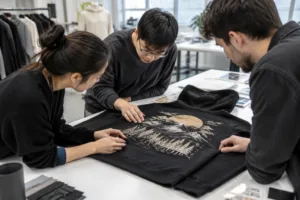
Print quality issues rarely start at bulk stage. In most hoodie programs, the early warning signs appear during sampling, especially when the design includes a large back graphic, thick ink coverage, or a brushed fleece surface that behaves differently under washing and stretch. This case study shows how a print cracking problem was identified, tested, and corrected before bulk production approval.
For buyers developing custom hoodies, this is where hoodie manufacturing for print durability becomes more than a decoration choice. The garment base, print size, fabric surface, and wash performance all interact, so a hoodie that looks good out of the sample bag can still fail after normal use. By reviewing these factors early, a sourcing team can move from visual approval to a more reliable production standard.
Project Background: The Client’s Large-Format Back Print Requirement
The project involved a custom pullover hoodie for a brand launch order. The client wanted a bold oversized back print with high visual coverage, plus a smaller front chest logo. The graphic style required solid ink areas rather than a light distress effect, so the print had to look dense, clean, and opaque on a medium-weight fleece hoodie.
The commercial requirement was clear: the hoodie needed to feel retail-ready, hold up after washing, and stay visually consistent across a bulk run. Because the back artwork covered a large area, the print was expected to face more stress during wearing, folding, packing, and laundering than a smaller logo would.
Why Hoodie Print Cracking Matters in Bulk Production
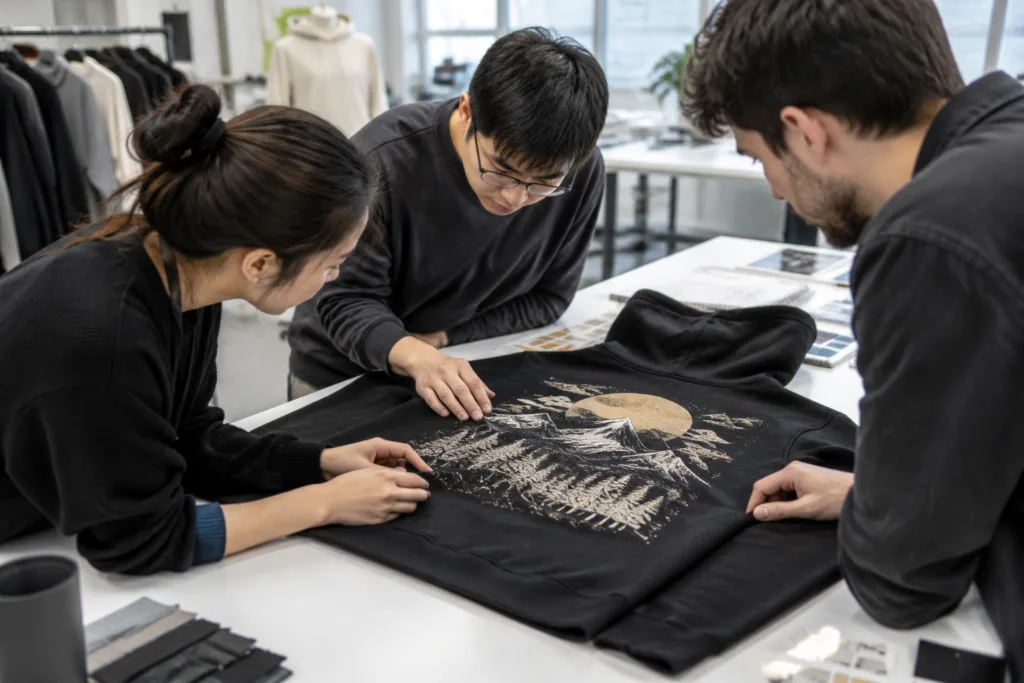
Print cracking is not just a cosmetic issue. Once it appears on a large area graphic, the garment can quickly look aged or mishandled, which affects customer perception and increases return risk for the brand. In bulk production, a small print weakness repeated across hundreds or thousands of units becomes a costly quality problem.
From a manufacturing perspective, cracking often points to a mismatch between print build, fabric behavior, curing balance, and graphic size. That is why many teams include hoodie print durability testing during development instead of relying only on a fresh sample appearance. A stable result should survive normal washing and moderate fabric extension without obvious surface breakage.
First Sample Review: What Went Wrong After Washing and Stretching
The first sample looked acceptable at initial inspection. Color coverage was strong, the edges were sharp, and the artwork placement matched the approved layout. The problem appeared only after basic wear simulation and a wash cycle.
After washing, the back print showed fine surface cracks in the heaviest ink zones. When the panel was stretched by hand, the cracking became more visible, especially across the widest sections of the design. The print also felt stiffer than expected, which suggested that durability and hand feel were not balanced well.
This was a good example of why visual approval alone is incomplete. A garment can pass the first impression test but still fail performance review. For sourcing teams, this is exactly where the apparel sample approval process should include simple but deliberate stress checks before any bulk release.
Root-Cause Analysis: Ink Build-Up, Fleece Surface, and Print Area Size
Once the issue appeared, the next step was not to guess but to isolate likely causes. The team reviewed the print method, ink deposit, curing outcome, fabric face, and artwork dimensions together rather than treating cracking as a single-variable defect.
Ink build-up
The first likely cause was excessive ink laydown in the densest parts of the graphic. Heavy deposit can improve opacity, but it also creates a more rigid print film. On a hoodie, especially one designed for casual movement, a rigid surface is more likely to crack when the fabric flexes.
Fleece surface behavior
The hoodie used a fleece fabric with a brushed interior and a knit face that was serviceable but not perfectly flat. Even when the outer surface looks smooth, minor texture variation can affect how evenly the print sits and cures. If the print bridges over surface irregularity instead of bonding evenly, stress points increase during wash and wear.
Print area size
The large back artwork also amplified the issue. Bigger prints usually have less natural give, and they cross more of the garment panel where movement happens. This is one reason why careful hoodie logo placement decisions matter when a design moves from concept to production: the same artwork can behave very differently depending on scale and location.
Adjustment Options: Printing Method, Ink Selection, Artwork Size, and Placement
After the first review, several practical adjustments were considered. The goal was not simply to make the print softer or thicker, but to improve durability without losing the intended visual effect.
- Reduce ink build in selected zones: This helps limit stiffness while keeping strong coverage where it matters most.
- Review ink system suitability: A more flexible print result may be possible depending on the artwork and fabric behavior.
- Adjust artwork dimensions: Slightly reducing total coverage can lower stress without changing the overall design language.
- Refine placement: Moving part of the print away from high-flex zones can improve long-term appearance.
- Confirm curing balance: Proper curing is critical because both under-curing and an overly rigid final film can lead to problems.
In this case, the chosen solution was a combined adjustment rather than a single change. The artwork coverage was refined slightly, the print build was controlled more carefully, and the target was a more flexible hand feel on the final sample.
Second Round Testing: Wash Tests, Stretch Tests, and Hand-Feel Evaluation
The revised sample went through a second review with more attention on comparative performance. Instead of asking whether the sample looked good, the team asked whether it behaved better than the first version under the same conditions.
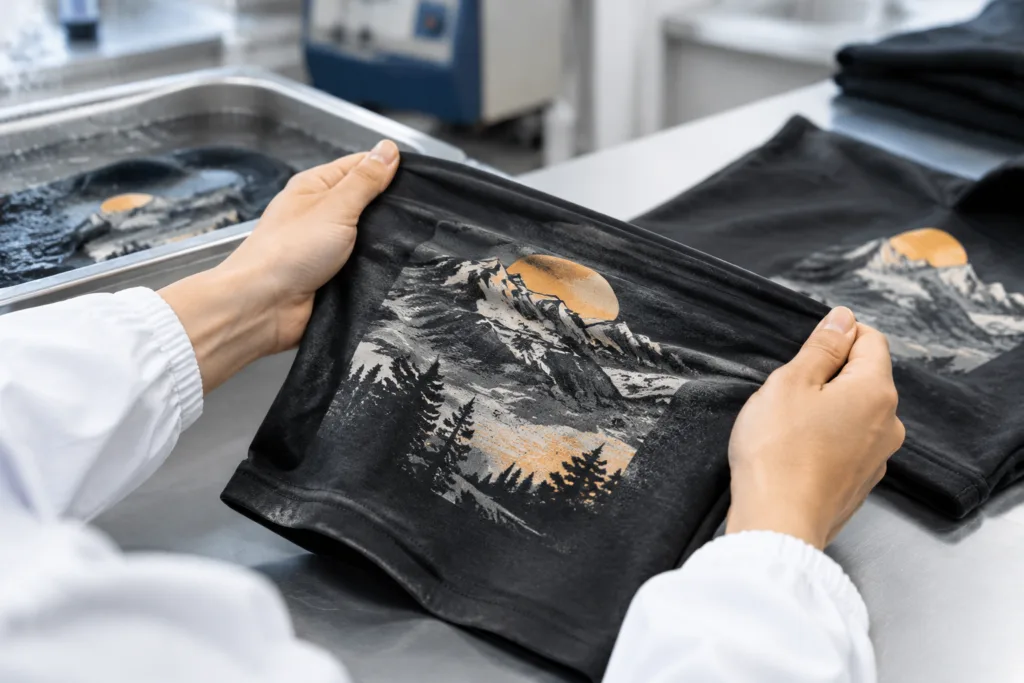
After washing, the cracking was significantly reduced and no longer obvious in normal viewing. Under manual stretch, the print still showed minor tension response, which is normal in larger graphics, but the visible break lines from the first sample were no longer the defining feature. The hand feel was also more balanced, with less stiffness across the center of the design.
This stage is where a manufacturer perspective becomes valuable. At Ninghow Apparel, sample testing is most useful when comments move beyond “looks better” and become specific approval points tied to wash result, extension behavior, and acceptable visual change. That creates a standard the production floor can actually follow.
How to Lock Quality Standards Before Bulk Production
Once the second sample performed acceptably, the next job was to convert that result into a repeatable bulk standard. This matters because solving the sample problem is only half the work. The other half is preventing drift during production.
Key controls included confirming the approved hoodie fabric, locking the final print size, documenting print placement measurements, keeping the approved hand feel as a reference, and using the tested sample as the standard for bulk comparison. Before shipment, buyers should also review a hoodie defect checklist before shipment so print durability is checked alongside sewing, measurements, stains, and packing accuracy.
What the Buyer Learned from Sample Approval and Print Durability Testing
The buyer’s main takeaway was that a strong graphic concept does not automatically mean a production-ready graphic execution. Large-format prints need to be judged as part of the full garment system, not as isolated artwork.
The second lesson was that sample rejection is not a failure when the comments are specific. In this project, the first sample prevented a larger bulk issue. That saved time compared with discovering the same cracking after production had already been cut, printed, packed, or shipped.
Key Takeaways for Brands Ordering Custom Hoodies
For custom hoodie buyers, print cracking risk rises when several factors appear together: large artwork, dense ink coverage, flexible fleece fabric, and approval based only on fresh appearance. A practical review process should include wash testing, stretch observation, and hand-feel comparison before bulk signoff.
- Do not approve oversized prints on appearance alone.
- Ask for testing that reflects real garment use.
- Review print softness and flexibility, not just opacity.
- Make sure sample comments are specific enough to become production standards.
- Use the approved sample as a control reference for bulk output.
When to Ask Your Manufacturer for Pre-Production Print Testing
Pre-production print testing is especially useful when the hoodie uses large graphics, special inks, dark fleece colors, textured fabric faces, or tight quality expectations for private label release. It is also important when the order size makes rework expensive or when the product will represent a new brand launch.
In simple terms, if the print is central to the product’s value, it should be tested before the mass order is released. That gives both buyer and factory a shared performance target and reduces avoidable surprises during bulk production.
Conclusion
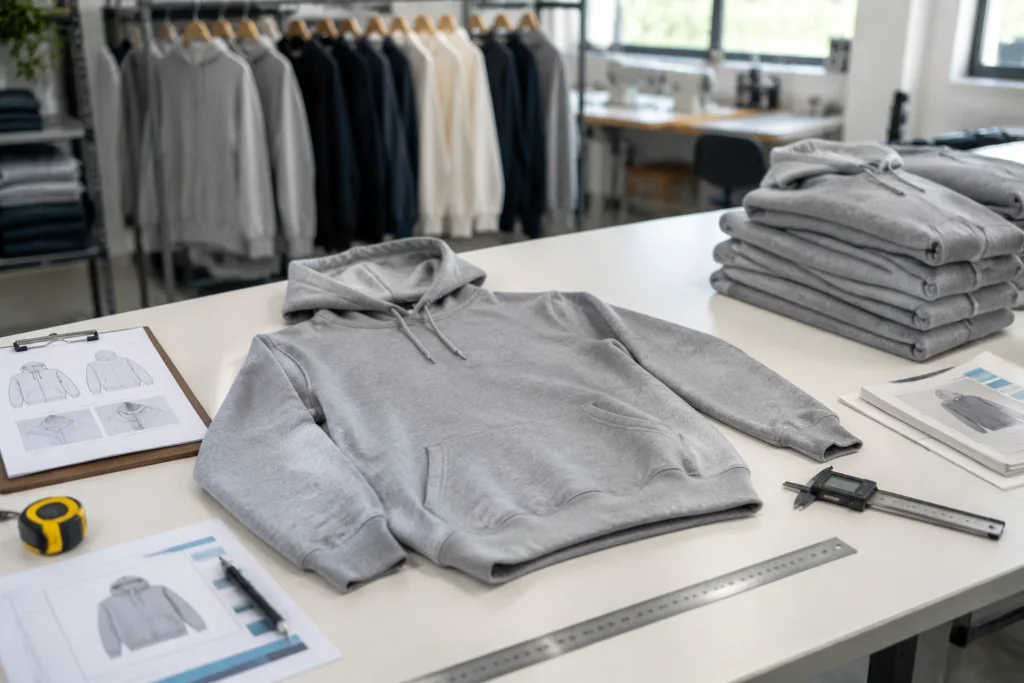
This hoodie print cracking case study shows why the right time to solve decoration problems is during sample development, not after the bulk order starts. By identifying cracking through wash and stretch review, tracing the issue back to ink build, fabric behavior, and graphic scale, then confirming a better second sample, the team turned a visible defect into a clearer production standard. For brand owners and sourcing teams, that is the practical value of manufacturer-led testing: fewer assumptions, better approvals, and a smoother path to bulk consistency.
FAQ
What causes print cracking on hoodies?
Print cracking usually comes from a combination of factors such as heavy ink deposit, limited print flexibility, large artwork coverage, fabric movement, and weak sample testing before production approval.
Can a hoodie sample look fine at first but fail later?
Yes. A fresh sample may look clean at first inspection, but washing, stretching, and repeated handling can reveal cracking, stiffness, or other print durability issues that were not visible initially.
Why are large back prints more likely to crack?
Large back prints cover more surface area and experience more stress during wear, folding, and washing, so any rigidity in the print film becomes easier to see over time.
Should buyers ask for wash testing before bulk production?
Yes. Wash testing helps confirm whether the approved print can maintain appearance and flexibility under normal use, which is especially important for large graphics and private label hoodies.
What should be locked after a hoodie print sample is approved?
Buyers should lock the approved fabric, print size, placement measurements, hand feel, artwork version, and sample reference so the factory has a clear standard for bulk production.
When is pre-production print testing most important?
It is most important when the hoodie uses oversized graphics, dense ink coverage, special decoration methods, textured fabric surfaces, or when the order value makes bulk defects costly to fix.