

Launching a first streetwear hoodie drop sounds simple until the SKU count starts expanding. A startup may begin with one strong idea, then add extra colors, alternate fits, and too many branding variations, which quickly turns a focused launch into a risky inventory bet. From a manufacturing perspective, the first drop usually works better when the product line is tight, the specifications are clear, and the reorder path is already considered before production begins.
In this case, the founder was aiming for a premium feel on a limited budget and wanted a launch that looked intentional rather than small. That is where streetwear hoodie manufacturer support becomes especially useful, because narrowing the first hoodie program is often less about reducing ambition and more about protecting cash flow, fit consistency, and brand presentation. Instead of building six or eight uncertain variants, the better move was to shape one hoodie platform that could support a focused three-SKU release.
Case overview: a startup with premium ambitions and a limited first-drop budget
The startup in this case wanted its first release to feel elevated: clean silhouette, substantial fabric, clear branding, and retail-ready finishing. The problem was not the product vision itself. The problem was trying to express that vision through too many initial options before the brand had any real sales data.
The founder originally proposed multiple hoodie bodies, several colorways, and more than one logo treatment. On paper, that looked exciting. In production terms, it introduced more fabric commitments, more trim coordination, more fit risk, and more slow-moving inventory exposure.
For a first launch, the real goal is usually not to offer maximum variety. It is to prove demand, confirm size movement, validate fabric and fit, and build a repeatable production structure.
The early planning mistake: too many styles and too much inventory risk

The first draft assortment included pullover and zip styles, washed and clean finishes, and a broad color list. That kind of range can make sense later, but early on it creates a difficult equation: each style-color-size combination becomes a separate inventory commitment.
Once that happens, minimums no longer feel low in practice. Even if the supplier can support a smaller order, the total number of units across all combinations rises quickly. The startup was at risk of tying up capital in small, fragmented quantities that would be harder to market and harder to reorder efficiently.
This is the same reason many first-time founders benefit from disciplined low MOQ collection planning. The issue is not only the unit count. It is whether the assortment structure gives the brand a realistic chance to read demand clearly after launch.
Why a 3-SKU hoodie drop made more sense
The recommendation was to reduce the release to three commercial SKUs built on the same hoodie base. That meant one fabric direction, one fit block, one core construction method, and three color options with broad streetwear appeal.
This approach solved several problems at once. It improved consistency, simplified approvals, reduced development noise, and made the launch easier to explain to customers. It also gave the startup cleaner post-launch data. If one color sold faster than the others, the reason would be easier to identify because the fit and base garment stayed constant.
A three-SKU structure is often strong for startup streetwear because it balances choice and control. Customers still see a curated drop, but the brand avoids spreading its budget too thin across too many uncertain variants.
Building one hoodie platform before expanding the range
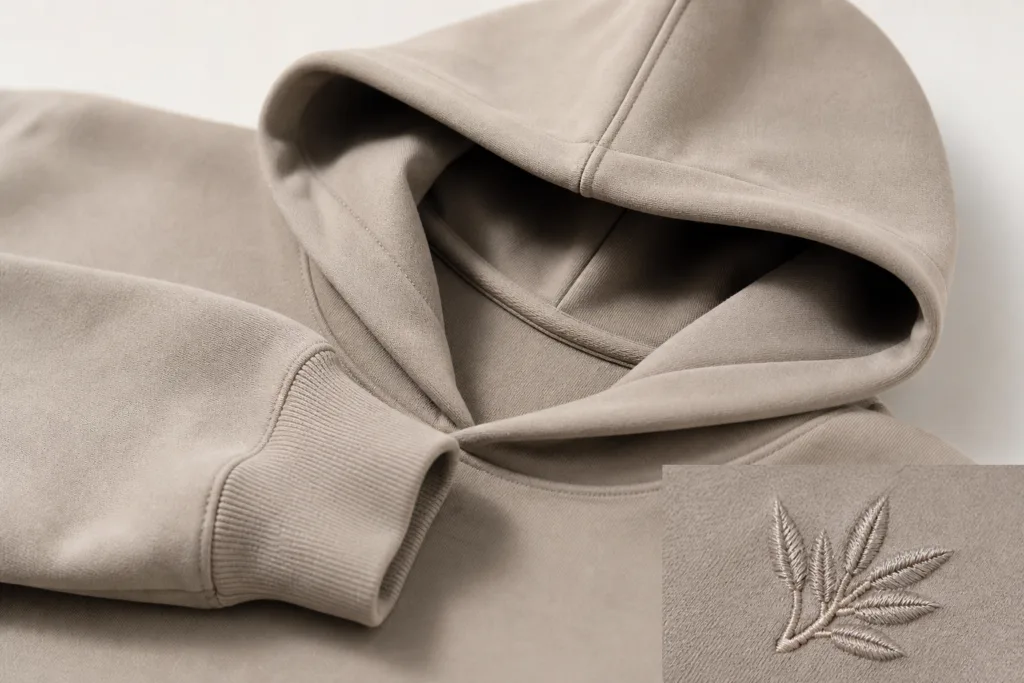
The most important technical decision was to create a unified hoodie platform. In practical terms, that meant locking in one shell fabric, one rib direction, one hood construction standard, one pocket approach, and one measurement spec. The brand could then vary color and branding details without rebuilding the garment every time.
This is also where Ninghow Apparel would typically advise startup buyers to think beyond the first shipment. A unified base makes future adjustments easier, whether the brand later adds a seasonal color, a special print version, or a second production run. It is much easier to scale a hoodie program when the original fit and construction foundation are already stable.
The startup selected three colors that served different buyer preferences without drifting away from the same brand identity: a dependable black, a wearable washed neutral, and a more expressive seasonal tone. That mix gave the collection enough personality while keeping it operationally manageable.
Choosing the right fabric weight for a streetwear feel
Fabric weight was one of the most important decisions because the founder wanted the hoodie to feel premium immediately in hand. The mistake many startups make is assuming heavier always means better. In reality, the right choice depends on target price, silhouette, brushing preference, print compatibility, and the climate where the product will mainly be sold.
For this drop, a substantial mid-to-heavy range made sense because the brand wanted structure without creating a garment that felt too stiff or overly costly for a first run. Thinking carefully about choosing the right hoodie GSM helped narrow the decision between a soft wearable everyday option and a more rigid statement piece. The final direction balanced drape, warmth, and decoration suitability rather than chasing weight alone.
That kind of decision matters because fabric affects almost everything else: embroidery stability, puff print appearance, shrink behavior, fit retention, and how premium the hoodie feels after washing.
Selecting the silhouette: fit, hood shape, and construction priorities
The founder initially wanted an oversized streetwear fit, but the term itself was too vague for production. Oversized can mean extra width, longer body, dropped shoulders, deeper armholes, or simply a roomier chest. Without clear measurement intent, approvals become subjective and repeat orders become inconsistent.
The better process was to define the fit through measurable priorities: slightly dropped shoulder, fuller body width, controlled body length, and a hood shape that still sat cleanly when worn down. Rib recovery, cuff tension, and pocket alignment were also treated as priority points because they affect perceived quality more than many startups expect.
For a first hoodie, it is usually smarter to choose a silhouette that feels distinctive but not extreme. A heavily exaggerated fit can limit the customer base and create more returns or customer hesitation, especially before the brand has built trust in sizing.
Logo and branding choices without overcomplicating the first run
The startup originally considered embroidery on one style, screen print on another, and puff print on a third. That sounded creative, but it made the collection feel less coherent and introduced extra approval variables. The final recommendation was to simplify branding so the drop looked intentional as one story.
A small chest logo, a clean neck label setup, and one supporting brand element were enough. This gave the hoodies a more mature presentation while keeping decoration costs and execution risk under control. For founders shaping a first private label hoodie line planning process, the key is to decide which branding element actually drives recognition and which ones merely add complexity.
The private label package focused on the basics that matter most in a first launch: woven main label, size label logic, care label accuracy, and consistent logo placement. Those details support brand credibility without forcing the startup into an overbuilt trim program too early.
How to plan size ratios for a first streetwear drop
Size planning is one of the easiest areas to underestimate. Founders often spread units too evenly across sizes because it feels fair, but equal distribution rarely matches actual demand. Streetwear hoodie sales often cluster in core sizes, especially when the fit is relaxed.
In this case, the startup used a weighted size curve with stronger allocation in middle sizes and more limited volume in the outer sizes. Using a more deliberate hoodie size ratio planning method helped the brand avoid getting trapped with too many fringe-size units while still offering a complete size range.
The right ratio depends on the target customer, fit direction, and sales channel. A unisex oversized drop may need a different curve than a tighter fashion fit or a region-specific launch. The important point is that size buys should be driven by likely demand, not by visual symmetry in the purchase order.
Setting the first order quantity with cash flow in mind
Once the lineup was reduced to three SKUs, the startup could make a more rational quantity decision. Instead of chasing a lower-looking cost per unit through a larger buy, the founder focused on what level of inventory could realistically be launched, marketed, and replenished if the product gained traction.
This is where startup cash flow and production efficiency need to be balanced. Ordering too little can create logistical inefficiency and leave no room for momentum. Ordering too much can force discounting, weaken the brand image, and block development of the next drop. The final quantity target aimed to preserve flexibility while still making production worthwhile.
From a manufacturer perspective, a good first order is not simply the smallest possible MOQ. It is the quantity that gives the brand enough stock to test demand properly, enough consistency to launch with confidence, and a credible path into a second order if the response is strong.
Packaging and label strategy for a clean private label presentation
The packaging plan stayed disciplined. The startup did not need elaborate unboxing features for the first drop, but it did need consistency. Each hoodie required correct labels, clean folding, and a packaging setup that protected the garment while still supporting the premium positioning.
The most practical first-drop packaging strategy usually includes the essentials only: private label identity where it matters, readable sizing, barcode or SKU logic if needed, and a bag or presentation method suited to the sales channel. This keeps the customer experience polished without adding unnecessary pre-production delays or trim minimum complications.
Launch planning and the advantage of a tight lineup
With only three SKUs, the brand could present the drop as a focused statement rather than a fragmented first attempt. The campaign message became clearer, the product photography could stay visually consistent, and customer choice was easier to navigate.
That clarity matters because too much choice can reduce confidence in a new label. A tight lineup helps the audience understand what the brand stands for. It also simplifies stock tracking after launch, making it easier to read which color moved fastest and which sizes started breaking first.
Post-launch results: what sold first and what the startup learned
After launch, the startup could quickly see which variables mattered. The black hoodie sold first, confirming that the safest color still had the broadest reach. The neutral tone performed steadily, while the more expressive seasonal color moved slower but helped define the drop visually.
On sizes, the strongest movement came from the middle of the size curve. That reinforced why disciplined allocation matters in a first run. If the brand had spread stock evenly, it likely would have sold out of its core sizes too early while holding less productive inventory in outer sizes.
Just as important, the startup learned that the chosen fit direction was commercially workable. Customers responded well enough that the next decision was not whether to continue hoodies, but how to reorder with better precision.
Using first-drop data to plan the second production round
The second production decision was not to introduce five new concepts immediately. Instead, the startup reviewed sell-through by color, size, and customer feedback, then used that information to refine the next order. The strongest-performing color could be replenished with confidence, while weaker options could be adjusted or replaced.
This is the real value of a controlled first drop. Clean data supports better reordering. The brand can increase the most productive sizes, reduce slower ones, and decide whether a new color deserves space in the next run. That is far more useful than trying to interpret messy results from an overexpanded first assortment.
Key lessons for founders considering a small-batch hoodie launch
- Keep the first drop narrow. A focused lineup usually produces better sell-through insights than a broad one.
- Build one stable hoodie platform. Shared fabric, fit, and construction make quality control and reorders easier.
- Choose colors commercially. One dependable core color often supports the launch while other options add character.
- Define fit with measurements. Vague terms like oversized are not enough for reliable production.
- Use branding selectively. A coherent private label setup is often more valuable than multiple decoration experiments.
- Let size ratios follow demand logic. First drops need practical allocation, not equal distribution.
- Plan the reorder before launch. The best first production run is one that makes the second run easier to execute.
When a 3-SKU hoodie drop is the right choice
A three-SKU hoodie drop is usually the right move when a startup is still proving demand, managing budget carefully, and trying to establish a clear product identity. It is especially suitable when the brand wants a premium-looking launch but cannot afford to spread inventory across too many uncertain combinations.
It may be time to expand beyond three SKUs when the brand already understands its size curve, has evidence of repeat demand, and can support more complex stock planning without weakening cash flow. Expansion works best once the base hoodie block has been validated and the team knows which fabric, fit, and branding direction should remain constant.
In other words, the three-SKU strategy is not a limitation. For many early streetwear brands, it is the structure that makes growth more controlled and more repeatable.
Conclusion

This streetwear hoodie startup case study shows that the smartest first drop is not always the biggest or most varied one. By reducing the release to three well-planned SKUs, the brand improved inventory control, simplified production, protected cash flow, and created a much clearer path to reordering. For founders launching hoodies for the first time, disciplined product planning often does more for long-term brand building than a larger but less focused assortment.
FAQ
Is a 3-SKU hoodie drop enough for a new streetwear brand?
Yes, if the goal is to test demand without overcommitting inventory. Three SKUs usually provide enough customer choice while keeping fit, fabric, and stock planning manageable.
What counts as one SKU in a hoodie launch?
In this context, one SKU usually means one hoodie style in one color, with sizes nested under that product setup. Adding another color or a different hoodie body typically creates another SKU group to manage.
Should a startup choose heavyweight hoodies for the first drop?
Not automatically. The right weight depends on your brand positioning, target price, decoration method, and how you want the hoodie to feel in everyday wear.
How low should the first hoodie MOQ be?
The lowest possible MOQ is not always the best choice. A better target is a quantity that supports efficient production, gives you enough stock to test demand, and still protects cash flow.
How should a first hoodie drop split sizes?
Most first drops should place more units into core middle sizes rather than splitting evenly across all sizes. The exact ratio should reflect fit direction, customer profile, and expected demand pattern.
When should a brand reorder after the first hoodie drop?
A reorder makes sense when early sell-through shows clear demand by color and size, and the first production run has already validated the fit and quality standard you want to keep.