

If you want accurate hoodie pricing, the quality of your RFQ matters almost as much as the product itself. A vague message like “I want to customize a hoodie” forces a manufacturer to make assumptions about fabric, weight, fit, trims, decoration, packaging, and order volume, which usually leads to a rough quote rather than a dependable one.
A strong RFQ gives the factory enough detail to evaluate feasibility, estimate material use, and flag cost drivers before sampling starts. If you are preparing a custom hoodie manufacturer quote request, it helps to think like a production team: define the hoodie clearly, explain the commercial requirements, and remove as much guesswork as possible. That approach improves quote accuracy and reduces revisions later.
Why vague hoodie inquiries often produce inaccurate quotes
Manufacturers quote based on inputs. When those inputs are incomplete, they either provide a broad estimate or base the quote on assumptions that may not match your final product. Both outcomes create friction once the project moves into sampling or costing review.
For example, a standard pullover hoodie in a midweight fleece is priced very differently from an oversized heavyweight French terry hoodie with embroidery, woven labels, custom-dyed drawcords, and individual polybags. If your first inquiry does not distinguish between those options, the supplier cannot confidently calculate fabric consumption, trim cost, labor complexity, or decoration pricing.
The most common missing details are quantity, size ratio, fabric composition, fabric weight, artwork method, and destination market. Even small omissions can shift pricing because hoodies are sensitive to material usage, finish requirements, and fit grading.
What a custom hoodie RFQ should include
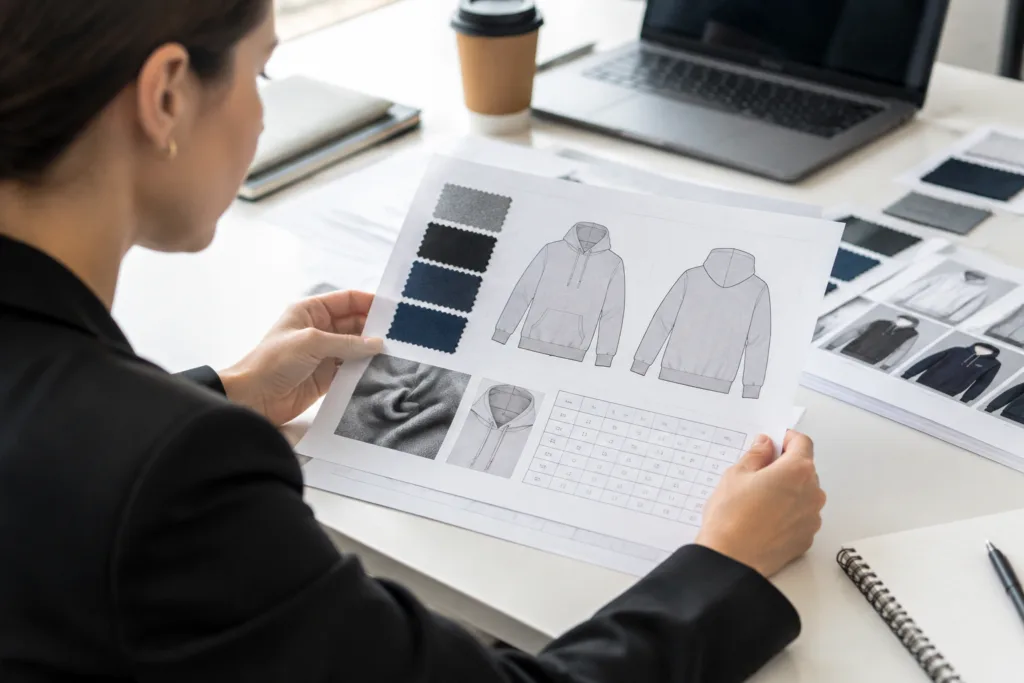
A useful custom hoodie RFQ should answer three practical questions for the factory: what you want made, how you want it made, and what commercial conditions apply. The clearer those answers are, the more accurate the quotation process becomes.
- Product type: pullover, zip-up, cropped, oversized, standard fit, or another silhouette
- Target quantity: total units and expected reorder potential if known
- Size range: full range plus estimated ratio by size
- Colorways: number of colors and unit split by color
- Fabric details: composition, GSM, finish, brushed or unbrushed interior, and preferred hand feel
- Decoration: print, embroidery, applique, patch, mixed methods, and artwork count
- Construction details: pocket type, zipper, rib, hood shape, drawcord, eyelets, label requirements
- Branding details: neck label, size label, hangtag, care label, private label requests
- Packaging: folding method, barcode sticker, polybag, carton requirements
- Timeline: sample deadline, target bulk delivery window, launch timing
- Shipping destination: country and preferred shipping method if already known
- Reference materials: tech pack, sketch, marked-up photos, spec sheet, or physical sample photos
You do not need every line to be perfect on day one, but the more complete the information is, the less the supplier has to guess.
Pricing basics every hoodie quote needs
Quantity and MOQ logic
Unit cost usually depends on scale. A 150-piece hoodie order may carry higher fabric and trim costs per unit than a 1,000-piece order because purchasing efficiency, marker usage, and production setup are less favorable at smaller runs. If you are unsure of volume, give a realistic starting quantity and note any planned repeat program separately.
Size range and size ratio
Hoodie costing is affected by size distribution because larger sizes consume more fabric. A quote based on balanced S-XL quantities may not hold if your final order heavily skews toward XL and XXL. Include expected ratio by size instead of only listing the available size range.
Color breakdown
Three colorways at equal volumes are not the same as one main color with two low-volume secondary colors. Small color runs can increase complexity in fabric planning, dye lot management, and packing. Make the unit split by color clear in the RFQ.
GSM and fabric consumption
GSM is one of the fastest ways to narrow quote accuracy because fabric weight directly affects material cost and garment feel. If you are still choosing the right hoodie GSM, it is better to request pricing in two clearly defined options, such as one midweight version and one heavyweight version, rather than asking for a single quote without a weight range.
Choosing the hoodie style before requesting a quote
Style choice changes both pattern work and production cost. A manufacturer needs to know the silhouette before estimating sewing complexity, material usage, and trim requirements.
- Pullover hoodies: often simpler from a trim perspective, but pocket shape, hood construction, and rib details still matter
- Zip-up hoodies: add zipper sourcing, alignment control, extra sewing steps, and potential QC points
- Oversized hoodies: use more fabric and may require fit clarification to avoid inconsistent expectations
- Cropped hoodies: may use less fabric overall but often need more attention to hem construction and proportion
If you have a visual reference, send it with notes explaining what you want to keep and what you want to change. A factory can work from reference imagery, but only if your comments identify the exact features you are asking it to price.
Selecting the right fabric for quote accuracy
Fabric is often the largest cost component in a hoodie, so this section of the RFQ should be as specific as possible. Instead of saying “cotton hoodie fabric,” define what kind of performance or hand feel you want.
Common hoodie fabric directions
- Fleece: often chosen for warmth and a soft interior
- French terry: useful when you want structure with a loopback interior and lighter seasonal versatility
- Cotton-poly blends: often considered when balancing comfort, durability, and cost control
- Higher cotton content fabrics: often selected for a more natural hand feel and brand positioning reasons
Good RFQs mention composition, GSM, brushed or loopback interior, pre-shrunk expectations if relevant, and whether fabric color should be stock, dyed to match, or matched to a Pantone reference. When buyers need a deeper comparison of material trade-offs, Ninghow Apparel usually recommends clarifying intended use first: retail fashion, teamwear, promotional programs, or premium private label launches each point toward different fabric priorities.
Logo, artwork, and decoration method requirements
Artwork cost is not only about logo size. It also depends on decoration method, placement count, color count, and whether the artwork sits on smooth fabric, textured fleece, or ribbed areas. A manufacturer cannot quote decoration accurately from “add my logo on the chest” alone.
Your RFQ should state whether the decoration is screen print, embroidery, puff print, DTG, applique, patch, heat transfer, or mixed technique. Also mention logo dimensions, placement area, artwork count per garment, and whether the same art applies across all sizes and colorways.
If you are still refining hoodie logo placement decisions, send a simple placement map with front, back, sleeve, hood, and pocket notes. That is often enough to stop avoidable quote revisions before the sample stage.
Construction details that change hoodie cost
Construction details are where many RFQs become too light. Two hoodies can look similar from a distance but cost differently because of trim quality, seam choices, and finishing requirements.
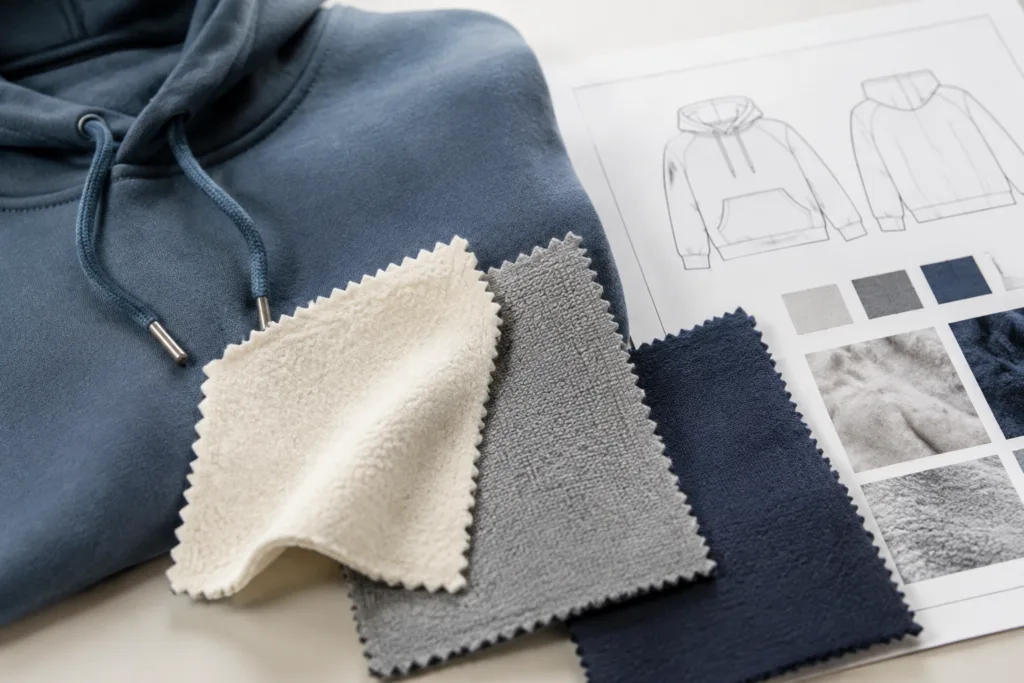
Details worth specifying
- Drawstrings: flat, round, cotton, polyester, silicone tip, metal tip, or no drawcord
- Eyelets: self-fabric, stitched eyelets, or metal eyelets
- Pockets: kangaroo pocket, welt pocket, inseam pocket, or no pocket
- Zippers: nylon coil, metal look, branded puller, covered placket, or standard exposed zipper
- Ribbing: cuff and hem rib composition, width, and firmness
- Labels: woven main label, printed neck label, separate size tab, care label, country of origin label
- Seams and finishing: topstitching, bartacks, tape, coverstitching, enzyme wash, garment wash, or special finish
If any of these are undecided, say so directly and ask the supplier to quote based on one standard option plus one upgraded option. That is usually more efficient than leaving the point blank.
Packaging, samples, timeline, and shipping details
Commercial details shape the final landed cost and should not be left for the end. Packaging, sampling rounds, and delivery expectations all affect quote structure.
In your RFQ, include whether you need branded polybags, barcode stickers, size stickers, hangtags, fold-and-pack standards, carton marking rules, or retailer-specific packing instructions. If packaging matters to your program, reviewing custom hoodie packaging options before sending the RFQ can help you separate essential requirements from optional upgrades.
You should also state whether you need a proto sample, fit sample, pre-production sample, or only a costing sample. A factory will price and schedule differently depending on sample depth, revision risk, and the amount of approval required before bulk starts.
Lead time should be expressed as a target window rather than a vague “as soon as possible.” For example, note when you need the first sample, when approvals are expected, and when goods must arrive at the destination. Include the ship-to country as well, because export planning and transit method can affect commercial advice.
A copyable custom hoodie RFQ template
Use the template below as a starting point. It is simple enough for first inquiries but detailed enough to support a more accurate quote.
| RFQ Item | What to Provide |
|---|---|
| Product | Custom hoodie, style type, intended market, target customer |
| Fit | Standard, relaxed, oversized, cropped, unisex, mens, womens, kids |
| Quantity | Total units plus expected reorder information if available |
| Size Range | Sizes and estimated ratio by size |
| Colorways | Color count and units per color |
| Fabric | Composition, GSM, fleece or French terry, brushed or loopback |
| Decoration | Method, placement, size, color count, artwork files if available |
| Construction | Pocket type, zipper type, rib, drawcord, eyelets, labels |
| Branding | Private label needs, hangtags, care labels, main labels |
| Packaging | Folding, polybag, sticker, barcode, carton notes |
| Samples | Type of sample needed and approval expectations |
| Timeline | Sample target date and bulk delivery target |
| Shipping | Destination country and preferred shipping method if known |
| References | Tech pack, sketches, photos, measurement sheet, comments |
If you are sending the inquiry by email, list these points in the message body and attach your reference files in a clearly labeled folder. Keep filenames practical so the factory can review your request efficiently.
How a manufacturer turns your RFQ into a quote
From the factory side, a good RFQ is reviewed in stages. First, the team checks whether the style is producible with the requested construction and trims. Next, fabric and trim assumptions are matched to the quantity and target market. Then sample needs, production risk, and delivery feasibility are considered before the quotation is finalized.
This is why missing inputs often trigger follow-up questions instead of immediate pricing. It is not just an administrative issue. The supplier is trying to avoid giving you a number that will later change because key details were unresolved.
In practical terms, the cleaner your RFQ, the smoother the apparel sample approval process usually becomes. Better upfront information reduces confusion between the quoted hoodie and the sampled hoodie, which is where many sourcing delays begin.
Common RFQ mistakes to avoid
- Giving only inspiration photos: photos help, but they are not enough without notes
- Skipping size ratios: size mix affects material planning and pricing
- Leaving GSM undefined: hoodie cost can shift quickly with fabric weight
- Ignoring decoration method: logo type and placement can materially change the quote
- Omitting packaging: retail-ready packing is not the same as basic bulk packing
- Not stating timeline: urgency affects planning and sometimes sourcing options
- Requesting “best price” without specs: accurate pricing requires a defined product
A better approach is to be specific where you are confident and transparent where you are still deciding. That gives the factory a reliable foundation for quoting and a clear list of variables that may still move the price.
Conclusion

A strong custom hoodie RFQ does not need to be overly technical, but it does need to be complete. When you define the hoodie style, fabric, quantity, size ratio, decoration, construction details, packaging, and timeline clearly, you make it easier for a manufacturer to give a quote that reflects the product you actually intend to buy.
That is the real goal: fewer assumptions, fewer quote revisions, and a cleaner path from inquiry to sampling to bulk production. For buyers, sourcing teams, and private label brands, a well-prepared RFQ is one of the simplest ways to save time and reduce preventable cost surprises.
FAQ
What is a custom hoodie RFQ?
A custom hoodie RFQ is a request for quotation that gives a manufacturer the product and commercial details needed to estimate price, sampling needs, and production feasibility for a custom hoodie project.
How detailed should a custom hoodie RFQ be?
It should be detailed enough to define the hoodie style, fabric, quantity, size ratio, color split, decoration method, construction details, packaging needs, and target timeline without leaving major cost drivers open to guesswork.
Do I need a tech pack to request a hoodie quote?
No, but a tech pack helps a lot. If you do not have one, you can still send a useful RFQ with clear reference images, a measurement list, fabric notes, artwork details, and written comments about the features you want.
Why do manufacturers ask for size ratio and GSM?
Size ratio affects total fabric consumption across the order, while GSM affects material weight and cost per garment, so both are basic inputs for more accurate hoodie pricing.
Can I ask for multiple hoodie options in one RFQ?
Yes, as long as the options are clearly separated. For example, you can request pricing for both pullover and zip-up versions or for midweight and heavyweight fabrics, but each version should have its own defined specs.
What happens after I send a custom hoodie RFQ?
The manufacturer usually reviews the specs, checks missing details, evaluates material and trim needs, may ask follow-up questions, and then issues a quote that can lead into sampling and approval before bulk production.