

Choosing between a heavyweight and midweight hoodie is not just a fabric decision. For apparel brands, GSM influences perceived quality, comfort, warmth, silhouette, decoration performance, pricing, and where the product fits in the market. A hoodie that feels right for a premium streetwear drop may be completely wrong for a corporate uniform program or a high-volume promotional order.
That is why many buyers evaluate GSM early, alongside fit, fabric composition, and decoration plans. If your next step is comparing sourcing options with a custom hoodie manufacturer, it helps to understand how weight changes not only the feel of the garment, but also sampling decisions, MOQ logic, and production expectations. The more clearly your brand positioning is defined, the easier it becomes to choose a hoodie weight that supports both product quality and commercial goals.
Why hoodie GSM matters for brand positioning
GSM, or grams per square meter, is one of the clearest indicators of how substantial a hoodie will feel in hand. It affects warmth, drape, opacity, recovery, and how consumers interpret value the moment they touch the garment. Even before branding or packaging is considered, weight helps shape first impressions.
For buyers who need a deeper foundation before choosing between ranges, it helps to review how GSM affects hoodie fabric weight and why the same style can feel very different once fabric density changes. In manufacturing terms, GSM is not a cosmetic detail. It influences pattern behavior, sewing handling, and how the finished product supports your intended price point.
In simple terms, midweight hoodies often support broader use cases and easier price accessibility, while heavyweight hoodies usually create a stronger premium or streetwear signal. Neither is automatically better. The right choice depends on the customer, the selling channel, and the role the hoodie plays in your product line.
Heavyweight vs midweight hoodie: the core differences brands should understand

A midweight hoodie is typically easier to wear across seasons, more flexible for layered styling, and often more commercially versatile. A heavyweight hoodie usually delivers more structure, a denser handfeel, and a stronger sense of durability and substance.
| Factor | Midweight Hoodie | Heavyweight Hoodie |
|---|---|---|
| Typical market feel | Balanced, versatile, broadly wearable | Premium, substantial, statement-driven |
| Warmth | Moderate | Higher |
| Silhouette | Softer, easier drape | More structured |
| Price positioning | Accessible to mid-tier | Often supports higher pricing |
| Decoration behavior | Good for many print uses | Stable base for embroidery and dense finishes |
| Shipping impact | More efficient | Heavier and costlier to move |
| Typical buyer fit | Basics, teams, general retail, promo | Streetwear, premium casual, colder-climate assortments |
From a manufacturing perspective, the choice is usually tied to product intent. If the hoodie needs broad appeal, easier reorder economics, and lower inventory risk, midweight is often the safer route. If the hoodie is intended to signal quality, structure, and a more elevated identity, heavyweight may offer a better match.
Midweight hoodie: best use cases, target buyers, and brand types
Midweight hoodies are often the most practical choice for brands that need flexibility. They work well for entry collections, schoolwear, teamwear, corporate apparel, licensed merchandise, and brands that want year-round usability without pushing the garment into a niche seasonal category.
They also tend to suit buyers who care about manageable price points and wider customer acceptance. A midweight hoodie is easier for many end users to wear indoors, under jackets, or across changing climates. That matters for wholesalers and organizations ordering in bulk, because the garment has to satisfy a broader range of preferences.
For startup brands, midweight can also reduce risk. It generally offers more room to test sizing, color response, and customer demand before committing to a heavier and more expensive base. When margin sensitivity is high, midweight often provides a more forgiving starting point.
Heavyweight hoodie: which brands benefit most
Heavyweight hoodies are especially effective when the garment itself is part of the brand story. Streetwear labels, elevated casual brands, premium private label programs, and collections built around oversized silhouettes often benefit from extra fabric density because it changes the visual and tactile impression of the product.
Structure matters here. A denser fabric can help the body hold shape better, create a more deliberate shoulder line, and make the hoodie feel more substantial in photography, retail presentation, and customer unboxing. This is one reason many teams planning a boxy or relaxed profile look closely at oversized hoodie fit and GSM planning before finalizing fabric selection, since silhouette and weight need to work together rather than be chosen separately.
That said, heavyweight is not automatically a premium solution. If the handfeel is stiff, the fit is not balanced, or the finishing is inconsistent, high GSM alone will not create a better product. The fabric weight must still align with your target wearer, your branding direction, and the comfort expectations of your market.
How higher GSM affects silhouette, drape, structure, and fit
As GSM increases, a hoodie usually becomes less fluid and more architectural. This can be a major advantage for brands that want a cleaner hem line, more visible volume, and a body that sits away from the torso. Heavier fabrics can make dropped shoulders look more intentional and can support silhouettes associated with modern streetwear or premium basics.
Midweight fabrics, by contrast, tend to drape more naturally and can feel easier for everyday wear. They are often the better option when a brand wants softness and versatility rather than statement structure. For corporate programs or event merchandise, that softer, easier wearability can matter more than visual heft.
Fit development should also account for fabric behavior after washing and finishing. A silhouette that looks sharp in a first proto may tighten up, soften, or shift after garment treatment. In practice, fabric weight should be evaluated together with rib quality, panel dimensions, and finishing expectations rather than viewed in isolation.
The cost impact of higher GSM
Higher GSM usually means more fabric consumption per garment, and that affects unit pricing. It can also influence marker efficiency, cutting behavior, and the total material spend across a full production run. For brands trying to hit a target retail price, the jump from midweight to heavyweight may be commercially significant even if the visual difference seems subtle on paper.
Sampling can become more important as weight increases because fit, shrinkage response, handfeel, and decoration results are more likely to affect final approval. A heavier hoodie may also need stronger trims, different rib balance, or revised sewing considerations. These details can influence development cost and how many sample rounds are needed before bulk production is approved.
MOQ discussions may change as well. Some mills or factories have better access to common midweight fleece programs than niche heavyweight constructions, especially when custom dyeing or specific blends are required. At Ninghow Apparel, this kind of decision is usually reviewed not only by target GSM, but also by color count, trim customization, decoration method, and expected reorder volume, because those variables together determine whether a hoodie program is efficient to scale.
How heavyweight hoodies affect lead time, shipping, and logistics
Heavyweight hoodies can create a stronger product impression, but they also add practical pressure to planning. More substantial fabrics may require more careful sourcing, longer knitting or finishing preparation, and more detailed fit approval. If your launch depends on multiple custom elements, extra weight can increase development complexity rather than simply increasing quality.
Shipping is another overlooked factor. Heavier garments increase carton weight, affect freight calculations, and can reduce unit efficiency per shipment. For brands shipping direct to warehouse, distributor, or end customer, that additional weight has a real margin effect. This is especially relevant for international programs or collections where the hoodie is bundled with other bulky garments.
For high-volume promotional or uniform orders, these logistics costs can outweigh the branding benefit of using a heavier base. In those cases, the right answer is often the weight that delivers acceptable quality without overloading transport and storage cost.
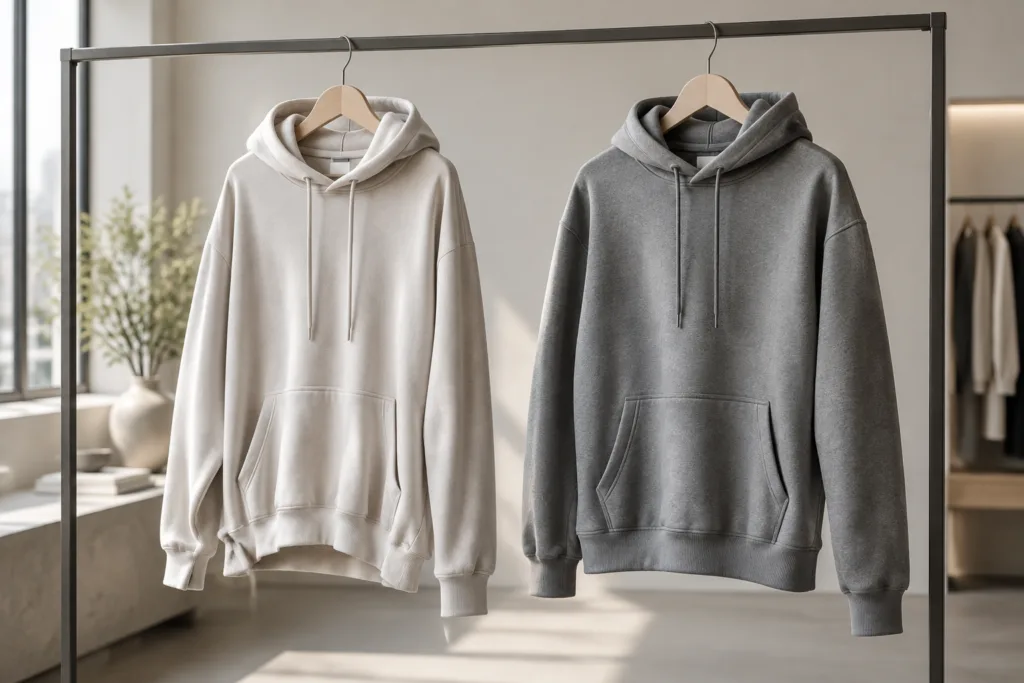
Why streetwear brands often prefer heavyweight hoodies
Streetwear buyers often expect a hoodie to feel intentional, not generic. Weight helps communicate that. A heavyweight hoodie can support a boxier profile, cleaner hood shape, denser cuffs, and a more substantial body that feels closer to a hero product than a basic layering item.
It also tends to pair well with elevated decoration strategies. If the garment uses puff print, dense embroidery, applique, or larger graphic placements, brands often review hoodie print durability testing to make sure the chosen base can support repeated wear and washing without undermining the premium impression. The point is not only visual impact, but consistency over time.
Still, not every streetwear line needs very heavy fabric. A warmer-climate brand or a label focused on movement and daily wear may prefer a lower range that keeps the silhouette modern without making the garment overly dense. Good positioning is about matching weight to audience expectation, not copying a trend blindly.
Should corporate, teamwear, and promotional buyers choose high GSM?
Often, not by default. Corporate and teamwear programs usually value consistency, broad size acceptance, easy care, and practical cost control. A hoodie for staff use, campus events, clubs, or promotional distribution needs to satisfy many body types and wearing situations. Midweight often performs better in that environment because it is easier to layer, easier to ship, and usually more budget-friendly.
That does not mean high GSM has no place in this segment. Premium gifting, executive merchandise, select clubwear, and limited-run branded apparel can benefit from a heavier hoodie if the goal is to raise perceived value. The key is whether the buyer wants a workhorse garment for wide circulation or a more premium item for brand impression.
When a logo is central to the garment, placement and scale should be reviewed together with weight and garment structure. A thick, structured hoodie can carry chest, sleeve, or back graphics differently than a softer base, which is why it helps to check a custom hoodie logo placement guide during development rather than after samples are already made.
How printing and embroidery methods interact with hoodie GSM
Fabric weight changes how decoration sits on the garment. Heavier hoodies generally offer a more stable platform for embroidery, patches, and some specialty techniques because the base fabric resists distortion better. This can be useful for larger logos, premium branding details, or placements that need a more substantial foundation.
Midweight hoodies are often highly workable too, but the decoration method must be chosen carefully. Large, heavy embroidery on a softer base may pull the fabric, while certain prints can feel different depending on surface texture and fleece construction. The right decision depends on the combination of GSM, fabric composition, brushing, and garment use.
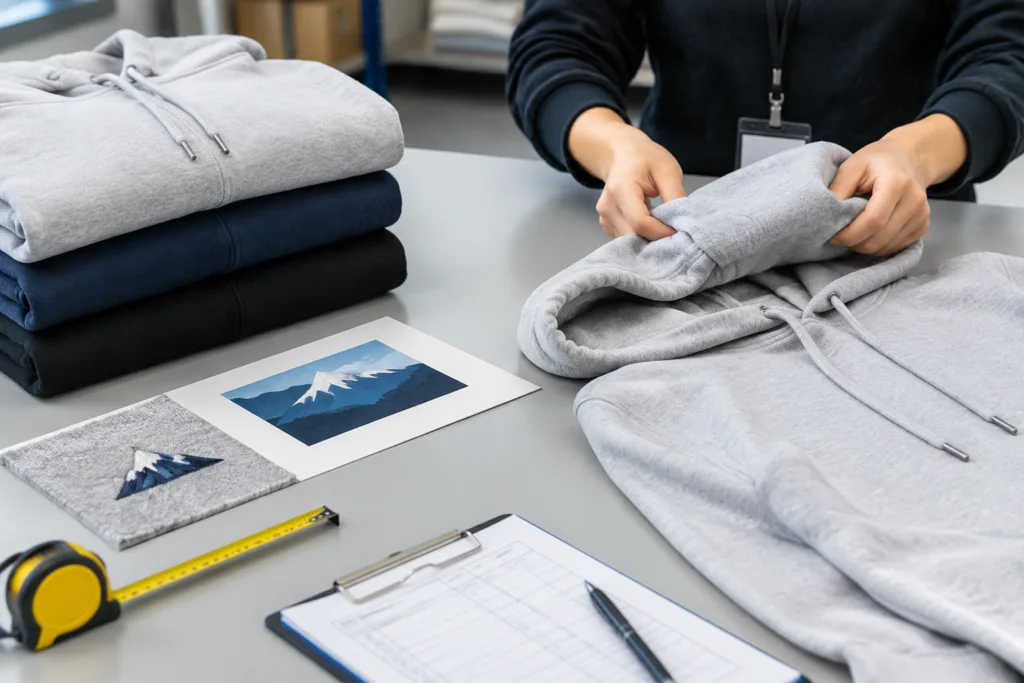
From a production standpoint, buyers should request decoration tests on actual sample fabric whenever possible. A mockup cannot fully predict how the final weight will respond once sewn, washed, and worn.
Choosing 280gsm, 350gsm, and 450gsm
These ranges often signal very different product intentions.
- Around 280gsm: usually suitable for lighter midweight programs, broad wearability, layering, and value-conscious collections.
- Around 350gsm: often a strong middle ground for brands that want a more substantial feel without pushing into very heavy bulk and cost.
- Around 450gsm: typically used when structure, warmth, and a pronounced premium or streetwear feel are major priorities.
These numbers should not be treated as quality rankings. A well-developed 350gsm hoodie may outperform a poorly balanced 450gsm option in comfort, fit, and repeat order potential. What matters is how the weight supports the product promise your brand is making to its customers.
Brand positioning matrix for hoodie GSM
| Brand strategy | Recommended direction | Why it fits |
|---|---|---|
| Premium streetwear | Heavyweight | Supports structure, elevated handfeel, and stronger perceived value |
| Modern basics brand | Midweight to upper-midweight | Balances comfort, versatility, and price accessibility |
| Corporate apparel | Midweight | Improves broad wearer acceptance and cost efficiency |
| Teamwear and schoolwear | Midweight | Works well for repeat orders, layering, and practical wear |
| Limited premium merch | Midweight to heavyweight | Depends on audience and desired value signal |
| Private label fashion collection | Depends on silhouette and retail target | Should be aligned with fit direction, margin, and customer expectation |
This is where supplier discussion becomes valuable. The right GSM is rarely chosen by number alone. It should be reviewed together with brand story, end-use, sizing strategy, and planned reorder model.
How to decide your best hoodie GSM with a supplier
The most reliable way to choose between heavyweight and midweight is to compare real samples against your target market, not just a fabric spec sheet. Ask for side-by-side sample review where possible, and evaluate each option for handfeel, warmth, silhouette, decoration response, and wash behavior.
Use this checklist during development
- Define the hoodie’s role in your collection: core basic, premium statement, teamwear, or promotional.
- Confirm target retail or wholesale pricing before locking GSM.
- Review fit together with fabric weight, especially for oversized silhouettes.
- Test decoration methods on actual sample garments.
- Check shrinkage, recovery, and handfeel after washing.
- Discuss MOQ implications for fabric, color, and customization level.
- Review freight impact if the hoodie will ship in bulk or direct to customer.
- Confirm whether the chosen GSM supports reorder consistency.
If a brand is unsure, starting from a commercially balanced midweight sample and then testing one heavier alternative is often a practical path. That approach keeps development focused while still giving the team a meaningful basis for comparison.
Conclusion
The right GSM is not just a technical specification. It shapes how your hoodie feels, how your customer values it, how your graphics perform, and how your margins hold up through production and delivery. A heavyweight hoodie may strengthen a premium or streetwear position, while a midweight hoodie may better support broader use, lower risk, and stronger cost control.
For most brands, the best decision comes from aligning fabric weight with product purpose. When GSM supports your fit, audience, pricing, and operational realities at the same time, the hoodie becomes easier to sell, easier to reproduce, and more consistent with the identity your brand wants to build.
FAQ
Is a heavyweight hoodie always better than a midweight hoodie?
No. A heavyweight hoodie can feel more premium and structured, but a midweight hoodie is often better for broader wearability, lower cost, and higher-volume programs.
What GSM is considered midweight for hoodies?
Midweight hoodies are commonly developed in ranges that feel balanced for everyday wear, often around the middle of the hoodie fabric spectrum rather than the lightest or heaviest options.
What GSM is considered heavyweight for hoodies?
Heavyweight hoodies usually sit in higher GSM ranges that create a denser handfeel, more warmth, and a more structured silhouette than standard everyday fleece.
Are heavyweight hoodies more expensive to produce?
Usually yes. Higher GSM generally increases fabric usage, can affect sampling complexity, and may also raise shipping and logistics costs.
Which hoodie weight is better for printing and embroidery?
It depends on the decoration method. Heavyweight hoodies often provide a more stable base for embroidery and specialty details, while midweight hoodies can work very well for many print applications when the fabric and finish are matched correctly.
Should startup brands begin with midweight or heavyweight hoodies?
Many startup brands begin with midweight hoodies because they are easier to price, easier to test across a wider audience, and generally lower risk for first production runs.