
Choosing between heavyweight and lightweight custom T-shirts is not just a fabric decision. For most brands, GSM affects how the product is perceived, how it fits the target market, how well it prints, and whether the final price still works within the collection plan.
That is why many buyers start by looking at custom T-shirt manufacturing for brands as a category, not just as a blank garment purchase. Fabric weight influences retail positioning, decoration choices, packaging expectations, and reorder consistency, so the right GSM should match the full product strategy rather than a single preference.
Why GSM affects perceived value in custom T-shirts
GSM, or grams per square meter, is one of the quickest ways buyers assess how substantial a T-shirt may feel. It does not tell the whole story on its own, but it strongly shapes first impressions. A lighter T-shirt often feels easier, softer, and more casual. A heavier T-shirt usually feels denser, more structured, and more premium.
From a manufacturing perspective, GSM matters because customers notice weight immediately when they touch the garment. Brands selling basic promotional tees, seasonal event shirts, or warmer-weather products often lean lighter. Brands selling elevated essentials, oversized silhouettes, or streetwear-inspired products often prefer higher GSM because the hand feel supports a stronger value perception.
If you want a broader technical view of how fabric weight and GSM shape garment feel, it helps to compare fabric weight with fit, yarn quality, and finishing rather than treating GSM as an isolated spec.
Lightweight T-shirts: best-fit brand types and product use cases
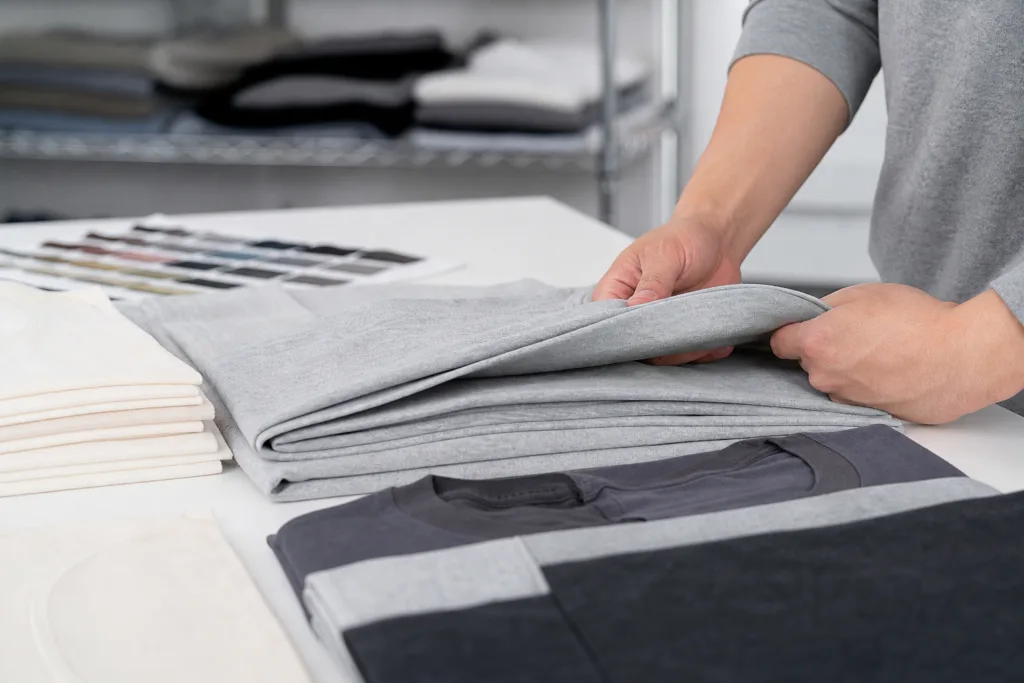
Lightweight T-shirts usually work well when comfort, mobility, and lower cost are priorities. They are commonly chosen for promotional programs, events, uniforms in warm climates, entry-price retail, layered fashion basics, and active casualwear where a lighter hand feel makes more sense than a thick, structured body.
Brands that often prefer lightweight options include:
- Event and campaign apparel buyers
- Promotional merchandise programs
- Warm-weather lifestyle brands
- Entry-level private label collections
- Layering-focused basics brands
Customer expectations also matter. If the end buyer expects an easy everyday tee, a lighter GSM can feel appropriate rather than cheap. The key is whether the fabric weight aligns with the selling context, the fit, and the finishing. A lightweight T-shirt with clean stitching, stable shrinkage control, and a good print surface can still feel commercially strong.
Typical strengths of lightweight T-shirts include better packability, easier wear in hot weather, and a lower cost base for large-volume programs. The trade-off is that they may feel less substantial, show body contours more easily, and provide less structure for brands aiming for a premium oversized look.
Heavyweight T-shirts: where they fit best
Heavyweight T-shirts are usually selected when structure, drape control, and stronger perceived value are part of the brand message. They are especially common in premium basics, modern streetwear, oversized fits, boutique merchandise, and collections where the T-shirt itself is positioned as a hero product rather than a simple giveaway item.
Brands that often benefit from heavyweight fabric include:
- Streetwear labels
- Premium private label basics brands
- Oversized fit programs
- Higher-price merchandise collections
- Retail concepts built around quality-first branding
Higher GSM fabrics usually create a cleaner silhouette, hold shape better, and give prints a more stable surface when the garment is properly developed. That does not automatically make heavyweight fabric the better choice for every project. It simply means the fabric supports a different positioning.
At Ninghow Apparel, this is often where buyer discussions shift from “What GSM is best?” to “What product story are you trying to sell?” The right answer depends on whether the shirt needs to feel easy and accessible or substantial and elevated.
How GSM changes breathability, drape, structure, and durability
Lightweight and heavyweight T-shirts perform differently in wear, even when they are made from similar fibers. Lighter fabrics generally feel more breathable and flexible, especially in hot climates or active settings. They tend to drape closer to the body and feel less rigid.
Heavier fabrics usually create more structure. That can improve the silhouette for boxy or oversized fits, but it can also make the garment feel warmer and less fluid. Buyers should think about end use carefully. A premium urban retail tee and a summer event shirt are solving different problems.
Durability is also more nuanced than many buyers assume. Heavier GSM can contribute to a stronger, longer-wearing impression, but real durability still depends on fiber quality, knitting stability, construction, washing performance, and finishing. GSM helps, but it is not a substitute for good manufacturing control.
Why oversized and streetwear brands often choose higher GSM
Oversized and streetwear products rely heavily on shape retention. If the fabric is too light, the garment may collapse rather than hold the intended silhouette. Higher GSM often supports the broader shoulders, dropped sleeves, and boxier body proportions that define many modern streetwear fits.
There is also a branding effect. Customers buying oversized streetwear usually expect weight, density, and a more substantial hand feel. The shirt is often purchased as a standalone fashion item, not as a low-commitment basic. In that context, heavyweight fabric supports both visual identity and price positioning.
That said, not every oversized tee needs an extremely heavy fabric. Some brands prefer a middle GSM range to keep the shape but avoid excessive warmth or stiffness. Sampling is the only reliable way to confirm whether the chosen fabric weight matches the intended fit, wash, and brand mood.
Do event T-shirts need heavyweight fabric?
Usually, no. Event T-shirts often perform better when they are comfortable, cost-efficient, and easy to distribute in volume. A lighter or midweight option is often more practical for campaigns, conferences, sports days, festivals, and promotional runs, especially when the garment is worn in warmer conditions or produced on a tighter budget.
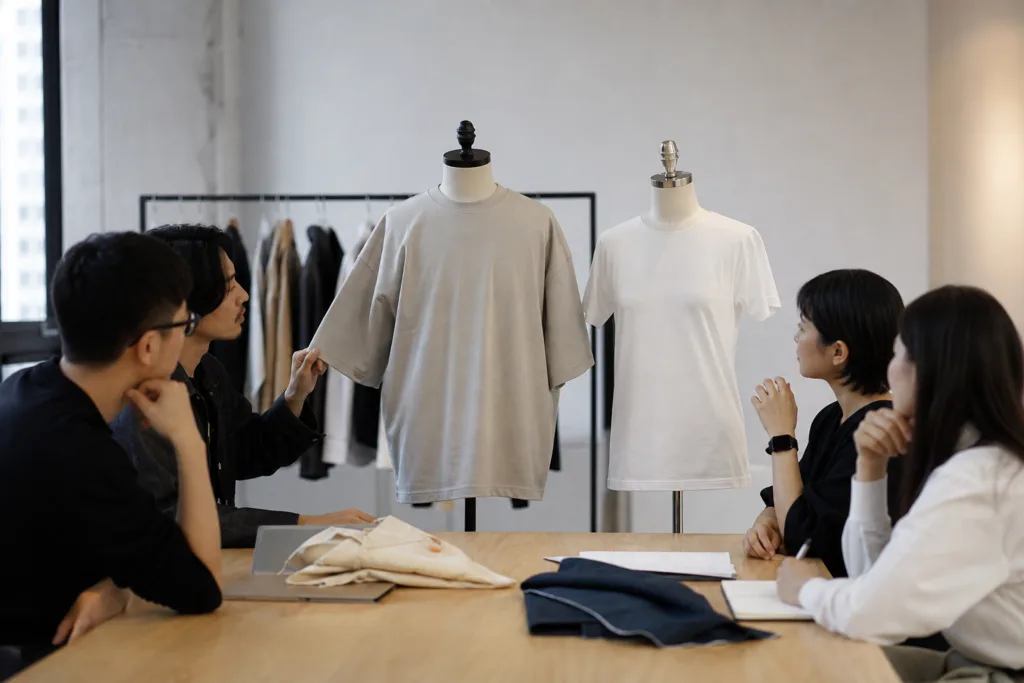
That is why buyers comparing custom T-shirts for events, merch, and retail should separate short-term campaign needs from retail resale goals. If the shirt is mainly a wearable giveaway or event keepsake, lightweight can be the smarter choice. If it is meant to sell as premium merchandise after the event, a heavier fabric may better support that commercial purpose.
A practical decision framework is simple:
- Choose lighter GSM when budget, comfort, and volume matter most
- Choose midweight when you want broader appeal across climates and use cases
- Choose heavyweight when the shirt is part of a premium merch strategy or fashion-led launch
How GSM impacts print results
Fabric weight influences print performance, but not in a simplistic “heavier is always better” way. The real question is whether the fabric surface, fabric stability, and print method are aligned. Lightweight fabrics can print very well, but they may require more careful handling to manage show-through, fabric movement, or the feel of the print relative to the cloth.
Heavyweight fabrics often provide a more stable base for bold graphics, especially when the brand wants a substantial garment with a confident print presence. However, print success still depends on fabric composition, pretreatment needs, ink behavior, curing control, and wash testing.
For buyers comparing screen printing, digital decoration, and transfer-based methods, it helps to review how fabric weight affects print method selection before locking in fabric and artwork together. In production, print planning should happen alongside fabric selection, not after it.
General print considerations by fabric weight
- Lightweight tees often suit softer-hand prints and simpler graphics
- Midweight tees usually offer the widest versatility across print methods
- Heavyweight tees can support bold retail graphics and a more premium finished feel
Cost, MOQ, and lead time considerations
Higher GSM fabrics often use more material, which can increase cost, but fabric weight alone does not determine price. Yarn type, cotton grade, blends, finishing, dyeing, print requirements, and order size all affect the final result. A well-planned midweight program can sometimes offer a better cost-performance balance than either extreme.
MOQ also matters. Some fabric weights are easier to source from existing mills or stock programs, while others may require custom knitting or dyeing, especially if the buyer needs a specific hand feel, color, or shrinkage standard. That can affect flexibility for startups and capsule launches.
If you are building an early-stage range, it is worth understanding low MOQ collection planning for apparel brands before committing to too many fabric weights at once. Limiting the number of GSM options in a first launch often improves sourcing efficiency, simplifies approvals, and reduces the risk of uneven product positioning.
| Factor | Lightweight T-Shirts | Heavyweight T-Shirts |
|---|---|---|
| Material usage | Lower | Higher |
| Perceived value | Casual or accessible | Premium or substantial |
| Warm-weather comfort | Usually stronger | Usually lower |
| Oversized fit support | Moderate | Usually stronger |
| Budget suitability | Often better for volume programs | Often better for premium retail |
Brand positioning matrix: matching GSM to product strategy
The most useful way to choose GSM is to connect it to the role of the product in your line. A lightweight promotional shirt, a midweight everyday retail tee, and a heavyweight streetwear blank may all be correct choices for different brands.
- Lightweight range: suitable for event apparel, entry-price merchandise, summer basics, and giveaway programs
- Midweight range: suitable for broad retail appeal, balanced comfort, and versatile everyday collections
- Heavyweight range: suitable for premium basics, fashion-led merchandise, oversized fits, and streetwear positioning
From a manufacturer perspective, problems usually happen when a brand chooses GSM based on trend language alone. If the retail price, fit block, decoration plan, and customer expectation do not support that fabric choice, the final product can feel mismatched even if the fabric itself is good.
How to choose the right GSM for your next custom T-shirt project
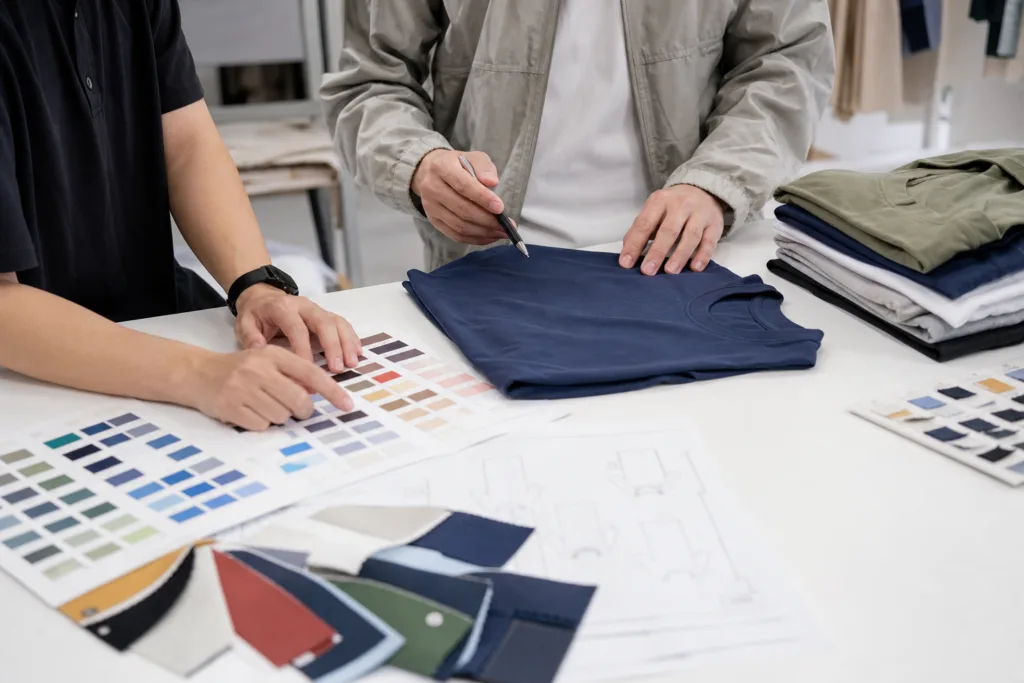
Start with the end market, not the mill spec. Ask what role the T-shirt plays in your business: campaign piece, teamwear, basic retail core, premium fashion item, or brand-building hero product. Then evaluate climate, fit, print style, target margin, and reorder plans.
A practical selection process looks like this:
- Define the target customer and expected selling price
- Decide whether the shirt is promotional, everyday retail, or premium fashion
- Match the fit shape to the weight you need
- Confirm the print method before finalizing fabric
- Sample at least two weight options if the choice is commercially important
- Review shrinkage, hand feel, and wash outcome before bulk approval
In many projects, the best answer is not the heaviest or the lightest option. It is the GSM that supports the brand promise with the fewest trade-offs in comfort, print quality, cost, and production consistency.
Heavyweight vs lightweight T-shirts is ultimately a positioning decision. If your customer expects breathable value and easy wear, lightweight may be right. If your customer expects structure, substance, and a stronger premium cue, heavyweight may be the better fit. The most reliable route is to test the garment in sample form and judge it against your brand strategy, not just the number on the spec sheet.
Frequently Asked Questions
What is considered a lightweight T-shirt?
A lightweight T-shirt is usually chosen for comfort, warmer weather, layering, or cost-sensitive volume programs, and it typically feels softer and less structured than a heavier option.
Are heavyweight T-shirts better for streetwear brands?
Often yes, because heavier fabrics usually support oversized fits, stronger shape retention, and the more substantial hand feel many streetwear customers expect.
Do heavier T-shirts always last longer?
No, because long-term durability also depends on yarn quality, fabric construction, stitching, finishing, and wash performance, not only on GSM.
Which GSM is best for event T-shirts?
The best GSM for event T-shirts is often lightweight or midweight, since these options usually balance comfort, budget, and easier bulk distribution more effectively than heavyweight fabrics.
Does fabric weight affect printing quality?
Yes, fabric weight can influence print stability, ink feel, and surface behavior, but print quality also depends heavily on the fabric composition and the decoration method used.
Should a new brand offer multiple GSM options in one launch?
Usually not, because starting with too many fabric weights can complicate sourcing, approvals, and brand positioning, while a tighter range is often easier to control and reorder.