

A t-shirt shrinkage test should be part of bulk approval, not a last-minute fix after production starts. It gives brand teams a measurable way to confirm how the fabric, construction, and finishing will behave after washing, so size specs stay realistic and repeatable.
For teams setting up a new program, the t-shirt supplier support for bulk production page is a useful next step because shrinkage expectations are easier to manage when the product is sourced with testing in mind. The key is to treat shrinkage as a controlled production variable, then document the result clearly enough for both the factory and the buyer to use it as an approval reference.
Why T-Shirt Shrinkage Testing Matters Before Bulk Production
Shirt shrinkage affects fit, size consistency, and customer satisfaction. Even a small change after washing can move a garment outside tolerance if the original pattern was already tight on length, chest, or sleeve balance.
From a manufacturer perspective, the earlier shrinkage is confirmed, the easier it is to adjust pattern allowances, fabric selection, or finishing method before bulk cutting begins. That is why buyers should not rely on assumption or fabric content alone.
What a T-Shirt Shrinkage Test Actually Measures

A shrinkage test measures how much the garment changes after a defined wash and dry cycle. For T-shirts, the most important points are body length, chest width, shoulder width, and sleeve length.
Some buyers also document twist, seam distortion, and neckline recovery, especially when the garment uses ringspun cotton, compact knits, or blended yarns. Those details matter because fit complaints often start with shape change, not just total size loss.
Before you wash, record the starting points
Measure each sample flat and keep the same method for every test. Consistency matters more than speed here, because a poor baseline makes the result hard to trust.
- Body length from the highest shoulder point to hem
- Chest width across the front
- Shoulder width from shoulder point to shoulder point
- Sleeve length from shoulder seam to cuff
When brands build that method into the apparel sample approval process, they reduce argument later because everyone is reviewing the same measurement logic.
How to Run a T-Shirt Wash Test Correctly
Use one wash method and keep it fixed across all samples. The exact settings should match the intended customer use as closely as possible, whether that is home laundering, commercial washing, or a softer retail-care standard.
Mark the measurement points before washing so you can measure the same locations afterward. After washing and drying, let the garment rest before re-measuring, because heat and moisture can affect the result if you check it too early.
Keep the test conditions controlled
A proper test is less about complexity and more about repeatability. If one sample is washed cold and another warm, the results cannot be compared with confidence.
- Use the same wash cycle for all samples
- Use the same drying method for all samples
- Test more than one size if the style will run in multiple fits
- Record wash count if you need more than one cycle
For buyers handling multiple knit styles, a bulk wash test approval guide can help translate the same testing logic into a more formal approval process for production.
How to Calculate Shrinkage Percentage After Washing
Shrinkage percentage is calculated by comparing the pre-wash measurement with the post-wash measurement. The same formula works for length, width, and sleeve points.
| Measurement | Formula |
|---|---|
| Length shrinkage | (Pre-wash length – Post-wash length) / Pre-wash length x 100 |
| Width shrinkage | (Pre-wash width – Post-wash width) / Pre-wash width x 100 |
| Sleeve shrinkage | (Pre-wash sleeve – Post-wash sleeve) / Pre-wash sleeve x 100 |
Brands should keep the calculation simple and consistent. Once the method changes, the result becomes difficult to compare across vendors, samples, or factory runs.
Fabric Differences: Cotton vs Polyester vs Blends
Fabric composition has a direct effect on shrinkage risk. Cotton knits usually have more potential movement than polyester-rich fabrics, while blends can behave differently depending on yarn structure, finishing, and knit density.
That does not mean one fabric is always better. It means the buyer should match the fabric to the fit expectation and ask for a test result that reflects the real production fabric, not a similar substitute.
Ninghow Apparel usually treats this as a material-and-process question, not just a fabric question, because the finishing method can change shrinkage behavior even when the fiber content looks straightforward. For that reason, buyers should confirm fabric, wash process, and target measurements together before bulk approval.
Pre-shrunk fabric is not the same as zero shrinkage
Pre-shrunk fabric can reduce movement, but it does not eliminate it. Garment washing, heat exposure, and construction details can still change the final fit.
That is why a pre-shrunk claim should still be backed by a test record, not accepted as a final answer.
What Shrinkage Range Is Usually Acceptable for Bulk Approval
There is no universal number that fits every T-shirt program. Acceptable shrinkage depends on the brand fit, the fabric, the price point, and how much pattern allowance was built in.
In practice, the buyer should define tolerance before production, then compare the test result against that limit. If the garment exceeds the agreed range, the factory may need to adjust the pattern, refine finishing, or change the fabric choice.
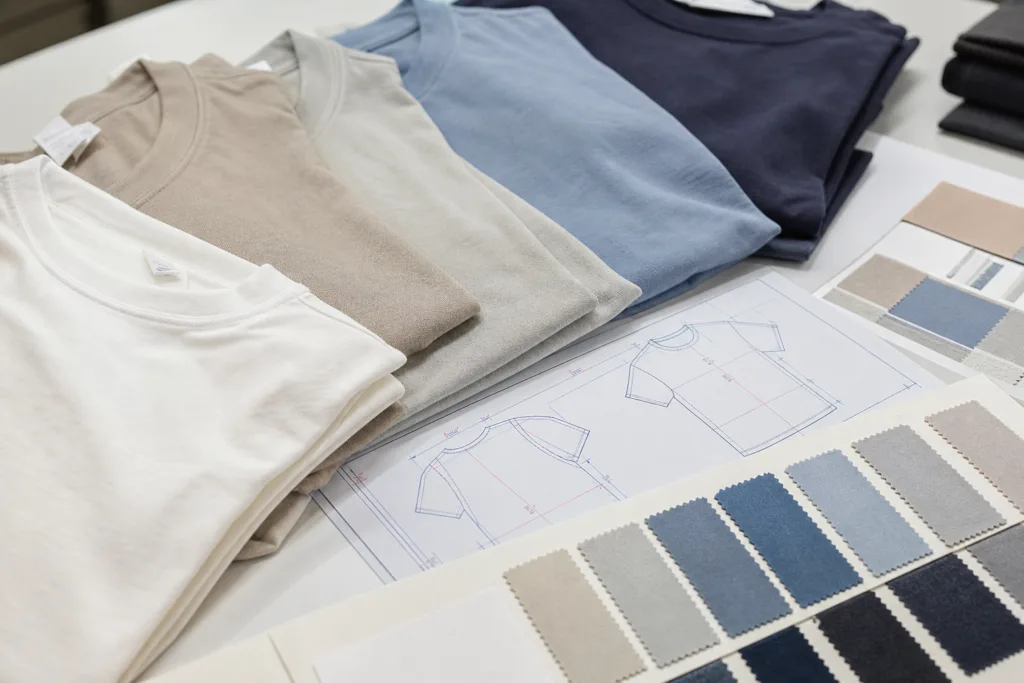
This is where apparel quality tolerance standards become useful, because shrinkage is only one part of the broader approval threshold.
How Buyers Should Record and Compare Wash Test Results
Good documentation makes the result usable. Without a clean record, a successful test can still become a dispute if the factory, merchandiser, and buyer are referencing different numbers.
Track the sample ID, date, fabric, wash method, dry method, and all measurement points. If multiple samples were tested, record each result separately and note the average as well as the outliers.
- Sample code and size
- Fabric composition and finish
- Pre-wash measurements
- Post-wash measurements
- Shrinkage percentage for each point
- Tester name and test date
Bulk Production Wash Test Checklist for Brands and Sourcing Teams
Before approving bulk, the brand team should confirm that the test reflects the final product, not a draft version. The closer the sample is to bulk material, the more reliable the decision.
Use a checklist that covers fabric, construction, labeling, wash method, and measurement approval. If any major input changes after testing, the result should be reviewed again.
A production-ready bulk clothing checklist helps teams avoid missing a small detail that later turns into a fit issue or rework.
How to Write Shrinkage Standards Into Purchase Orders and Tech Packs
Standards should be written where both the buyer and factory will actually use them. That usually means the tech pack, spec sheet, and purchase order notes.
State the testing method, the wash condition, the accepted shrinkage range, and the measurement points. If the program includes multiple sizes, say whether the tolerance applies to every size or only the base size.
Clear writing reduces back-and-forth during approval and gives the factory a direct target. It also helps avoid the common problem of approving a sample verbally and then discovering the written record was incomplete.
Common Mistakes Brands Make When Approving T-Shirts Without Proper Testing
The most common mistake is approving based on visual fit alone. A shirt can look right on a hanger or fit model and still shrink outside tolerance after the first wash.
Another mistake is testing the wrong fabric lot or a non-final sample. If the yarn, knit density, or finishing changes later, the earlier result may no longer apply.
Brands also run into trouble when they compare results from different wash methods. If one test uses a gentle cycle and another uses a hotter standard, the data will not support a clean approval decision.
Final Approval Decision: When to Proceed, Revise, or Reject the Bulk Run
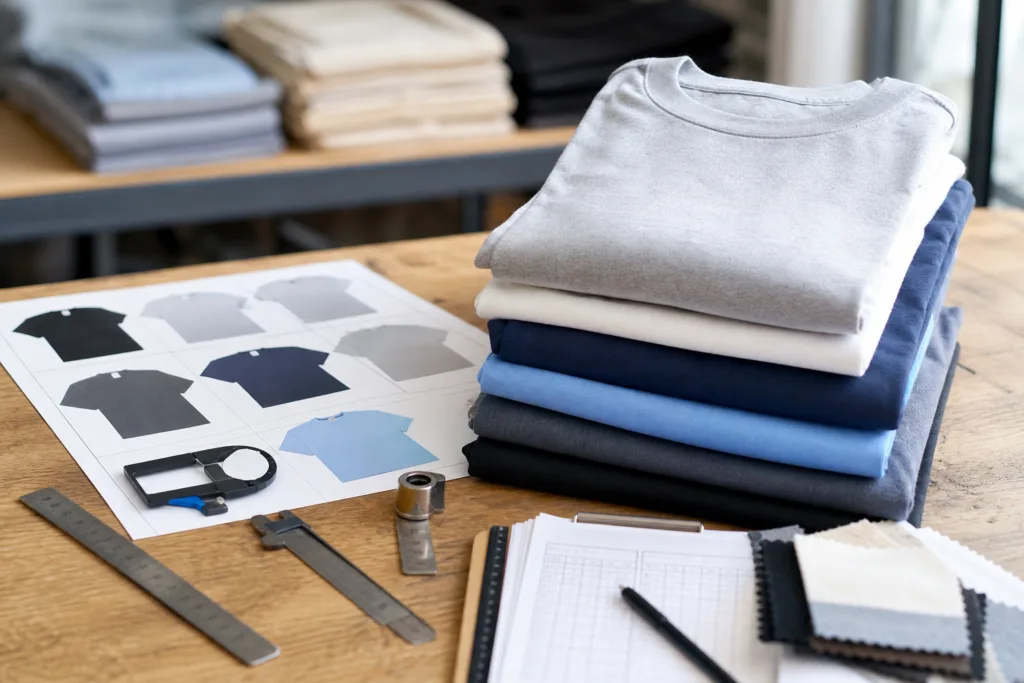
Proceed when the shrinkage stays within the agreed tolerance and the fit still matches the target spec after washing. Revise when the result is close but the pattern can still be corrected before cutting.
Reject or retest when shrinkage is outside tolerance, the wash method was not representative, or the sample does not match the approved bulk fabric. A clear decision now is cheaper than a correction after bulk production.
For teams that want a more structured handoff, the safest approach is to connect the test result, the tech pack, and the approval notes in one record before fabric cutting starts.
FAQ
What is a t-shirt shrinkage test?
A t-shirt shrinkage test measures how much a shirt changes in size after a defined wash and dry cycle. It helps buyers confirm whether the garment will still meet fit expectations after use.
Which measurements should be checked?
At minimum, check body length, chest width, shoulder width, and sleeve length. Many teams also record shape changes such as twisting or neckline distortion.
How many samples should be tested?
Test at least one approved sample, and more if the style will be produced in multiple sizes or fabric lots. More samples give a clearer view of variation.
Should the test use the final fabric?
Yes. The result is only reliable if the sample uses the same final fabric, finishing, and construction that will be used in bulk production.
Where should shrinkage limits be written?
Put them in the tech pack, spec sheet, and purchase order notes so the factory and buyer are working from the same standard. The wash method should also be stated clearly.
What should a buyer do if shrinkage is too high?
The buyer should review whether the pattern, fabric, or finishing needs adjustment before bulk cutting starts. If the sample is far outside tolerance, retesting is usually the safer choice.