
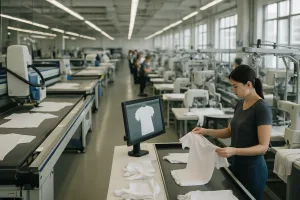
Industry Trends: The Drive Toward Automated T Shirt Production

Global demand for high-quality, differentiated t shirts continues to climb. To keep pace, manufacturers are deploying automation not just to boost output, but also to enhance consistency and creativity. The “smart factory” leverages interconnected machinery, sensors, and data analytics, allowing seamless integration from design to delivery. Drivers behind this shift include:
- Rising Labor Costs: Automation helps mitigate wage pressures in key manufacturing regions.
- Fast Fashion Cycles: Rapid trend turnover requires short lead times and agile production lines.
- Demand for Customization: Digital workflows make low-MOQ and made-to-order feasible at scale.
- Sustainability Targets: Automated processes reduce waste, energy, and chemical usage.
- Global Compliance: Smart QC and traceability tools support certifications like OEKO-TEX, BSCI, and REACH.
AI-Powered Pattern Making and Automated Cutting
The linchpin of modern t shirt manufacturing is precise, efficient material utilization. Traditional manual cutting is labor-intensive and prone to variability due to human error and fabric distortion. Today, manufacturers rely on:
CAD Software & Digital Tech Packs
Design begins in the digital realm with detailed tech packs: 2D/3D CAD specifies every dimension, tolerance, and trim for each style and size. Automated grading systems rapidly generate full size sets, while marker software optimizes layout to minimize waste—often reducing fabric usage by 3-5% on bulk runs.
Vision-Guided Auto Cutters
Once markers are finalized, intelligent auto-cutting tables—equipped with cameras and AI—perform high-speed, multi-layer cutting. These systems recognize grainlines, pattern notches, and relax fabric to prevent size deviation or skew, especially with stretch blends like combed cotton-elastane (20s/24s/32s) and modal or rPET. Vision-guided blades ensure superlative edge accuracy, rapid cycle times, and uniformity from sample to mass production.
| Cutting Method | Accuracy | Speed (pcs/hr) | Best Use |
|---|---|---|---|
| Manual Cutting | ±2.5mm | 60–120 | Small batch, simple tees |
| Auto Cutter (AI-Vision) | ±1.0mm | 400–800 | Bulk orders, all fabric types |
Sustainability & Versatility Boost
- Reduces excess offcuts; supports organic cotton and recycled fabric efficiency.
- Handles varied constructions: single jersey (160-200gsm), interlock, French terry, or lightweight modal.
- Facilitates batch tracking, traceability, and seamless re-orders.
Robotic Sewing and Assembly Lines
While fully automated garment sewing was once a challenge due to fabric flexibility, breakthroughs now bring robotics into critical tasks. Modern t shirt lines increasingly use:
Line Balancing and SMV Optimization
Manufacturers engineer production lines around Standard Minute Values (SMVs) for each t shirt operation. Automated and semi-automated machinery—flatlock, overlock (ISO 504/602), coverstitch for hems, auto-collar setting—improves productivity, uniformity, and reduces downtime.
Sewing Robots & Cobots
AI-trained robots and collaborative robots (cobots) perform tasks like shoulder taping, applying rib collars on polos, or executing precise twin-needle stitching—enhancing speed and consistency beyond manual labor. Smart machines adjust tension and stitch length to prevent puckering or seam distortion, even for blends and lighter gauge knits.
Real-Time Quality Monitoring
Vision systems and sensors carry out inline checks for skipped stitches, color shade bands, and sew strength (ASTM D1683) as garments move down the line—catching defects before they reach finishing. All data is logged for batch QA audits and certifications.
Digital Textile Printing: From Mass Customization to On-Demand
Decoration is no longer confined to mass screen printing. The arrival of digital print technology—Direct-to-Garment (DTG) and Direct-to-Film (DTF)—lets brands offer unlimited color, photo-realistic artwork, and fast-turn personalization for sports teams, events, and lifestyle wear.
Advances Over Traditional Methods
- Flexibility: Print-on-demand eliminates minimum order constraints.
- Eco-Friendly: Water-based inks reduce chemical use; digital workflow minimizes waste.
- Full-Color Gradients: Smooth transitions, detailed graphics, and Pantone-accurate branding.
- Compatible Fabrics: Produces crisp prints on combed cotton, organic, and blended knits.
- Fast Sampling: Strike-offs and color alignment completed in days—not weeks.
Choosing the Right Print Method
| Print Type | Handfeel | Durability | Order Size |
|---|---|---|---|
| Screen Print | Smooth, thick (plastisol) | High | Bulk (100+ units) |
| DTG/DTF | Soft, integrated | Medium | 1–500 units |
| Sublimation | Permanent, no hand | High | Polyester, custom runs |
Business Impact
“Digital printing solutions enable faster prototyping and empower smaller brands, sports clubs, and promotional buyers to launch collections with minimal upfront risk. This agility is driving a new era of brand and product innovation.”
Smart Quality Control and End-to-End Traceability
Tech-enabled QA ensures that today’s t shirts meet both consumer expectations and stringent compliance requirements (OEKO-TEX, CPSIA, GOTS). Automated inspection stations perform:

- Inline/endline checks for seam straightness, puckering, skewed prints, and colorfastness (ISO 105-C06/X12).
- Automated measurement tables compare each t shirt against graded spec sheets for length, width, and sleeve accuracy.
- Needle detection systems to prevent foreign objects in kids’/uniform apparel (AQL/ANSI/ASQ Z1.4 standards).
- Real-time batch tracking using RFID/barcode labeling for total supply chain transparency.
Materials, Constructions, and Performance Finishes
Innovative sourcing complements automation. Next-gen t shirts leverage:
Materials Selection
- Combed cotton: 20s/24s/32s for premium or mass-market knits. GOTS-certified organic options are rising in demand.
- Recycled polyester (rPET): For eco-conscious collections and performance blends.
- Elastane/modal/viscose blends: Enhance handfeel, drape, and flexibility in activewear and streetwear basics.
- Knits & Weaves: Single jersey (160–220 gsm), interlock, French terry, or lightweight summer twills.
Performance Finishes
- Moisture-wicking coatings for athletic/lifestyle ranges.
- Antimicrobial/odor control (silver ion, biocidal treatments).
- UPF/UV-resist for outdoor & resort-wear.
- Stain-release, peach finish, brushed back (fleece/French terry for cool weather tees).
- Pre-shrink/compact finishing to preserve fit after wash (AATCC 135/150).
Color Approvals and Lab Work
Accurate, repeatable color is vital for brand identity. Automated systems streamline:
- Lab dips and strike-offs: Digital colorimeters document target Pantones and variations before bulk dyeing or printing.
- Shade band creation: Each batch is measured for color deviation, with automated rejection and re-dye cycles if outside specified tolerance.
- Bespoke reporting: Digital records provide full traceability for audits and compliance verification.
Smart Packaging and Logistics
Downstream, automation boosts consistency and simplifies fulfillment. Features include:
- Automated folding & polybag stations for uniform, retail-ready presentation.
- RFID/barcode integration for item-level inventory tracking (UPC/EAN compatible).
- Export-ready packaging: Multi-size ratio & style packs, carton markings by Incoterm (EXW, FOB, CIF, DDP), and eco-friendly material selection.
Ninghow Apparel implements these protocols to support clients in sports, corporate, and lifestyle markets, ensuring goods arrive pristine and on spec globally.
Business Impact: Speed, Transparency, and Sustainable Growth
No longer simply about volume, the future of t shirt manufacturing is being redefined by flexibility, rapid iteration, and eco-conscious operation. Key outcomes include:
- Cutting lead times from weeks to days using AI-powered design, prototyping, and finishing.
- Aligning product specs, fit consistency, and color uniformity across reorders or global franchises.
- Enabling sustainable production and circular models—recycled inputs, batch-level traceability, and compliance with international standards (OEKO-TEX, GOTS, SEDEX).
- Empowering buyers with data-driven dashboards, tracking everything from style status to inline QC metrics.
“These innovations allow brands and manufacturers to pivot faster, assure end-user quality, and uphold environmental commitments—key differentiators as the t shirt category grows ever more competitive.”
Applications: From Golf Apparel to Streetwear and Teams
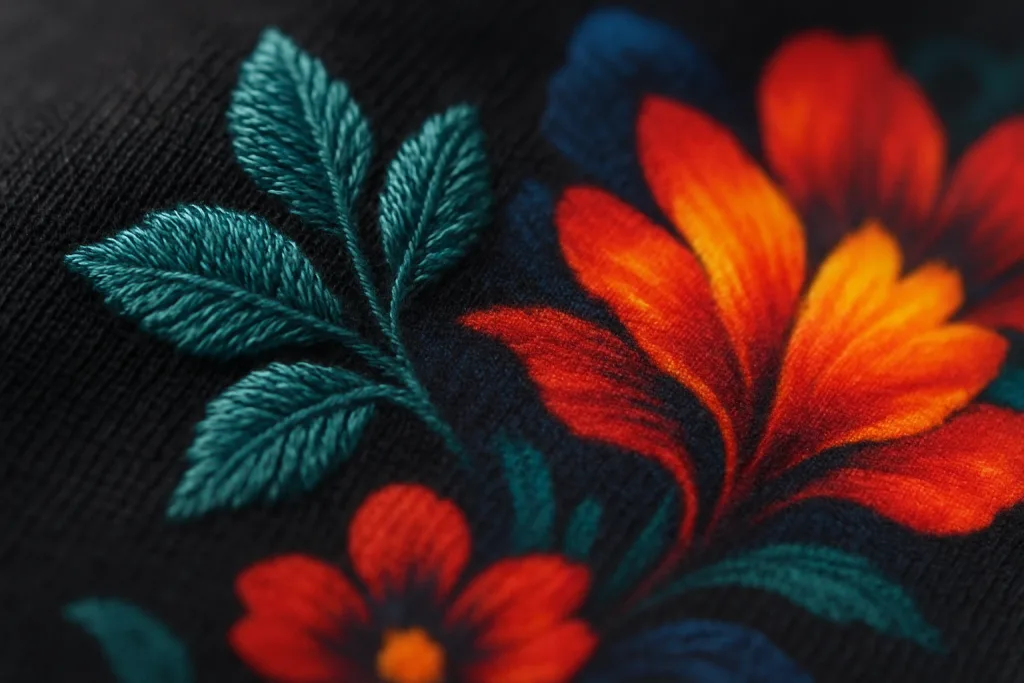
The technological leap transforms manufacturing across market segments. Automation-driven t shirt production now powers:
- Golf and activewear: Moisture control, exact fit, advanced printing/embroidery.
- Corporate and team uniforms: Colorfastness, consistent sizing, compliance-ready labeling.
- Streetwear/neutrals: Soft handfeel, custom washes, low-MOQ print projects.
- Resort/beachwear: UPF finishes, quick-dry, vibrant sublimation prints.
- Promotional programs: Fast-turn, cost-efficient on-demand runs with full branding.
Frequently Asked Questions
How does automation improve t shirt manufacturing efficiency?
Automation streamlines key stages from digital design and auto-cutting to robotic sewing and QC, reducing errors, boosting speed, and ensuring consistent quality across all batches.
What is AI-powered cutting in t shirt production?
AI-powered cutting utilizes computer vision to optimize marker layouts, recognize grainlines, and perform highly accurate, multi-layer fabric cuts, minimizing material waste and improving fit precision.
How is digital printing changing t shirt decoration?
Digital printing enables on-demand production, unlimited color, and fast prototyping, making full-color, low-MOQ, and personalized t shirts accessible for brands of any size.
What performance features are possible with modern t shirts?
Today’s t shirts can include moisture-wicking, antimicrobial finishes, UPF protection, pre-shrunk treatments, and sustainable material blends, meeting diverse brand and end-user demands.
How do modern factories ensure t shirt quality and compliance?
Factories use automated measurement tables, inline/endline inspection, needle detection, batch tracking, and rigorous QC protocols to align with international standards such as OEKO-TEX and CPSIA.
What are the business benefits of smart t shirt manufacturing?
Smart manufacturing reduces lead time, supports rapid customization, increases supply chain transparency, minimizes waste, and ensures products meet global compliance and sustainability goals.