

Scale T Shirt Business Manufacturer
If you’re ready to turn a small t-shirt drop into a full-fledged brand, finding the right manufacturing partner is your first step. Scaling from limited runs to bulk production is a challenge, but with careful planning and the right manufacturer, growth is not only possible—it’s repeatable. Brands aiming for scale must master material selection, supply chain management, quality control, and smart production scheduling. Here, you’ll learn the critical steps for expanding your t-shirt business with a manufacturer like Ninghow Apparel, known for exceptional fit, quality, and global B2B service.
Why Scaling Matters for Your T Shirt Brand

Scaling creates opportunities: wider reach, lower unit costs, and improved brand reputation. Yet it brings risks—quality drops, delays, and mismanaged inventory. To scale successfully, you need more than ambition; you need a blueprint. The secret lies in production planning, supply chain integration, and process discipline.
Starting Small: Laying the Foundation for Growth
Choosing the Right Manufacturer
A reliable t-shirt manufacturer acts as both a supplier and a strategic ally. Look for partners with transparent MOQs (minimum order quantities), flexible sampling, and scalable processes. A company like Ninghow Apparel provides tailored OEM and ODM solutions, supporting everything from 100-piece pilot runs to bulk orders for growing brands.
Dialing in Materials and Construction
Selecting the right fabric sets your t-shirts up for quality, feel, and durability. Here are popular options:
- Combed cotton – soft, high-end; 20s/24s/32s yarn, great for streetwear or lifestyle tees
- Organic cotton (GOTS certified) – sustainable choice, trusted for eco lines
- Recycled polyester (rPET) – moisture-wicking, ideal for athleisure
- Elastane blends – holds shape, stretches, perfect for performance tees
- Modal/viscose – silky handfeel, suited to resort and premium basics
Common knits: single jersey (light & versatile, 160–180 gsm), interlock (smooth, double-sided), French terry (soft, good for heavier street basics), and fleece (warm, 280–360 gsm for sweatshirts).
Tech Packs: Your Blueprint for Consistency
Tech packs are detailed specification documents outlining measurements, fabrics, trims, stitching, and finishing. Brands ready to scale must invest here. A robust tech pack streamlines sampling, avoids miscommunication, and ensures every batch matches brand standards.
Production Planning: Moving from Small to Bulk Orders
MOQ and Capacity Planning
MOQ (minimum order quantity) is the baseline for each production run. As you move from 200 to 2,000 pieces, some manufacturers—like Ninghow Apparel—offer tiered pricing, which reduces per-unit cost. Forecast demand and align your bulk orders with sales cycles to avoid dead stock.
Cutting & Sewing: Balancing Speed and Precision
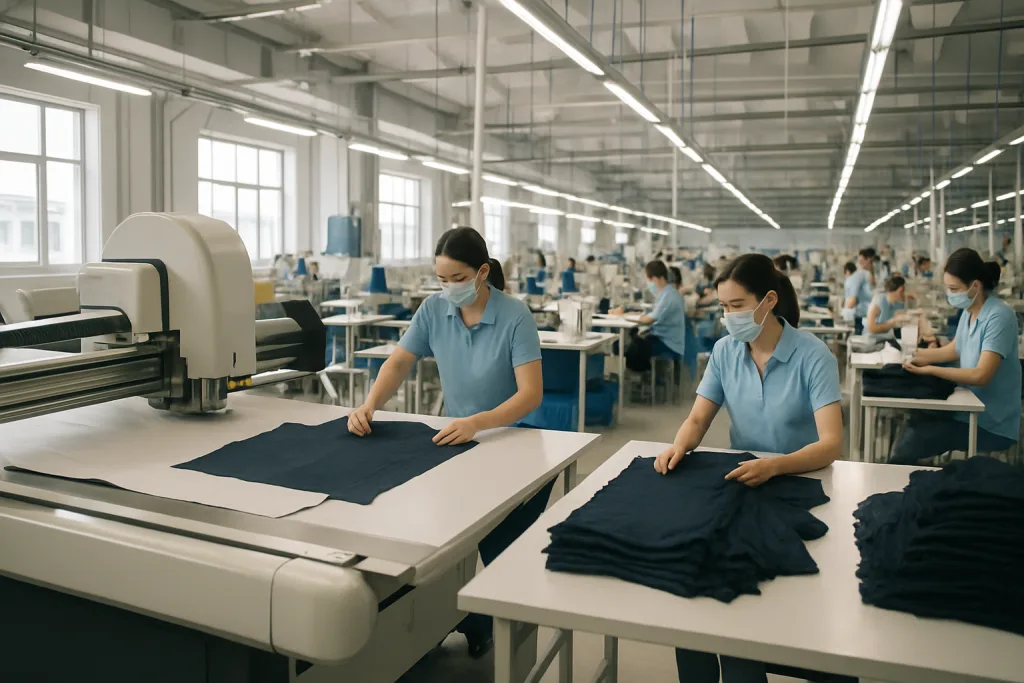
Automated cutting delivers consistent shapes, while manual cutting suits intricate designs. Bulk production uses graded markers, proper fabric relaxation, and grainline control. Efficient lines use SMV (Standard Minute Value) balances for sewing tasks—coverstitch, lockstitch, bartack reinforcements—so nothing slows down the line.
Decoration Choices that Scale
- Screen Print: Plastisol for bold colors, water-based for soft handfeel; best for bulk orders
- DTG (Direct-to-Garment): Fast for small orders, but slower at scale
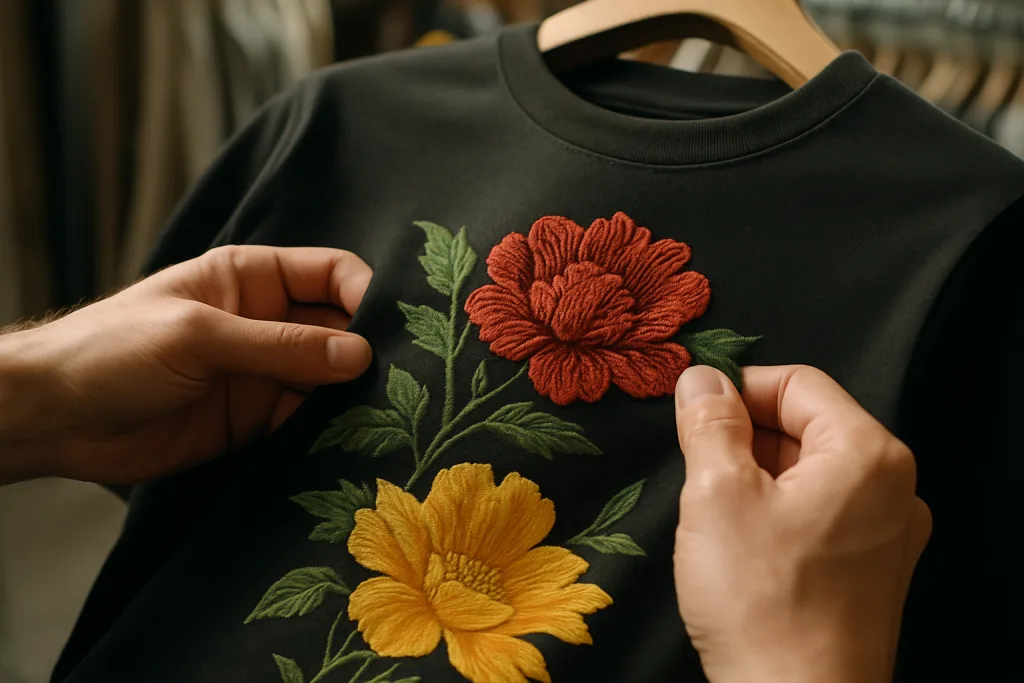
- Embroidery: Durable, premium finish, scalable on automatics
- Sublimation: Full color, limited to polyester; ideal for custom all-over prints
Weigh handfeel, artwork durability, and cost per piece as order volume rises.
Quality Assurance: Guarantee Consistency as You Grow
Inline and Endline Inspection
Quality control starts on the production floor. Inline checks catch sewing errors early, while endline inspections measure against spec tables and AQL standards (ANSI/ASQ Z1.4). For export, many brands require needle detection for safety.
Lab Testing: From Fabric to Finished Product
Batches undergo lab dips for color, bulk color approval, and Pantone matching to avoid shade bands. Dimensional change (AATCC 135), colorfastness (ISO 105-C06), and seam strength (ASTM D1683) prevent returns and protect your reputation. International standards like OEKO-TEX STANDARD 100, GOTS, SEDEX, and WRAP certification build export credibility.
| Material/Finish | Properties | Best Use Scenario | MOQ | Unit Cost Impact |
|---|---|---|---|---|
| Combed Cotton, Single Jersey | Soft, breathable, durable | Streetwear, brand basics | Low to Medium | $-$$ |
| Organic Cotton, Pique Knit | Sustainable, textured, premium | Eco, golf, polos | Medium to High | $$-$$$ |
| rPET Poly, Interlock | Wicking, stretch, lightweight | Active, athleisure | High | $ |
| French Terry, Peach Finish | Soft, brushed inside, warm | Premium sweats, resort | Medium | $$ |
Managing Lead Times and Sample Approval
Sample, PP Sample, and Bulk Flow
The sample process sets the tone for bulk production. Request a sample, refine the fit, and review construction. Next comes the PP (pre-production) sample—your final checkpoint before the run. Manufacturers like Ninghow Apparel follow a workflow: Sample → PP Sample → Bulk → TOP (top-of-production) sample, ensuring every step matches standards.
Timeline Planning
Bulk orders take 30–60 days, but holidays, supply chain delays, and dye-batch scheduling can push this longer. Use clear lead times and buffer in your launch plan for market campaigns and retailer shipments.
Packing, Shipping, and Inventory for Scale
Packing and Labelling Best Practices
- Fold methods (flat fold, roll pack, hanger) keep garments neat
- Polybag specs and size ratio packing optimize carton fill
- Hangtags, woven labels, care labels (ISO 3758) build brand presence
- Carton marks, UPC/EAN codes speed up warehousing
Export packages vary: EXW (ex works), FOB (free on board), CIF (cost insurance freight), and DDP (delivered duty paid). Choose the best Incoterm based on your delivery region and inventory plan.
Cost Management: Finding Your Sweet Spot
Bulk Economies and Margin Control
Bigger runs lower per-piece cost, but you must balance upfront spend with sell-through—over-ordering eats profit. Track material and labor rates (fabric cost, sewing minutes, decoration unit pricing) and adjust quantities to meet real demand.
Negotiating with Your Manufacturer
Use forecast data, seasonality, and multi-item contracts to unlock better pricing tiers. Ask about test orders, side-by-side samples, and up-front quality benchmarks.
How Ninghow Apparel Supports Scalable Growth
Ninghow Apparel stands out for its attention to fit consistency, sustainable materials, and proven multi-category expertise. Their structured workflow, strict quality checks, and global logistics support help brands launch bulk orders with confidence, whether for activewear, golf polos, corporate uniforms, or streetwear.
Applications: Scaling Across Markets
Sports and Team Uniforms
Bulk runs for teams or tournaments demand color consistency, fast turnaround, and accurate sizing—all requiring precise planning in order forms and tech packs.
Corporate and Promotional Programs
Logo decoration, “Pantone” matching, and rapid production enable promotional runs to meet event deadlines and reinforce brand identity.
Streetwear & Lifestyle Brands
Consistent fit, print clarity, and premium labeling set top sellers apart; quality drops harm reputation quickly, so strong QC is critical as you scale.
Expert Tips for Seamless Scaling
- Build strong tech packs early; detail every measurement and finish zone
- Communicate changes quickly—batch color approval and fit tweaks matter
- Audit samples and PP samples before green-lighting bulk runs
- Track inline and endline QC metrics to catch issues fast
- Plan launches around realistic factory lead times, not just marketing dates
- Negotiate smart—test price points before committing to large orders
- Partner with manufacturers that invest in talent, equipment, and certifications
Brands that scale rapidly do so by mastering the partnership between creative vision and production discipline. Every detail—from yarn to shipping label—matters for consistency and reputation.
Frequently Asked Questions
What is the minimum order quantity (MOQ) for t-shirt bulk production?
Most manufacturers start at 300–500 pieces, but some offer lower MOQs for pilot runs. Ninghow Apparel provides flexible options to help brands ramp up gradually.
How do I guarantee color consistency in large production runs?
Use lab dips, Pantone matching, and bulk color approvals to prevent shade differences. Reliable manufacturers follow strict color control protocols for every batch.
What are the most cost-effective fabrics for scaling my t-shirt brand?
Single jersey combed cotton balances softness and price. Large orders may also use rPET blends for performance lines, cutting costs further as volume grows.
How can I control quality when my order volume increases?
Develop strong tech packs, conduct inline inspections, review PP samples, and require endline AQL checks and wash testing for every bulk run.
What decoration methods work best for bulk t-shirt manufacturing?
Screen printing is durable and scalable for most designs; embroidery fits premium lines, while DTF and sublimation serve niche or custom projects.
How long does bulk t-shirt production usually take?
Allow 30–60 days for standard bulk orders, plus sample approval and transit. Holidays and special finishes can affect lead times, so plan ahead.