
Introduction: How Apparel Manufacturing Works Step by Step
Apparel manufacturing is much more than simply sewing clothes. It’s a complex journey that transforms creative designs into fully finished garments ready for retail. Understanding the step-by-step process—from first sketch to final shipment—can help brands, buyers, and those new to the industry better navigate production challenges and unlock smoother workflows. This guide walks through each critical stage, answering common questions, revealing practical insights, and connecting you to resources for smarter decisions in apparel production.
Why Apparel Manufacturing Matters: The Foundation of Fashion Quality
Manufacturing is the backbone of the fashion industry. Quality, reliability, and ethical production practices shape everything from a brand’s reputation to a consumer’s confidence in their clothes. Ensuring the process is followed methodically helps brands maintain fit, color accuracy, stitching consistency, and on-time deliveries—the essentials every buyer expects.
Step 1: Market Research and Concept Development
The apparel manufacturing process starts with market research. Brands identify target customers, analyze trends, and sketch concepts that will define their collection. This early stage sets priorities: style, function, price point, and production volume. Good research reduces waste and ensures each design meets a real demand.
Step 2: Design Creation and Technical Specification
Designers translate ideas into technical sketches or CAD drawings. Detailed specifications are crucial—measurements, seam finishes, trims, and fabric choices must be documented. This is where mistakes or ambiguity easily creep in, so experienced manufacturers (like Ninghow Apparel) often recommend double-checking spec sheets for clarity. Precise specs prevent production errors down the line.
Step 3: Sourcing Fabrics and Accessories
Choosing the right fabric isn’t simply about looks. Durability, sustainability, colorfastness, and texture all impact end performance. Accessories (labels, zippers, buttons, and ribbing) are sourced to match both design needs and cost constraints. Brands often balance between stock fabrics, which offer faster lead times, and custom-milled materials for unique properties. Learn more about fabric sourcing in apparel manufacturing.
Step 4: Pattern Making and Grading
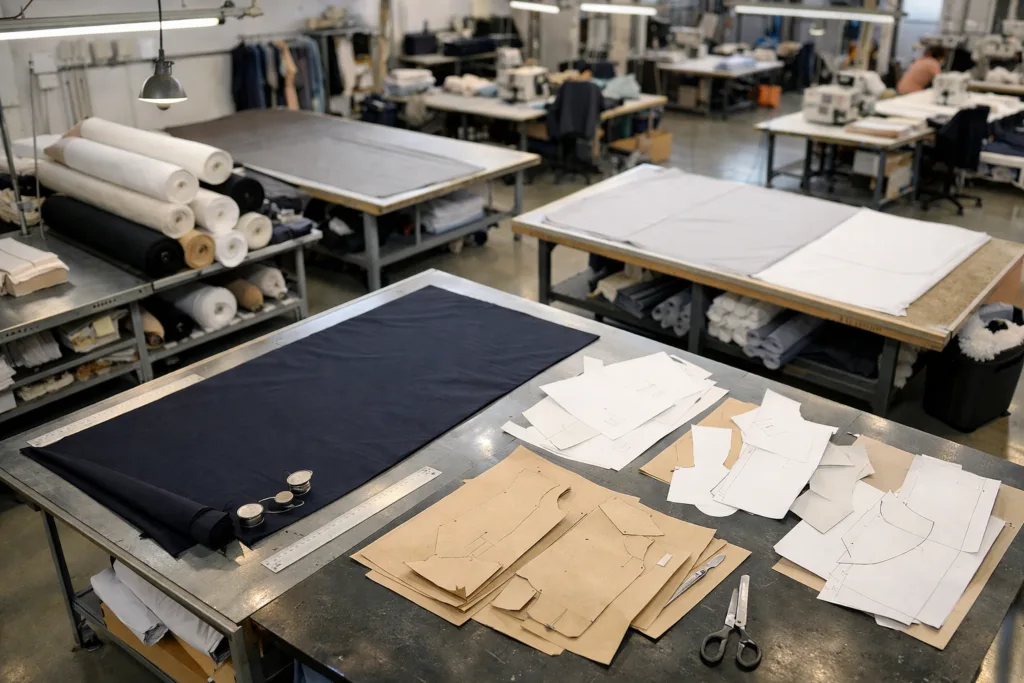
Pattern makers transform a designer’s vision into practical templates. These templates shape the cut pieces for each garment. Grading extends the base pattern into all necessary sizes—accurate grading is essential for fit consistency, especially in bulk production.
Step 5: Prototyping – Creating Samples
Sample production lets brands test design, fit, and fabric choices. It’s a trial run before committing to volume manufacturing. Most factories require approval of “pre-production samples”—the reference point for quality, measurements, and construction. This step is critical; it’s where brands spot faults early and avoid larger batch mistakes.
Step 6: Fit Testing and Refinement
Samples are tried on for fit and movement. Adjustments are made to ensure real-world comfort. Manufacturers like Ninghow Apparel emphasize honest feedback—fixing issues now prevents costly revisions later. Once approved, the sample becomes the “gold standard” for the entire production.
Step 7: Bulk Material Ordering
With samples finalized, factories place orders for bulk fabric and accessories. Lead times depend on material origin (overseas vs. local), dyeing requirements, and order size. Accurate forecasting prevents production delays.
Step 8: Cutting – Preparing for Assembly
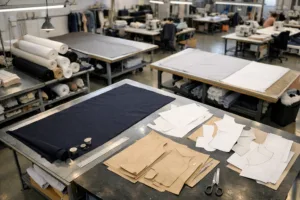
Fabrics are spread on large cutting tables, layered, and precision-cut using templates. Automated machines or seasoned cutters follow the pattern for efficient, waste-minimized output. This stage ensures all garment components are ready for sewing.
Step 9: Sewing and Assembly – Stitching the Garment
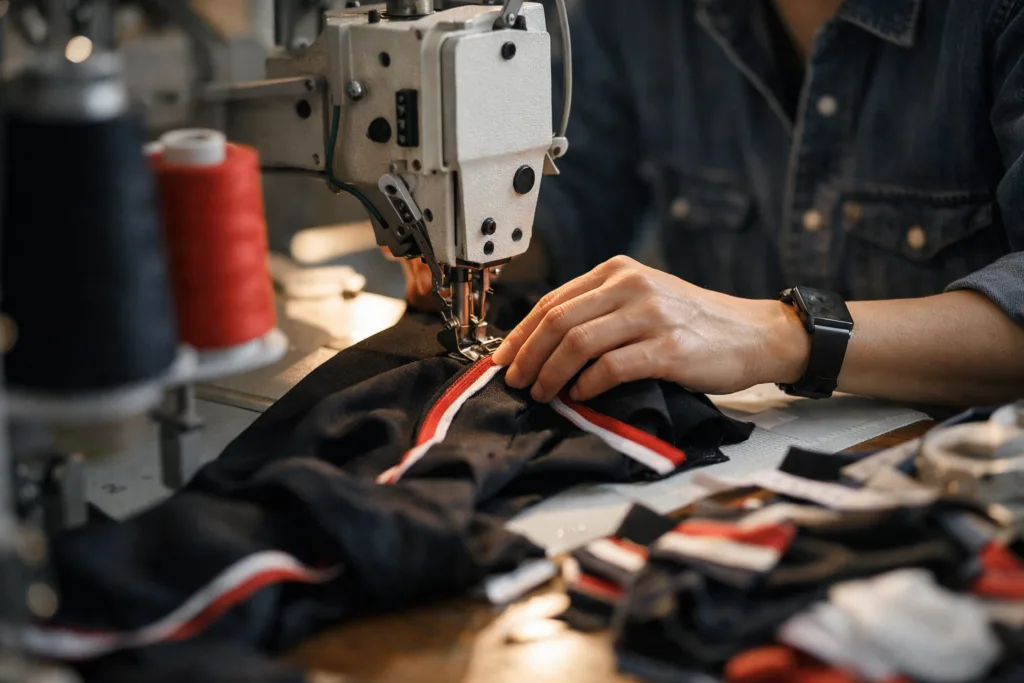
Skilled operators sew garment parts together using industrial machines. Each station completes a specific operation: attaching sleeves, joining panels, finishing hems. Consistency in stitch length, thread choice, and seam strength is carefully monitored—flaws here can affect both look and durability. Read more about apparel production assembly.
Step 10: Adding Trims, Labels, and Brand Features
After basic assembly, trims (ribbons, appliqués), branded labels, and care tags are attached. This step personalizes the garment and fulfills regulatory requirements for fiber content and care instructions.
Step 11: Quality Control Inspection
Strict QC checks are performed: measurements verified, seams inspected, fabric tested for colorfastness, buttons pulled for strength. Any flaws are logged and corrected. Factories with dedicated QC teams (like Ninghow Apparel) help brands maintain consistent standards. Learn more about quality control in apparel manufacturing.
Step 12: Pressing and Finishing
Finished garments are pressed (ironed) to remove wrinkles and present a crisp look. Additional finishing (edge cleaning, loose thread removal) enhances appearance. Proper finishing means fewer returns and greater customer satisfaction.
Step 13: Packaging – Preparing for Shipment
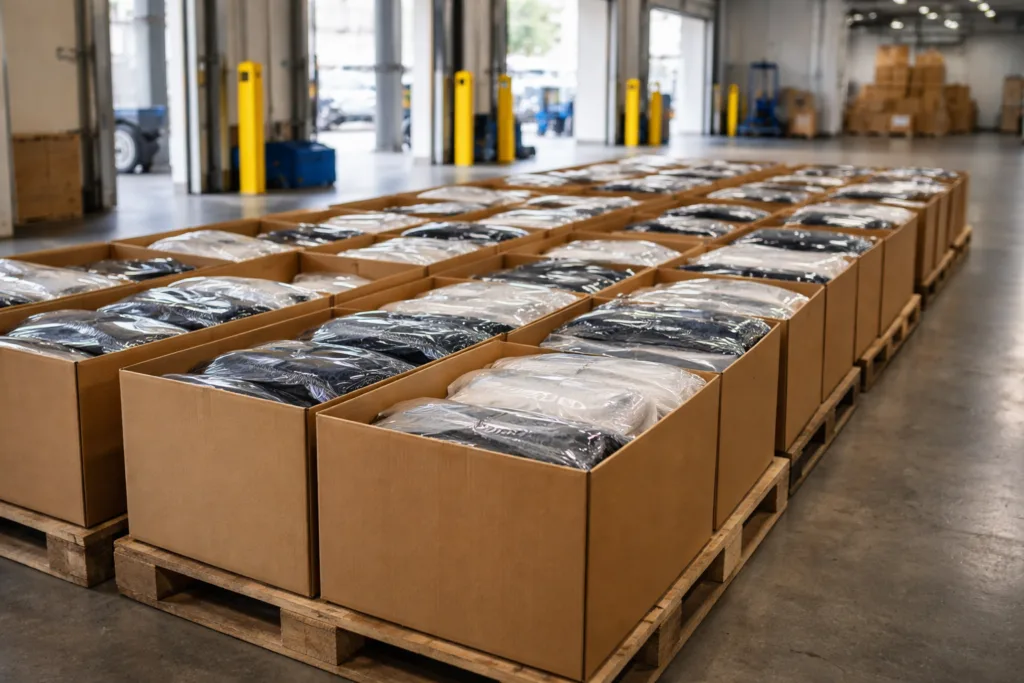
Garments are folded, bagged (often polybags), and boxed. Packaging varies by client requirements (e.g., retail-ready, bulk shipment). Correct labeling (SKU, size, color) avoids shipping confusion.
Step 14: Logistics – Shipping and Delivery
Goods are shipped via air, sea, or land. Brands monitor delivery timelines, customs risks, and transit damage. Reliable logistics partners ensure products reach their destination intact and on schedule.
The Role of OEM, Private Label, and Custom Manufacturing
In apparel, OEM (Original Equipment Manufacturer), private label, and fully custom manufacturing all use the same core steps—but differ in design ownership, branding, and production flexibility. Brands can choose the approach that best fits their retail model, whether launching a new line or scaling up existing products.
Common Challenges in Apparel Manufacturing
Issues like delayed material arrival, sample mismatches, inconsistent stitching, or QC failures can disrupt workflow. Brands must communicate clearly, review samples, and plan for realistic lead times. Choosing experienced manufacturers can minimize these headaches.
How Apparel Manufacturing Works Step by Step: Detailed Breakdown
- Design & concept: identifying customer needs and translating inspiration into technical sketches
- Material sourcing: balancing quality, sustainability, and price
- Pattern making & grading: scaling designs for all sizes
- Sampling & approval: testing fit and function before mass production
- Bulk production: efficient assembly, rigorous QC, final packaging
- Logistics: ensuring smooth shipment and delivery
How to Choose the Right Apparel Manufacturer
Vet factories for reliability, transparency, sample quality, and communication. Visit production floors if possible; ask for references, certifications, and inspect QC processes. Consider location, MOQ (Minimum Order Quantity), and production capacity to match your brand’s needs.
Fit Accuracy: Why It Matters in Bulk Production
Fit errors can be costly. Testing samples in real-life conditions, reviewing graded patterns, and maintaining feedback loops are key. Manufacturers prioritize documented measurements and consistent fitting to maintain brand integrity.
Sustainable Manufacturing: Innovations and Options
Eco-friendly materials (e.g., organic cotton, recycled polyester), ethical labor standards, and energy-efficient machinery are becoming standard. Brands seeking sustainable manufacturing solutions should ask for certifications and transparency in supply chains.
Minimum Order Quantities (MOQs): Balancing Inventory and Cost
Factories set MOQs to optimize workflow and reduce overheads. New brands must weigh the risks of high MOQs versus flexible production. Some manufacturers now offer lower MOQs and tiered pricing strategies to make entry easier for startups and small brands.
Lead Times: What Affects Production Duration?
Key factors: material sourcing, complexity of design, sample iterations, and factory workload. Realistic forecasting lets brands plan launches and avoid missed retail windows.
How Apparel Manufacturing Works Step by Step: Summary Table
| Stage | Action | Key Considerations |
|---|---|---|
| Design | Sketching, tech packs | Customer needs, specs clarity |
| Fabric Sourcing | Select material, accessories | Cost, sustainability, speed |
| Pattern & Grading | Templates, sizing | Fit, scaling accuracy |
| Sampling | Making and testing samples | Fit checks, approval |
| Production | Cut, sew, assemble | QC, efficiency, consistency |
| Finishing | Press, package | Presentation, labeling |
| Logistics | Ship to buyer | Tracking, on-time delivery |
From Small Batch to Mass Production: Scaling Apparel Manufacturing
Brands may start with small runs for market testing. Once demand grows, production scales—requiring careful planning, robust QC, and potential process tweaks. Experienced manufacturers help brands transition smoothly and avoid costly missteps.
Technology Trends Transforming Apparel Manufacturing
Digital patternmaking, automated cutting, and real-time QC systems are streamlining production. Brands benefit from faster turnaround and improved fit precision.
Key Takeaways: Making Apparel Manufacturing Work for You
- Start with clear specs and market research
- Prioritize accurate samples and fit checks
- Partner with transparent, reliable manufacturers
- Monitor QC, logistics, and sustainability efforts
- Plan for scaling and anticipate production challenges
Conclusion: Understanding How Apparel Manufacturing Works Step by Step
Apparel manufacturing is a coordinated process that depends on clear communication, technical know-how, and trusted partners. Brands that invest in spec quality, sampling, QC, and responsible production can confidently bring their designs from sketch to shipment with fewer surprises and more market success. Staying sharp on these steps means better products, satisfied customers, and a stronger brand reputation.
Frequently Asked Questions
What is the minimum order quantity (MOQ) in apparel manufacturing?
MOQ refers to the smallest batch a factory will produce. It balances factory efficiency and material minimums, affecting cost and inventory decisions.
How long does the apparel manufacturing process take?
Lead time depends on design complexity, fabric sourcing, sampling, and order volume. Typical timelines range from six weeks for basics to several months for intricate items.
How do I ensure consistent quality across all garments?
Clear specs, detailed samples, rigorous quality control, and good communication with your factory minimize variation and help maintain high standards.
What’s the difference between OEM and private label manufacturing?
OEM produces goods to a brand’s design; private label uses a factory’s designs rebranded for the buyer. Custom manufacturing offers full design ownership.
How can brands reduce production errors?
Double-checking tech packs, fit samples, and maintaining an open dialogue with your factory before bulk production reduce costly mistakes and rework.
Is sustainable apparel manufacturing practical for startups?
Yes, but it requires careful supplier selection, fabric choices, and transparency. Many manufacturers offer eco-friendly materials and lower MOQs for smaller brands.
Related Reading
- Spotting Sample Quality Issues: What Every Brand Must Know
- Essential Factory Audit Checklist for Apparel Buyers
- The Inventory Trap: How High MOQs Affect Brand Success
- How to Select the Right Clothing Manufacturer: Step-by-Step Advice
- Mastering Your Production Timeline: Guide to Launching a Clothing Brand