
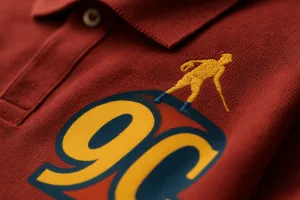
Introduction: Mapping Your Clothing Brand Launch Timeline
Building a successful clothing brand goes far beyond design sketches and style inspiration. Every founder faces tight schedules—from first sample to shelf-ready stock. Without clarity on timing, deadlines and costs pile up. This guide breaks down the entire clothing brand launch timeline, step by step. See what to expect at each stage, from ordering and sampling to manufacturing, shooting, launching, and shipping.
Understanding Key Phases in the Clothing Brand Launch Timeline

Launching a clothing brand follows a series of set phases. Each has its own processes, risks, and lead times. At a glance, the journey includes:
- Design and sample development
- Fabric and finish selection
- Bulk production
- Photo shooting and content creation
- E-commerce or retail launch
- Fulfillment and delivery
Let’s explore what happens in each stage and realistic timeframes for every milestone.
From Sample to Store: Timeline to Launch a Clothing Brand
The full process from initial order to in-store launch can span 8–20 weeks, depending on style complexity, supplier expertise, quantity, and seasonality. In this section, we’ll detail each critical step, breaking down average lead times and best practices to stay on track.
Step One: Placing an Order and Tech Pack Preparation (1–2 Weeks)
The journey starts when a clothing brand finalizes designs and submits a purchase order, usually alongside a detailed tech pack. The tech pack serves as the “blueprint” for every sample, specifying measurements, materials (such as combed cotton, organic cotton, or rPET blends), color Pantones, trims, decorative details, stitching, and labeling requirements. Clarity here saves time: any missing or vague specs can add days or even weeks.
Step Two: Sampling and Prototyping (2–4 Weeks)
Once tech packs are approved, the sampling stage begins. This phase features two key sample types: prototypes (sometimes referred to as “development samples”) and pre-production (PP) samples. Brands confirm fabrics, test construction methods, and evaluate fit. During this period, mills may create fabric lab dips or strike-offs for color approval and offer swatch books for texture and handfeel comparison.
- Lab Dip/Color Approval: Color recipes are matched to Pantone standards, with lab dips in single jersey, pique, or fleece.
- Prototype Construction: Factories trial various stitch types (ISO 301/401/504), seam choices, and decorative applications, from screen print to embroidery or sublimation for polyester styles.
- Fit and Tolerance Testing: The factory sews graded size sets for fit trials, measuring against tightly specified tolerances. Adjustments here help perfect notches and grainline alignment for accurate cutting later on.
A responsive supplier, such as Ninghow Apparel, sends swatch photos and tracking updates at every sampling step.
Step Three: Fabric and Component Ordering (2–3 Weeks Overlap)
While samples are approved, raw materials are ordered in parallel. For polos, T-shirts, or hoodies, typical fabrics might be 180–220 gsm single jersey, 220–240 gsm pique, or 320–360 gsm fleece. Quality mills prioritize sustainable options, offering GOTS organic cotton or recycled polyester (rPET) certified to OEKO-TEX Standard 100 criteria. Component lead times depend on zippers, buttons, woven labels, and other trims, which may add several days to weeks, especially if custom-branded.
Step Four: Bulk Production (3–6 Weeks)
Bulk production begins as soon as fabrics arrive and pre-production samples are signed off. Here is where scale, process planning, and workmanship all converge:
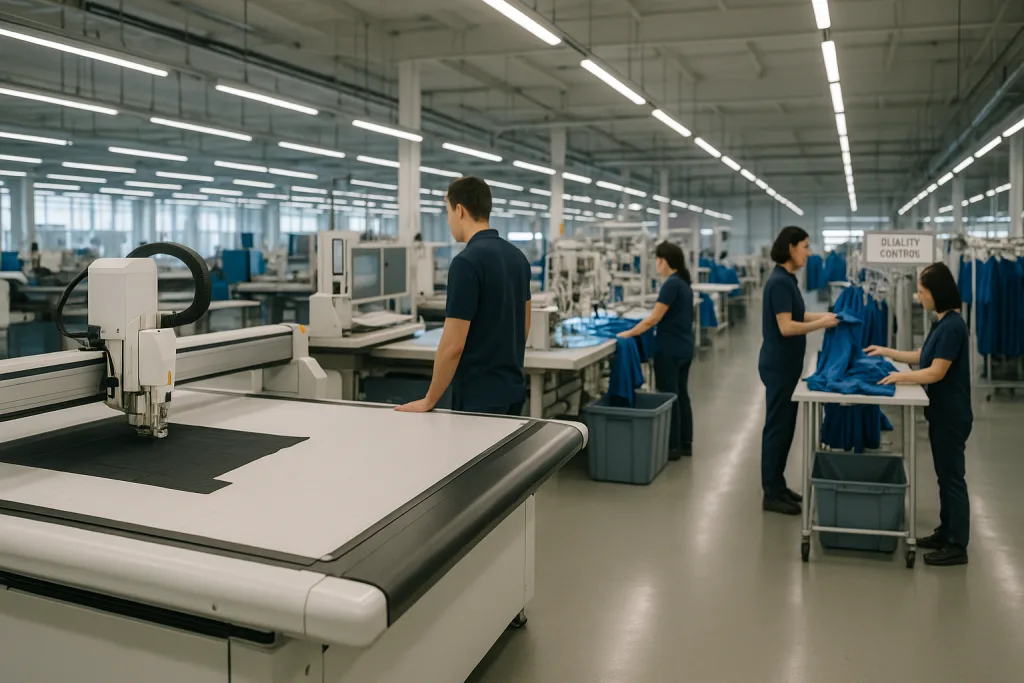
- Cutting: Fabrics are rested, laid, and cut using automated markers, reducing waste and ensuring consistency. Careful control of grainline and notches avoids twisting and skewing.
- Sewing: Assembly lines are balanced by Standard Minute Values (SMV) for each operation, such as flatlock, overlock, and coverstitch. Experienced teams minimize puckering. Bartacks and reinforced seams are added at stress points for activewear and uniforms.
- Decoration: Screen printing (plastisol or water-based ink), embroidery (including 3D techniques), or digital methods (DTF, DTG, or sublimation for performance polyester) are applied. Each method impacts handfeel and durability, so choices should align with brand positioning.
- Finishing: Moisture-wicking and anti-odor finishes, UPF protection, or brushed/french terry backers are applied as needed. All fabrics are pre-shrunk and compacted to reduce post-wash distortion.
Step Five: Quality Control and Testing (1–2 Weeks Parallel)
Quality checks occur throughout production. Factories like Ninghow Apparel conduct inline and endline QC, checking dimensions, seam strength, colorfastness (per ASTM D1683 and ISO 105-C06 standards), and wash stability. Accessories, prints, and trims are screened for compliance with REACH, CPSIA, and Prop 65 where relevant. Garments are run through needle detectors for safety, and AQL (Acceptable Quality Level) inspection systems keep error rates in line with industry benchmarks.
Step Six: Product Photography and Content Creation (1–2 Weeks)
After QC is passed, the brand arranges photo shoots for e-commerce and marketing. Professional photography covers product flat lays, on-model shots, and key details like logo embroidery or print quality. For high-volume launches, factory partners may provide content-ready studio shots directly.
- Tips: Use natural lighting to highlight fabric texture and color accuracy. Show close-ups of key decorations or signature trims.
- Capture standard product views (front, back, close-up, lifestyle) for consistent e-commerce presentation.
Step Seven: E-Commerce or Retail Launch (1 Week Overlap)
Content uploads and product listings can begin as soon as photographs are finalized. Prepare size charts (derived from spec sheets), care guides (matching ISO 3758 symbols), and rich product descriptions to support buyers. Early press and influencer seeding may overlap with this stage for maximum launch impact.
Step Eight: Packing, Shipment, and Delivery (1–3 Weeks)
Clothes are pre-packed according to your shipping instructions: flat fold, hanger pack, polybags with suffocation warnings, size ratio packs for multistyle launches, and labeled export cartons. Custom hangtags and woven labels are attached. Export paperwork, carton marks, and EAN/UPC barcode systems complete the prep. Brands should choose shipping terms (EXW, FOB, CIF/DDP) that match their logistics network and budget.
- Standard sea freight: 2–4 weeks (international)
- Standard air freight: 5–12 days
- Courier/express: 3–6 days (sample/boutique quantities)
Expert Tip: Factor in customs clearance time when planning an international launch. Build a buffer for any final inspections or shipping delays.
Comparing Fabric & Finish Choices for Launch Success
Fabric and finish selection shape not only milestone lead times but also brand quality. The table below compares common fabrics, their properties, and best-use scenarios for first collections:
| Fabric/Finish | Properties | Best Use |
|---|---|---|
| Combed Cotton (20s/24s/32s) | Soft, breathable, durable, good colorfastness | Premium T-shirts, polos, fashion basics |
| Ring-Spun Organic Cotton | Smooth, sustainable, certified organic | Eco-friendly collections, kidswear, luxury |
| Recycled Polyester (rPET) | Moisture-wicking, high-strength, sustainable | Activewear, golf polos, team uniforms |
| French Terry / Fleece (280–360 gsm) | Warm, plush, durable, good for decoration | Hoodies, sweatshirts, athletic sets |
| Pique (220–240 gsm) | Textured, classic polo look, breathability | Polo shirts, golf apparel, uniforms |
| Performance Finishes | UV/UPF, anti-odor, stain-release, moisture-control | Sportswear, corporate, resort wear |
Choose materials based on brand promise, end-use, and launch season. Each fabric affects handfeel, durability, color stability, print/embroidery quality, price per unit, and delivery time.
Critical Quality and Compliance Standards
Quality assurance and compliance define the difference between a smooth launch and costly recalls. Reputable manufacturers conduct the following tests:
- Colorfastness to wash, rub, and light (ISO 105-C06/X12, AATCC 61/8)
- Dimensional stability (AATCC 135/150)
- Seam strength and pilling (ISO 12945, ASTM D1683)
- OEKO-TEX STANDARD 100 or GOTS organic certification
- Needle detection and AQL batch inspection
- Lab dip and shade band control for consistent color between batches
- REACH, CPSIA/Prop 65, and RoHS benchmarks for safety and import
Building a reputation for quality—and reliability—forges lasting relationships with retailers, team programs, or online buyers. Ninghow Apparel specializes in B2B partnerships that keep quality, fit, and sustainability front and center, from startup collections to global launches.
Timelines by Garment Category: What to Expect
Lead times vary by product complexity and quantity. Here is a practical guide by main apparel categories:
- Basic T-shirts: 6–9 weeks (from sample sign-off to ship)
- Polo shirts: 7–10 weeks (pique options often require extra dye lot time)
- Hoodies/Sweatshirts: 8–12 weeks (bulkier fabrics take longer to sew and pack)
- Shorts/Pants: 8–13 weeks (pockets, lining, and trims add steps)
- Activewear/Sports sets: 9–14 weeks (performance finishes and decorations may extend sample trials)
Bespoke styles, complex prints, or embroidery-heavy collections may stretch the timeline. Always build in a 2–3 week buffer for unexpected adjustments.
Navigating Decoration and Branding Choices
Decoration decisions shape not just look but workflow timing. Here’s how typical options compare:
| Decoration Type | Handfeel & Durability | Production Impact |
|---|---|---|
| Screen Print (Plastisol/Water-based/Discharge) | Soft feel, moderate-high durability, cost effective for bulk | Often adds +3 days to lead time |
| Digital Print (DTG/DTF/Sublimation) | Detailed color, good for small runs, best for polyester | 1–2 days, quick sample feedback |
| Embroidery (Flat/3D/Puff) | Premium finish, top durability, signature look | Depends on design density; add 2+ days for large areas |
| Heat Transfer | Clean, fast turnaround, works on tech/sports fabrics | 1–2 days; efficient for teamwear/numbering |
Final Checklist: Staying on Track for Launch

- Lock in a detailed timeline with suppliers, buffer for sample tweaks.
- Confirm your material, finish, and decoration specs upfront.
- Review all PP samples and lab dips before green-lighting bulk.
- Plan photography, content, and e-commerce tasks to run parallel with production.
- Confirm testing, quality, and compliance for each market to avoid delays.
- Arrange logistics, export paperwork, and last-mile fulfillment well before goods are packed.
Partnering with an experienced OEM like Ninghow Apparel streamlines every step, helping you avoid common snags and stay launch-ready from first sample to final shipment.
Frequently Asked Questions
How long does it take to launch a clothing brand from sample to store?
It generally takes 8 to 20 weeks from the first sample to in-store launch. Exact timing depends on the number of styles, material availability, and order quantity.
What is a tech pack and why is it important in the timeline?
A tech pack is a detailed blueprint of your design. It speeds up sampling and production by providing precise specs on size, materials, stitching, and trims.
When should fabric and trims be ordered in the clothing brand launch timeline?
Raw materials should be ordered as soon as preliminary samples and tech packs are approved. Overlapping this with sample approval saves valuable lead time.
Can I launch faster if I use simpler designs or fewer decoration types?
Yes. Simplifying styles, using standard fabrics, and limiting decoration speed up sampling and production while lowering costs and risk of delays.
What compliance standards should new brands consider?
Consider OEKO-TEX, GOTS, REACH, CPSIA/Prop 65, and AQL inspection. Compliance ensures quality, safety, and smooth import approvals for your garments.
How do brands manage quality control before shipping?
Quality control involves inline checks, spec measurements, needle detection, batch inspection, and testing against standards for colorfastness, seams, and shrinkage.