




NINGHOW APPAREL / MANUFACTURING
Define what will be checked, against which reference.
Connect apparel quality control to the approved product. Ninghow Apparel offers incoming, in-process, measurement, visual and pre-shipment checks covering materials, construction, sizing, decoration, labels and packing.

FABRIC / FIT / FINISH
INPUTS → PRODUCTION → PRE-SHIPMENT
Build the control points around the approved reference.
Identify the approved sample and specification version, including later revisions. Confirm how production staff access the reference and who records each check.

01
Incoming materials
Compare fabric identity, composition, construction, color, visible condition, trims, label information and packing components with approved references. Confirm supplier or test records where required.
02
During production
Review assembly, seams, components, measurements, decoration and labels before all units are finished. Agree inspection points, responsible parties and defect classification.
03
Before shipment
Check finished appearance, measurements, quantities and packing against the agreed plan. Confirm sampling, acceptance criteria, reporting and release responsibility.
OBSERVATION / CRITERION / DISPOSITION
Describe the difference before deciding what it means.
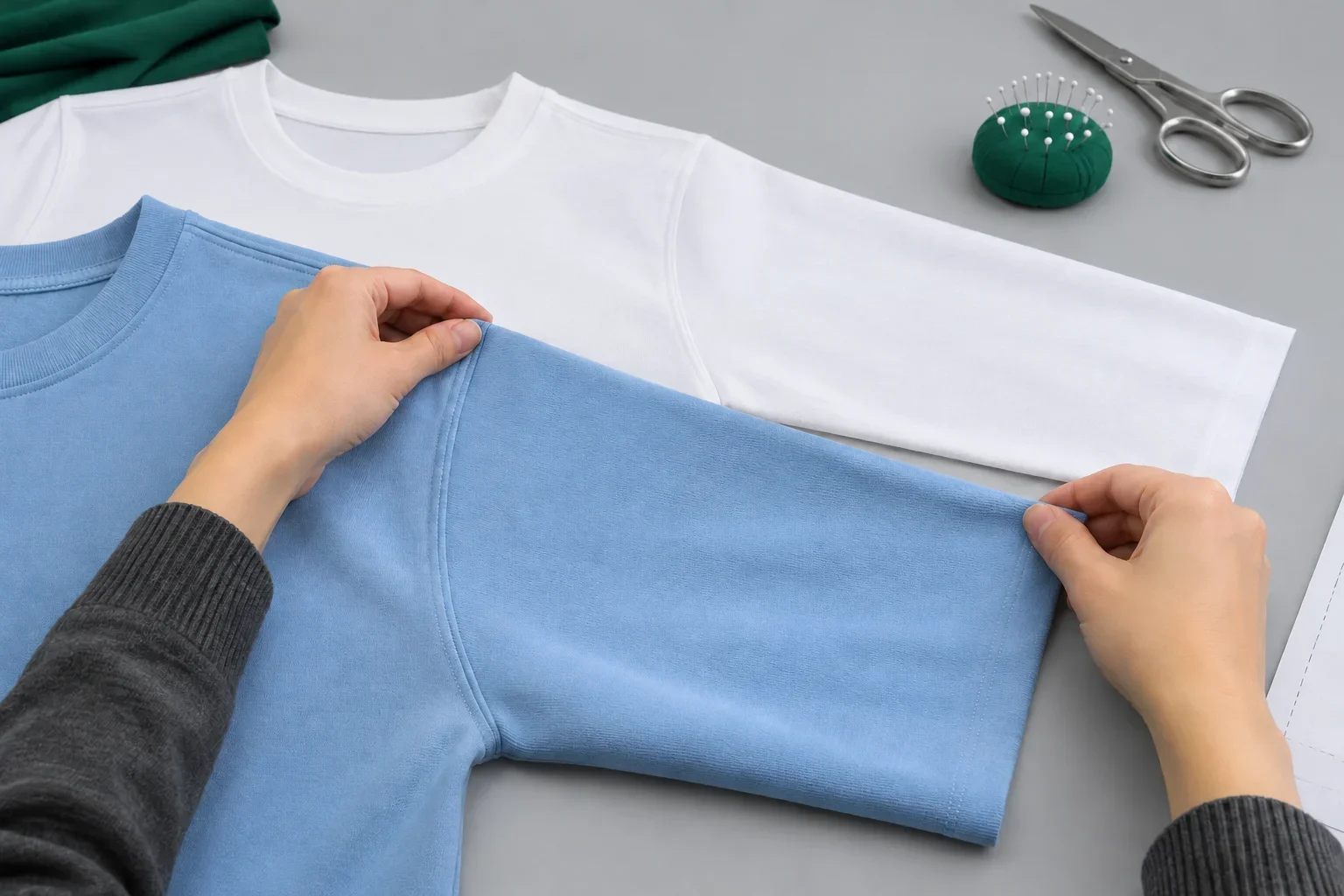
Construction checks may cover seam appearance, stitch formation, attachment, symmetry, alignment, loose threads, marks, holes or stains. The garment specification determines the relevant checklist.

A
Seam appearance
B
Puckered surface
A / Seam appearance
B / Puckered surface
COMPARE
Use the agreed acceptance basis
Assess panels, openings, pockets, closures and hems against the approved construction and allowable tolerances.
RESOLVE
Record the difference and its treatment
Agree defect classification, corrective action, reinspection and who can approve release. An inspection stage does not guarantee a particular defect level.
POINT / SIZE / TOLERANCE / RECORD
Make measurement verification repeatable.
Confirm measurements for each style and fabric; do not assume one tolerance applies to every product. An approved garment is a reference, not a substitute for the measurement chart.
DEFINITION
Specify points and grading
Identify measurement locations, reference chart, sizes and grading rules.
SCOPE
Agree what is inspected
Confirm sizes, quantities or samples checked, measurement method and tolerance for each point.
RESPONSE
Record out-of-tolerance results
Agree how differences are logged, assessed and corrected, including whether a revised sample is needed.
DECORATION / LABEL / PACK / RELEASE
Check the details that reach the buyer.

Define visual and packing requirements before inspection. Confirm export documents, Incoterms, carrier arrangements and destination restrictions separately from garment approval.
01
Decoration
Compare artwork, scale, colors, placement, alignment, attachment and surface appearance for printing, embroidery or heat transfer.
02
Labels
Check wording, size information, placement and attachment against approved artwork and instructions.
03
Packing
Verify folding, presentation, customized packaging, quantity by style/color/size, carton counts and markings.
04
Release records
Agree the inspection report, defect record, sampling plan, acceptance criteria and any corrective-action closure required before shipment.
INSPECTION PLAN / PRODUCT TESTING
Match each quality conclusion to the right evidence.
Prepare the specification checklist and upload approved files. Include intended use, quantity and destination; discuss unresolved requirements before setting the plan.
INSPECTION
Confirm the plan and its availability
Agree AQL level if applicable, sampling, inspection provider, scope, timing, records and commercial terms. Request current order-relevant material, construction, measurement and packing records.
TESTING
Check the product behind the report
Durability, wash performance, colorfastness and other claims need relevant evidence. Verify method, standard, report date, sample identity, results and certification validity for the actual product.
YOUR NEXT STEP
Ask for evidence tied to your garment and order.
Identify the approved reference, materials, measurement points, tolerances, decoration, packing, quantity and destination. Include the inspection or testing standards your review needs.