
What Is Nylon Fabric?
Nylon fabric is a synthetic textile made from polyamide fibers. First developed in the 1930s, nylon was designed to mimic silk, but quickly earned a reputation for durability and versatility. Today, nylon is widely used in apparel manufacturing for sportswear, outerwear, and accessories.
Its chemical makeup allows nylon to stretch, resist water, and stand up to tough conditions. Apparel manufacturers like Ninghow Apparel rely on nylon for its consistent quality and performance, tailoring its use for everything from activewear to fashion basics.
Composition of Nylon Fabric

Nylon starts with polymerization—a chemical reaction joining monomers into long chains. These chains form the strong fibers that define nylon’s unique properties. Most commercial nylon fabrics come from Nylon 6 or Nylon 6,6, each with subtle differences in feel and strength. Both types are spun into yarn, then woven or knitted.
Main Components
- Nylon 6: Derived from caprolactam, provides excellent abrasion resistance and a soft handfeel.
- Nylon 6,6: Created from hexamethylene diamine and adipic acid, known for higher melting point and strength.
- Blends: Nylon is often mixed with elastane (spandex), polyester, or cotton for stretch or handfeel.
Fabric Structures
- Wovens: Used in jackets, shorts, and uniforms. Examples include twill and ripstop.
- Knits: Applied in active tees, sportswear and underwear, using single jersey or interlock methods.
- Technical Mesh: For ventilation zones or linings in sports apparel.
Nylon Fabric Properties
Nylon fabric stands out for its high strength, flexibility, and resilience. Its performance characteristics are tailored through specific constructions and finishes.
| Property | Description | Best-Use Scenario |
|---|---|---|
| Tensile Strength | Resists tearing and stretching; holds up under stress | Outerwear, sports uniforms |
| Lightweight | Low density keeps garments breathable and easy to move in | Activewear, lightweight jackets |
| Absorbency | Moisture-wicking when engineered, dries quickly after washing | Fitness tops, running shorts |
| Shape Retention | Holds its form, resists wrinkling and creasing | Polo shirts, blouses, travel apparel |
| Colorfastness | Accepts vibrant dyes with minimal fading if processed correctly | Team uniforms, logo apparel |
Performance Finishes
Modern nylon apparel may feature moisture-wicking finishes, stain release treatments, or antimicrobial coatings. These upgrades further improve comfort and durability for everyday and high-performance applications.
Advantages of Nylon Fabric in Apparel
Brands and manufacturers choose nylon for several reasons. Its advantages span manufacturing, wearability, and cost-effectiveness.
Durability and Longevity
Nylon’s robust structure resists abrasion and stretching. Sports and outdoor garments benefit from fewer repairs and longer lifespans.
Consistent Quality
In large-scale production, nylon delivers reliable fit and construction. Controlled polymerization and precise spinning ensure each batch meets set tolerances—crucial for brands like Ninghow Apparel that build reputation on product consistency.
Lightweight Comfort
Nylon’s low fiber density means lighter, more packable garments. Travelers and athletes enjoy freedom of movement without bulk.
Color Flexibility
Nylon takes dye easily. With proper lab dips, bulk color approval, and Pantone matching, brands produce garments in bold or subtle hues with stable shade bands—key to promotional and sports programs.
Common Nylon Fabric Applications
Nylon is a staple in modern apparel, showing up in many categories. Below are its most recognized uses:
Activewear
- Running shorts: Quick-drying, lightweight construction.
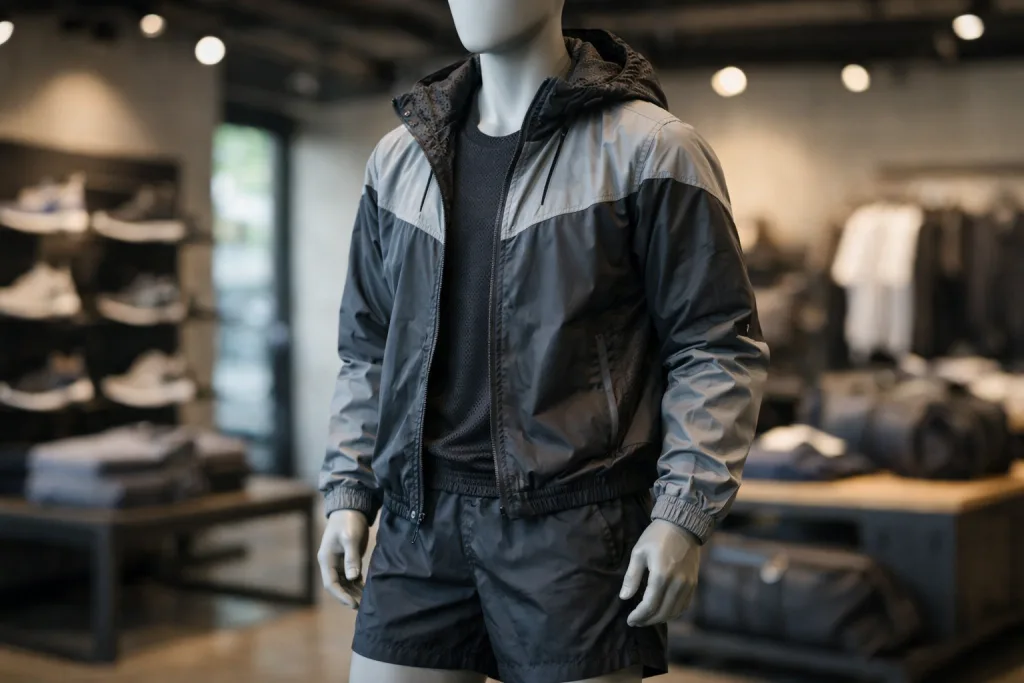
- Jackets and windbreakers: Durable, wind-resistant overlays with technical mesh linings.
- Sports bras: Often blended with elastane for stretch and recovery.
Outerwear & Uniforms
- Raincoats and shells: Water-repellent finishes and taped seams for protection.
- Team jerseys: Colorfast dyes stand out on the field; durable for repeated washings.
Lifestyle and Streetwear
- Bomber jackets: Fashionable, easy-care, and versatile pairing for casual outfits.
- Tech pants and joggers: Lightweight, comfort stretch for urban movement.
- Bags and backpacks: Tough weaving supports outdoor and daily utility.
Nylon Fabric Construction Techniques
The way nylon is handled in production shapes its performance and cost. Apparel manufacturers apply several key methods:
Knitting and Weaving
Single jersey knits offer softness for tees; interlock brings two-sided smoothness. Wovens like twill and ripstop give jackets extra strength against snags. GSM (grams per square meter) generally ranges from 60–160 gsm for lightweight knits and 100–280 gsm for outerwear wovens.

Cutting & Patterning
- Tech packs specify length, shoulder fit, and construction details.
- Markers optimize fabric usage and reduce waste during the cutting stage.
- Auto-cutters increase accuracy; manual cutting maintains flexibility for custom orders.
- Proper grainline control avoids fabric distortion and ensures pattern reliability.
Sewing & Assembly
Sewing lines balance speed and precision, using lockstitch (ISO 301), overlock (ISO 504), and coverstitch machines as needed. Needle selection is crucial—slight changes in needle gauge or point type can reduce puckering and improve seam strength on nylon.
Nylon Fabric Decoration & Finishes
To achieve branded or specialty looks, manufacturers decorate nylon using various advanced techniques:
Printing
- Screen Print: Water-based inks for soft handfeel, discharge for faded effects.
- DTF/DTG: Direct-to-film or direct-to-garment prints add detailed logos with minimal texture.
- Sublimation: Dye-sublimation bonds color into the fiber, ideal for teamwear and full-color patterns.
Embroidery & Transfers
Embroidery—standard or 3D puff—for durable, high-quality decoration. Heat transfers suit complex branding, but may trade off longevity for handfeel. The best approach balances requested artwork with intended garment use.
Functional Finishes
- Moisture-wicking coatings.
- Anti-odor/antimicrobial treatments.
- UPF/UV protection additives.
- Pre-shrink/compaction for minimal size change after washing.
Nylon Fabric Quality Control & Compliance
Trusted manufacturers like Ninghow Apparel maintain strict standards throughout the nylon garment process—vital for reliability and brand reputation.
Quality Assurance Steps
- Inline/Endline Checks: Inspect for puckering, skew, and spec deviations at each production stage.
- Spec Measurement Tables: Confirm dimensions for every graded size set.
- Needle Detection: Ensures safety for apparel delivered to B2B clients.
- Wash Testing: Verifies color stability, seam strength, and shrinkage rates.
Compliance & Certifications
- Colorfastness: ISO 105-C06/X12, AATCC 61/8
- Dimensional Change: AATCC 135/150
- Seam Strength: ASTM D1683
- Pilling: ISO 12945
- OEKO-TEX STANDARD 100 for safe textiles
- REACH/RoHS, BSCI/WRAP/SEDEX as required by client or market
Finishing, Packaging & Logistics for Nylon Apparel
The final steps in nylon apparel production focus on presentation and delivery. Packaging ensures products arrive safe, clean, and retail-ready.
Finishing Touches
- Folding—machine or manual, per client specs for retail or promo packs.
- Polybag—transparent or branded; chosen for product visibility and protection.
- Hangtags, woven labels, and care labels—contain ISO 3758 symbols and washing instructions.
- Carton packing—size ratio packs, barcode/UPC/EAN, and carton marks meet export requirements.
Shipping & Logistics
- Lead times: Bulk orders typically ready in 30–45 days, sample programs faster.
- Incoterms: EXW, FOB, CIF, or DDP depending on buyer preference.
- Sample workflow: Proto sample & PP (pre-production) approval, followed by bulk TOP (top-of-production) samples.
Sustainability and Innovation in Nylon Production
Modern apparel brands explore eco-friendly options for nylon textiles. Advances in recycled nylon—often called rPET (recycled polyethylene terephthalate)—reduce environmental impact while maintaining the benefits of conventional nylon.
Recycled Nylon Initiatives
- GOTS-certified recycled blends combine quality with sustainability.
- Closed-loop production recovers water and reduces chemical runoff.
- Brands may use batch tracking to ensure recycled content in every garment.
Energy and Water Savings
Latest manufacturing lines feature energy-efficient dyeing and finishing. These efforts align with rising demand for environmentally responsible clothing in sports, streetwear, and corporate programs.
Buyer Considerations When Choosing Nylon Fabric
Selecting nylon for a clothing line involves several critical choices. Here’s what buyers should evaluate:
- Intended use: Will the garment face high wear, weather, or require technical finishes?
- Handfeel: Choose between crisp wovens or soft knits; blends may improve comfort.
- Color stability: Ask for shade band samples and lab test results.
- MOQ & lead time: Factories like Ninghow Apparel can advise on minimums and delivery windows.
- Compliance: Certain garments need OEKO-TEX or REACH certification depending on market and buyer.
Expert takeaway: The best nylon fabric matches its technical properties with design intent, guaranteeing apparel that’s stylish, functional, and long-lasting.
Frequently Asked Questions
What is nylon fabric made from?
Nylon fabric is made from synthetic polyamide fibers created by chemical polymerization, offering durability and strength.
Why is nylon used in sportswear?
Nylon provides lightweight comfort, excellent stretch, and quick-drying properties, making it ideal for athletic and performance wear.
Is nylon fabric water-resistant?
Nylon inherently resists water and, with special finishes, can become highly water-repellent for rain gear and jackets.
How does nylon compare to polyester?
Nylon is generally softer, stronger, and more abrasion-resistant than polyester, while polyester offers better UV resistance and lower cost.
Can nylon be recycled for eco-friendly apparel?
Yes, recycled nylon (often called rPET) is used to create sustainable clothing lines without sacrificing performance.
What certifications should nylon apparel have?
Nylon garments often require OEKO-TEX STANDARD 100 and REACH compliance to guarantee safety and environmental responsibility.