
Start Strong: Why Launch a Private Label Shorts Brand?
Launching your own shorts line unlocks new revenue, strengthens your brand, and attracts customers who crave something fresh. Private label shorts put you in the designer’s seat without building a factory from scratch. In this guide, you’ll discover how to develop top-quality shorts with trusted private label shorts manufacturers—step by step.
Private Label Shorts: How to Build Your Own Apparel Line

Private labeling lets you create an exclusive shorts collection with your unique branding. The process includes designing, sourcing, manufacturing, and selling shorts under your name—but produced by expert partners. This approach controls quality, customizes style and fit, and often boosts profit per unit, since you bypass middlemen. Let’s break down every important stage, with key insights from industry experts and Ninghow Apparel’s proven systems.
Understanding Private Label Shorts Manufacturing
What Sets Private Label Apart?
Unlike wholesalers who sell generic products, a private label shorts manufacturer builds each item to your creative brief. You control details like fabric, cut, colors, trims, and decoration methods. The manufacturer provides technical know-how, ensuring your vision translates into ready-to-wear shorts that meet professional standards.
OEM vs. ODM: Which Path to Take?
- OEM (Original Equipment Manufacturer): Bring your own tech packs or detailed designs. The manufacturer follows your exact specs.
- ODM (Original Design Manufacturer): Use the manufacturer’s pre-developed styles as a base, then personalize them with your branding and adjustments.
Ninghow Apparel supports both routes, giving you flexibility based on budget and design needs.
Key Steps to Launching Your Private Label Shorts Brand
- Market Research & Brand Positioning
- Design Development
- Material Selection
- Sample Making & Fit Testing
- Order Placement & Production
- Quality Control
- Packing & Logistics
- Launch Planning
Step-by-Step: From Concept to First Shipment
Market Research & Brand Positioning
Begin with your audience. Are they searching for eco-friendly athleisure—think organic cotton and recycled polyester? Or do they want golf shorts with crisp fit and sweat-wicking powers? Study trends, competition, price points, and user pain points to find your unique angle.
Design Development
Sketch your shorts or work with a fashion designer. Identify must-have features (pockets, drawstrings, logo placements). Create a tech pack—a comprehensive document containing drawings, size specs, stitching details, trim options, and measurement tables.
Material Selection: Fabrics Matter
| Fabric Type | Main Properties | Recommended Use |
|---|---|---|
| Combed Cotton (20s/24s/32s) | Soft, breathable, durable | Lifestyle, loungewear, kids’ |
| Recycled Polyester (rPET) | Moisture-wicking, quick-dry, sustainable | Activewear, gym, team uniforms |
| Elastane Blends | Stretch, resilience, maintains shape | Golf, performance, fitted trends |
| French Terry, Fleece (280–360 gsm) | Warmth, plush feel, bulkier drape | Casual, winter, sweats, resort wear |
| Organic Cotton (GOTS) | Sustainable, hypoallergenic | Eco lines, premium basics |
Confirm fabric quality through lab dips (small dyed swatches to approve color), strike-offs (print tests on fabric), and bulk approval before production.
Performance Finishes
- Moisture-wicking: Moves sweat to the outer surface, perfect for sport shorts.
- Anti-microbial/odor control: Keeps shorts fresher, ideal for summer and gym wear.
- UV protection (UPF): Shields the skin, important for golf and outdoor shorts.
- Pre-shrink/compaction: Controls shrinkage during washing.
Sample Making & Fitting Process
Your manufacturer creates samples based on your tech pack. You’ll review for cut, comfort, seam finish, pockets, and branding. Feedback is key—refine waistbands, inseams, and trims until you nail the fit. Use a graded size set (range of sample sizes) to confirm fit consistency.
Decoration: Printing, Embroidery, and More
Decide how to showcase your brand. Screen printing, embroidery (including 3D/puff styles), DTF or DTG (direct-to-garment), and heat transfer are common methods. Each affects handfeel (how the decoration feels), durability, and bulk. For polyester shorts, consider sublimation for all-over prints.
Choosing a Private Label Shorts Manufacturer
What to Look For
- Experience with your product category (e.g., athletic vs. lounge shorts)
- Support for your MOQ (minimum order quantity)
- Quality certifications: OEKO-TEX, GOTS, BSCI, WRAP, SEDEX
- Transparency in pricing, sampling, and lead times
- Clear communication and dedicated account service
- Original process insights: Fabric testing, colorfastness, wash durability
Questions to Ask
- Can you support custom fabrics, finishes, or trims?
- Will you manage tech packs and size grading?
- How do you control color consistency and shade bands?
- What are your typical lead times for samples and bulk production?
- How do you pack and label garments for export?
Working with Ninghow Apparel
Ninghow Apparel partners with brands, designers, and businesses to develop private label shorts across sports, lifestyle, and resort channels. With strong fit consistency, sustainable options, and strict QA (backed by standards such as OEKO-TEX STANDARD 100 and GOTS), you get production you can trust—delivered on time.
Production Workflow: From Order to Delivery
Tech Pack Finalization
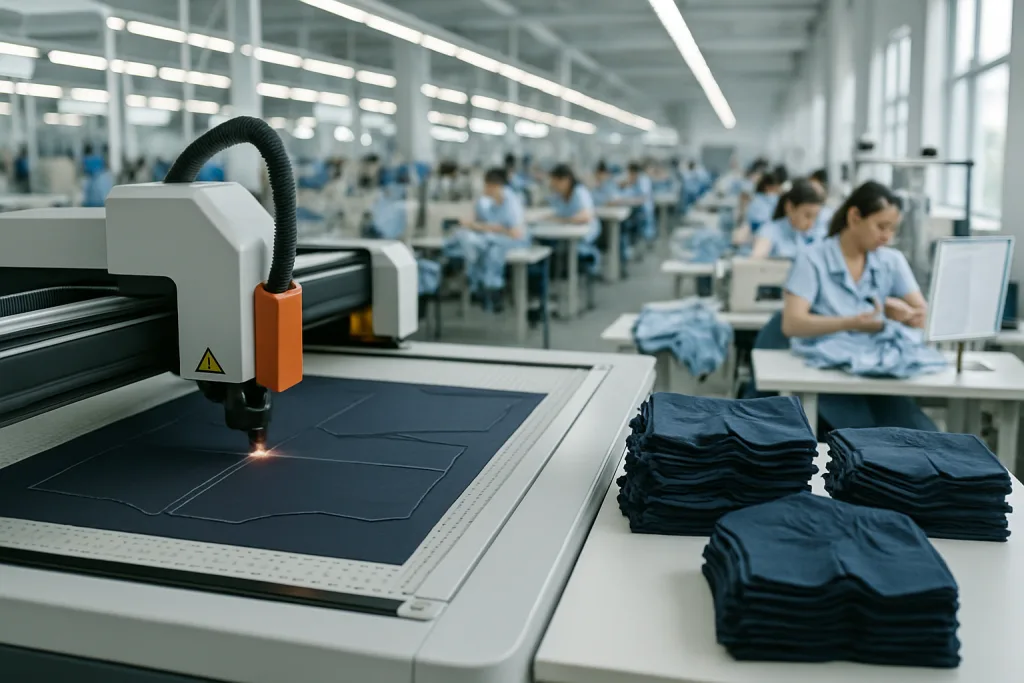
Your design document must list all measurements, tolerances (acceptable differences per size), color codes (Pantone), trims, and sewing details. Cutting markers and auto-cutters help reduce waste and ensure pattern accuracy—watch for grainline control to maintain the fabric’s integrity.
Cutting and Assembly
Fabric should rest to release tension before cutting. Markers ensure efficient fabric usage. Details such as notches guide sewers for perfect seam alignment. Sewing lines use different stitches: ISO 301 for strong seams, 504/602 coverstitch for hems, bartacks on pockets. Line balancing boosts speed and consistency.
Decoration & Labeling
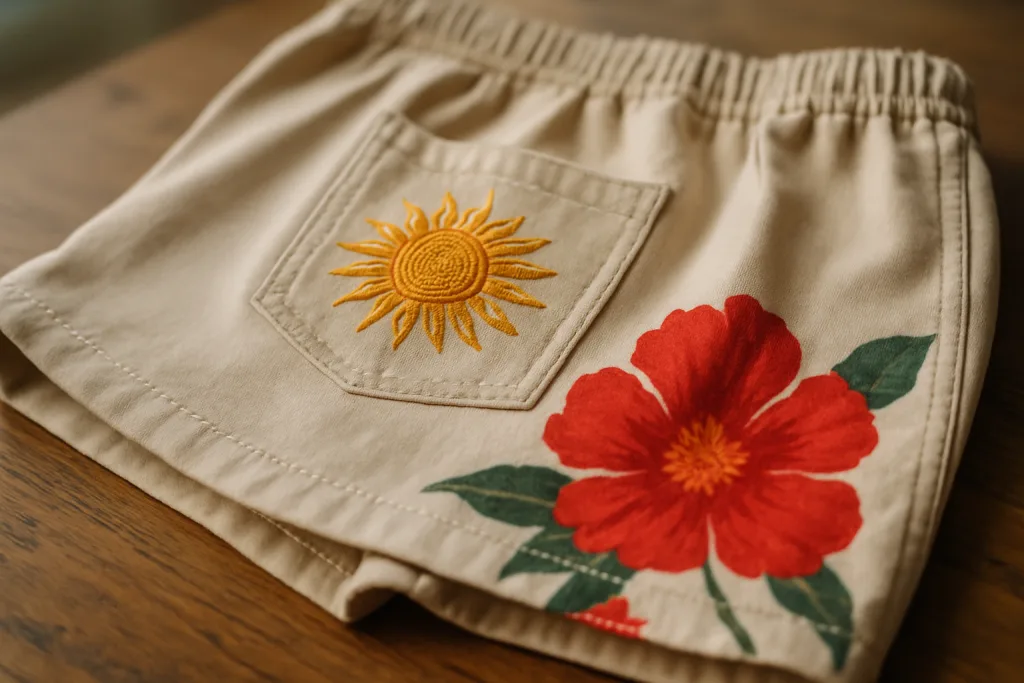
Following sewing, shorts move to print or embroidery stations. Prints undergo curing (heat setting) for durability. Embroidery requires correct backing for shape and wash testing. Finish with labels—woven brand labels, size/care labels (using ISO 3758 care symbols), and packaging tags.
Quality Assurance & Testing
Inline and endline checks control measurement, skew, puckering, and decoration clarity. Testing for colorfastness (ISO 105), dimensional stability (ASTM D1683), and seam strength ensures every batch meets spec. AQL (Acceptable Quality Level) sampling targets defect rates under ANSI/ASQ Z1.4 guidelines.
Packing and Logistics
Shorts are folded, bagged, and boxed per your request (e.g., six-pack ratio per carton). Cartons get barcodes (UPC/EAN), handling marks, and exporter details. For export, choose Incoterms—EXW, FOB, CIF, or DDP—based on your needs. Shipping lead time varies from 25–45 days depending on location and order size.
Cost Drivers and Margins: Key Factors
What Impacts Short Costs?
- Fabric choice: Higher GSM, organic or functional textiles boost cost per unit.
- Decoration: All-over prints, embroidery, or multi-position logos cost more.
- Order volume: Larger MOQs reduce per-unit cost through efficiency.
- Trims: Custom zippers, cord ends, and branded drawstrings may add cost.
- Special testing or compliance: For children’s wear or markets like EU/US, extra standards (CPSIA, REACH, Prop 65) may apply to labels and inks.
Boosting Margins
- Streamline silhouettes to reduce waste
- Select proven fabrics available locally
- Limit logo positions or combine print/embroidery when possible
- Negotiate for scalable MOQs as your brand grows
Design and Brand Features: Standing Out in Shorts
Customization Options
- Pocket design: Zipped, side-slant, cargo
- Waistband: Elastic, drawcord, internal branding
- Lining: Mesh for athletic, brushed for winter
- Contrast panels or piping
- Branding: Large or subtle, tonal embroidery, classic woven tags
Sustainable Short Stories
Brands are asking for rPET (recycled polyester), GOTS-certified organic cotton, and water-based inks for printing. These add value, appeal to eco-conscious shoppers, and often improve press and retail placement.
Color and Trend Management
- Pantone matching ensures color consistency between batches
- Approve shade bands—a strip showing color variation tolerance—to avoid costly mismatches
Compliance and Testing: Meeting Global Standards
Lab Testing Checklist
- Colorfastness (e.g., ISO 105)
- Dimensional Stability (AATCC 135/150)
- Pilling Resistance (ISO 12945)
- Seam Strength (ASTM D1683)
- Fabric Performance (burst/tear tests)
Kids’ and US/EU market shorts should pass CPSIA, REACH, and Prop 65 checks for drawstrings, labels, and decoration chemicals.
Launch Planning: Building Your Shorts Brand
Inventory and Distribution Models
Test demand with a focused range—three to five hero styles. Sell online, partner with retailers, or open preorders to build early adoption. Consider white-label programs for teams, resorts, or corporate buyers.
Storytelling Sells
“Great shorts brands combine practical design with strong storytelling. Customers want to know ‘why these shorts?’”
After-Sales and Brand Loyalty
- Clear care labels and fit guidance reduce returns
- Offer swaps or size adjustments on first launch
- Collect feedback to inform next collections
Scaling Up: Beyond Your First Season
Improve Based on Real Feedback
Monitor reviews and sales. Update cuts, introduce seasonal fabrics, or test new colors. Work with your private label shorts manufacturer to refine tech packs and streamline future production.
Expand Your Range
- Vary lengths—5-inch, 7-inch, or 9-inch inseams
- Offer matching tops or seasonal sets
- Develop signature trims (e.g., engraved aglets, contrast lining)
Track Compliance Changes
Keep up with regional laws on product labeling, safety, and sustainability. Partnering with factories fluent in global exports (like Ninghow Apparel) prevents costly missteps.
Frequently Asked Questions
What is a private label shorts manufacturer?
A private label shorts manufacturer produces shorts with custom branding, design, and specifications exclusively for your business.
How do I choose the right fabric for my shorts?
Select fabric based on your customers’ needs—cotton for comfort, polyester for performance, or blends for durability and stretch.
What is the minimum order quantity (MOQ) for private label shorts?
MOQs vary by manufacturer; most start at 200–500 pieces per style, but some offer lower quantities for new brands.
How long does production take for private label shorts?
Sampling takes 10–21 days, and bulk production usually takes 25–45 days after sample approval, depending on order size.
Can I use recycled or organic materials for my shorts?
Yes, many manufacturers—including Ninghow Apparel—offer recycled polyester and GOTS-certified organic cotton for eco-friendly production.
What are common testing and compliance standards for shorts?
Look for colorfastness (ISO 105), seam strength (ASTM D1683), OEKO-TEX certification, and CPSIA compliance for kids’ products.