
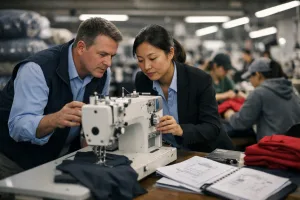
Why Choosing the Right Clothing Manufacturer Matters
Your decision about clothing manufacturers sets the foundation for every collection. The right partner means consistent quality, timely deliveries, and reliable support through each season. The wrong choice can risk wasted fabric, poor fit, and headaches from missed deadlines. Whether you create sportswear, fashion basics, or promotional garments, a meticulous approach to factory evaluation protects your investment—and your brand reputation.
Clothing Manufacturers: Key Evaluation Factors

Before you commit, take time to evaluate potential clothing manufacturers. Focus on process transparency, production capabilities, quality checks, compliance, and flexibility for custom programs. Leading suppliers—such as Ninghow Apparel—welcome detailed inquiries about these factory assessment points.
Production Capabilities and Factory Scale
Start by matching your business needs with the manufacturer’s production capacity. Look for details about machine inventories, skilled operators, and throughput at various order sizes. Leading clothing manufacturers operate advanced lines, including auto-cutters, flatseam, overlock, and coverstitch machines for quality knits (single jersey, pique, fleece) and wovens (twill, poplin). Ask about monthly output, peak capacity, and flexibility in MOQ (minimum order quantities), especially for new designs.
Fabric Sourcing and Material Range
Ask about their expertise with common and specialty fabric types: combed cotton (in 20s/24s/32s yarn), ring-spun, organic/GOTS cotton, modal, viscose, recycled polyester (rPET), and elastane blends. Effective clothing manufacturers source knits and wovens in weight ranges from 160–240 gsm for polos/tees, up to 360 gsm for heavier fleece and outerwear.
Pattern Making, Cutting, and Sampling
Factory skill with tech packs, graded size sets, and tolerances impacts fit consistency. Inspect workflow for automated marker making, notching, grainline control, and fabric relaxation before cutting. Leading factories do sample runs (SMS), pre-production samples (PP), and top-of-production checks (TOP) to refine construction, fit, and bulk results.
Quality Control and Apparel Testing
Reliable clothing manufacturers run robust QC checks at every step. Inline and end-line inspections cover spec measurement tables, seam strength, puckering, and skew analysis. Some factories deploy needle detection—crucial for children’s apparel. Approved suppliers test fabrics and finished goods for key performance standards:
- Colorfastness (ISO 105-C06, AATCC 61/8)
- Dimensional stability/shrinkage (AATCC 135/150)
- Pilling and abrasion resistance (ISO 12945)
- Seam strength (ASTM D1683)
Compliance with OEKO-TEX STANDARD 100, GOTS, BSCI, WRAP, SEDEX, REACH, and CPSIA assures safety in final products, inks, trims, and accessories. Ask for certification copies and test reports.
Quality Assurance Table: Methods vs. Outcomes
| QC Method | Target Outcome | Best Use Case |
|---|---|---|
| Inline Inspection | Early defect detection | Bulk sportswear, corporate basics |
| End-line Inspection | Spec conformity | Fashion items, promotional tees |
| Needle Detection | Metal-free finished goods | Kidswear, uniforms |
| Lab Wash Testing | Dimensional, color stability | Performance polos, premium apparel |
Technical Details: Construction and Decoration
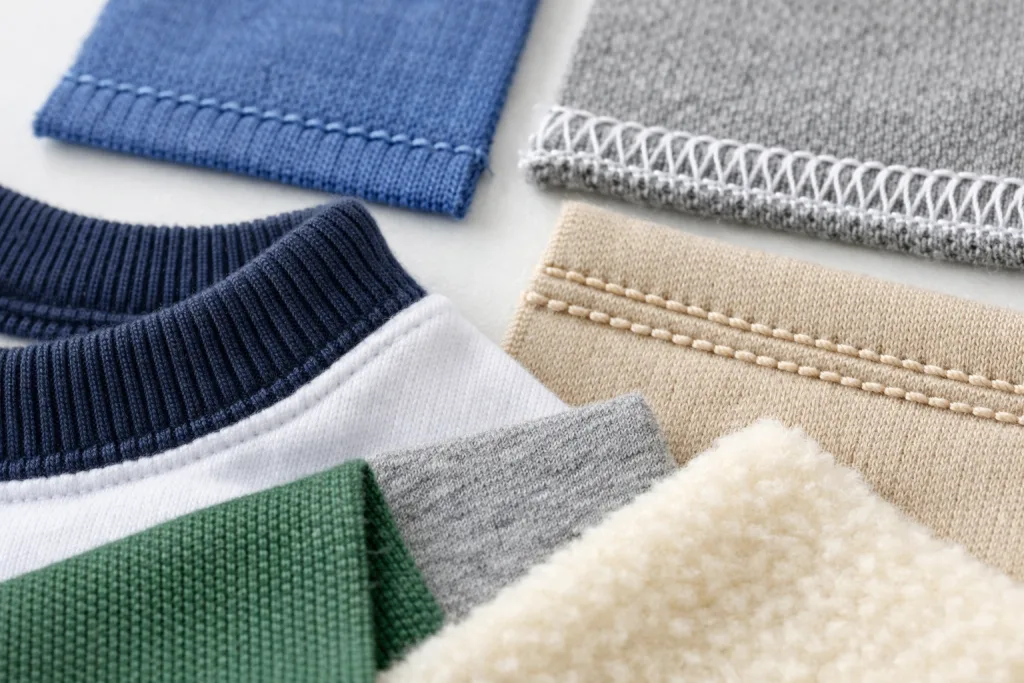
Manufacturers should detail their sewing standards, stitch types (ISO 301/401/504/602), needle selection, seam structures, and options for rib collar attachment on polos. For decoration, leading partners offer screen printing (plastisol, water-based, discharge), DTF, DTG, sublimation for poly blends, and embroidery (standard, 3D/puff). Choices affect handfeel, durability, and cost. Ask for samples to compare surface finish and resistance to repeated wear or washes.
Stitch and Seam Types Explained
- ISO 301: Standard lockstitch—durable for main seams
- ISO 401: Chainstitch—used in side seams, offers stretch
- ISO 504/602: Overlock and coverstitch—secure edges and hems
Coverstitch hems deliver a flat, flexible finish on activewear and lifestyle garments. Bartacks reinforce stress points for increased garment lifespan.
Decoration Choices for Your Brand
- Screen print: Vibrant, durable, best for classic branding.
- Direct-to-garment (DTG): Flexible, soft hand, good for small runs.
- Sublimation: All-over prints, needs polyester base.
- Embroidery: Premium texture, strong wear resistance.
Color Control and Lab Processes
Professional clothing manufacturers maintain strict color standards from sampling to bulk order. Lab dips and strike-offs test dyes, with Pantone matching to lock in shade accuracy. Factories manage shade bands and batch controls to prevent color drift across production lots. Well-run facilities review colors under D65 and TL84 light, double-checking for metamerism (color shifts by light).
Packaging, Labelling, and Export Logistics
Look for clarity on folding methods, polybag thickness, size ratio packs, hangtags, woven/care labels (using ISO 3758 symbols), carton marking, barcode systems (UPC/EAN), and export packaging. The best clothing manufacturers optimize for space and durability, reducing shipping damage risks. Logistics options often include EXW, FOB, CIF, and DDP Incoterms—review which matches your market needs. Ask Ninghow Apparel or any prospective factory about lead times from SMS sample through production to final delivery.
Packaging Options Compared
| Method | Pros | Cons | Use Case |
|---|---|---|---|
| Flat fold, polybag | Low cost, bump protection | Limited shape maintenance | Polo shirts, tees |
| Hang/suit-pack | No creasing | Higher shipping cost | Jackets, pants |
| Box pack | Strong crush protection | Bulky, costlier | Premium fleece, delicate apparel |
Compliance: Social, Environmental, and Safety Standards
Responsible clothing manufacturers document BSCI, WRAP, SEDEX (social audits), OEKO-TEX, GOTS, REACH, and CPSIA standards. Ask about workplace safety, fair labor practices, reduced chemical footprint, and use of recycled or certified organic materials. Ninghow Apparel emphasizes environmental stewardship and transparent reporting in their manufacturing process.
Common Compliance Certifications
- OEKO-TEX STANDARD 100: safe chemical use, textile safety
- GOTS: organic textiles, environmental responsibility
- BSCI/WRAP: social accountability, fair wages
- REACH: chemical and materials safety
- CPSIA: child product safety (USA market)
Fit Consistency and Customization Ability
A key outcome of an effective manufacturing partnership is fit consistency across styles, sizes, and repeat orders. Confirm technical pack accuracy, graded size set handling, and tolerance management. Ask about the factory’s ability to support custom collar styles, sleeve shapes, hem finishes, or logo placements—all critical for brand differentiation.
- Review bulk fit samples and tolerance records.
- Test one-off trims, colorways, and personalized packaging.
- Evaluate feedback cycle for sample adjustments.
Lead Times, Flexibility, and Communication
On-time deliveries depend on realistic lead times, clear communication, and the ability to adapt when plans shift. Confirm sample stage (SMS & PP), bulk production, and logistics timeline benchmarks. Test factory responsiveness to sample revisions, specification updates, and unforeseen challenges. Fast response and transparent dialogue turn issues into solutions.
How to Shortlist Clothing Manufacturers
Use these steps to find partners who fit your quality and growth goals:
- Visit the factory or request live virtual tours.
- Review past client portfolios, including apparel types and brand levels.
- Confirm audit and certification documents.
- Request sample runs across multiple product types (polos, hoodies, tees, pants).
- Compare pricing, lead times, and MOQ offers.
- Ask precise questions on the above evaluation points.
Ninghow Apparel demonstrates top-tier capabilities across sportswear, lifestyle basics, and promotional clothing. Their focus on fit consistency, craftsmanship, and sustainable practice supports long-term brand growth.
Expert takeaways: Prioritize transparency, robust QC, and a proactive communication style. The best clothing manufacturers become trusted partners, not just suppliers.
Frequently Asked Questions
What are the first steps in evaluating clothing manufacturers?
Begin by mapping your target product and volume, then shortlist manufacturers with matching capacity, certifications, and a reputation for quality. Onsite visits or virtual tours add confidence.
Which certifications matter most for clothing manufacturers?
OEKO-TEX STANDARD 100, BSCI, WRAP, SEDEX, GOTS, REACH, and CPSIA are the core certifications. These cover textile safety, labor practices, and compliance standards for major markets.
How do I ensure fit consistency across bulk orders?
Provide accurate tech packs and graded size sets, and check manufacturers’ sample and bulk fit tolerance records. Insist on bulk sampling before full production to confirm results.
What is the importance of QC and testing in apparel manufacturing?
Quality control and lab testing ensure garments meet specs for durability, safety, and color stability. They reduce defects and protect brand reputation, especially for demanding programs.
How do decoration choices affect apparel durability?
Screen printing and embroidery offer highest durability, while DTG and heat transfer are best for softer handfeel and small runs. Each method suits different branding and wear needs.
Why does communication matter when working with clothing manufacturers?
Clear and timely communication prevents mistakes, speeds up sample approvals, and keeps production on schedule. It helps solve problems quickly and ensures smoother collaboration.