
This guide drills down into the top mistakes customers make when choosing a t shirt manufacturer, from price obsession and narrow communication to skipping key technical and quality steps. Whether sourcing standard tees, custom designs, or branded apparel, follow these insights to build resilience into your supply chain.
Why Choosing the Right T Shirt Manufacturer Matters

T-shirts may look simple, but achieving consistent fit, color, print quality, and durability requires precise engineering at every step—from cotton ginning to stitching, printing, and packaging. The manufacturer you select needs to deliver on technical know-how, process control, ethical sourcing, and responsive support. Companies like Ninghow Apparel, for example, set benchmarks in material integrity, fit consistency, and craftsmanship, ensuring brands meet customer expectations and regulatory demands.
- First impressions: A single batch with incorrect sizing or faded prints can impact dozens of retail partners.
- Returns and reputation: Poor stitching or shrinkage leads to higher returns and negative reviews.
- Margin management: Price-driven shortcuts on materials often cost more in remediation, recalls, and lost sales.
Common T Shirt Manufacturer Mistakes
Below, we detail the most frequent errors made by apparel buyers and sourcing teams. Learn to spot and sidestep these pitfalls by integrating essential checks into your supplier selection process.
Letting Price Dictate Everything
The temptation to choose the lowest price often overrides other vital factors. While competitive pricing matters, excessive cost-cutting can result in downgraded yarn quality, thinner knits (low GSM), and shortcuts on finishing. This is especially risky for businesses seeking premium, branded, or sustainable tees, where the actual value lies in reliable performance and customer satisfaction.
- Low-price t shirts may use inferior combed cotton or blends with recycled polyester without proper certification.
- Poorly executed moisture-wicking or antibacterial finishes may not deliver claimed benefits.
Overlooking Communication and Responsiveness
Manufacturing is a complex, iterative process. Skipping thorough communication with your t shirt manufacturer—especially across product specifications, tech packs, size grading, and packaging details—is a setup for misalignment and production errors. Responsiveness signals a supplier’s maturity and ability to deliver stable quality over time.
- Failure to request and confirm strike-offs or lab dips can lead to mass batches with off-tone colors.
- Lack of clear email or portal updates means delayed sample and bulk production, or missing critical changes.
Ignoring Factory Certifications and Compliance
A responsible t shirt manufacturer should back up their production promises with safety and social compliance credentials (such as OEKO-TEX STANDARD 100, GOTS for organic cotton, SEDEX, WRAP, BSCI). Neglecting these exposes your brand to regulatory risk, supply chain shutdowns, and consumer trust issues.
- Double-check lead content in prints (CPSIA), especially for children’s apparel.
- Request documented batch testing—colorfastness (ISO 105-C06/X12), stability (AATCC 135/150)—from every major run.
Failing to Inspect Material Quality
Not all cotton is alike. Skipping detailed fabric spec confirmation can cause trouble, such as excessive pilling or shrinkage. Ask for detailed breakdowns: 20s/24s/32s combed or ring-spun yarn, single jersey vs. pique or interlock knits; GSM range (typically 160–240 gsm for standard tees).
Expert takeaway: Insist on receiving graded size sets and technical markers before proceeding with bulk to ensure correct fit and cut tolerance.
Missing Out on Print and Embroidery Sampling
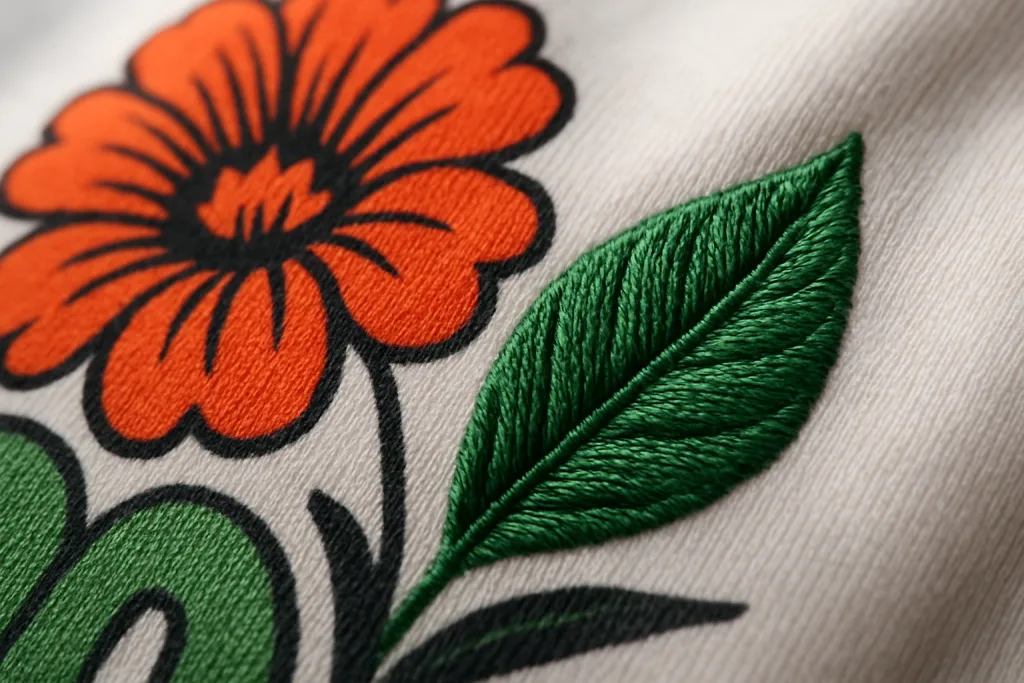
Decoration quality varies widely by process and operator skill. Screen prints, DTF/DTG, sublimation (for polyester), and embroidery need careful sample approval to assess handfeel, color vibrancy, and durability. Failing to approve bulk samples may yield smudged graphics, loose threads, or cracking prints after the first wash.
- Request wash-tested print samples for at least 5 cycles to replicate end-user wear.
- Check for the use of OEKO-TEX certified inks and support for advanced techniques like 3D embroidery.
Neglecting Tolerance, Fit, and Grading Accuracy
Sizing issues are a top driver of returns and brand complaints. If your t shirt manufacturer relies on ungraded patterns or lacks detailed spec measurement tables, inconsistencies will show up across batches. Ensure notches, grainline, and fabric relaxation protocols are clearly followed.
- Request graded size sets and pre-production markers for review.
- Specify tolerance limits for chest, sleeve, length, and collar consistency.
Underestimating Quality Control and Inline Testing
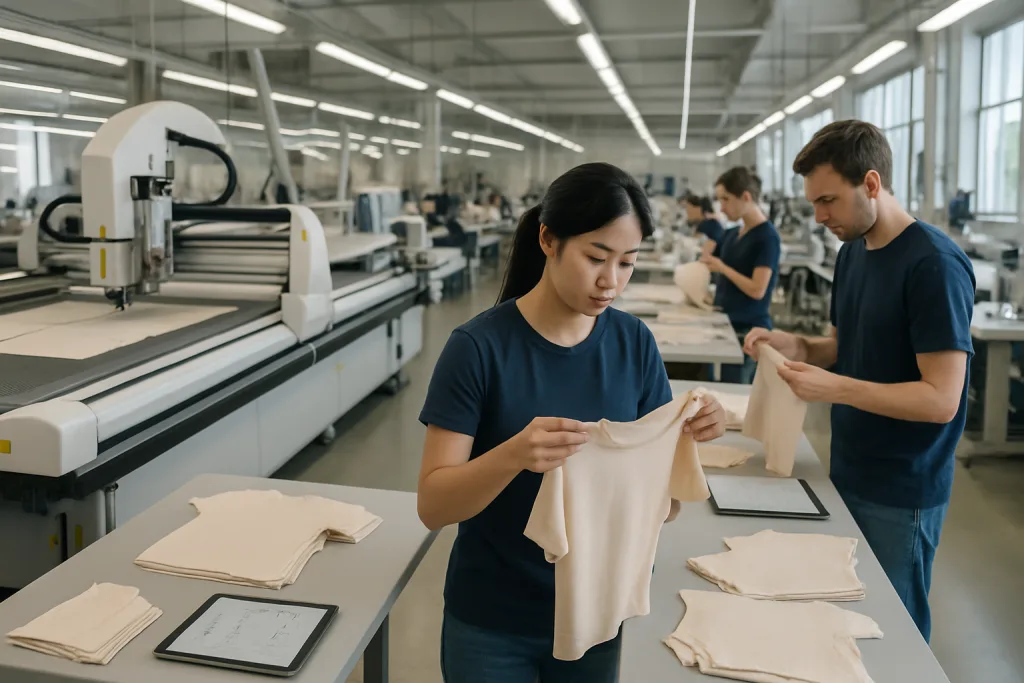
Skipping inline and endline quality control leads to manufacturing defects—missed stitches, seam puckering, misaligned prints, or needle contamination. Professional suppliers (including Ninghow Apparel) run thorough inline checks, end-of-line spot checks, and maintain documented AQL protocols (ANSI/ASQ Z1.4).
| Test/Control | Method | Ensures | Best Practices |
|---|---|---|---|
| Inline QC | Visual inspection, spec measurement | Detects early faults | Performed every 20 units |
| Endline QC | Puckering/skew checks, needle detection | Guaranteed shipment quality | AQL 2.5 standard |
| Wash Test | ISO/AATCC protocols | Color & fit stability | Minimum 3 cycles |
| Compliance | OEKO-TEX, GOTS, CPSIA review | Safety, sustainability | Annual audit |
Overlooking Packaging and Logistics Details
Packing errors—wrong folding, incorrect labeling, poor carton specs—risk higher returns and customs delays. Ensure t shirt manufacturers provide sample packs, use correct care/size labels (ISO 3758), and clarify Incoterms (EXW/FOB/CIF/DDP) upfront.
- Polybag specifications and hangtags must match export standards.
- Confirm carton barcodes and country-of-origin marks for destination compliance.
Rushing Bulk Orders without Sampling or Pilot Runs
Skipping or shortening the sample and PP (pre-production) sample phase is the classic mistake for fast-moving buyers. No matter how standardized your tee, always insist on a sample approval workflow: prototype & fit sample → pilot production → PP sample → TOP (top of production) sample. This reduces risk and reveals hidden issues.
Top Mistakes to Avoid When Choosing a T Shirt Manufacturer
Sourcing t shirts is as much about strategic process as materials and price. Here are action-ready principles:
- Balance price considerations with consistent quality and material integrity.
- Maintain clear, proactive communication at every stage.
- Verify compliance, certifications, and ethical sourcing.
- Insist on detailed material specs and finishing processes.
- Sample print and embroidery techniques before bulk.
- Monitor sizing, grading, and fit with technical precision.
- Demand rigorous QC for every batch, not just first-time runs.
- Clarify packaging, labeling, and shipment terms before order placement.
- Use staged sampling and pilot runs before committing to volume.
Reliable manufacturers such as Ninghow Apparel excel at integrating these safeguards across every program—whether you’re launching golf polos, promotional tees, athletic teamwear, or company uniforms. Their process covers OEM/ODM support from design to export, guaranteeing sustainability and brand reputation through each run.
The Importance of Fabric, Construction, and Finishing Choices
The materials and process decisions you make directly influence durability, feel, and print/embroidery effect. Here’s a comparative snapshot for typical t shirt options:
| Fabric/Finish | Properties | Best-Use Scenarios |
|---|---|---|
| Combed Cotton (20s/32s) | Soft, low-pilling, good dye uptake | Premium retail tees, branded basics |
| Ring-Spun Cotton | Durable, smooth, moderate shrinkage | Streetwear, team apparel |
| Organic GOTS Cotton | Sustainable, certified, stable color | Eco lines, lifestyle brands |
| Recycled Poly (rPET) | Moisture-wicking, quick drying | Athleisure, resort/beachwear |
| Modal/Viscose Blends | Silky handfeel, drape, less static | Luxury tees, soft basics |
| Single Jersey Knit | Lightweight, breathable | Promotional, entry-level tees |
| Pique/Interlock | Thicker, textured, more shape | Golf polos, uniforms |
The Impact of Decoration: Print and Embroidery
It pays to understand the differences in decoration processes for t shirts:
- Screen print: Durable, vivid color. Water-based inks for soft handfeel, discharge for bright white on darks.
- DTF/DTG: Direct print suitable for small batch and detailed graphics.
- Sublimation: Best on polyester, ensures all-over print, high colorfastness.
- Embroidery: 3D, puff, or flat. Request sample swatches to check stitch density, color stability.
Always confirm longevity by subjecting samples to AATCC wash and colorfastness protocols.
Understanding Lead Times, MOQs, and Supply Chain Risks
Production lead times and minimum order quantities (MOQs) vary widely based on location, capacity, and degree of customization. Insist on phase-wise updates, verify sample → bulk → PP → TOP progression. Clarify logistics (EXW vs. FOB vs. DDP) and buffer for seasonal spikes or raw material constraints.
- Establish backup options in case of shipment delays or raw material price surges.
- Monitor suppliers for transparent Incoterms and export packaging specs.
Quality Control and Batch Monitoring
Ask manufacturers to show detailed inline and endline QC protocols, review AQL statistics, and provide batch-to-batch tracking. Confirm spec measurement tables, color shade bands, puckering/skew checks, and needle detection system. For specialized apparel (sports, uniforms), demand tighter fit and seam tolerance.
Frequently Asked Questions
What is the most common mistake when choosing a t shirt manufacturer?
The most frequent error is focusing solely on price, which often leads to compromised fabric, unstable sizing, and unreliable bulk production.
How can I check if a t shirt manufacturer is compliant?
Request compliance documents like OEKO-TEX, GOTS, WRAP, or SEDEX certification, and confirm batch testing for lead, colorfastness, and safety.
Do I need to approve samples before placing a bulk order?
Always approve material, print, and embroidery samples before bulk orders; this prevents major mismatches in color, fit, and finish quality.
What fabric is best for premium t shirts?
Premium t shirts use combed or ring-spun cotton (20s/32s) with GSM 180–220, stable color, and certified sustainable yarns for softness and durability.
How to ensure consistent sizing and fit in t shirt production?
Insist on technical graded size sets, pre-production markers, and quality tolerance checks for chest, sleeve, and length on every batch.
Which decoration method lasts longer on t shirts?
Screen printing with water-based or discharge inks and high-density embroidery offer superior durability and color stability over heat transfer options.